
 David Joseph
Did you know we spend almost 90% of our lives indoors? Yet, studies reveal indoor air can be up to five times more polluted than outside air. We often ignore the invisible factors that affect our comfort, like moisture levels in our homes.
Low humidity can cause dry skin, irritated sinuses, and make us more likely to get sick. Using a smart humidifier in your home can help control your environment easily. These advanced devices watch over your space to keep the air just right for your health.
We think your home should be a place of clean, fresh air. Picking the right technology is key to making your home healthier. A top-notch smart humidifier gives you the exact moisture you need, so you can feel great every day.
Key Takeaways
- Indoor air quality greatly affects your long-term lung health.
- Keeping the right moisture levels stops dry skin and sinus problems.
- Modern devices have automated sensors to keep humidity steady.
- Choosing the right tech makes your home a healthier space.
- Regular air checks help cut down on airborne pollutants.
What is a Smart Humidifier?
Modern homes need modern solutions, and a smart humidifier is at the top. These devices do more than just add mist to the air. They manage your environment for comfort. They make your home a healthier place by using technology.
Features of Smart Humidifiers
These devices connect to your home network. They have an air quality monitor that tracks humidity levels. This lets them adjust automatically, keeping your room just right.
You can control them with apps or voice commands. Set schedules, check water levels, and get alerts without touching the device. This makes it easy to keep your atmosphere consistent.
Benefits of Adding Humidity to Your Home
Right moisture balance is key for your health. Dry air can irritate skin and throats. A smart humidifier helps avoid these problems and makes your home more comfortable.
“The U.S. Environmental Protection Agency recommends maintaining indoor humidity between 30–50% to help reduce mold growth and dust mites.”
Keeping humidity levels right protects your health and furniture. It stops wood from cracking and reduces static electricity. It’s a simple change with big benefits for your home.
How They Differ from Traditional Humidifiers
Traditional humidifiers are basic and often need manual control. They don’t have the precision of a smart humidifier. Smart humidifiers stop when they reach the right humidity level.
Also, smart humidifiers have an air quality monitor for better peace of mind. You don’t have to guess if your air is too dry. You can rely on precise data for your climate control, making your home smart.
Top Brands of Smart Humidifiers
Understanding the strengths of top brands is key to long-term satisfaction with your air quality device. Choosing a reputable manufacturer means peace of mind. You know your smart humidifier will perform well and have reliable support. By looking at industry leaders, we can find the best features for your home.
Dyson
Dyson is known for its innovative home climate control. Their devices purify and humidify the air, making it clean and moist. These units are great for those who want cutting-edge technology and stylish design.
Honeywell
Honeywell is known for durability and easy use. They make strong systems that are simple to maintain. Many of their models fit well into a connected humidifier system, making them perfect for busy families.
Levoit
Levoit is loved for its powerful yet quiet operation. The Levoit LV600S is a top hybrid ultrasonic model with great mist output. It connects to Wi-Fi, letting you control your home environment with a mobile app.
Philips
Philips focuses on clean humidification, using advanced technology to stop bacteria spread. Their units are great for those who care about air and water quality. A connected humidifier from Philips often has smart sensors that adjust output based on room conditions.
| Brand | Primary Strength | Best For |
|---|---|---|
| Dyson | Air Purification | Premium Performance |
| Honeywell | Durability | Ease of Use |
| Levoit | Quiet Power | Smart Connectivity |
| Philips | Hygienic Mist | Health-Conscious Users |
Key Features to Look For
Finding the perfect balance of performance and convenience starts with evaluating key technical specifications. When you invest in a connected humidifier, you gain more than just moisture; you gain total control over your indoor environment.
App Connectivity
Modern devices often feature a dedicated humidifier app that allows you to manage settings from anywhere. You can adjust mist levels, set schedules, or check water levels directly from your smartphone. This level of convenience ensures your home remains comfortable even when you are away.
Humidity Sensors
Advanced units include built-in sensors that provide precise humidity control. These sensors monitor the air in real-time and adjust the output automatically to maintain your preferred levels. By avoiding over-saturation, these smart features help prevent mold growth and protect your furniture.
“The integration of smart sensors into home appliances is not just a luxury; it is a fundamental shift toward healthier, more efficient living spaces.”
Energy Efficiency
Understanding how your device operates is vital for long-term savings. Ultrasonic models use high-frequency vibrations to create a cool mist, which is generally very energy-efficient. In contrast, evaporative models rely on airflow through a wet filter, which may consume more power but often provides a more natural humidification process.
Filter Options
Maintenance requirements vary significantly based on the filtration system. Some models use permanent, washable filters, while others require periodic replacements to ensure clean air output. Choosing the right filter type is essential for maintaining both the longevity of your device and the quality of the air you breathe.
| Feature | Ultrasonic | Evaporative |
|---|---|---|
| Energy Use | Low | Moderate |
| Noise Level | Very Quiet | Noticeable |
| Maintenance | Frequent Cleaning | Filter Replacement |
| Best For | Small Bedrooms | Large Living Areas |
How to Choose the Right Size
Finding the perfect humidity control isn’t just about picking a unit that looks good. We need to think about our room’s size to make sure it works well. Choosing the wrong size can lead to too little moisture or too much, which can harm your home.
“The secret to a comfortable home environment lies in the balance of air quality and proper equipment sizing.”
Small vs. Large Rooms
In smaller spaces like bedrooms or home offices, smaller units work well. They are made to control humidity without taking up too much space. But, bigger rooms need stronger models to spread moisture over a larger area.
Portable vs. Whole-House Models
Portable humidifiers are great for moving around. They’re perfect for those who want easy, spot comfort. On the other hand, whole-house models keep moisture levels steady everywhere in your home. They are highly efficient for a lasting fix to dry air.
Coverage Area
Knowing your room’s square footage is key before buying. Most makers give ratings for how far a device can reach. Always check these to prevent mold from too much moisture in a small area.
- Measure your room dimensions accurately.
- Check the manufacturer’s recommended square footage.
- Consider the ceiling height for larger rooms.
- Ensure the unit has an adjustable output setting.
Health Benefits of Using a Smart Humidifier
Keeping your home’s climate balanced does more than just make it cozy. It helps our health by controlling moisture levels. Using a smart device with an air quality monitor lets us create a perfect environment for health.
Alleviating Allergies
Many people face allergy problems due to wrong humidity levels. The CDC says mold can cause nasal issues, throat irritation, coughing, and skin problems. Smart humidifiers keep moisture right, stopping mold and easing nasal problems.
Reducing Respiratory Issues
Dry air makes breathing harder, worse in winter when heaters dry out the air. An air quality monitor helps keep our air good for breathing. This way, we cough less and have fewer dry throat problems.
- Consistent moisture keeps mucous membranes from drying out.
- Automated sensors adjust output to keep humidity healthy, between 30–50%.
- Good air flow helps our lungs work better.
Improving Skin Hydration
Our skin needs moisture to stay healthy and strong. Dry air makes it flaky, itchy, and sensitive. A smart humidifier keeps our skin moist, making us feel better and sleep better.
Using an air quality monitor helps us avoid too much moisture. This balance is key to keeping our skin and lungs safe from dry air.
Smart Humidifier Maintenance Tips
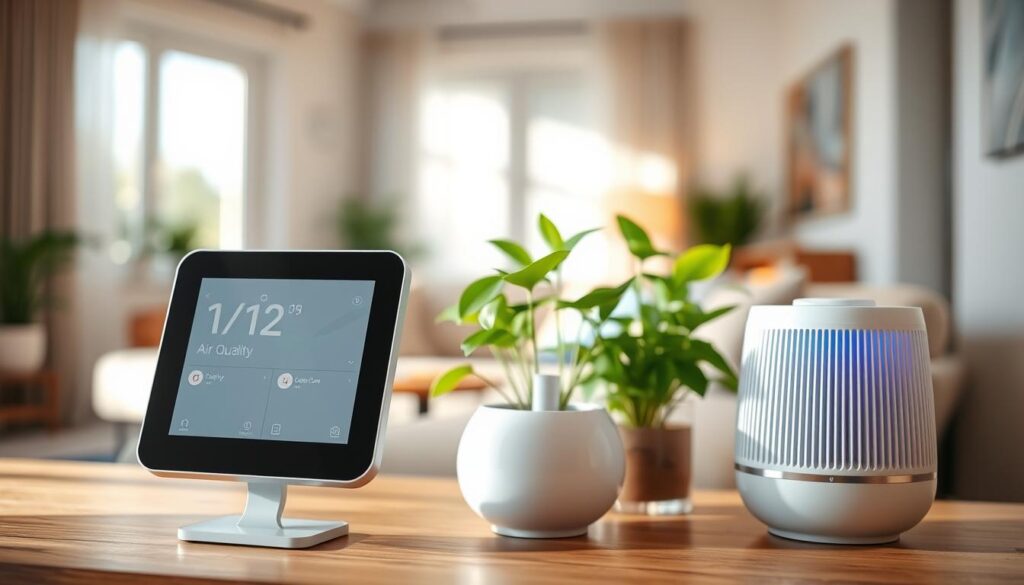
We believe that consistent care is key to getting the most from your smart home devices. Keeping your unit clean ensures the air quality monitor works right. If you ignore these tasks, mineral buildup can make the motor work too hard.
Regular Cleaning Practices
For your device to run well, clean it deeply once a week. Always unplug it first for your safety. Empty the water tank and wipe the base with a soft cloth to remove any residue.
Using distilled or filtered water is best for ultrasonic models. This stops mineral buildup and white dust. If you see scale, mix white vinegar and water to dissolve it without harming the device.
Filter Replacement Guidelines
Filters keep your water clean. Most say to replace them every three to six months, based on how often you use it. If you have hard water, you might need to change them more often.
Not following these guidelines can lower mist output and lead to bacterial growth. Always check your model’s manual for the right replacement time. A fresh filter helps your air quality monitor track humidity levels accurately.
Troubleshooting Common Issues
Even with good care, you might face small problems. If your device doesn’t make mist, check the water level and make sure the tank fits right. Sometimes, a reset of the smart app can fix connection issues that affect sensor readings.
If you smell something bad, it means the water has been there too long. Empty the tank every day and let it dry before refilling. Here’s a quick guide to maintenance tasks.
| Task | Frequency | Action Required |
|---|---|---|
| Tank Rinse | Daily | Empty and air dry |
| Deep Clean | Weekly | Vinegar soak |
| Filter Change | 3-6 Months | Replace unit |
| Sensor Check | Monthly | Wipe with cloth |
Integrating Smart Humidifiers with Home Automation
We can now control our home climate with ease thanks to new tech. By picking a connected humidifier, you can link it with other smart devices. This makes your home’s air quality stay good without needing you to adjust it all the time.
Compatibility with Smart Assistants
Today’s devices work with Amazon Alexa, Google Assistant, or Apple HomeKit. This lets you control your voice-controlled humidifier with just your voice. You can change mist levels or see humidity levels while you’re relaxing or cooking.
Seamless integration makes your device part of your smart home. If you want to learn more about bettering your home’s air, check out improving indoor air quality for tips.
Scheduling and Automation Features
A programmable humidifier lets you set up routines for your day. You can make it work harder when it’s dry outside and turn off when you leave for work. This automation saves energy and makes your home comfy when you get home.
Remote Control Capabilities
Being able to control your home’s climate from anywhere is a big plus. With a humidifier app, you can check humidity levels and adjust them from afar. This gives you peace of mind, keeping your plants or wooden furniture safe while you’re away.
Comparing Smart Humidifiers Based on Price
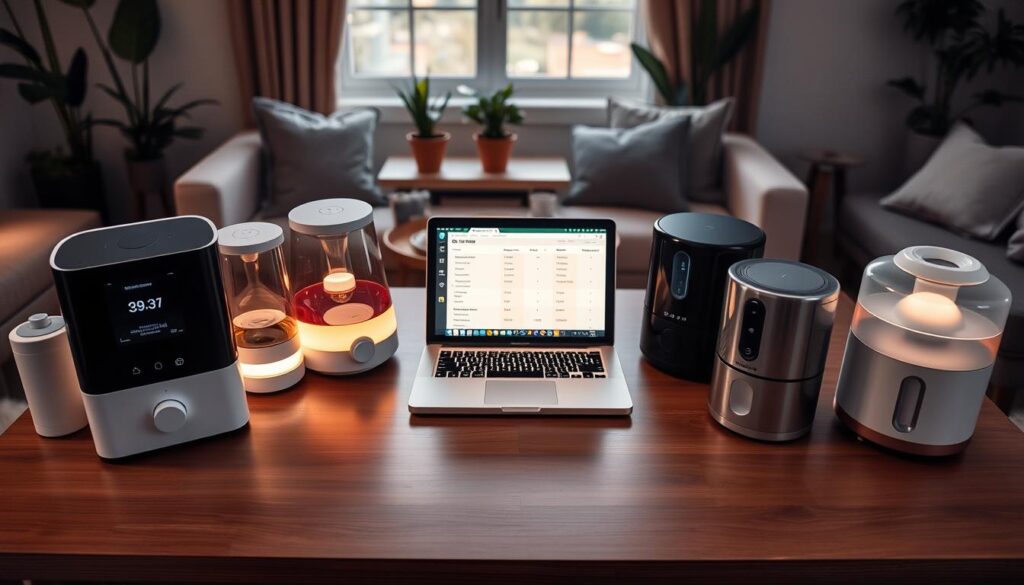
Finding the right balance between cost and function is key. When looking for a smart home device, it’s easy to get caught up in marketing. But focusing on what you need can save you money.
Budget-Friendly Options
For those on a tight budget, entry-level models are a great choice. They offer basic humidity control without breaking the bank. These units have essential misting and simple settings, even if they lack advanced features.
- Compact designs fit small spaces well.
- They have easy-to-use interfaces.
- They’re a cost-effective way to improve air quality.
Mid-Range Choices
Mid-range options offer more convenience and better integration. These units often have reliable sensors and can be controlled with your voice. They make adjusting settings easy without needing to touch anything.
“The true value of a mid-range device lies in its ability to maintain consistent comfort levels while reducing the need for constant manual oversight.”
Premium Models
Premium units are at the top of the tech list. They come with advanced features like UV sterilization for clean mist. These devices are for those who value health and efficiency.
High-end smart home devices offer better build quality and longer warranties. They often have apps that track your usage. If you want the best voice-controlled humidifier experience, these are the top choices.
| Category | Key Benefit | Best For |
|---|---|---|
| Budget | Affordability | Small spaces |
| Mid-Range | Automation | Daily convenience |
| Premium | Advanced Health | Whole-home comfort |
User Reviews and Ratings
User experiences show how well modern home climate tech works over time. We think real feedback is key to knowing if a model fits your home. By seeing how others use their devices, we find out which features last.
What Customers Are Saying
Most people say a programmable humidifier should be quiet and work well. They stress that quiet operation is crucial for bedrooms. A silent device lets you sleep well while keeping the air right.
“The ability to set a schedule and forget about it has completely changed my sleep quality. It is the most reliable smart home device I have added to my bedroom setup.”
Common Complaints
Some users face challenges with their devices. A big issue is setting up the humidifier app. If the app is hard to use, connecting to Wi-Fi can be tough.
- Difficulty in reaching internal water tank corners during cleaning.
- Occasional connectivity drops between the device and the router.
- Complex menu navigation within the mobile software.
Positive Feedback Highlights
When a smart home device is well-made, the praise is clear. People love how accurate the humidity sensors are. They also enjoy changing settings from another room with a programmable humidifier.
The best models mix advanced tech with easy upkeep. Users say a good humidifier app makes tracking water and filter life easy. Reliability is key for lasting happiness with these devices.
Conclusion: Elevate Your Home’s Air Quality
Turning your home into a haven starts with the air you breathe. Getting a smart humidifier is a smart move. It makes your home healthier and more comfy for your family.
Selecting the Right Technology
Check out the top smart humidifiers to improve your air. You can pick from a Dyson Pure Humidify+Cool or a Philips Smart Air Humidifier Series 3000i. These devices let you control humidity with precision.
A programmable humidifier lets you set schedules that fit your life. It’s perfect for keeping your home’s humidity just right.
Modern Convenience and Health
Adding a voice-controlled humidifier to your smart home is easy. It works with Amazon Alexa or Google Assistant. This keeps humidity balanced, which is good for your breathing and skin.
You’ll feel better knowing your home’s air is always just right. No need to adjust it all the time.
Looking Toward the Future
Technology for better air is getting better all the time. Look for smart solutions with advanced sensors and filters. Brands like Boneco or Levoit are leading the way.
Investing in these smart solutions now is a smart choice. It will make your home’s air fresher and healthier for years.