
 David Joseph
Did you know that homes lose nearly 15% of their floor area because of bad furniture placement? We often see storage as less important. But picking the right bookshelf is key to more than just book storage.
Choosing the right design for your bookshelf is crucial. It affects how your room flows and works. By thinking about your space and daily life, you can turn a messy area into a tidy spot.
We think the best storage should use space well and look great. In this guide, we’ll show you how to measure your space, pick strong materials, and place it just right. Let’s find a bookshelf that matches your style and meets your storage needs.
Key Takeaways
- Measure your room before buying furniture to get the perfect fit.
- Think about your daily habits to decide between open shelves or closed cabinets.
- Match the bookshelf style to your decor for a unified look.
- Use vertical space to save room in small apartments.
- Choose materials that can hold your books’ weight over time.
Understanding Your Needs for a Bookshelf
Start your journey to a tidy home by thinking about how you use your books and stuff every day. Before looking at styles or finishes, figure out why you need a bookshelf. Knowing what you need helps avoid clutter and keeps your furniture useful as your collection grows.
Assessing Your Book Collection Size
First, count how many books you have to know how much shelf space you need. Add twenty percent more space to grow with your collection. This way, your book storage stays organized and doesn’t feel too tight or too full.
If you have a lot of books, think about their weight. Heavy books need a sturdy construction to avoid sagging. Make sure the shelf can handle the weight of your books.
Considering Other Items to Display
A good display rack can hold more than just books. Many people like to show off plants, photos, or special items with their books. Look for shelves that can be adjusted to fit different sizes.
Think about how you want your space to look. Open shelves are great for decorations, while closed cabinets hide clutter. Mixing both can make your living area look neat and organized.
Identifying Your Reading Habits
Your daily habits help decide the best setup for your space. If you often grab books, place them where they’re easy to reach. For those who love to display their books, glass-fronted cases keep them dust-free.
For families with kids, safety is key. Choose shelves with rounded corners and low profiles to avoid accidents. Always secure your furniture to the wall, like a tall bookshelf in a family room or nursery.
Types of Bookshelves to Consider
The shape and style of your storage unit can change a room’s whole look. Choosing the right furniture means finding a balance between looks and function. Whether you need more space or storage, knowing the different types is key for a great design.
Built-In vs. Freestanding Bookshelves
Built-in units give a custom look that fits right into your home’s design. They are permanent fixtures that boost your home’s value. On the other hand, freestanding bookcases let you change your layout easily.
Freestanding models are great for renters or those who like to change things up. They don’t fit as well as built-ins but are easy to put up and move. Think about the visual weight of these pieces, as big ones can take over a small room.
Wall-Mounted Shelves
A wall shelf is perfect for saving floor space. It uses vertical space to keep things tidy and open. These are great for showing off decorative items or books without taking up too much room.
Make sure to install them on wall studs for safety and stability. Once up, they become a sleek display rack that draws the eye up. They’re ideal for modern homes where simplicity is key.
Corner Bookshelves
Empty corners are often overlooked but are perfect for special storage. A corner bookshelf turns a forgotten spot into a useful area. These units fit snugly into tight spaces, making the most of your room.
Some models even rotate for 360-degree access, making them great for storing lots in a small space. Always check the weight limits to make sure they can handle your books.
| Type | Installation | Mobility | Best Use |
|---|---|---|---|
| Built-In | Professional | None | Permanent Storage |
| Freestanding | Simple | High | Flexible Layouts |
| Wall-Mounted | Moderate | Low | Space Saving |
| Corner | Simple | Low | Niche Utilization |
Materials to Look for in a Bookshelf
When you start looking for a new bookshelf, the material matters a lot. It affects how long the furniture will last and how it looks. Think about what you need to store before picking a material.
Wood: Pros and Cons
Wood like oak, cherry, and walnut is very durable and looks great forever. It’s pricey but worth it for quality. For stylish bookshelves, solid wood is the top choice.
Engineered wood is cheaper and works well for many homes. It’s good for modern looks because it can be painted easily. But, it might not hold as much weight as solid wood.
Metal Shelves for Modern Spaces
Metal shelves are perfect for a modern, industrial look. They’re strong and can hold a lot of books. Look for powder-coated finishes to keep the metal looking good.
But, be careful with cheap metal or fabric shelves. They might not last long or hold much weight. They’re not good for a permanent furniture piece.
Glass Shelving Options
Glass shelves add elegance and make rooms look bigger. Use tempered glass for safety and strength. Glass shelves need to be cleaned often to stay clean.
Many people like wood-and-metal or wood-and-glass shelves. They mix the look of wood with metal’s strength. Make sure your bookshelf can hold what you need to store.
Dimensions and Space Planning for Your Bookshelf
Home organization begins with a tape measure and a clear plan. Before choosing a bookshelf, measure your room’s space carefully. This ensures a perfect fit.
Measuring Your Available Space
First, measure the wall where you’ll put your bookshelf. Remember to account for door swings and paths to avoid a cramped room.
Check your ceiling height to avoid blocking lights or vents. Always leave space around your furniture for a clean look.
Height vs. Width Considerations
Decide between a tall shelving unit or a wider one based on your needs. A 72 to 80 inch tall unit is great for high ceilings.
But, wider units offer more space for display and easier access. Think about how much floor space you’re willing to give up for storage.
Depth and Stability Needs
Stability is key for tall furniture. Anchor your unit to the wall to prevent it from tipping, important in homes with kids or pets.
For a wall shelf, place it at eye level, about four to five feet up. This makes it easy to reach and keeps your books at a good viewing height.
| Shelf Type | Best Use Case | Space Impact |
|---|---|---|
| Tall Unit | Vertical storage | Low floor footprint |
| Wide Unit | Display and access | High floor footprint |
| Wall Shelf | Decorative items | Zero floor footprint |
Aesthetic Considerations for Your Bookshelf
When designing a living space, we often forget how a bookcase can be both useful and beautiful. A good piece of furniture does more than store books. It makes the room look better by mixing function and beauty.
Matching Your Room’s Decor
Your bookshelf should match your home’s style. For a Scandinavian look, choose light woods and simple designs. This creates a feeling of openness.
If your home is industrial, go for metal frames with wooden shelves. For a farmhouse or traditional feel, warm wood finishes are best. They add history and comfort to your space.
Choosing the Right Color and Finish
The color and finish of your furniture are key. A dark finish can make a bold statement. A light or neutral tone helps a display rack blend in.
Test samples against your wall color before buying. This ensures your wall shelf or bookcase fits well with the room.
Creative Styling Ideas
Styling lets your personality show. Start with statement pieces like big art books or sculptures. This sets the tone for each shelf.
Keep things tidy with wicker boxes for electronics or cables. Mix heights, textures, and colors. But don’t forget to leave some negative space to avoid clutter.
Functionality of Your Bookshelf
The best storage solutions grow with your library. A top-notch bookshelf does more than hold books. It must adapt to your changing collection. This ensures your furniture stays useful for years.
Adjustable Shelving Features
Being able to change shelf heights is key for good book storage. Fixed shelves waste space, as they don’t fit tall books and small paperbacks well. Adjustable pegs or tracks let you tailor each level to your items.
Adjustable systems offer many benefits:
- Optimized vertical space for different-sized items.
- Easy changes as your collection grows or changes.
- Works well with decorative baskets and bins.
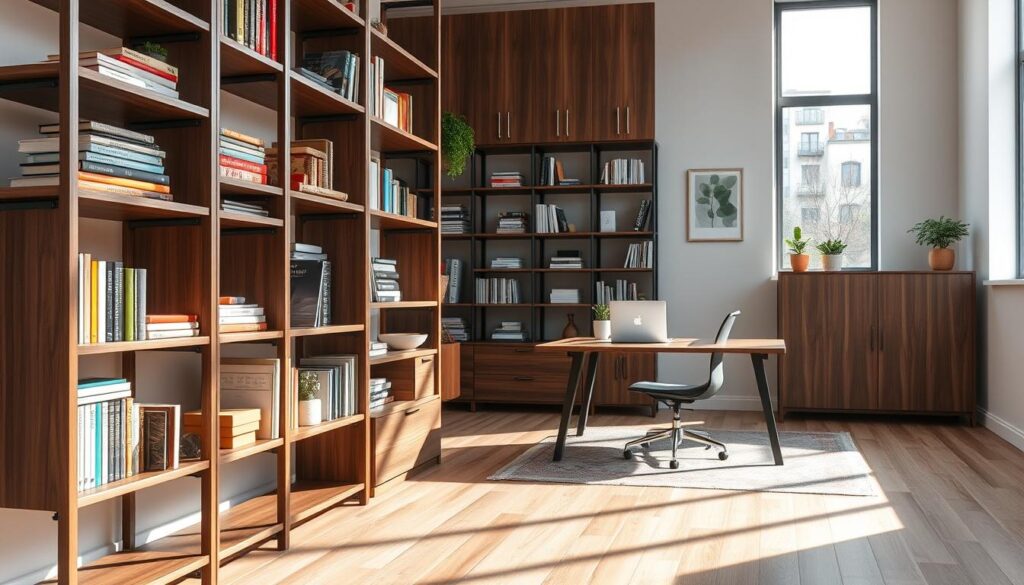
Add-Ons: Drawers and Hidden Storage
Adding closed storage to your shelving unit keeps things tidy. Drawers and doors hide items like cables, stationery, or small electronics. For more space-saving ideas, check out 8 affordable home gadgets for daily storage and kitchen.
Hidden compartments help with home organization by hiding clutter. This lets your favorite books shine while keeping other items out of sight.
Weight Capacity and Durability
When picking a bookshelf, check its strength. Heavy books can damage thin shelves. Make sure the shelf can handle your books’ weight.
Durability also depends on how well it’s set up. For stability:
- Anchoring to the wall to prevent tipping.
- Choose solid wood or strong composite materials for heavy loads.
- Check the shelf span to avoid too long lengths.
By focusing on these features, you get a reliable book storage space. A sturdy shelving unit is the base for a neat, efficient home.
Budgeting for Your Bookshelf Purchase
Setting a budget is key to smart book storage choices. Look at the total cost, not just the initial price. This way, you make a better decision.
Setting a Realistic Budget
Planning goes beyond the furniture cost. Think about shipping, assembly, and mounting hardware too. These costs add up.
By planning these expenses, you avoid unexpected costs. Use a spreadsheet to track them. This keeps your budget in check.
Exploring Budget-Friendly Options
Engineered wood is a smart, affordable choice for a bookshelf. It’s common and comes in many finishes. These can look like more expensive materials.
It’s great for basic storage in apartments or offices. It’s modern and affordable, fitting your budget well.
Investing in High-Quality Pieces
Spending more on solid wood furniture is worth it. It’s more expensive upfront but lasts longer. It also adds timeless beauty to your home.
Choosing quality means investing in your home’s future. Focus on durability and design. This ensures your book storage stays good as your collection grows.
| Material Type | Durability | Price Range | Best Use |
|---|---|---|---|
| Engineered Wood | Moderate | Low to Mid | General Storage |
| Solid Wood | High | High | Heirloom Pieces |
| Metal | Very High | Mid to High | Modern Decor |
DIY vs. Store-Bought Bookshelf
When you need a new storage solution, you must weigh the satisfaction of a DIY project against the ease of a store-bought piece. Choosing the right path depends on your available time, technical skills, and the specific requirements of your home layout.
Pros and Cons of DIY Bookshelves
Building your own bookshelf allows for complete control over dimensions and materials. You can tailor every detail to fit awkward corners or specific wall spaces that standard furniture simply cannot accommodate.
DIY projects require a significant investment of time and access to proper tools. Safety is a primary concern, as structural integrity is vital for any shelving unit that will hold heavy items. If you lack experience with woodworking, the final result might not offer the same durability as a professional product.
“The joy of creating something with your own hands is unmatched, but the precision of factory-made engineering provides a peace of mind that is hard to replicate at home.”
Inspiration for Custom Designs
If you choose the DIY route, consider using reclaimed wood or industrial piping to create a unique design. These materials add character to your home and allow you to build a custom wall shelf that serves as a focal point.
You might also explore built-in options that maximize vertical space in small apartments. By sketching your own plans, you can ensure that every inch of your bookcase is utilized efficiently.
Where to Buy Pre-Made Shelves
For those who prefer convenience, purchasing a pre-made unit is often the best choice. Retailers offer consistent quality, clear weight capacities, and valuable warranty support that DIY projects lack.
For example, the Tribesigns industrial ladder shelving unit is a popular choice for dorm rooms and home offices. Priced at approximately $239.99, this nine-cube bookcase provides a reliable, stylish solution without the need for power tools or complex assembly skills.
| Feature | DIY Bookshelf | Store-Bought |
|---|---|---|
| Customization | High | Low |
| Convenience | Low | High |
| Cost | Variable | Fixed |
| Warranty | None | Included |
Ultimately, your decision should align with your lifestyle. If you value creative expression and have the necessary skills, building your own furniture can be a rewarding endeavor. If you prioritize speed and reliability, a high-quality retail bookshelf will serve your needs perfectly.
Organizing Your Bookshelf Efficiently
A well-organized bookcase is the heart of a room, blending function with style. When organizing our book storage, we aim for both ease of access and beauty. A clear system can transform a messy shelf into a stunning home feature.
Categorizing Your Book Collection
Sorting your library is all about personal taste and how you use your books. Some like to group by genre or author for easy finding. Others prefer color arrangement for a striking look.
For big collections, organize by reading status or by family member. This keeps your bookshelf useful for everyone. You might also sort by size for a neat, uniform look.

Decorative Objects and Bookends
A beautiful bookcase is more than just books. Add small plants, photos, or ceramics for personality. These items add variety and give the eye a break.
“The details are not the details. They make the design.”
When decorating your display rack, use odd numbers like three or five for balance. Bookends are key for keeping books upright and organized. They also help tie your decor together.
Maintaining a Tidy Appearance
Even the best shelves need regular care. Leave some space on each shelf to avoid clutter. This makes your favorite items pop and your book storage look intentional.
To keep your display rack looking great, follow these tips:
- Dusting: Clean shelves and book tops weekly to avoid dust.
- Editing: Remove unread books to make room for new ones.
- Concealed Storage: Use baskets to hide small items that clutter.
By treating your bookshelf as a dynamic display, it stays inspiring. A clean bookcase not only protects your books but also improves your home’s feel.
Sustainability in Bookshelves
We think a beautiful home shouldn’t harm our planet. Choosing eco-friendly options for home organization makes your space look and feel good. It’s good for you and the Earth.
Eco-Friendly Materials to Consider
Choosing the right bookshelf material is key. Solid wood, sourced responsibly, is a great pick. It’s strong and can break down naturally when it’s time.
Bamboo is another smart choice. It grows fast and has a beautiful grain. It adds a natural touch to any room.
Brands Committed to Sustainability
Before buying, check the brand’s green credentials. Look for companies that are open about their environmental efforts. They should show how they source materials and make their products.
Look for certifications like FSC wood or finishes that don’t harm indoor air. Many brands now use minimalist, recyclable packaging. This cuts down on shipping’s environmental impact.
Tips for Recycling Old Bookshelves
Think about your old bookshelf’s future before getting rid of it. A solid bookshelf can be given to charity or a thrift store. It can still serve a purpose.
If it’s damaged, try fixing it or finding a new use. This way, you reduce waste and keep your commitment to the planet strong. It shows your love for reading and the environment.
Where to Shop for Your Perfect Bookshelf
Finding the right bookshelf for your home is important. It affects both your storage and style. The best way to find quality is to know the benefits of different places to shop. Whether you want a modern or rustic look, where you shop matters a lot.
Online Retailers vs. Local Stores
Online shopping is convenient and offers a wide range of choices. You can compare prices, read reviews, and find the perfect bookcase easily. Online, you can find styles not available locally.
Local stores, on the other hand, let you see and touch the shelving unit before buying. You can check its quality and how it looks in real light. This hands-on experience is key for durability.
Thrift Stores and Vintage Finds
Thrift stores and vintage markets offer unique finds. They have one-of-a-kind furniture pieces that add history to your home. You might find a vintage display rack with more charm than new ones.
Keep in mind, secondhand items might need cleaning or fixing. But, they’re good for the environment. Always check if they’re sturdy before buying.
What to Look for When Shopping
When shopping, check important details. Make sure the wall shelf or bookcase can hold your books and fits your room. A good unit should grow with your collection and match your room’s size.
Consider corner units for odd spaces. Check the return policy and delivery before buying. This way, your purchase will be worth it in the long run.
Final Tips for Selecting a Bookshelf
Choosing the right furniture is a mix of practicality and creativity. We need to make sure it fits well in our space. This ensures it improves our living area.
Visualizing Your Space with Layouts
Sketching out possible layouts helps us see how a new Bookshelf fits with our furniture. Using painter’s tape on the floor to mark dimensions is a smart move. It helps avoid clutter and keeps our home organized.
Envisioning Future Needs
Our collections can grow over time. So, it’s wise to choose modular units that can change with us. Investing in quality book storage now saves us from future replacements. We look for designs that offer flexible shelf heights for different book sizes and decorations.
Taking Your Time with the Decision
Rushing into a purchase can lead to regret. We compare open shelving with cabinets to find the best balance. This careful planning ensures our bookshelf remains both functional and beautiful for years.