
 David Joseph
Did you know a standard garden hose uses over 10 gallons of water per minute? Yet, it can’t blast away deep, set-in grime. Many homeowners find it hard to clean their driveways or siding with just basic tools and effort.
A high-pressure washer makes a big difference. It turns simple water into a powerful cleaning stream. This tool makes outdoor cleaning faster and more effective than scrubbing by hand.
But, picking the right pressure washer can be tough. You need to think about power sources, safety, storage, and the total cost. We’re here to guide you through these choices. This way, you can find the perfect machine for your home.
Key Takeaways
- Understand the difference between residential and commercial cleaning power.
- Evaluate your specific surface needs to prevent accidental damage.
- Compare electric versus gas models based on your storage and mobility requirements.
- Consider the long-term cost of maintenance and necessary accessories.
- Prioritize safety features to ensure reliable operation during every project.
Understanding High-pressure Washers
Ever wondered how a simple machine can blast away years of grime? You’re in the right spot. Many homeowners use these devices to keep their places looking great all year.
What is a High-pressure Washer?
A high-pressure cleaner is a special machine. It forces water through a narrow nozzle at high speed. This stream removes dirt, mildew, oil stains, and more from different surfaces.
Whether cleaning a driveway or deck, this tool gives the needed force. Efficiency is key when using it for home upkeep.
How Does it Work?
The system has several parts working together. Water from your home supply goes into a pump. The pump pressurizes the water to create a strong jet.
This jet then moves through a high-pressure hose to the trigger handle and wand. The nozzle shapes the spray for your cleaning needs.
“The right tool makes the hardest jobs feel effortless, turning a weekend of labor into a simple afternoon project.”
Choosing the right nozzle is crucial for safety and performance. You should avoid using a zero-degree nozzle. Its concentrated stream can damage surfaces or hurt the operator.
Different Types of High-pressure Washers
When looking for a power washer, you’ll find electric and gas-powered units. Compact electric models are great for light tasks like washing cars or cleaning patio furniture.
Gas-powered units, on the other hand, offer more power and mobility for big jobs. They’re best for large-scale projects where you need to run the washer for a long time without being plugged in.
Choosing the right high-pressure cleaner depends on your cleaning needs. Knowing the differences helps you pick the best machine for your home.
Key Features to Consider
Understanding performance ratings is key to finding the right tool for your home. Look beyond marketing labels and focus on technical data. This data shows how well a tool cleans.
https://www.youtube.com/watch?v=3ySva1jW5rA
Pressure Ratings Explained
Pressure is measured in Pounds per Square Inch, or PSI. It shows how hard water hits a surface to remove dirt and grime.
Higher PSI ratings are better for tough stains on concrete or brick. But, too much pressure can harm delicate surfaces like wood decks or soft siding.
Flow Rate: What You Need to Know
Flow rate, measured in Gallons Per Minute (GPM), is crucial. It’s the volume of water that helps wash away loosened debris.
A high-pressure, low-flow machine takes longer to clean big areas. Effective cleaning needs a good balance of PSI and GPM.
Electric vs. Gas Models
Choosing between an electric pressure washer and a gas pressure washer depends on your needs. Electric models are quieter, lighter, and need little maintenance. They’re great for everyday household tasks.
A compact 2,100 PSI electric unit works well for washing cars or patio furniture. For heavy-duty tasks, a gas pressure washer is better. A 2,600 PSI model can handle deep stains on driveways easily.
Do you need a professional pressure washer for your home? These machines are for daily, industrial use. They’re too much for most homeowners. Stick to residential-grade tools unless you have big, frequent cleaning jobs.
Benefits of Using a High-pressure Washer
Getting a pressure washer is a smart move for keeping your place in top shape. It uses powerful water jets to clear off tough dirt, mold, and mildew fast. Learning about the 12 benefits of pressure washing shows why it’s key for outside upkeep.
Time Efficiency
Old-school cleaning takes hours with brushes and buckets. A pressure washer cuts down this time to seconds. Big areas like driveways or long paths can be cleaned in minutes, not hours.
Versatility of Use
The best pressure washer isn’t always the strongest. Look for one that’s easy to carry and set up. This way, you’ll use it more often. Models like the DeWalt DWPW2600 are great because they’re small but still powerful.
These machines work well on many surfaces, like:
- Wooden decks and composite patios
- Outdoor furniture and plastic play equipment
- Vinyl or fiber cement siding
- Concrete walkways and brick pathways
Cost Savings on Maintenance
Regular cleaning protects your home’s value. It stops damage that costs a lot to fix or replace. Keeping your deck or siding clean makes them last longer.
Choosing the right best pressure washer helps you clean your home’s outside affordably. You avoid expensive repairs or replacing old wood. This way, you save money and keep your home looking great all year.
Common Uses for High-pressure Washers
Learn how to use your equipment for common cleaning tasks. A pressure washer is key for keeping your home looking great. With the right techniques, you can get professional results without harming your surfaces.
Cleaning Decks and Patios
For big areas like decks or patios, use a surface cleaner attachment. It gives a smooth, streak-free finish. If you must use a wand, move slowly to clean evenly.
Be careful not to damage the sand between pavers with a power washer. If you see the sand disappearing, stop and refill the gaps later. Always test a small area first to avoid damage.
Washing Vehicles
Cleaning your car needs a gentle touch. Use a wide-angle nozzle and keep at least 18 inches away from the paint. This prevents damage to the paint or trim.
Start with the lowest pressure setting on your pressure washer. Work slowly and increase pressure if needed. Test on a hidden area to avoid scratches.
Preparing Surfaces for Painting
A power washer is great for removing old paint, dirt, and mildew before painting. It helps your new paint stick well. But be careful around windows and siding to avoid water damage.
| Surface Type | Recommended Pressure | Nozzle Tip |
|---|---|---|
| Concrete Patios | 2500 – 3000 PSI | 25-degree (Green) |
| Wooden Decks | 1200 – 1500 PSI | 40-degree (White) |
| Vehicles | 1000 – 1200 PSI | 40-degree (White) |
| Painted Siding | 1000 – 1500 PSI | 40-degree (White) |
Safety Tips for Using High-pressure Washers
Using a high-pressure washer is not just about spraying water. It’s about safety. Even home models can be dangerous if not used right.
Personal Protective Equipment (PPE)
First, you need the right gear. It protects you from debris and accidental spray.
- Eye protection: Safety goggles shield your eyes from dirt and chemicals.
- Footwear: Wear sturdy shoes to protect your feet from fast-moving water.
- Clothing: Long pants and shirts keep your skin safe from the water.
Avoiding Common Injuries
Most injuries happen when people don’t realize how powerful the water is. Never aim the nozzle at yourself or others. It can hurt badly.
Watch where you are to avoid accidents. Keep electrical things dry and avoid tripping over hoses.
Safe Techniques for Operation
Start with low pressure to avoid damage. Test the spray on a hidden area first.
Consistency is key for cleaning. Move the nozzle constantly to avoid damage. Keep a safe distance from surfaces.
Be careful with delicate things. Don’t use high pressure on:
- Glass windows and mirrors
- Soft woods like cedar or pine
- Vinyl siding
- Deteriorated or peeling paint
- Delicate fabrics or screens
By following these tips, you can clean safely. Even a small unit can be dangerous if too close to fragile things.
Maintenance Tips for Your High-pressure Washer
Keeping your pressure cleaner in top shape is key. Regular care ensures it’s always ready for action. This not only makes it last longer but also keeps it working efficiently.
Regular Cleaning and Care
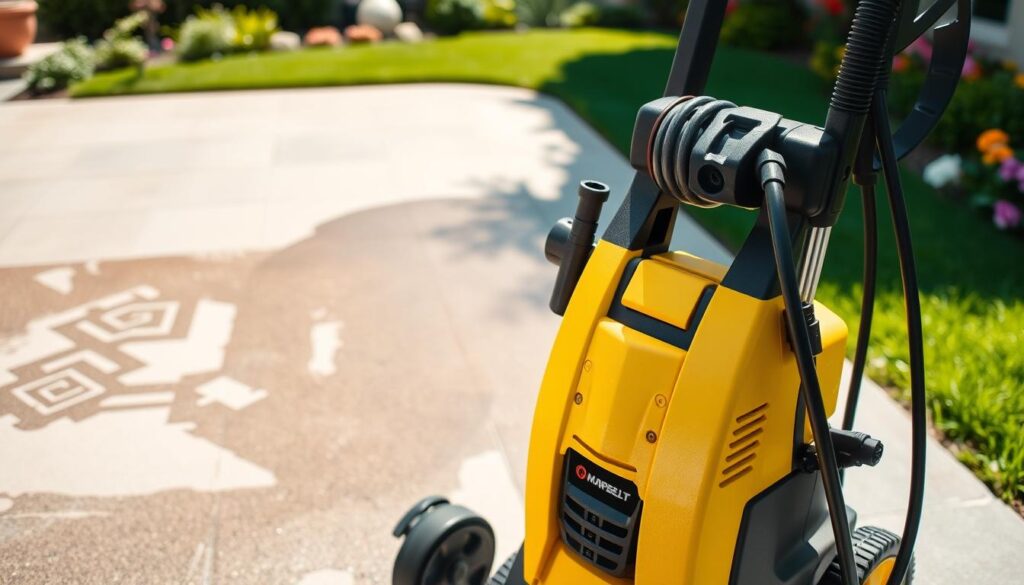
Flush the system with clean water after each use. This removes any leftover detergent that could harm the pump. Also, check the spray nozzles for blockages. A clogged nozzle reduces cleaning power.
“The longevity of your power equipment is directly tied to the quality of care you provide during the off-season.”
Checking Hoses and Attachments
Before storing, inspect hoses for wear. Look for kinks, cracks, or leaks that could affect water pressure. Coil hoses neatly to avoid damage to the rubber lining.
Store your wand and power cord in a dry, safe place. This prevents accidents and protects them from damage. A well-maintained pressure cleaner is quicker to use when you need it.
Winterizing Your Equipment
Freezing temperatures can harm your equipment. In cold climates, drain all water from the pump, hoses, and fittings before the first frost. Frozen water can cause cracks in the housing.
Use a pump saver solution to lubricate seals and prevent corrosion during storage. This ensures your machine works well when spring comes. Use the table below to remember your maintenance tasks.
| Task | Frequency | Importance |
|---|---|---|
| Flush System | After every use | High |
| Check Hoses | Monthly | Medium |
| Winterize | Before winter | Critical |
| Clean Nozzles | Quarterly | Medium |
Accessories to Enhance Your High-pressure Washer
The right accessories make a big difference in cleaning your home. Adding tools to your high-pressure cleaner helps you clean faster and more precisely. These accessories don’t boost the machine’s power but improve how well you can control it.
Nozzles and Tips
Most machines come with different tips for various cleaning tasks. A moderate setting like the 25-degree green tip is great for siding or wooden furniture. But, avoid using zero-degree red tips on soft materials to prevent damage.
| Nozzle Color | Spray Angle | Best Use Case |
|---|---|---|
| Red | 0 Degrees | Heavy-duty spot cleaning |
| Yellow | 15 Degrees | Concrete and brick |
| Green | 25 Degrees | General home cleaning |
| White | 40 Degrees | Rinsing and windows |
Surface Cleaners
A surface cleaner attachment is a must for big areas. It has a rotating bar that cleans evenly and without streaks. This tool keeps water from splashing back, protecting your walls and windows.
Detergents and Cleaners
The right cleaner can remove tough grime faster than water. Many machines have a soap tank, but you can also use outdoor cleaners by hand. Make sure the cleaner you choose is safe for your high-pressure cleaner to avoid damage.
Budgeting for a High-pressure Washer
Buying a pressure washer means balancing your cleaning needs now and your money goals later. Many homeowners spend too much on equipment they don’t really need. Knowing how often you need to clean helps you avoid wasting money on too much power.
Affordable Options vs. Premium Models
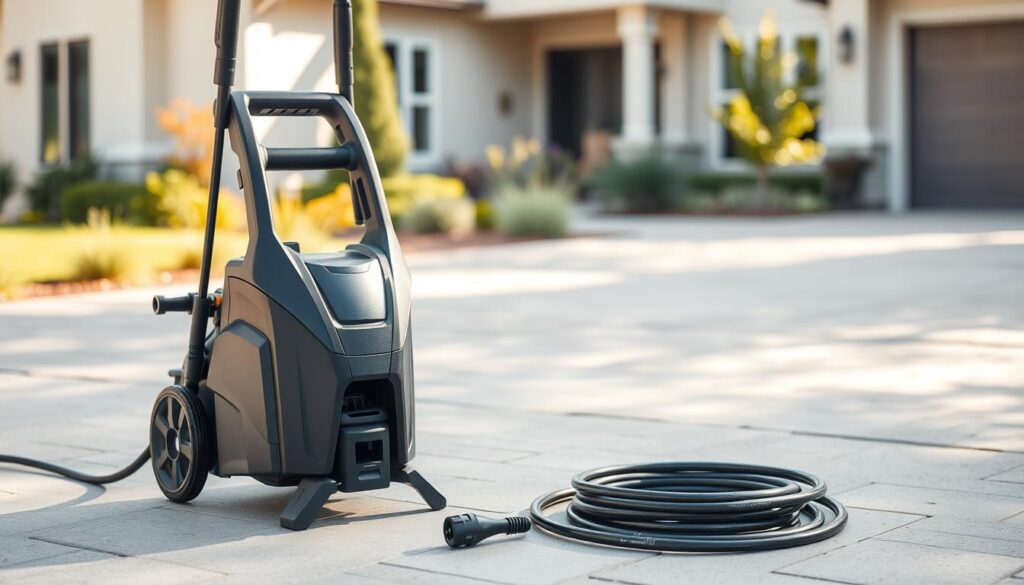
For home cleaning, you don’t need a professional pressure washer or an industrial pressure washer. These are for daily use in businesses. Instead, the Westinghouse ePX3500 or the Sun Joe SPX3000 are great for home use.
These electric units are powerful enough for decks, driveways, and cars but are cheaper than gas pressure washers. They’re small, easy to store, and need little upkeep. Picking the right tool helps you stay on budget and get great results.
“The bitterness of poor quality remains long after the sweetness of low price is forgotten.”
Understanding Long-term Costs
The cost of buying a machine is just the start. You also have to think about fuel, special cleaners, and parts. A gas pressure washer needs oil changes and fuel care, which raises your yearly costs.
Electric washers are cheaper over time because they don’t have complex engines. But, don’t forget to budget for good accessories and storage to avoid damage and save money.
| Feature | Electric Model | Gas Model |
|---|---|---|
| Initial Cost | Low to Moderate | High |
| Maintenance | Minimal | Frequent |
| Best Use | Residential | Heavy-duty |
| Portability | High | Moderate |
Where to Find Deals and Discounts
Wait for sales to get the best deal on your equipment. Spring and early summer are when prices drop. Also, check for refurbished items from the maker for a good deal.
Look for deals that include extras like wands or cannons. These bundles are often a better value than buying separately. By comparing prices, you can find a machine that fits your budget well.
Environmentally Friendly Choices
We can get sparkling results without harming the planet. Simple habits make our cleaning routines kind to the earth. They work well against dirt and grime.
Eco-friendly Detergents
The chemicals we use can harm our water. We suggest using biodegradable cleaning products for outdoor surfaces. They are safe for our water supply.
It’s important to use just the right amount of detergent. Too much doesn’t clean better and can pollute our lawns and gardens.
Water Conservation Tips
Water is very valuable. We should use it carefully during cleaning. Here are some ways to save water:
- Plan your cleaning path to avoid repeated passes over the same area.
- Direct runoff away from sensitive plants and toward grassy areas that can absorb the water.
- Use a high-pressure nozzle to maximize cleaning power, which allows you to finish the job faster with less water.
Choosing Energy-efficient Models
The right equipment is key to our environmental impact. An electric pressure washer is a great choice. It doesn’t need gasoline and cuts down on harmful emissions.
These machines are also quieter than gas-powered ones. This reduces noise pollution in our neighborhoods. When looking for an electric pressure washer, find ones with a brushless induction motor.
These motors are more efficient and last longer. They make a sustainable choice for your home. Always use elevated, weather-proof connections for safe and energy-efficient cleaning.
Top Brands in High-pressure Washers
Choosing the best pressure washer for your home depends on the brand’s reputation. Instead of looking for one perfect model, consider your cleaning needs, storage space, and the surfaces you clean. This will help you find the right one.
“Quality is never an accident; it is always the result of high intention, sincere effort, intelligent direction and skillful execution.”
Leading Electric Models
An electric pressure washer is great for those who want convenience and quiet. Brands like Kärcher and Ryobi are easy to find at Home Depot. They’re also easy to service and accessorize. Greenworks is known for being eco-friendly and is found at Lowe’s and Tractor Supply.
If you need a lot of power, DeWalt has electric washers that can handle tough jobs. Sun Joe is perfect for those who need a small, versatile machine for light yard work.
Best Gas-powered Options
For heavy-duty cleaning, a gas pressure washer is the best choice. Simpson and Generac lead the industry with their strong engines and high pressure. These washers are built to last for years.
Briggs & Stratton, Champion, and Cub Cadet are also top brands. They offer consistent pressure for big outdoor jobs. These are good for those with lots of space and don’t mind engine maintenance.
Reliable Budget Brands
Looking for value doesn’t mean you have to settle for low quality. Many entry-level models from well-known brands last long for occasional use. Look for these features to get the most value:
- Warranty coverage for long-term peace of mind.
- Availability of replacement parts at local hardware stores.
- Ease of assembly for quick setup.
By choosing from these reputable brands, you can find a washer that fits your budget and meets your needs.
Final Tips for Choosing Your High-pressure Washer
Choosing the right equipment means knowing what you need. Look at the surfaces you clean, how much space you have, and your power source preferences.
Assessing Your Cleaning Needs
For occasional use, a compact Ryobi electric model might be perfect. You don’t always need the highest pressure for a clean driveway or deck. Think about how often you’ll use it before buying a heavy-duty unit.
Trying Before You Buy
Visit a local retailer to try the equipment. Check the controls, hose routing, and wheel stability. A comfortable design makes cleaning easier over long sessions.
Reading Reviews and Recommendations
Don’t just look at PSI numbers online. Read about real-world experiences with maneuverability, noise, and reliability. A washer that’s easy to maintain and store is the best value. Share your experiences to help others choose the right tool.