
 David Joseph
Did you know nearly 90% of home cooks face uneven heat issues? We often point fingers at our recipes. But, the real secret to success often lies in managing our kitchen appliance. Learning to control your heat settings can make your cooking routine go from frustrating to flawless.
Whether you’re baking delicate pastries or roasting a hearty dinner, knowing your equipment is key. Many modern ovens have a convection oven setting. This uses a fan to circulate hot air, leading to faster, more even results than traditional methods. Let’s dive into these professional tips to boost your cooking skills and get perfect results every time you use your oven.
Key Takeaways
- Understand how air circulation improves your roasting results.
- Learn the best rack positions for different types of food.
- Discover why preheating is the most critical step for success.
- Master the differences between convection and standard heat modes.
- Use simple maintenance tricks to keep your equipment running efficiently.
Understanding Your Oven Type
Every oven works differently, and knowing this is key to cooking success. Before we cook, we need to understand our kitchen appliance‘s mechanics. This knowledge helps us adjust recipes for the best results every time.
Conventional Ovens vs. Convection Ovens
A conventional oven uses heat from the top and bottom. This can cause uneven browning if we don’t rotate pans. It’s great for delicate items like soufflés or cakes.
A convection oven uses a fan to move hot air. This makes cooking faster and more even. It’s perfect for getting great browning on roasted veggies or meats.
Electric Ovens vs. Gas Ovens
Choosing between an electric oven and a gas oven depends on what you prefer. Electric ovens dry heat is good for crispy baked goods. They also keep a steady temperature for a long time.
Gas ovens, found in ranges, offer quick heat control and add moisture. This moisture is great for roasting, keeping proteins moist. Many chefs like gas stoves for quick heat adjustments.
Key Features to Look for in an Oven
When picking a kitchen appliance, look for features that make it versatile. A good range should have adjustable rack positions for different dishes. Also, a strong broiler setting is key for a golden top on dishes.
Modern ovens have special modes like proofing for bread or dehydrating for snacks. Knowing these settings lets us try new recipes. Always check your manual for how your oven handles heat and timing.
Prepping Your Oven for Cooking Success
Getting great results in the kitchen starts before you turn on your oven. A little prep work ensures every dish turns out just right. It stops problems like uneven heating or smoke during baking.
Cleaning Your Oven: Best Practices
A clean kitchen appliance is key to good cooking. Leftover grease and food can burn and smoke, changing your dish’s taste. Regularly wiping down the inside keeps it clean.
For a deeper clean, check your oven’s manual. Stay away from harsh chemicals that can leave residues. Regular cleaning keeps your oven’s heat even and reliable.
Calibrating Your Oven Temperature
Even top-notch electric ovens can lose their temperature over time. If your food is burning or undercooked, your thermostat might need adjusting. Check your manual to see if you can calibrate it.
Many ovens let you adjust the temperature by a few degrees. This small change can greatly improve your cooking. If you’re not sure how, searching online for your model’s number usually helps.
Utilizing Oven Thermometers for Precision
We always suggest using a separate, hanging thermometer to check your oven‘s heat. Built-in sensors can be off, causing problems with baking. An external thermometer gives you the accurate data you need.
Just hang the thermometer from the center rack and let it preheat for twenty minutes. Then, compare its reading to your electric oven‘s temperature. This habit ensures your recipes are cooked perfectly.
Mastering Baking Techniques in Your Oven
We can make our cooking better by learning key tools and techniques for baking. Getting consistent results is more than just a good recipe. It’s about knowing how your oven works with different materials and heat zones.
Essential Baking Tools for Success
The quality of your bakeware is crucial for even heat distribution. Heavy-duty baking sheets are best because they don’t warp and provide a stable base. For convection ovens, these sheets help with airflow and even browning.
Ceramic and glass dishes are great for slow, even heat, perfect for casseroles. A baking stone turns your home oven into a pro-grade hearth. It gives intense heat for crusty breads and pizzas.
| Material | Best Use | Heat Conductivity |
|---|---|---|
| Heavy Aluminum | Cookies & Pastries | High |
| Glass/Ceramic | Casseroles & Roasts | Low/Moderate |
| Baking Stone | Bread & Pizza | Very High |
Adjusting Rack Positions for Optimal Heat
Heat isn’t always even, so rack placement is key. Place your main dish in the center of the middle rack for balanced airflow. In a convection oven, the center is still the best spot for even results.
For a crisper bottom, use the lower third of the rack. For a browner top without overcooking the base, use the upper third. Always set these positions before baking to keep the temperature steady.
Knowing When to Rotate Your Baking Dish
Even top-notch ovens can have hot spots. Rotating your pans halfway through baking ensures even browning. This stops one side from burning while the other is undercooked.
Just open the door, turn your pan 180 degrees, and close it fast to keep the temperature. By mastering these small steps, your oven creations will always be top-notch.
Cooking with Different Temperature Settings
Getting perfect results in the kitchen starts with knowing how your oven handles heat. Whether it’s a delicate pastry or a hearty roast, the right temperature is key. Learning these settings lets us control our cooking.
Understanding Temperature Ranges for Various Dishes
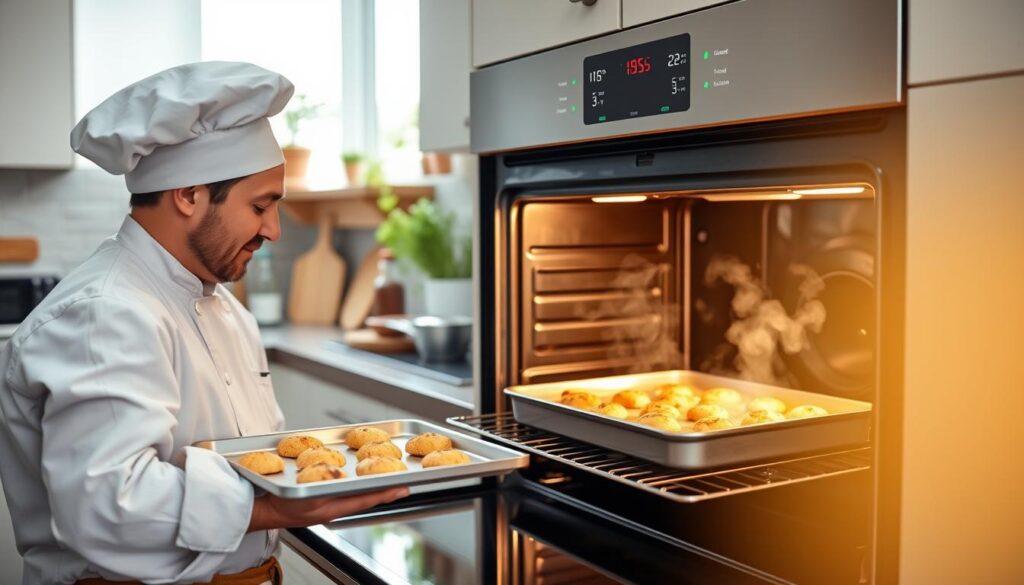
Different foods need specific heat levels to be at their best. Low heat is good for slow-roasting meats or drying herbs. High heat is needed for searing or getting a crispy crust on bread. Always check your recipe to pick the right temperature.
When using a electric oven or gas oven, being consistent is important. Most recipes work with a standard setting. But, we should also think about how our stove or range works. Small changes can make a big difference.
The Importance of Preheating Your Oven
Many skip preheating to save time, but it’s a big mistake. A fully preheated oven starts cooking at the right temperature for food. Without it, our baking might not turn out right.
Preheating is crucial for both convection ovens and traditional ones. It makes sure the oven heats evenly. This is key for everything from cookies to casseroles.
Timing Your Cooking for Perfect Results
Timing is as important as temperature when cooking. If you’re using a convection oven, lower the temperature by about 25 degrees Fahrenheit. The air circulates faster, so we need to watch closely to avoid overcooking.
Don’t open the door too often. Each time you do, heat escapes, changing the inside and messing up our timing. Just use the internal light to check on your food instead.
| Dish Type | Temperature Range (°F) | Cooking Goal |
|---|---|---|
| Delicate Pastries | 325°F – 350°F | Even browning |
| Roast Meats | 375°F – 425°F | Crispy exterior |
| Slow-Cooked Stews | 250°F – 300°F | Tenderizing fibers |
| Artisan Bread | 450°F – 500°F | Maximum oven spring |
Tips for Roasting and Broiling
Mastering high-heat cooking is key for any home chef. Whether you have a gas oven or a convection oven, it’s important to know the difference between roasting and broiling. Roasting cooks food evenly with steady heat. Broiling, on the other hand, uses direct heat to quickly brown the surface.
Preferred Settings for Roasting Meats
For roasting, a steady temperature is crucial to keep meat juicy. Choosing the right electric grill can help manage heat. Set your range or stove to 325°F to 375°F for best results.
A convection oven can make roasting better. The fan ensures even heat, making the outside crispy and the inside tender. Place your pan in the center rack for best airflow.
Broiling Techniques for Delicious Results
Broiling is great for a quick, caramelized finish on steaks, fish, or veggies. The heat is at the top, so watch your food closely to avoid burning. Keep your rack about four to six inches from the heating element.
Always slightly open the oven door for ventilation, if needed. This prevents the gas oven from overheating. Broiling is fast, so stay close to check your food.
How to Avoid Common Roasting Mistakes
Don’t overcrowd the pan to avoid steaming instead of roasting. Make sure there’s enough space for air to circulate. Also, resting meat after cooking helps keep juices in.
Use a meat thermometer to check internal temperatures. This ensures your cooking is safe and consistent every time.
| Method | Heat Source | Best For | Typical Temp |
|---|---|---|---|
| Roasting | Surrounding Air | Whole Poultry, Roasts | 325°F – 400°F |
| Broiling | Direct Top Heat | Steaks, Fish, Melting | High (500°F+) |
| Convection | Circulated Air | Even Browning | 300°F – 375°F |
Using Your Oven for Meal Prep
Our kitchen appliance is more than just for daily dinners. With a strategic mindset, it can be a powerful tool for healthy, time-saving cooking. This way, we keep a consistent schedule and always have nutritious meals ready.
Batch Cooking Strategies
Batch cooking saves us a lot of time during the week. We use heavy-duty sheet pans or glass baking dishes for even heat. If our oven has a warming drawer, we can keep sides warm while the main dish cooks.
- Group ingredients by temperature for better efficiency.
- Use parchment paper for easy cleanup between batches.
- Rotate pans halfway for even browning.
Utilizing Freezer-to-Oven Recipes
Freezer-to-oven meals are a big help for busy families. Make sure your cookware can handle hot and cold without cracking. Always check the dish is hot all the way through before serving.
Storing Leftovers Correctly
Proper storage keeps our meals fresh after cooking. Cool food slightly before storing in airtight containers. This prevents moisture buildup. An organized fridge makes it easy to find and reheat meals later.
| Method | Best For | Storage Time |
|---|---|---|
| Batch Roasting | Vegetables & Proteins | 3-4 Days |
| Freezer-to-Oven | Casseroles & Lasagnas | 2-3 Months |
| Portion Control | Individual Lunches | 3-5 Days |
Special Techniques: Steaming and Baking Together
Getting professional results at home is easier with moisture. Our oven is not just for dry heat. Adding steam can change the texture and taste of many foods. This lets us create amazing sides and loaves.
How to Steam Vegetables in Your Oven
Steaming veggies in the oven keeps them fresh and colorful. Put your veggies in a shallow dish with a bit of water or broth. Cover it with foil to trap the steam.
This method is great for veggies like carrots or potatoes. The heat is gentle, so they cook evenly. Consistency is key to get them just right.
Baking with Moisture for Perfect Bread
Moisture is key for a pro crust when baking. Bakers use steam early to help dough rise before the crust sets. Place a hot skillet with water on the bottom rack.
This steam makes the crust shiny and crackly, perfect for sourdough. In a convection oven, the air spreads the moisture. This keeps the inside soft and the outside golden.
Combining Techniques for Unique Recipes
Using different heat sources can make complex dishes. A baking stone adds steady heat, great with steam. This is ideal for a crispy pizza bottom and juicy toppings.
Here are tips for mixing heat sources:
- Preheat your stone for at least 30 minutes for best heat.
- Use a spray bottle for a quick steam in the convection oven.
- Try baking parchment to avoid sticking with moist doughs.
Mastering these techniques takes our home cooking to the next level. Whether steaming greens or baking a crusty loaf, moisture makes all the difference.
Common Oven Mistakes to Avoid
We often overlook small habits that significantly impact the quality of our oven-baked dishes. Even with the best ingredients, simple errors during the cooking process can lead to uneven textures or disappointing flavors. By identifying these common pitfalls, we can ensure every meal reaches its full potential.
Overcrowding Your Oven
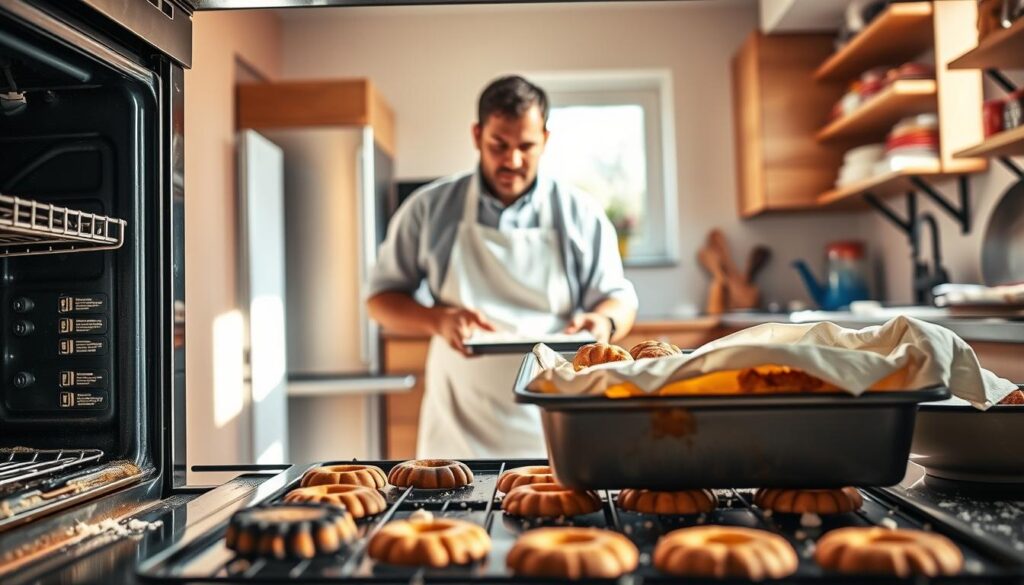
One of the most frequent mistakes is packing too many pans into the oven at once. When you overcrowd the space, you restrict the necessary airflow that allows heat to circulate evenly around your food. This lack of movement often results in soggy bottoms or uneven browning, which can ruin a perfectly prepared dish.
To manage this, we recommend leaving at least two inches of space between pans and the walls of the unit. If you must cook multiple items, remember to rotate your pans halfway through the cycle to help mitigate any lingering hot spots.
Ignoring the Importance of Resting Time
Many of us are tempted to slice into a roast or a loaf of bread the moment it leaves the heat. But resting time is a critical step in the cooking process. It allows internal juices to redistribute throughout the protein or crumb. Cutting too early causes moisture to escape, leaving your food dry and less flavorful.
We suggest letting meats rest for at least ten to fifteen minutes before serving. This simple patience ensures that every bite remains succulent and tender.
Not Following Recipe Guidelines
Baking is a science, and ignoring specific instructions can lead to disastrous results. Whether it is skipping the preheat phase or substituting ingredients without adjusting ratios, these deviations often compromise the final structure of your meal. Always read the full recipe before you begin to ensure you have the right tools and timing.
| Common Mistake | Primary Impact | Recommended Fix |
|---|---|---|
| Overcrowding | Uneven browning | Increase spacing |
| Early Slicing | Loss of moisture | Allow resting time |
| Ignoring Steps | Structural failure | Follow instructions |
Maintaining Your Oven for Longevity
Looking after your kitchen appliance means it works well for every meal. Regular care stops small problems from turning into big, costly fixes.
Daily Care and Routine Maintenance
Wipe down your oven after each use to avoid grease buildup. Check the door seal to keep heat in. A good thermometer ensures your oven’s temperature stays right.
Recognizing When to Seek Expert Help
Look out for signs like smoke, odd noises, or food not cooking evenly. These hints mean it’s time for a pro to check it out. A skilled technician can handle tricky electrical or gas problems.
Commitment to Long-Term Performance
Stick to the manual for the best care. Share your best cooking stories or ask about your oven model below. Your input helps us all get better at cooking at home.