
 David Joseph
Did you know that modern magnetic heating technology can boil water in just two to three minutes? This is about 40% faster than gas or electric stoves. As we look to upgrade our kitchens, finding the best induction cooker is key for efficiency.
Choosing the right unit means balancing performance, safety, and lifestyle needs. Whether you want a portable induction cooker for quick meals or a full-sized induction cooktop for a kitchen makeover, knowing the differences is crucial. Check out this buyer’s guide to make a smart choice.
We’ll guide you through the market, comparing installation, energy costs, and safety features. By figuring out if you need a built-in range or a countertop model, you can make cooking faster and safer.
Key Takeaways
- Magnetic technology boils water significantly faster than gas or standard electric options.
- Safety is improved because the surface remains cool, reducing the risk of accidental burns.
- Energy efficiency is a major benefit, as these units lose less heat during the process.
- Consider your space and power needs, choosing between portable units or permanent installations.
- Always verify that your existing pots and pans are compatible by using a simple magnet test.
Understanding Induction Cooking
Modern kitchens are changing fast, and the induction cooker is leading this change. It’s different from old gas or electric stoves. This tech uses special physics to heat your pots and pans directly.
What is Induction Cooking?
Induction cooking uses electromagnetic energy to heat your cookware. It doesn’t use an open flame or a glowing coil. Instead, the cookware itself gets hot, making cooking more efficient and keeping your kitchen cool.
How Does an Induction Cooker Work?
An induction stove works by creating a magnetic field under the glass surface. When you put a magnetic pan on it, the field makes the pan hot. This way, you can cook food much faster than with old stoves.
This design is also very safe. The stove only works when it finds a magnetic pan. If you take the pan away, the stove stops working right away. This makes cooking very precise and easy to control.
Benefits of Cooking with Induction
Using an induction system has many benefits. You’ll cook food much faster, which means you can eat dinner sooner. Plus, it keeps your kitchen cooler because it doesn’t waste heat. And cleaning the smooth surface is a breeze.
| Feature | Induction | Gas | Electric Coil |
|---|---|---|---|
| Heating Speed | Very Fast | Moderate | Slow |
| Energy Efficiency | High | Low | Moderate |
| Surface Safety | Cool to Touch | Hot | Very Hot |
| Cleaning Ease | Very Easy | Difficult | Difficult |
Induction cooking is not just convenient. It also makes your kitchen air cleaner by avoiding gas stove emissions. By choosing an induction stove, you’re making your cooking safer, cleaner, and more efficient.
Key Features to Consider
Understanding the specs of your next appliance is crucial. It helps match your equipment to your space and needs. This way, you get the best value from your purchase.
Size and Portability
Choosing an induction cooktop means deciding between a fixed or portable option. A portable induction cooker is great for small spaces like apartments or dorms. It’s also handy for extra cooking during big gatherings.
An induction range is perfect for kitchen renovations. These units fit into existing cabinets and come in various sizes. Larger models are ideal for big families who cook a lot.
Power Levels and Cooking Speed
The power of an Induction cooker is key. Higher wattage means faster boiling and better temperature control.
Look for a boost function for quick heating. Bridge zones let you use two burners as one for big pans. Easy controls make adjusting power simple during busy times.
Cookware Compatibility
Remember, not all pots and pans work with induction. Your cookware needs a magnetic base for induction to work.
Test your pans with a magnet. If it sticks, your cookware is compatible. Good, compatible cookware ensures you enjoy your induction cooktop‘s benefits fully.
Energy Efficiency of Induction Cookers
Many homeowners are choosing induction cooking for its smart energy use. It transfers heat directly to your cookware, reducing energy loss to the air.
How Induction Cookers Save Energy
An energy efficient induction cooker uses a magnetic field to heat your cookware directly. This method is different from traditional cooking, where the burner heats up first. It ensures most energy goes to your food.
The surface of an induction cooktop stays cool. This means you don’t waste electricity heating the glass or air around the pot. This precision leads to faster boiling times and less power use during cooking.
Comparing Energy Use with Other Cooking Types
Looking at different cooking methods, induction stoves stand out. Traditional gas burners lose a lot of heat around the sides of the pan. Standard electric coils also take time to heat up.
Here are some key efficiency differences:
- Induction cooking is about 15% more efficient than standard electric cooktops.
- Gas stoves transfer less than 50% of their heat to the cookware.
- Using an induction cooktop means less waste heat in your kitchen. This can also make your kitchen cooler, saving on air conditioning costs in summer.
While your energy costs depend on local rates and cooking frequency, an energy efficient induction cooker is a wise choice. It’s a smart investment for any induction stove user.
Safety Features in Induction Cookers
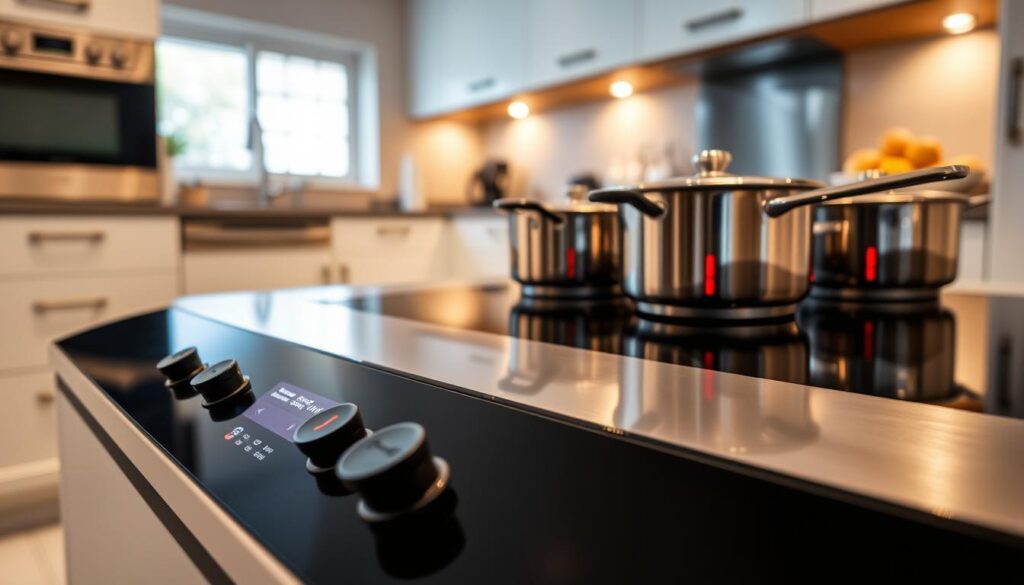
Switching to induction cooking brings advanced safety features. Traditional stoves can’t match these. They remove open flames and hot coils, lowering fire and burn risks.
“Safety is not just a feature; it is the foundation of a well-designed kitchen environment where families can cook with total peace of mind.”
Auto Shut-Off Mechanisms
Modern units have smart sensors that watch the cooking all the time. If you take a pan off the induction cooktop, it stops using energy right away. This prevents waste and overheating.
These systems also watch for spills and foreign objects. If something spills over or a metal utensil touches the surface, the unit turns off. This protects against damage or injury.
Cool-to-Touch Surface
An induction range has a cool surface. It doesn’t get hot itself. Instead, it heats only the cookware with a magnetic field.
The area under the pot might get warm from the pan. But the rest of the surface stays cool. This makes it safer for busy homes, reducing the risk of burns.
Child Lock Options
Keeping children safe is crucial for parents. Most models have a digital child lock. It locks the control panel, so kids can’t turn on the induction cooking surface by accident.
This safety feature gives parents peace of mind while cooking. Here’s how these features compare to traditional stoves:
| Feature | Induction Cooktop | Gas Range |
|---|---|---|
| Open Flame | None | Yes |
| Surface Heat | Minimal | High |
| Auto Shut-Off | Standard | Rare |
Choosing an induction range means safer cooking. These built-in protections let you focus on your recipes. Your home stays safe and worry-free.
Budget Considerations
Choosing the best induction cooker is more than just looking at the price. We must think about the total cost, including any needed electrical upgrades and compatible cookware. Long-term energy savings are also important. By planning ahead, we can find a model that fits our budget without losing performance.
Average Price Range of Induction Cookers
The market has many options, from affordable countertop units to high-end built-in ranges. A basic portable induction cooker can cost under $100. This makes it a great choice for those new to induction cooking, perfect for small spaces or extra burners during holidays.
Mid-range models offer better temperature control and build quality. Full-sized induction stoves cost more and need professional installation. Yet, an energy efficient induction cooker will save you money on utilities in the long run.
Cost vs. Features: What to Prioritize
When comparing models, focus on features that matter for daily cooking. Safety systems like auto shut-off and child locks are essential. Also, look for enough wattage for faster boiling and better searing.
Don’t get caught up in fancy features you might not use. Instead, focus on reliable performance and the size of the cooking elements. This ensures they fit your pots and pans. The table below shows how different budgets relate to specific features.
| Budget Category | Typical Price Range | Primary Use Case | Key Feature Focus |
|---|---|---|---|
| Entry-Level | $50 – $150 | Occasional or portable use | Basic heating and safety |
| Mid-Range | $200 – $600 | Daily home cooking | Temperature precision |
| Premium | $1,000+ | Full kitchen integration | Advanced smart features |
Brands to Consider
Looking at manufacturers based on performance, reliability, and service is key. Brand recognition is good, but check how models fit your cooking needs. A top rated induction cooker should give consistent results and last long.
Leading Induction Cooker Brands
The market has many manufacturers, each with unique strengths. Bosch and Miele are known for their engineering and durability. Samsung and GE offer modern features for everyday use.
For luxury or special designs, Gaggenau, Dacor, and Bertazzoni are great. Even on a budget, IKEA offers reliable options. When picking an induction range, think about these:
- Service Availability: Make sure the brand has repair centers near you.
- Feature Consistency: Choose brands that keep high standards across their line.
- Owner Satisfaction: Check long-term feedback for real reliability.
Innovations from Top Manufacturers
Modern tech has made the induction stove smarter. Brands now add features for ease and precision. These help you cook like a pro with less effort.
“Quality is never an accident; it is always the result of high intention, sincere effort, intelligent direction and skillful execution.”
Many top models have flex zones for bigger pans. Some even have Wi-Fi for maintenance alerts. Other cool features include:
- Full-surface cooking: Cook anywhere on the glass top.
- Precision temperature controls: Exact heat for delicate cooking.
- Guided cooking: Software helps with complex recipes on your induction range.
The best induction cooker for you balances new features with your budget and lifestyle. Focus on the manufacturer’s reputation and the value of their tech. This way, you’ll choose wisely and enjoy your kitchen for years.
User Reviews and Ratings
Finding the perfect kitchen upgrade often starts with real-world user experiences. Technical specs give a basic idea, but the real test comes from daily cooking. It’s where the true details emerge.
By mixing expert opinions with real user feedback, you can find the best induction cooker for you. This method helps you avoid common mistakes and find a cooker that fits your life.
Importance of Checking Customer Feedback
Looking at feedback, we search for common themes beyond just star ratings. It’s crucial to focus on comments about boiling speed, simmer control, and how well the cooker responds.
Users often mention practical issues like fan noise, cleaning ease, and long-term reliability. If many owners talk about installation problems or error codes, it’s a sign of potential issues with a induction cooktop.
Where to Find Reliable Reviews
Looking for trustworthy info means checking different sources. Start with independent testing groups that test appliances thoroughly. They check if the claims are true.
Also, read verified owner reviews on big retail sites to see how the cooker works in different homes. For a detailed look at top models, check out the best induction ranges list.
Lastly, see how a brand handles public complaints. A company that listens and acts is likely a top rated induction cooker maker. This gives you confidence in your purchase.
Warranty and After-Sales Service
Buying a top-notch induction stove means you need great after-sales service too. A good warranty is like a safety net for your kitchen. It keeps it working well for years. Checking the warranty before you buy can save you a lot of trouble and money.
Understanding Warranty Coverage
Look closely at the warranty details. It should tell you how long it lasts and what’s not covered. Many warranties cover parts and labor for a certain time but might not include damage to the glass surface. Always verify if you need a professional to install it to keep the warranty valid.
Also, find out where the warranty is good. Some brands only fix things in big cities. If you live in a small town, you might face extra costs for shipping or service.
Importance of Customer Support
Today’s appliances have complex electronics and controls. If your induction range has a problem, you need help from experts. Look for brands with good phone support and many service centers.
Good customer support makes owning an induction range better. You’re not just buying a stove; you’re getting help when you need it. Use the table below to see what to expect from your next induction stove or induction cooktop.
| Service Feature | Standard Coverage | Premium Coverage |
|---|---|---|
| Parts and Labor | 1 Year | 3-5 Years |
| Glass Surface | Excluded | Included (Limited) |
| Support Access | Email Only | 24/7 Phone/Chat |
| Technician Type | General Appliance | Brand Certified |
Maintenance and Care
Keeping your induction cooker in top shape is easy with a bit of routine care. By sticking to a regular cleaning schedule, your induction cooker will stay efficient and responsive for many years.
How to Clean an Induction Cooker
It’s crucial to keep your cooktop clean for induction cooking to work right. Always let the surface cool down before cleaning spills or food.
Use a soft cloth or a sponge with a gentle, glass-ceramic cleaner. Stay away from steel wool or harsh cleaners to avoid scratches.
When moving pots and pans, lift them instead of sliding. This helps avoid scratches and keeps the cooktop clean.
Troubleshooting Common Issues
Even the top portable induction cooker might show error messages or stop working. Most problems are easy to fix without a pro.
If it won’t detect your cookware, check if it’s the right type and in the right spot. Induction cooking needs magnetic materials, so a magnet test can help.
Unexpected shut-offs? Maybe the controls are wet or the vents are blocked. Dry the area with a cloth to fix it.
For issues like uneven heating or error codes, check your electrical setup. If problems persist, reach out to the maker for help.
Conclusion: Making Your Choice
Choosing the right appliance changes how you cook every day. We think finding the best induction cooker means matching your space and power needs to your lifestyle.
Key Decision Factors
Consider the layout of elements and safety features against your budget. An energy efficient induction cooker heats up fast and controls temperature well. This makes it great for those who are always on the go.
Final Tips for Picking the Right Unit
Check your home’s electrical capacity before buying. Make sure your pots and pans work with the new cooker by testing them with a magnet. Look for a top rated induction cooker from brands like Duxtop or NuWave for lasting quality.
Read what other users say to see how a cooker really works. Picking the right induction cooker takes thought about your cooking style. We hope this guide helps you find a cooker that makes cooking fun and efficient at home.