
 David Joseph
Did you know over 80% of home cooks hate kneading dough by hand? It’s exhausting. We get it. You want that fresh bread smell without the hard work. That’s why we made this guide to find the best bread maker for you.
We’ll look at different machines based on size, special programs, and price. Our aim is to make your search easier. We’ll compare upkeep and performance for all kinds of homes. Whether you’re new to baking or a pro, the right bread maker means easy, consistent results with less mess.
Key Takeaways
- Discover how to save time with automated kneading and baking cycles.
- Compare top-rated appliances based on capacity and household needs.
- Learn which features truly matter for achieving the perfect crust.
- Understand the long-term maintenance requirements for your new device.
- Find budget-friendly options that do not sacrifice quality or performance.
Why You Should Invest in a Bread Maker
Getting a bread maker is a smart move. It makes baking easy and fun. You can make fresh bread whenever you want, without the hassle of kneading dough.
Health Benefits of Homemade Bread
Homemade bread lets you control what goes into it. Unlike store-bought bread, it doesn’t have preservatives or artificial stuff. You can pick the best ingredients for your family’s health.
Cost Savings Compared to Store-Bought
Buying a bread maker might seem pricey at first. But, it saves money in the long run. Making your own bread is cheaper than buying it every day. How much you save depends on your ingredients and baking frequency.
Variety of Bread Options Available
Today’s bread makers can do so much more than just white bread. You can make whole grain, sourdough, and even gluten-free bread easily. This keeps your meals interesting and healthy all year round.
| Feature | Store-Bought Bread | Homemade Bread Maker |
|---|---|---|
| Ingredient Control | Limited/Unknown | Full Control |
| Cost Per Loaf | High ($4 – $7) | Low ($1 – $2) |
| Convenience | Immediate | Scheduled/Automated |
| Freshness | Days Old | Oven Fresh |
Features to Consider When Choosing a Bread Maker
Choosing the right bread maker machine is crucial. It’s like meteorologists analyzing data to predict the weather. You need to compare features like heat, timing, and capacity to meet your needs.
Capacity and Size Options
Think about the space the appliance will take on your counter. Most bread makers can make loaves from one to two pounds. If you have a big family, a larger capacity can save time and effort.
Programmable Settings and Customization
Today’s bread makers are very versatile. They come with pre-set cycles for different types of bread. You can also find special modes for dough, jam, and gluten-free bread. Customization features like crust-color controls and delay timers make it easy to enjoy fresh bread every morning.
Ease of Cleaning and Maintenance
A bread maker that’s easy to clean is a must. Look for one with a removable, non-stick pan. A large viewing window is also helpful, letting you watch the dough without losing heat.
| Feature | Standard Benefit | Why It Matters |
|---|---|---|
| Loaf Capacity | 1lb to 2.5lb options | Matches household size |
| Delay Timer | Up to 15 hours | Convenience for mornings |
| Crust Control | Light, Medium, Dark | Personalized texture |
| Removable Pan | Non-stick coating | Simplifies maintenance |
Top Bread Maker Brands in 2024
Our research shows three big names leading the market for home bakers. When searching for top bread makers, these brands stand out. They are known for their quality and how easy they are to use. Knowing what each bread maker brand offers can help you choose the best for your kitchen.
Panasonic: Innovation Meets Tradition
Panasonic is a top name in the industry. They are known for their exceptional reliability and cutting-edge tech. Their machines have a special yeast dispenser. This adds yeast at the right time, leading to better rise and texture in every loaf.
Zojirushi: High-End Performance
Zojirushi is the go-to for those seeking top-notch results. Their dual-blade systems knead dough thoroughly. This makes them perfect for those who love traditional loaf shapes and sandwich slices.
Cuisinart: Affordable Quality
Cuisinart is great for those who want quality without spending a lot. Their machines are smaller, perfect for small kitchens. They also have user-friendly interfaces, making baking easy for beginners.
| Brand | Primary Strength | Loaf Shape | Best For |
|---|---|---|---|
| Panasonic | Advanced Yeast Tech | Vertical | Consistent Results |
| Zojirushi | Heavy-Duty Kneading | Horizontal | Serious Bakers |
| Cuisinart | Compact Design | Vertical | Budget-Conscious |
Comparing Price Ranges of Bread Makers
When we look at bread makers, the first price we see isn’t always the whole story. An affordable bread maker might seem cheap at first. But we need to think about the long-term value, how much energy it uses, and the quality of its parts.
Budget-Friendly Choices
For those new to home baking, entry-level machines are a good start. They’re cheap and let you make simple white and whole wheat bread. They’re easy to use but don’t have fancy features.
Even though they might not come with extra stuff, they’re a great way to begin. Look for brands that offer good support, even at lower prices. Reliability is important here.
Mid-Range Options with Great Features
In the mid-range, we see better quality and more features. These machines have automatic fruit and nut dispensers. This means you don’t have to watch the dough while it mixes.
They also have better insulation, which saves energy and helps the crust brown evenly. These are great for families who bake a few times a week.
“The true value of a kitchen appliance is measured not just by its price, but by the consistency of the results it delivers over years of daily use.”
Premium Models for Serious Bakers
Premium bread makers are for those who see baking as an art. They have strong motors, stainless steel, and lots of settings for making artisan loaves.
Buying a high-end model means you get a better warranty and easier part replacements. It costs more upfront, but it lasts longer in your kitchen.
| Category | Price Range | Key Benefit | Best For |
|---|---|---|---|
| Budget | $60 – $100 | Simple operation | Occasional bakers |
| Mid-Range | $120 – $250 | Added convenience | Frequent home bakers |
| Premium | $300+ | Professional results | Serious enthusiasts |
Best Bread Makers for Gluten-Free Baking
Gluten-free baking is different from regular baking. It needs special care because gluten-free flours don’t have wheat’s stretchiness. A good gluten-free bread maker makes sure your ingredients are mixed just right for great results.
Key Features for Gluten-Free Bread
Look for a machine with dedicated gluten-free programs. These programs adjust how the machine kneads and rises to handle gluten-free flours better. It’s important for these doughs to be mixed well.
Being able to adjust the baking time is key. Gluten-free recipes often skip the second rise. Make sure your machine lets you change the cycle. Also, choose a machine that’s easy to clean to avoid gluten contamination.
Popular Models for Gluten-Free Needs
Many machines now have a special gluten-free setting. This setting takes care of the whole baking process by itself. A reliable gluten-free bread machine saves you time and ensures your bread is safe to eat.
Opt for a machine with a non-stick pan. It makes taking out your bread easier. Pick a machine known for making gluten-free bread well. Make sure it works with the flours you use every day.
How to Choose the Right Bread Maker for Your Needs
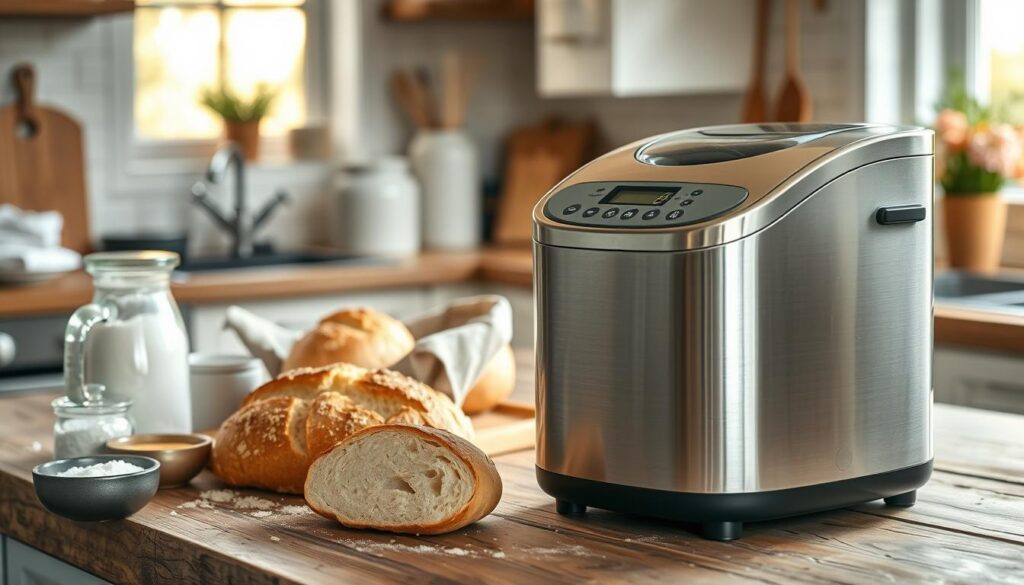
Finding the right bread maker for home use means balancing your cooking goals with your kitchen space. The best appliance should fit easily into your daily routine. It shouldn’t be a hassle to store or use.
Assessing Your Baking Frequency
If you bake often, look for durable components and strong motors. Models with advanced, customizable programs are great for those who like to control their bread’s crust and texture.
For occasional bakers, a simpler machine with straightforward controls is better. These are easy to use, making them ideal for those who want fresh bread without getting lost in complex settings.
Considering Counter Space Requirements
Measure your counter space before deciding. Some high-end models are bigger, which might not fit in small kitchens.
If you have limited space, find a compact bread maker for home use that meets your needs. Remember, some machines are taller, while others are wider. Check the exact dimensions to make sure it fits under your cabinets.
Your choice should match how many people you cook for and your interest in trying new recipes. By picking a machine that fits your lifestyle, you’ll get lasting value for years.
User Reviews: What Customers Are Saying
Looking for the perfect machine means we rely on customer feedback. We need to carefully read bread maker reviews to find real patterns. Just like how many studies confirm a trend, consistent praise or criticism shows a model’s true performance.
Positive Experiences with Top Brands
Many users love investing in well-known brands for durability and results. They often talk about the benefits in their bread maker reviews:
- Loaf Quality: They love the consistent crust and even browning.
- Ease of Use: Beginners can make professional-quality loaves easily.
- Long-Term Reliability: Long-time owners praise the machines’ sturdy build.
It’s wise to listen to feedback from those who’ve owned their machines for at least six months. They give the best insight into how a machine performs over time.
Common Complaints and Drawbacks
Even top appliances have their quirks. Reading about these can help avoid future problems. When looking at bread maker reviews, watch for these common issues:
- Noise Levels: Some find the kneading cycle too loud, disturbing in open-plan homes.
- Paddle Removal: Getting the kneading paddle out of the loaf can be a hassle.
- Cleaning Difficulty: Some designs are hard to clean due to their crevices.
Remember, one negative comment might not be a design flaw. Look for patterns in feedback. If many people mention the same issue, it’s likely a real problem. By focusing on these trends, you can choose wisely for your needs.
Step-by-Step Guide: Making Bread at Home
Making delicious loaves in your kitchen is easy once you know the basics. Whether you’re new to baking or have been doing it for years, following a clear guide ensures your homemade bread is perfect every time. Using a bread maker makes the hard parts easier and fills your home with the smell of fresh bread.
Ingredients You’ll Need
Start with the best ingredients for the best results. Most bread maker recipes need a mix of flour, yeast, liquid, salt, and sugar. Make sure your yeast is fresh; old yeast won’t make the dough rise.
You can also add fats like butter or oil for extra flavor and texture. For variety, try adding seeds, nuts, or dried fruits during the mix cycle. Remember, using room-temperature liquids helps the dough rise better.
Tips for Perfecting Your Recipe
Being precise is key to baking success. Use a digital scale for measuring ingredients, as volume can vary. Add ingredients in the order your machine suggests to keep yeast and salt separate until the cycle starts.
Watch the dough during the kneading stage. It should be smooth and pull away from the pan sides. If it’s too dry, add a little water. If it’s too sticky, a bit of flour will help.
Choosing the right cycle is crucial. Whether you’re making traditional bread or quick-bake, pick the right settings. Patience is key, so don’t open the lid during baking to keep the temperature right and get a great crust.
Troubleshooting Common Bread Maker Issues
When your bread maker starts acting up, a systematic approach to diagnostics can save your next batch. Effective bread maker troubleshooting relies on checking your variables, such as yeast activity, ingredient measurements, and cycle selection, rather than relying on guesswork. Much like tracking climate anomalies with a consistent baseline, you should observe your machine’s performance against a standard set of expectations.
Addressing Overcooked or Underbaked Bread
If you notice dense loaves or collapsed tops, the issue often stems from incorrect yeast levels or expired ingredients. Always verify your measurements before starting the cycle to ensure the dough has enough strength to rise properly. If the center remains underbaked while the crust is dark, your pan placement might be slightly off, or the selected crust setting is too aggressive for your specific recipe.
Excessive moisture can also lead to a gummy texture that feels undercooked. Try reducing the liquid slightly in your next attempt or ensuring the lid remains closed to maintain consistent internal temperatures. If the browning is uneven, check that the heating element is free of debris and that the pan is locked securely into the base.
Dealing with Unwanted Odors
Unusual smells during the baking process often indicate that bread maker maintenance has been overlooked. If you detect a burning scent, immediately check the exterior housing and the heating chamber for stray flour or spilled ingredients. Proper ventilation is essential, so ensure your machine is not pushed too close to a wall or cabinet.
To keep your appliance in top shape, always unplug the unit and allow it to cool completely before cleaning. Use a soft, damp cloth to wipe the housing, and consult your manual for specific instructions on cleaning removable parts like the kneading paddle. Regular care prevents buildup that can cause odors and ensures your machine operates efficiently for years to come.
| Common Issue | Primary Cause | Recommended Fix |
|---|---|---|
| Collapsed Top | Too much yeast or liquid | Reduce yeast by 1/4 teaspoon |
| Dense/Heavy Loaf | Inactive yeast or cold water | Check yeast date and water temp |
| Burning Odor | Spilled ingredients on element | Clean chamber after cooling |
| Uneven Browning | Incorrect pan placement | Re-seat pan firmly in base |
Conclusion: Finding the Perfect Bread Maker for You
Choosing the right appliance is about finding a balance. It’s about your baking habits and the features you need. Look for durability over fancy features to make your investment last.
Essential Factors for Your Purchase
Consider capacity, programmable settings, and gluten-free options. A good bread maker should fit your space and meet your dietary needs. Make sure you use the features you pay for by thinking about how often you bake.
Starting Your Baking Journey
Brands like Panasonic, Zojirushi, and Cuisinart offer great options. They cater to all skill levels and budgets. Choose a bread maker that will be a kitchen staple, not just a decoration. Start your baking journey today with a model that promises great results for every loaf.