
 David Joseph
Did you know that nearly 70% of home bakers get better results with their cakes and cookies? They do this by controlling the mixing speed themselves. An electric hand mixer is perfect for small batches and quick tasks. It lets you feel the batter, so you don’t overmix.
Choosing the right tool is key to your baking success. Whether you’re whipping egg whites or adding chocolate chips, the best hand mixer balances power and comfort. Check out a wide range of options at this specialized collection to find your perfect match.
Stability, motor strength, and ergonomic design are crucial for a great hand mixer. In this guide, we’ll show you how to evaluate these features. This way, you can bake with confidence every time.
Key Takeaways
- Electric models provide superior control for small-batch recipes compared to bulky stand units.
- Prioritize motor power and speed settings to match your specific baking needs.
- Ergonomic handles and lightweight designs significantly reduce arm fatigue during long sessions.
- Look for dishwasher-safe attachments to ensure quick and easy cleanup after baking.
- Stability features allow the appliance to rest upright, keeping your countertops clean.
What is a Hand Mixer and How Does It Work?
A hand mixer is a device that makes mixing easier. It uses an electric motor to move attachments in a bowl. This makes mixing tasks like whipping and kneading easier and more consistent.
It’s different from a hand blender, which is for soups and smooth liquids. A hand mixer with attachments is for baking. It helps mix ingredients well, making them light and fluffy.
Understanding Hand Mixer Components
Hand mixers are versatile because of their parts. They come with beaters for mixing, but you can also use a hand whisk or dough hooks. These parts fit securely and rotate at the chosen speed.
The motor is the heart of the mixer, with controls for speed. This lets you start slow and go faster as needed. The design is also important, to avoid tired wrists during use.
Common Uses of Hand Mixers
Hand mixers are used for many kitchen tasks. They’re great for creaming butter and sugar. For whipping cream or egg whites, a balloon hand whisk is best.
They’re also good for baking bread or cookies. Many models come with dough hooks for thick mixtures. Here’s how different attachments help with baking:
| Attachment Type | Primary Function | Best For |
|---|---|---|
| Standard Beaters | Creaming and Mixing | Cake batter, cookie dough |
| Balloon Whisk | Aerating | Whipped cream, egg whites |
| Dough Hooks | Kneading | Bread dough, pizza crust |
Why You Need a Hand Mixer in Your Kitchen
We often overlook the simple power of a handheld device when preparing our favorite treats. Whether you are a casual baker or a frequent kitchen enthusiast, having the right tools makes every task easier and more enjoyable.
Versatility in Baking
A handheld mixer offers incredible flexibility for everyday recipes. It is the perfect companion for small-batch projects where a large machine feels like overkill.
We find that this tool excels at several common kitchen tasks:
- Whipping light and airy meringue for desserts.
- Creating smooth, fluffy frosting for cupcakes.
- Mixing cookie dough without overworking the ingredients.
- Beating heavy cream into stiff peaks for toppings.
The primary advantage of a portable hand mixer is the level of control it provides. We can easily move the beaters around the bowl to reach every corner, ensuring that no dry ingredients remain stuck at the bottom. This eliminates the need to stop and scrape the sides of the bowl repeatedly.
Space-Saving Design
Kitchen storage is a common challenge for many of us. While stand mixers are powerful, they occupy a significant amount of valuable counter space and are difficult to move.
In contrast, a portable hand mixer is compact and lightweight. It fits perfectly into a standard kitchen drawer or a small cabinet shelf after use.
Choosing a handheld mixer allows us to maintain a clutter-free workspace without sacrificing performance. It is an ideal solution for those who want professional results while keeping their kitchen organized and efficient.
Key Features to Look for in a Hand Mixer
Choosing the right kitchen tools means understanding how they work inside. Many people focus on high wattage, but it’s not everything. Look for a electric hand mixer that has good power and quality inside.
Motor Power and Speed Settings
A good motor can handle thick mixtures without getting too hot. Look for models with a gradual slow start. This helps prevent flour from splashing out when you turn it on.
“Quality is never an accident; it is always the result of high intention, sincere effort, intelligent direction and skillful execution.”
It’s also important to have different speed settings for various tasks. Our hand mixer shopping guide goes into detail. You want a mixer that feels smooth and consistent at all speeds.
Attachments and Accessories
The tools you get with your mixer can make a big difference. A good hand mixer with attachments comes with more than just beaters. Look for balloon whisks for aeration and dough hooks for heavy tasks.
Having the right hand mixer with attachments lets you do more in the kitchen. Here are some accessories to consider:
- Balloon Whisks: Great for whipping cream or egg whites.
- Dough Hooks: Essential for kneading small batches of dough.
- Specialty Beaters: Help mix without clogging.
Choosing a model with these tools means your electric hand mixer will last for years. Make sure the attachments are dishwasher-safe for easy cleaning.
Types of Hand Mixers Available
Home bakers often get confused about mixing appliances. Let’s clear up the differences. Picking the right hand mixer is key to getting pro results at home. Each tool has its own special job, even if they look similar.
Standard Hand Mixers
A traditional handheld mixer is for aeration and mixing. It has twin beaters that mix air into batters, frostings, and egg whites.
Some models also have dough hooks for light dough. But, use them only for soft dough briefly. Heavy dough can damage the mixer’s gears and motor, shortening its life.
“The secret to great baking is not just the recipe, but using the right tool for the specific texture you want to achieve.”
Immersion Hand Mixers
An immersion blender is for pureeing and blending liquids, not for aeration. It’s great for soups, smoothies, or sauces. But, it can’t whip cream well.
Make sure to pick the right tool for your task. Whether you need to whip, fold, or blend, choose the right device.
| Feature | Standard Mixer | Immersion Blender |
|---|---|---|
| Primary Use | Aerating & Mixing | Pureeing & Blending |
| Attachments | Twin Beaters/Hooks | Fixed Blade |
| Best For | Cakes & Cookies | Soups & Sauces |
Comparing Hand Mixers: Brands and Models to Consider
Looking for the perfect baking tool means checking the brand and specs, not just looks. We focus on motor power, control, and how easy it is to use. The best hand mixer for your kitchen is about performance, not just looks.
Popular Brands Overview
Many bakers choose well-known brands for their reliability. A top rated hand mixer from KitchenAid, for example, offers cordless freedom. These high-end mixers have consistent torque and comfy grips for long mixing.
Buying from a trusted brand means your mixer will last longer and have better support. Even though they cost more, they come with quality beaters and attachments. A top rated hand mixer can handle everything from whipped cream to thick cookie dough.
Budget-Friendly Options
You don’t have to spend a lot to get great results. Entry-level mixers like the Hamilton Beach 6-speed series are powerful yet affordable. They’re perfect for mixing cake batter or frostings.
If you have little space, a compact hand mixer is key. The Kenwood Quick Mix Go fits in small spaces but still performs well. A compact hand mixer gives you the power you need without taking up too much room.
How to Choose the Right Hand Mixer for Your Needs
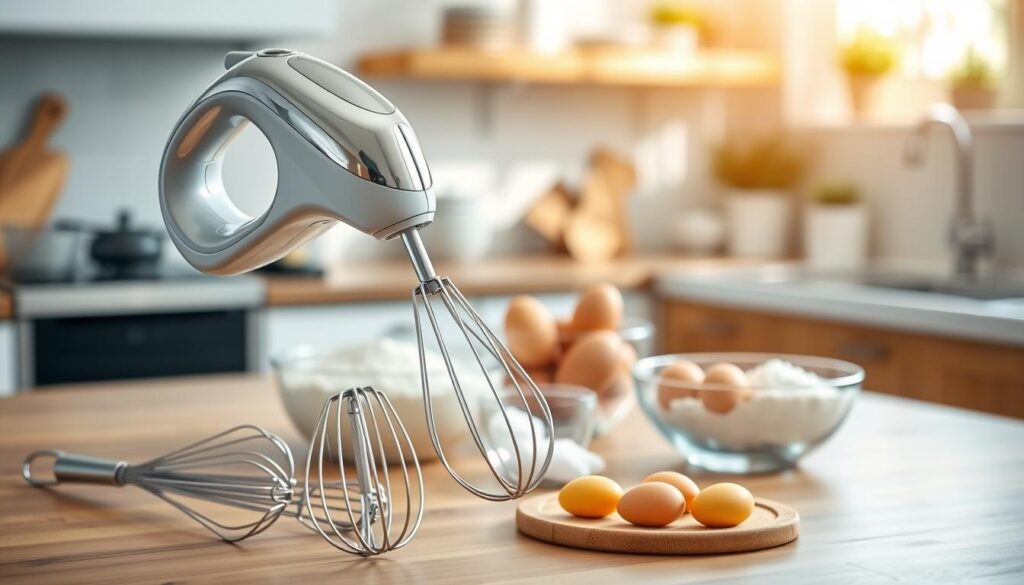
Your baking journey needs a reliable partner that fits your needs and comfort. Many start with a hand whisk, but a handheld mixer can change your kitchen experience. The best choice depends on how you work with ingredients and how much time you spend baking.
Assessing Your Baking Frequency
Think about how often you bake and the size of your batches. A small batch of cookies once a month might need a basic model. But, if you bake often and work with heavy doughs, you need a more powerful handheld mixer.
Also, consider your kitchen’s size. Compact mixers are great for small kitchens, while larger ones need more space. Choosing the right tool for your lifestyle means you’ll use it more often.
The Importance of Ergonomics
Weight and balance are key factors many overlook. Even light mixers can feel heavy after a while. Hold the mixer to see if it feels comfortable in your hand.
A balanced mixer helps avoid wrist strain during long mixing. While a hand whisk is cheap, it’s hard to use and doesn’t always mix well. The table below shows why the right tool is important for your baking.
| Feature | Hand Whisk | Handheld Mixer |
|---|---|---|
| Mixing Speed | Low | High |
| Physical Effort | High | Low |
| Consistency | Variable | Excellent |
| Best For | Quick Tasks | Baking Projects |
Maintenance Tips for Your Hand Mixer
Keeping your kitchen gear in top shape is as crucial as the ingredients you pick. A well-maintained electric hand mixer will help you whip up countless treats. By following a few easy steps, your mixer will stay in great condition for years.
Cleaning Your Hand Mixer Properly
When cleaning any kitchen appliance, safety comes first. Always unplug your device before starting. Then, press the eject button to safely take out the beaters or dough hooks.
Most attachments can go in the dishwasher, but hand-washing them keeps them looking good. For the motor housing, use a damp cloth to clean off spills. Never immerse the motor unit in water, as it can cause permanent damage to your portable hand mixer.
Troubleshooting Common Issues
Even the best tools can have minor problems. If your device seems to be struggling, here are some common fixes:
- Overheating: If the motor feels warm, turn it off right away and let it rest for at least two minutes.
- Weak Performance: Try making smaller batches to avoid overloading the motor.
- Unusual Sounds: Make sure your attachments are securely in place and not hitting the bowl sides.
- Cord Placement: Keep the power cord away from the beaters to avoid tangles and fraying.
To make your portable hand mixer last longer, don’t use it at high speeds for too long, mainly with thick dough. Taking good care of your electric hand mixer means it will be a reliable kitchen companion.
Hand Mixer Recipes to Try
Let’s dive into making fluffy cakes and delicate meringues with your hand mixer. Baking is more than just following a recipe. It’s about knowing how your tools affect the texture of your creations.
Simple Cake Batter Recipes
A good hand mixer is key for a light cake batter. Use a steady speed to mix in air, which makes the batter better.
For a classic vanilla sponge, cream softened butter and sugar until it’s pale and fluffy. Add eggs one at a time to keep the mix stable. Then, fold in your dry ingredients.
Whipped Cream and Meringue Ideas
Working with 200 milliliters of double cream needs precision. Start slow to avoid splashing, then speed up for soft peaks.
Be careful not to over-beat the cream, or it will turn into butter. For meringues, the hand mixer helps whip egg whites into a stable foam.
A manual hand whisk is great for small tasks like whisking vinaigrettes. But for big jobs, a powered mixer is better. It keeps your desserts light and fluffy every time.
| Task | Recommended Tool | Key Benefit |
|---|---|---|
| Cake Batter | Hand mixer | Consistent aeration |
| Whipped Cream | Hand mixer | Speed and volume |
| Small Sauces | Hand whisk | Total control |
| Meringue | Hand mixer | Stable structure |
Safety Tips for Using a Hand Mixer
Using a portable hand mixer safely keeps your kitchen happy and accident-free. Baking should be fun, not stressful. Knowing how to use your tools safely is key.
Avoiding Common Hazards
Keep your fingers, hair, and loose clothes away from the beaters when they’re moving. Always switch the motor off and unplug before changing attachments or scraping the bowl sides.
Make sure your mixing bowl is on a stable, flat surface. This prevents the mixer from tipping. Also, keep your hands dry and the power cord clear to avoid accidents. A clean workspace helps avoid kitchen mishaps.
“Safety is not just a rule; it is the foundation of every successful and enjoyable culinary creation in the home kitchen.”
Best Practices for Storage
Storing your compact hand mixer right keeps it working well and your cabinets tidy. Make sure it’s unplugged and the beaters are clean before storing.
Wrap the power cord loosely around the base or use a clip to prevent fraying. If it comes with a case, store all attachments inside to avoid losing them. Keep your compact hand mixer in a cool, dry spot for your next baking session.
Final Thoughts on Choosing a Hand Mixer
Finding the right tool makes cooking a joy. We think the best hand mixer is one that fits your cooking style.
Prioritizing Long-Term Value
Durability is key for frequent cooks. KitchenAid and Breville make mixers with strong motors. These mixers last for years, making mixing easier.
Simplifying Your Daily Baking
Efficiency is what home bakers want. A good mixer makes mixing easier and improves your bakes. Choose one that feels right in your hand and fits your kitchen.
Start your baking journey with the right tools. Check out our top picks for the best hand mixer. The right mixer makes mixing fun and easy.