
 David Joseph
Did you know nearly 80% of professional pastry chefs always have a electric hand mixer nearby? Even when they have a big stand mixer. The hand mixer is key for quick jobs and exact control.
Many think a handheld mixer is like an immersion blender. But they’re not the same. A handheld mixer is made for mixing batters, whipping cream, and gently combining ingredients. It’s perfect for both beginners and experts, making sure your baked goods are light and fluffy every time.
Key Takeaways
- Understand why compact appliances outperform larger units for small-batch recipes.
- Learn the critical differences between blending tools and aeration devices.
- Identify essential features like speed settings and motor power for better results.
- Discover how ergonomic designs reduce fatigue during long baking sessions.
- Evaluate storage solutions for kitchens with limited counter space.
- Determine the best budget-friendly options that do not sacrifice durability.
Why You Need a Hand Mixer for Baking
Perfect textures often depend on our mixing tools. A hand mixer is key for many recipes. It offers power and control that manual whisking can’t.
Versatility in Baking Tasks
A kitchen hand mixer is great for many textures. It’s perfect for folding egg whites or creaming butter and sugar. This tool meets our needs.
- Whipping heavy cream to stiff peaks.
- Mixing thick cookie dough without straining our wrists.
- Blending smooth cake batters for consistent results.
- Incorporating ingredients into smaller batches of bread dough.
Easy to Store and Handle
Many of us have limited counter space. That’s where a compact hand mixer excels. It fits easily in a drawer or small cabinet.
These mixers are light, making them easy to move around the bowl. This direct control helps us get to all parts of the bowl. We avoid dry spots at the bottom.
Time-Saving Features
When we’re busy making treats, time is precious. A good kitchen hand mixer saves us a lot of effort. It lets us focus on the fun parts of baking.
With adjustable speeds, we can start slow to avoid mess. Then, we can increase power as needed. A compact hand mixer makes baking faster and better, essential for home bakers.
Key Features to Look for in a Hand Mixer
Choosing a good appliance means knowing what makes it work well. Many people just look at the price. But, it’s the inside parts and design that really matter for your hand mixer.
Power and Speed Settings
Some think more watts means a powerful hand mixer. But, it’s the motor and gears that really count, not just the watts.
Find an electric hand mixer with lots of speed options. A slow start is key to avoid flour splashes when you first turn it on.
Attachments and Accessories
The tool’s versatility depends on its attachments. Most come with stainless steel beaters for mixing butter and sugar or whipping eggs.
For bread or thick cookie dough, make sure it has strong dough hooks. High-quality attachments should be easy to remove and dishwasher-safe for easy cleaning.
Ergonomic Design for Comfort
You’ll hold your hand mixer for a while, so it needs to be comfy. A mixer that weighs about 680 grams is good. It’s heavy enough to feel solid but won’t hurt your wrist.
Look at the handle to see if it fits your hand well. An ergonomic grip helps you control it, even when mixing thick stuff at high speed.
Top Hand Mixer Brands to Consider
Finding the best hand mixer means looking at both brand reputation and performance. While brands are important, what really matters is how well a mixer works for you.
We check motor strength, attachment variety, and build quality when reviewing these mixers. This helps us find the most reliable ones for your kitchen.
KitchenAid: A Trusted Choice
KitchenAid is a top pick for home bakers. Their mixers are known for exceptional durability and a timeless look that fits any kitchen.
Their machines deliver consistent power, perfect for thick cookie doughs or heavy batters. Buying a KitchenAid is like investing in a long-lasting tool.
Cuisinart: Innovative and Reliable
Cuisinart is known for innovation. Many of their mixers have advanced systems that adjust power automatically to keep speed steady.
This makes them great for anyone who wants a hand mixer for various tasks. Their easy controls also help beginners get professional results.
Braun: A Blend of Quality and Performance
Braun is famous for German engineering and design. Their mixers are often lighter, making them easier to use for long periods.
They offer high-performance motors in quiet designs. For those who value comfort and precision, Braun’s top hand mixers are perfect.
“The best appliance is not always the most expensive one, but the one that feels like a natural extension of your own hands while you work.”
| Brand | Primary Strength | Best For |
|---|---|---|
| KitchenAid | Durability | Heavy Batters |
| Cuisinart | Innovation | Versatile Tasks |
| Braun | Ergonomics | Extended Use |
Different Types of Hand Mixers
When you start looking for a hand mixer, you’ll see many types. Each one is made for different needs. Knowing what you need helps you pick the right one for your baking and kitchen.
Traditional Hand Mixers
Traditional hand mixers are great for everyday baking. They have removable beaters for whipping cream and mixing batter. They’re easy to control and perfect for most recipes.
These mixers have different speeds for various textures. They’re not for heavy dough, but they’re perfect for lighter tasks. Many people find them incredibly convenient for quick jobs.
Professional Hand Mixers
For big batches or thick mixtures, a powerful hand mixer is better. These mixers have strong motors that keep going even when it gets tough. They’re made to last, even with heavy use.
These mixers often come with special attachments like dough hooks. These hooks make kneading dough easy. They’re great for serious bakers who need reliable results.
Battery-Powered Hand Mixers
Battery-powered mixers give you freedom to move around the kitchen. You can mix anywhere without cords. They’re ideal for small spaces or quick tasks.
But, think about how long the battery lasts before you buy. They’re portable, but might not have the power for long mixing. Make sure the battery life fits your baking needs.
| Mixer Type | Primary Strength | Best For |
|---|---|---|
| Traditional | Versatility | Cakes and Cookies |
| Professional | High Torque | Bread and Large Batches |
| Battery-Powered | Portability | Quick Tasks |
How to Choose the Right Hand Mixer for Your Needs
Choosing the right hand mixer depends on how often we bake. It’s not just about the brand. It’s about finding a tool that fits our baking style.
Assessing Your Baking Frequency
If we bake only once a month, a compact hand mixer is perfect. These mixers are great for small tasks like mixing cake batter or whipping cream.
But, if we bake often, like weekly, we need a stronger kitchen hand mixer. Models with powerful motors are best for thick doughs without overheating.
Knowing Your Budget
It’s easy to get caught up in fancy designs. But, we should look at technical specs. An affordable hand mixer can be just as good as a pricey one if it has the right features.
Set a budget based on how much you’ll use it. Spending a bit more on a mixer can mean better durability and performance over time.
Reading Customer Reviews
Always check what others say before buying. Real feedback helps find the best hand mixer for our kitchen.
We look for comments on motor heat, attachment quality, and stability. If many say a compact hand mixer can’t handle heavy loads, we choose a more powerful one.
Tips for Using Your Hand Mixer Efficiently
We think handling your appliance right can make it last longer. By using smart habits, your hand mixer will be a trusted kitchen friend for years.
Proper Mixing Techniques
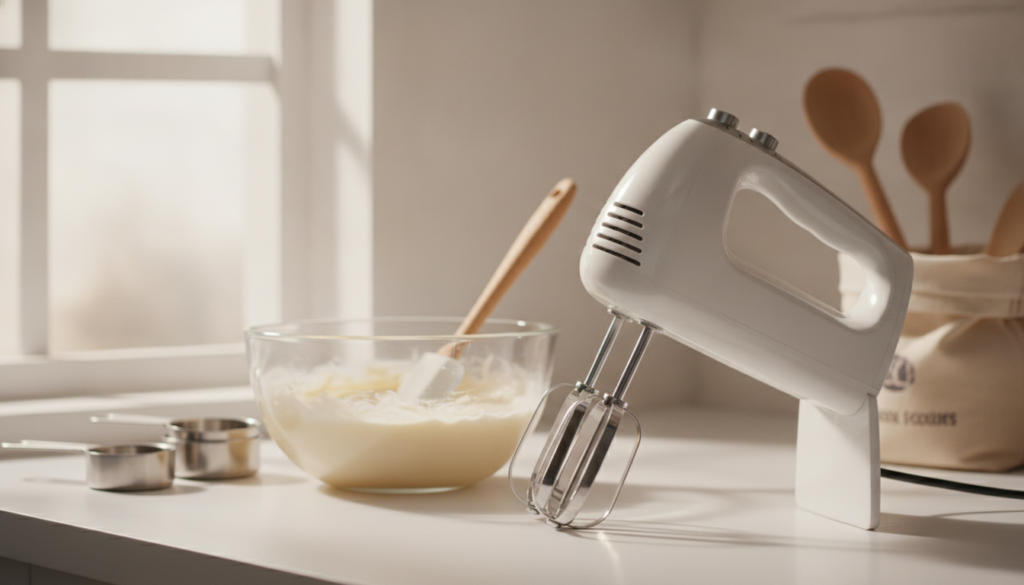
Start mixing on the lowest speed. This keeps ingredients in the bowl and eases the motor’s work. As mixing goes on, you can up the speed for the right mix.
For thick batters, mix in circles around the bowl. This way, everything mixes well without overworking the motor. Don’t push the beaters hard into the bowl to avoid damage.
Maintenance and Care
Just like you, your appliance needs a break. If it gets too warm, stop and let it cool for about two minutes before you go on.
Keep the ventilation slots clean to avoid motor overheating. A clean hand mixer works better and lasts longer.
Cleaning Tips for Longevity
Cleaning right is key to avoiding damage. Always unplug before taking off attachments. Most beaters are safe in the dishwasher, but hand washing keeps them looking good.
- Never submerge the main motor housing in water.
- Wipe the outside with a damp cloth to clean spills.
- Make sure all parts are dry before storing.
- Keep your hand mixer in a cool, dry spot to avoid moisture.
By following these tips, you protect your investment and keep baking fun. Regular care keeps your tools ready for every recipe.
Common Mistakes to Avoid with Hand Mixers
Using a hand mixer might seem easy, but we often make mistakes. These errors can ruin our baked goods and shorten our appliance’s life. Knowing these mistakes helps us bake better and safely.
Overmixing Ingredients
One big mistake is mixing too long. This makes batter or dough tough and dense. Always stop mixing when ingredients are just combined for the right texture.
Not Using the Right Attachment
Beaters and dough hooks have different jobs. Using beaters for heavy dough can hurt your hand mixer. Also, don’t confuse it with a hand blender, as they’re for different tasks.
Neglecting Safety Precautions
Always put safety first with electrical appliances. Don’t start the mixer too fast, as it can splash ingredients. Also, keep the cord away from heat and turn off before changing attachments.
| Mistake | Consequence | Corrective Action |
|---|---|---|
| Overmixing | Tough, dense texture | Mix until just combined |
| Wrong Attachment | Motor strain or poor mixing | Use hooks for dough, beaters for batter |
| High Start Speed | Messy splatters | Start on the lowest setting |
| Ignoring Safety | Potential injury or damage | Unplug before changing parts |
Hand Mixer Recipes to Try
Ready to get baking? Here are three classic recipes that show off your hand mixer‘s power. Using it right helps you get even textures and saves time in the kitchen.
Easy Cake Batter
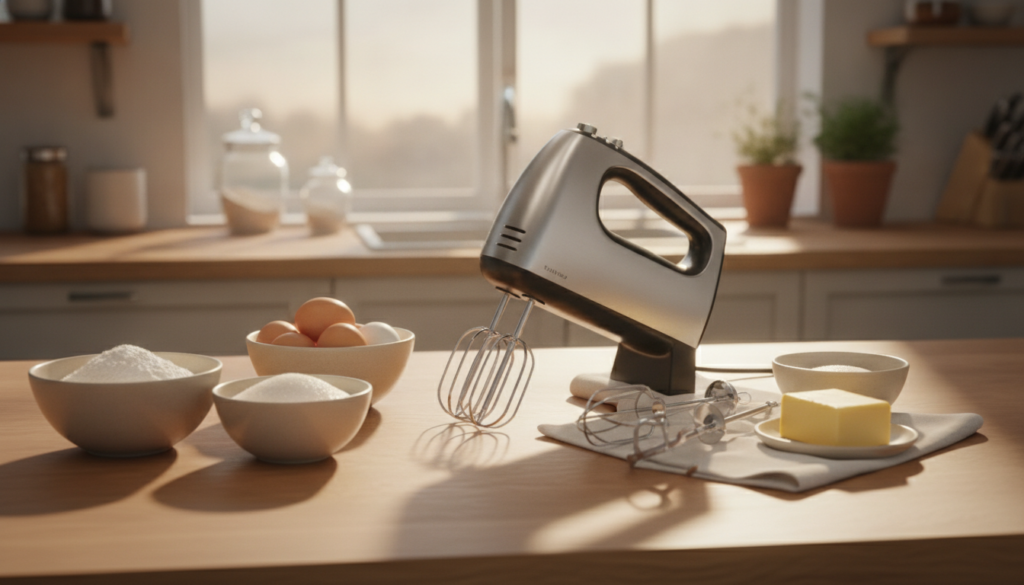
Start with room-temperature ingredients for a smooth cake batter. Use your standard beaters on the lowest speed to mix in the dry ingredients slowly.
Be careful not to overmix after adding flour. A handheld mixer is great for this. It mixes the butter and sugar well without toughening the dough.
Fluffy Whipped Cream
For the lightest whipped cream, use twisted beaters. These beaters add air fast, speeding up the whipping.
Start on a medium-high setting and watch as it thickens. Stop when stiff peaks form to avoid turning it into butter.
Quick Bread Dough
You might think big stand mixers are needed for bread. But a hand mixer works well for small batches. Use the dough hooks for this task to avoid straining the motor.
Keep your dough small so the handheld mixer can handle it. Always check the motor’s temperature and take breaks if it gets too warm.
Final Thoughts: Investing in a Hand Mixer
Choosing the right tool makes baking a fun, creative activity. A good hand mixer gives you the control and consistency you need. It helps you master even the most delicate recipes.
Elevating Your Baking Skills
Getting professional results at home requires precision. A top-notch hand mixer lets you watch your baking in real time. This way, your cakes will rise perfectly and your frostings will stay smooth.
The Joy of Homemade Goods
Baking for loved ones is incredibly rewarding. Whether you pick a high-end KitchenAid or a budget-friendly option, baking becomes quicker and more fun. Making small batches of cookies or whipped cream is now a breeze.
Finding Your Perfect Match
Your ideal hand mixer depends on your baking habits and space. Look at motor power, weight, and attachments before buying. The right hand mixer sets you up for years of baking success. Start looking today and see how it changes your kitchen.