
 David Joseph
Did you know that nearly 40% of all produce in the United States goes to waste? This happens because fresh items spoil before we can use them. We think there’s a smarter way to manage your kitchen and boost your nutrition.
A food dehydrator is a smart appliance that keeps your favorite foods fresh by removing moisture. It uses gentle heat and airflow. By picking the best food dehydrator, you turn seasonal foods into healthy snacks that last longer. This method keeps vitamins and flavors intact, without using chemicals.
If you’re thinking about buying a food dehydrator for your home, our guide is here to help. We show why a top rated food dehydrator is a great choice for health-focused homes. We’ll guide you to find the perfect model that fits your cooking needs and budget.
Key Takeaways
- Preserving snacks at home cuts down on waste and saves money.
- Low heat and steady airflow are key for removing moisture.
- High-quality equipment ensures even drying and keeps nutrients in.
- The right appliance depends on your kitchen space and snack needs.
- Our expert tips make choosing the right dehydrator easy for all cooks.
What is a Food Dehydrator?
A food dehydrator is a simple machine that turns fresh ingredients into lasting snacks. It uses controlled heat and airflow to remove moisture. This makes food last longer. Whether you’re a pro or new to cooking, a food dehydrators buying guide can help you pick the right one for your kitchen.
The Science Behind Dehydration
Dehydration works by using low heat and steady air. Most dehydrators heat between 40°C to 75°C. This is warm enough to dry out water but cool enough to not cook the food.
This method stops bacteria, yeast, and mold from growing. It does this by removing moisture. So, your fruits, veggies, and meats stay safe to eat for a long time. The key is the airflow, which makes sure everything dries evenly.
Benefits of Using a Food Dehydrator
Using a food dehydrator has many benefits. It lets you control what goes into your snacks, avoiding additives and preservatives. Here are some main advantages:
- Nutrient Preservation: Drying at low temperatures keeps enzymes and vitamins intact.
- Cost-Effective Snacking: Drying your own snacks saves money over time.
- Waste Reduction: You can preserve seasonal produce or leftovers before they spoil.
- Customization: Make unique flavors for jerky, fruit leathers, and herbs that you can’t find elsewhere.
Using this method lets you enjoy healthy, long-lasting snacks all year. It’s a great way to improve your nutrition and reduce waste at home.
Types of Food Dehydrators
The shape and airflow of a unit are key for food preservation. When searching for a food dehydrator, you’ll find two main designs. Knowing these differences helps you pick the right machine for your needs.
Excalibur Dehydrators
Many see Excalibur as the best food dehydrator for serious home use. They use a horizontal airflow system. This system ensures warm air circulates evenly across all trays.
The fan’s location at the back means you rarely need to rotate trays. This is great for making large batches of jerky or fruit leather. The even heat distribution ensures all food dries at the same rate. This leads to professional results with less effort.
Stackable vs. Shelf Dehydrators
Choosing between stackable and shelf-based units affects drying efficiency. Stackable models are more compact and affordable, perfect for beginners. But, they need tray rotation for even drying since the heat source is at the base.
Shelf-based units offer a more streamlined experience, similar to commercial equipment. They take up more space but have better temperature control. For frequent use, a shelf-based model is often the better choice.
Key Features to Consider
When you start looking for a food dehydrator, several technical factors are key. Understanding these is crucial for keeping food safe and tasty during drying. By choosing the right specs, your snacks will always be perfect.
Temperature Control
Heat control is the heart of good dehydration. Each food needs a certain heat to dry right without cooking too soon. A top-notch food dehydrator lets you adjust the heat for everything from herbs to meat.
Fan Placement and Airflow
Even air flow stops hot spots and ensures even drying. Look for a food dehydrator with a rear fan. This way, air flows across all trays evenly, keeping food dry and safe.
Size and Capacity
Choose a unit that fits your needs. A standard food dehydrator has 4 to 6 trays, great for small batches. For bigger jobs, go for 10 or more trays to save time.
| Feature | Small Batch Model | Bulk Processing Model |
|---|---|---|
| Tray Count | 4–6 Trays | 10+ Trays |
| Airflow Type | Vertical or Horizontal | Horizontal (Rear Fan) |
| Best Use | Occasional Snacks | Preserving Harvests |
| Control Type | Basic Dial | Digital Precision |
Benefits of Food Dehydration
Many of us are finding out that food dehydrator benefits help with our health and budget. We can turn fresh produce into snacks that last for months. This simple appliance changes how we see our pantry and healthy eating.
Nutrient Preservation
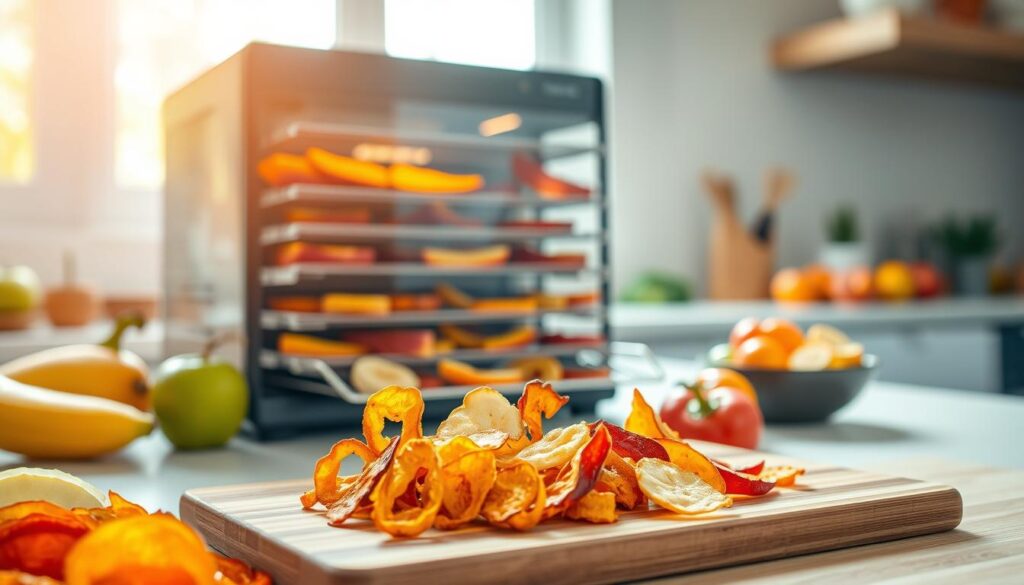
Using a food dehydrator helps keep vitamins and enzymes intact. Unlike high-heat cooking, dehydration uses low temperatures. This keeps your dried foods as healthy as possible.
“The preservation of food is not just about longevity; it is about capturing the peak nutritional value of nature’s harvest at its very best.”
Cost-Effective Snacking
Store-bought dried snacks are often expensive and have preservatives. With a food dehydrator, we can buy produce in bulk and dry it ourselves. This cost-effective approach lets us enjoy quality snacks without the high cost of commercial packaging.
Also, using a food dehydrator helps reduce food waste. We can turn extra produce into tasty, shelf-stable treats. This saves money and ensures we always have healthy snacks ready.
Meal Prep and Storage
Dehydrated foods are light and compact, great for hiking, camping, or busy days. We can prepare meal components that rehydrate quickly. This gives us control over our diet.
Building a sustainable pantry with long-lasting, nutrient-rich foods is rewarding. Whether it’s dried herbs, fruits, or jerky, these items save space. Embracing these food dehydrator benefits leads to a more efficient and healthy lifestyle.
Popular Brands to Consider
Choosing a food dehydrator means looking at the brand’s reputation and how well it lasts. There are many options out there. We’ve looked at the most reliable brands to help you choose wisely. Whether you’re new to dehydrating or have been doing it for years, picking a top rated food dehydrator ensures your snacks are dried right.
Nesco Dehydrators
Nesco is a well-known brand in the world of food dehydrator reviews. They’re famous for their unique airflow system. This system pushes air through the center and out to the trays, making drying easier.
Many of their models can grow with you. You can add more trays as you need them. This makes a Nesco food dehydrator a great choice for families who want to start small and expand later.
Hamilton Beach Options
Hamilton Beach is great for those looking for an affordable and easy-to-use dehydrator. Their units are known for being simple and easy to use right away. They work well for drying fruits, herbs, and veggies.
- Simple digital controls for precise temperature settings.
- Compact designs that fit easily on most kitchen counters.
- Reliable performance for everyday snacking needs.
Tribest and Other Notable Brands
For those wanting premium features, Tribest offers high-end options. These focus on durability and advanced airflow technology. In food dehydrator reviews, these models are often praised for their stainless steel and quiet operation.
Other top brands include Excalibur and Cosori. They’re often seen as the best food dehydrator choices for serious enthusiasts. These brands offer more control over the drying environment, perfect for recipes like jerky or fruit leathers. Choosing a top rated food dehydrator from these brands means you’re getting a machine built to last for years.
Accessories for Your Food Dehydrator
Adding a few simple accessories can unlock your food dehydrator‘s full potential. These tools help handle your ingredients with care. They prevent mess and keep your snacks perfect.
Trays and Screens
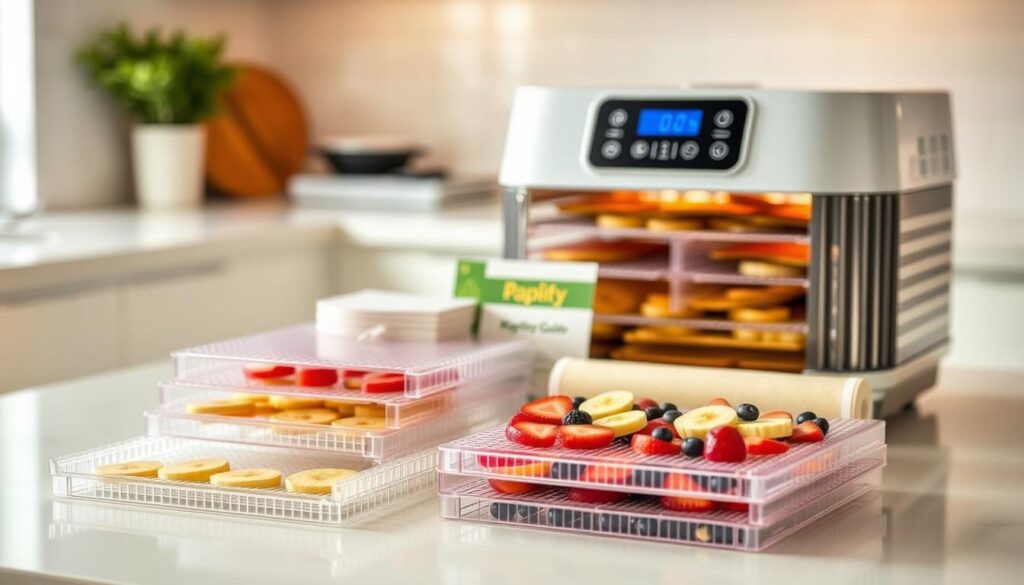
Standard trays work well for big fruit slices. But, they struggle with small items or liquids. Mesh screens are a must for preventing small berries or herbs from falling through. They also make cleaning up easier since food doesn’t stick to the plastic.
For recipes like fruit leathers, soups, or purees, nonstick sheets are crucial. These mats help spread your mixtures evenly without leaks. They keep your food dehydrator clean and your snacks in shape.
Storage Containers
After drying, the next step is proper storage. Air and moisture can ruin your hard work. Use airtight glass jars to keep your snacks fresh for months.
Glass containers are great because they don’t absorb odors or chemicals. Vacuum-sealed bags are also good for storing large amounts. Store your dried goods in a cool, dark place to keep them fresh longer.
| Accessory | Primary Use | Key Benefit |
|---|---|---|
| Mesh Screens | Small items/herbs | Prevents food loss |
| Nonstick Sheets | Fruit leathers/purees | Easy cleanup |
| Glass Jars | Long-term storage | Maintains freshness |
| Vacuum Bags | Bulk preservation | Saves pantry space |
Tips for Using a Food Dehydrator
Learning how to use a food dehydrator opens up a world of healthy snacks. It lets you preserve food at home. Follow these tips to keep your food tasty and nutritious.
Preparing Fruits and Vegetables
When slicing, keep it consistent. Use a mandoline or sharp knife for even thickness. This ensures even drying on all trays.
Some fruits, like apples, may brown quickly. A lemon juice and water dip can help keep them looking fresh.
Best Practices for Drying
Conditioning is key. Dry fruit until it feels dry, then store it in jars for 7–10 days. Shake daily to prevent mold.
Manage your dehydrator’s airflow and temperature. Leave space between items for air to flow. Don’t overload to avoid long drying times.
| Food Item | Preparation Method | Recommended Temp | Estimated Time |
|---|---|---|---|
| Apple Slices | 1/4 inch thick | 135°F | 6–8 Hours |
| Banana Chips | 1/8 inch thick | 135°F | 8–10 Hours |
| Bell Peppers | 1/2 inch strips | 125°F | 4–6 Hours |
| Carrot Coins | 1/4 inch thick | 125°F | 6–8 Hours |
Follow these food dehydrator tips for top-notch results. Remember, patience is crucial. With time, you’ll master making tasty, long-lasting snacks.
Cleaning and Maintenance
A clean machine is key to successful food preservation. Learning how to use a food dehydrator shows that regular maintenance is crucial. A well-maintained unit ensures your snacks stay safe and tasty.
How to Clean Your Dehydrator
Most modern units have removable trays, making cleaning easy. If you have a food dehydrator with horizontal airflow, cleaning is even simpler. This design helps prevent flavor mixing, making it easier to clean.
Here’s how to keep your appliance clean:
- Always unplug the unit and let it cool completely before starting.
- Check your manual to see if trays are dishwasher-safe; if not, wash them in warm, soapy water.
- Wipe the interior walls with a damp cloth to remove any food debris or oils.
- Ensure all components are completely dry before reassembling the machine.
Troubleshooting Common Issues
Even with the best care, minor issues can arise. Knowing how to fix these problems is part of using a food dehydrator effectively.
If drying is uneven, check if trays are overloaded. Proper airflow is vital for even drying. If you hear unusual fan noise, look for loose debris or a misaligned blade. Keeping the fan area clean ensures your food dehydrator runs quietly and efficiently for years.
Creative Recipes for Dehydrated Snacks
We love finding new ways to use our equipment to create healthy, shelf-stable treats at home. Once you have mastered the basics, you can explore a wide range of food dehydrator recipes that go far beyond simple apple slices. Whether you are preparing for a long hike or just want a nutritious snack for the office, your food dehydrator is an incredibly versatile tool.
But safety is key in your kitchen. Avoid drying high-fat foods like avocados, dairy products, or fatty meats. These items can spoil and grow bacteria. Stick to lean ingredients to keep your snacks safe and tasty for a long time.
Dehydrated Fruits and Vegetables
Fruits are great for beginners. Start with thin, uniform slices of apples, pears, or strawberries. This ensures even drying. You can also try savory options like kale chips seasoned with sea salt or sun-dried tomatoes for a concentrated burst of flavor.
For vegetables, blanching them briefly before drying helps keep their color and texture. Make sure your produce is completely dry on the surface before placing it on the trays. This step helps speed up drying and prevents uneven moisture levels in your snacks.
Jerky Recipes and Tips
Making homemade jerky is rewarding for high-protein snacks. Choose extra-lean cuts of meat, like top round or sirloin, and trim all visible fat before slicing. Fat doesn’t dehydrate well and can make your jerky go bad quickly.
Marinating your meat for several hours or overnight adds deep, savory flavor. Use a mix of soy sauce, Worcestershire, garlic powder, and a touch of liquid smoke. After marinating, pat the strips dry and arrange them on your trays without overlapping. This allows for optimal airflow during the drying cycle.
Comparing Prices: Budget vs. Premium Models
Choosing to buy food dehydrator equipment can be tough. You might wonder if to go for a cheap plastic model or a pricey stainless steel one. Your decision depends on how often you’ll use it and your kitchen’s needs. Looking at food dehydrator reviews can help you decide if the extra cost is worth it.
Affordable Choices
For beginners, entry-level units are great. They’re perfect for drying fruits or herbs without spending a lot. These models are made of lightweight plastic and have simple controls. They might not have all the fancy features, but they get the job done.
These machines are also small and easy to put away. They’re a cost-effective entry point for newbies. If you don’t plan to dehydrate often, a budget model is likely the best food dehydrator for you.
High-End Features Worth Considering
Premium models come with better build quality, like stainless steel trays and precise digital controls. These upgrades ensure even heat and airflow, crucial for top-notch results. Investing in a high-end food dehydrator means you’re getting durability and ease of use.
Also, think about the total drying area, not just the number of trays. For example, Excalibur 9-tray models might be a better deal than 5-tray ones. This can save you time and energy when dehydrating large amounts.
| Feature | Budget Models | Premium Models |
|---|---|---|
| Build Material | Lightweight Plastic | Stainless Steel |
| Controls | Manual/Basic | Digital/Programmable |
| Drying Area | Limited | High Capacity |
| Durability | Moderate | Long-lasting |
Final Thoughts on Choosing a Food Dehydrator
Choosing the right equipment makes your kitchen a place for healthy snacks. Finding the best food dehydrator lets you control your ingredients and nutrition.
Essential Factors for Your Purchase
Think about what you need in terms of size and airflow. Brands like Excalibur or Nesco provide consistent results. Remember these tips to find a dehydrator that fits your lifestyle and space.
Start Your Preservation Journey
Snacks stored properly can last 6 to 12 months. Vacuum sealing can extend this even more. Start dehydrating today to enjoy homemade, nutritious food.