
 David Joseph
Did you know that nearly 90% of laundry loads have fecal bacteria after washing? We think our machines clean everything, but they don’t always get rid of all germs. These germs love warm, damp places, making our clothes a breeding ground for germs.
We want our clothes to be truly hygienic and germ-free. Using a reliable clothes sanitizer is key to keeping our families safe. It adds an extra layer of protection for our peace of mind.
In this guide, we’ll show you how to pick and use the best clothes sanitizer. By following these easy steps, we can make our laundry routine better. We’ll keep our clothes fresh, safe, and germ-free.
Key Takeaways
- Standard detergents often leave behind bacteria that survive in synthetic fabrics.
- Using a specialized additive ensures a deeper level of hygiene for your laundry.
- Proper selection of laundry products is essential for protecting your family’s health.
- Effective sanitization helps eliminate odors caused by trapped microbial growth.
- Following recommended application methods maximizes the effectiveness of your cleaning routine.
What is Clothes Sanitizer?
A clothes sanitizer is a tool that makes your laundry better than just clean. Regular detergents remove dirt and stains well. But they don’t get rid of tiny threats.
These products are a must-have for any home. They make your clothes not just clean but truly safe.
Definition and Purpose
These agents are made to kill tiny germs that regular detergents miss. They are key for families who care about health and safety.
Adding them to your wash protects against bacteria and viruses. This is crucial for homes with people who need extra cleanliness.
How It Works
The science behind these products is interesting. They use special chemicals that go deep into fabric to kill germs.
They work great on synthetic fabrics, where germs and smells get stuck. Unlike regular soaps, they break down germs so they’re gone in the rinse.
Benefits of Using Clothes Sanitizer
The biggest plus is knowing your clothes are germ-free. A clothes sanitizer gets rid of smells that stay after washing.
Also, they keep your clothes in good shape by stopping bacteria buildup. Sanitizing your laundry means your clothes last longer and your home stays healthy.
Why You Need a Clothes Sanitizer
Keeping your family healthy starts with the clothes you wear. Choosing the right laundry is key. Standard detergents clean visible dirt but miss the tiny threats on fabric fibers.
Health Benefits
Viruses can stay on fabrics for hours to days. Bacteria and molds can last weeks without treatment.
A top-notch laundry disinfectant is a must. It fights off these hidden dangers. This way, your clothes are safe to wear.
Eliminating Odors
Ever noticed clothes smell musty after washing? It’s because bacteria love synthetic fibers, like in activewear.
A good odor eliminator for clothes gets rid of the smell at its source. It keeps your workout clothes smelling good longer.
Protecting Fabrics
Using a clothing freshener also protects your clothes. Harmful microbes and sweat can damage delicate fibers.
Adding these solutions to your laundry routine stops fabric damage. It keeps your clothes looking and feeling great. Plus, it boosts cleanliness standards.
Types of Clothes Sanitizers
Keeping your clothes clean is more than just using regular detergent. There are many types of fabric sanitizer to keep your clothes free from germs and smells.
Liquid Sanitizers
Liquid additives are added to your washing machine during the rinse cycle. They often have hydrogen peroxide at a 3% concentration. This is great for killing viruses, bacteria, and fungi.
Using these liquids in your laundry routine adds an extra layer of protection. They’re perfect for items like towels, bedding, and gym clothes that need extra care.
Spray Sanitizers
An anti-bacterial clothing spray is great for a quick clean between washes. These sprays let you target specific spots on your clothes that might have bacteria or smells.
They’re handy for items that can’t be washed yet, like blazers, denim, or delicate fabrics. Just spray a little on the surface and let it air dry for a quick clean.
Sanitizing Pods
Sanitizing pods are perfect for those who value convenience. They dissolve in water and clean and deodorize your clothes effectively.
They’re great for busy homes where time is short. Just add a pod to your clothes and let it do the work for you.
| Sanitizer Type | Best Use Case | Application Method | Primary Benefit |
|---|---|---|---|
| Liquid | Deep cleaning | Rinse cycle | Broad-spectrum kill |
| Spray | Quick touch-ups | Direct misting | Portability |
| Pods | Convenience | Wash cycle | Pre-measured dose |
Top Brands of Clothes Sanitizer on the Market
Finding a good garment germ killer is easier when you know the top brands. We’ve looked at the best options to help you keep your clothes clean with little effort.
Lysol Laundry Sanitizer
Lysol is a well-known name for a reason. Their laundry sanitizer effectively kills 99.9% of bacteria without harsh bleach.
This makes it safe for both white and colored fabrics. Families like it because it gives them peace of mind with every wash.
Dettol Antibacterial Fabric Spray
An anti-bacterial clothing spray is great for refreshing clothes between washes. Dettol’s formula kills germs on contact.
It’s perfect for heavy coats, upholstery, or gym bags that can’t be washed daily. This spray keeps your items smelling fresh longer.
Purell Clothes Sanitizer
Purell is known for hygiene, and their fabric solutions are no different. They offer a strong odor eliminator for clothes that targets smells at the source.
Their products are gentle on fibers but tough on microbes. This keeps your favorite clothes in great shape for longer.
| Brand | Primary Benefit | Best Use Case |
|---|---|---|
| Lysol | Bleach-free sanitization | Full laundry loads |
| Dettol | Quick surface refresh | Hard-to-wash items |
| Purell | Odor neutralization | Daily fabric care |
How to Use Clothes Sanitizer Effectively
Using your laundry disinfectant right is key. It keeps your clothes safe from germs and smells. Here are some tips to make your laundry routine better and safer.
Dosage Instructions
It’s important to use the right amount of your clothing hygiene solution. For most washing machines, add two capfuls to the fabric softener spot.
If your machine doesn’t have a special spot, add it during the final rinse. Always check the bottle label. Some products need less to work well.
Pre-Treatment Tips
For tough stains or germs, extra care helps. Apply a bit of your laundry disinfectant to the stain before washing.
Let it sit for about ten minutes. This helps the solution get deep into the fabric. It makes cleaning tough spots easier.
Machine vs. Hand Washing
Choose how you wash based on the fabric and how clean you want it. Machine washing is easy for daily clothes. But, hand washing is better for delicate items that need special care.
| Method | Application Point | Best For |
|---|---|---|
| Standard Machine | Softener Compartment | Everyday Loads |
| HE Machine | Rinse Cycle | High-Efficiency Cycles |
| Hand Wash | Soak Basin | Delicate Fabrics |
When hand washing, mix the product with water first. This keeps your clothes safe from strong chemicals.
Common Misconceptions About Clothes Sanitizers
When we talk about fabric sanitizers, many myths come up. Some think they’re not needed or are just a waste of money. But, understanding these myths can help you choose better for your home’s cleanliness.
Are They Necessary?
Many wonder if they really need a fabric sanitizer for every wash. For regular clothes, just using detergent is usually enough. But, these products are really useful for things like gym clothes or items from sick people.
Some try using vinegar instead. Vinegar can clean a bit, but it doesn’t stop bacteria from growing. A dedicated sanitizer is a better choice for keeping your family safe.
Do They Damage Fabrics?
People worry that fabric sanitizers might harm delicate clothes or make them fade faster. But, most are made to be safe for many fabrics, like cotton and polyester. Always check the label to make sure.
Used right, these products won’t hurt your clothes. They’re made to work with your wash cycle without leaving bad stuff behind. If you’re worried about something delicate, test it first.
Can They Replace Detergent?
It’s common to think a fabric sanitizer can replace regular detergent. But, they’re meant to be used together. Detergent cleans the clothes, and the sanitizer adds extra hygiene.
Think of the sanitizer as a special tool, not a replacement for detergent. Use your usual detergent to clean, and add the sanitizer to your machine. This way, your clothes get the best of both worlds.
DIY Clothes Sanitizer Solutions
If you’re looking for a natural garment germ killer, your pantry might have what you need. Many people use household items to keep their clothes clean. These methods are often cheaper and easy to find. But, it’s key to know they might not work as well as store-bought products.
Vinegar and Essential Oils
White vinegar is great for making clothes smell fresh. It breaks down dirt and soap that can make clothes smell bad. Adding essential oils like tea tree or lavender can make it even better. These oils help kill germs naturally.
Want to try making your own laundry sanitizer? Check out DIY laundry sanitizer ideas online. These mixes are good for light cleaning. But, they might not be strong enough for really dirty clothes.
Alcohol-Based Sanitizers
Isopropyl alcohol, or rubbing alcohol, is also good for killing bacteria on clothes. Mix it with water in a spray bottle. Spray it on clothes that can’t be washed often. Let it dry in the air.
- Always test a small, hidden area of the fabric first to ensure colorfastness.
- Avoid using high concentrations on delicate materials like silk or wool.
- Use this method mainly for spot-treating, not for washing the whole load.
Other Home Remedies
Pine oil is a strong garment germ killer made from pine tree resin. It’s known for killing germs and can be added to your wash. It makes clothes smell clean and fresh.
These home remedies are good for everyday use. But, for really dirty clothes or tough germs, you need stronger products. Mixing natural methods with strong cleaners keeps your clothes clean and smelling good.
Eco-Friendly Clothes Sanitizers
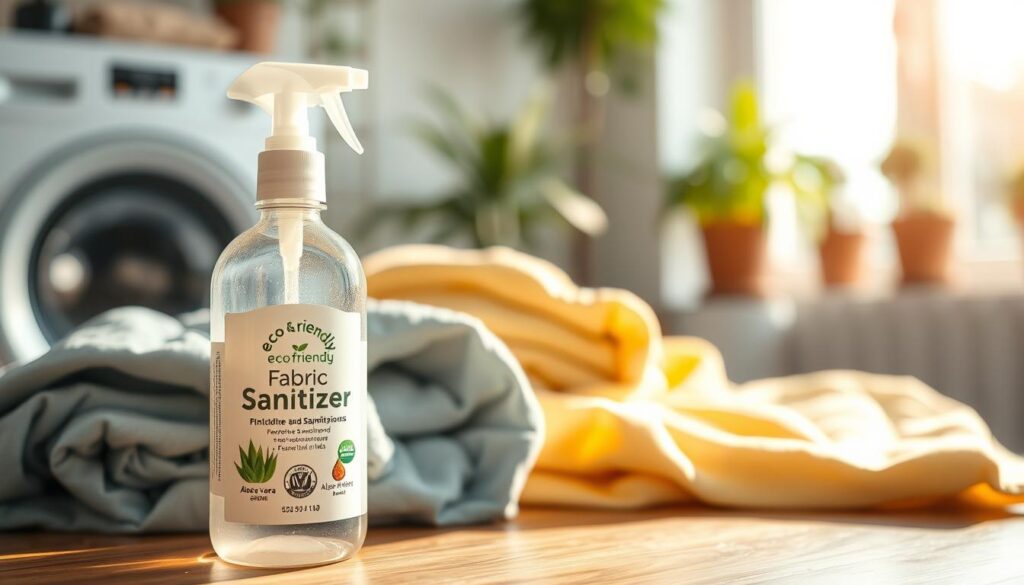
We think keeping your clothes germ-free shouldn’t harm the planet. Many families now choose eco-friendly laundry options. These choices are safe and effective, thanks to fabric sanitizers.
Benefits of Eco-Friendly Options
Green cleaning solutions are great for those with sensitive skin or who care about the environment. They often use natural ingredients like hydrogen peroxide. This ingredient kills germs safely and helps prevent harmful chemicals from polluting our water.
“The greatest threat to our planet is the belief that someone else will save it.” — Robert Swan
Top Recommendations
When looking for a fabric sanitizer, pick brands that use plant-based ingredients. Look for products in smaller packaging to reduce waste. These options show you can clean clothes well without harsh chemicals.
Certifications to Look For
Finding the right product can be hard. Look for specific labels to ensure the fabric sanitizer is safe and eco-friendly:
- EPA Safer Choice: Shows the product has safer chemicals.
- Leaping Bunny: Means it’s cruelty-free and not tested on animals.
- USDA Biobased Product: Confirms it’s made from renewable sources.
Choosing products with these labels means you’re making a smart choice. Switching to an eco-friendly fabric sanitizer is a small step toward a healthier home and a cleaner world.
Comparing Price vs. Performance
Finding a good clothing deodorizer means looking at both cost and how well it works. It’s key to find a balance between what you spend and how well your laundry products work. This helps you manage your household budget wisely.
Cost-Effective Options
Many think that expensive products clean better. But, many affordable options work great without breaking the bank.
The Clorox 2 Bleach-Free Fabric Sanitizer is a great example. It costs under $5 per bottle. This laundry disinfectant keeps your clothes fresh without costing too much.
Premium Brands Worth the Investment
At times, spending more is worth it for better cleaning. Premium brands use advanced technology to fight tough stains better than cheaper ones.
If you face tough stains or need medical-grade cleaning, these brands are worth it. They might need less for each load, making them cost-effective in the long run.
What to Consider When Shopping
When buying a new clothing deodorizer, think about a few things. Check the concentration to see how long it lasts. Higher concentrations last longer than weaker ones.
- Bottle Size: Bigger bottles are often cheaper per ounce.
- Usage Frequency: Choose a product that matches your laundry needs.
- Ingredient Safety: Make sure it’s safe for your fabrics.
By looking at these points, you can choose wisely. This way, your clothes stay clean and your wallet stays happy. Remember, the most expensive isn’t always the best for your home.
Conclusion: Choosing the Right Clothes Sanitizer
Choosing the right laundry care routine is about finding a balance. A clothes sanitizer can give you peace of mind against bacteria and odors. But, for most people, it’s not a must-have.
Standard detergents might be enough for everyday clothes. They clean well without the need for extra chemicals.
Evaluating Your Personal Needs
Think about your lifestyle before adding extra chemicals to your wash. If you work in healthcare or get sick often, a specialized product can help. It gives an extra layer of protection.
For those who prefer a gentler approach, you can learn if laundry sanitizer is necessary. Check your fabric types and how dirty they get. Many families find that eco-friendly detergents work well without harsh additives.
Purchasing and Implementation
You can buy these products at places like Target, Walmart, or online. Always check the label to make sure it’s safe for your washing machine and clothes. Testing a small, hidden area of your clothes first helps avoid damage or color changes.
By making an informed choice, you can keep your laundry routine safe, effective, and right for your home.