
 David Joseph
Did you know your home’s air can be up to five times more polluted than outside? We often focus on outdoor pollution but ignore the dangers inside. Taking control of your indoor air starts with knowing what you breathe every day.
A smart air monitor is like a health detective for your home. It tracks harmful particles and gases, and changes in temperature and humidity. By spotting these dangers, you can choose the right steps to improve your air.
In this guide, we review top picks like the Qingping Gen 2 and SwitchBot CO2 Detector. We also look at the affordable IKEA VINDSTYRKA. Finding the right indoor air quality solution is key to a healthier home.
Key Takeaways
- Indoor environments are often more polluted than the outdoors.
- Continuous tracking helps identify invisible pollutants like VOCs and CO2.
- Data-driven insights allow for better ventilation and purification strategies.
- Top devices include options from Qingping, SwitchBot, and IKEA.
- Proactive management significantly boosts your long-term respiratory health.
What is a Smart Air Monitor?
We often overlook the invisible pollutants in our homes until we have the right tools. A smart air monitor acts as a guardian for your indoor environment. It constantly watches the air you breathe.
Definition and Functionality
An environmental monitoring device tracks chemical and physical parameters in a room. Some models detect a wide range of pollutants. Others focus on specific threats like carbon dioxide or fine particulate matter.
These devices turn complex data into simple, useful insights. They sample the air continuously. This gives you a clear view of your home’s health, beyond what you can sense.
Key Features to Consider
When choosing a device, look for sensor coverage that fits your needs. Quality units often have displays for quick viewing. Many prefer app connectivity for tracking from afar.
Other key features include:
- Historical data logging to track trends over weeks or months.
- Real-time alerts that notify your smartphone when levels spike.
- Smart home integration to automate your HVAC or air purifier systems.
- Battery operation for flexible placement throughout your home.
Benefits of Using a Smart Air Monitor
The main benefit of a smart air monitor is making informed decisions about your home. Knowing when air quality drops lets you take immediate action. You can open windows or turn on a filtration system.
Using an air pollution detector helps find hidden sources of pollution. This could be cleaning products or poor ventilation in certain rooms. This environmental monitoring device helps you create a safer, healthier home. It keeps your indoor environment at its best.
How Smart Air Monitors Work
To understand the value of an indoor air sensor, we need to know how it works. These devices quietly check the air around us. They give us important information about our homes.
Sensors and Technology
Every air quality monitor has special sensors. For example, the Qingping Gen 2 uses lasers to count tiny particles. NDIR technology measures CO2 levels accurately.
These sensors turn air changes into signals. This way, the device can understand what it’s reading.
VOCs are tracked by metal-oxide semiconductor sensors. These sensors react to chemical vapors. Remember, these readings are not medical diagnoses. They show us when we need to improve the air.
Data Transmission and Analysis
After collecting data, the device sends it to us. Most use smart home technology for this. They send info via Bluetooth or Wi-Fi to a mobile app.
This lets us see live data, track history, and get alerts when air quality is bad. Advanced users can connect their monitors to other smart devices. Some even use cloud services or local integrations.
By looking at trends over time, we learn how our habits affect the air. This helps us make our homes healthier.
The Importance of Indoor Air Quality
Keeping our living spaces healthy begins with knowing what’s in the air. We clean surfaces but often overlook the air we breathe. An environmental monitoring device helps us see what’s really in our air.
Impacts on Health and Wellbeing
The air in our rooms affects our comfort every day. Bad indoor air quality can make us tired, give us headaches, or hurt our breathing. An IAQ monitoring system shows us how our air changes and how it makes us feel.
Temperature and humidity are key to good air. If they’re off, they can make air pollution worse. By watching these levels, we can fix our air or use air cleaners better.
Common Indoor Air Pollutants
Many things in our homes can make the air bad. It’s important to know what they are:
- Particulate Matter: Tiny particles from dust, pollen, mold spores, and smoke can linger in the air.
- Volatile Organic Compounds (VOCs): These are often released by cleaning products, paints, and new furniture.
- Household Activities: Cooking, burning candles, and even DIY projects can significantly alter air composition.
An environmental monitoring device quietly watches for these pollutants. With a good IAQ monitoring system, we can make our homes healthier. Knowing what makes the air bad helps us live better.
Top Smart Air Monitors in the Market
Every home is different, so we’ve sorted the best smart air monitors for you. The right smart air monitor depends on what you need. Do you want to track a lot of pollutants, carry it around, or focus on specific pollutants?
Featured Models
The market has many solutions for different needs. Here are some top picks:
- Qingping Gen 2: Great for tracking many pollutants at once.
- SwitchBot: Best for those who want to keep an eye on CO2 levels.
- Qingping Lite: Perfect for anyone who needs a portable air quality monitor.
- IKEA VINDSTYRKA: A budget-friendly option for basic tracking.
- Temtop: Ideal for precise formaldehyde checks.
Comparing Prices and Features
We’ve sorted these models by their main strengths and features. This table shows how they work with a connected air purifier system.
| Model | Primary Strength | Best Use Case |
|---|---|---|
| Qingping Gen 2 | Broad Coverage | Whole-home monitoring |
| SwitchBot | CO2 Accuracy | Office or bedroom |
| IKEA VINDSTYRKA | Value | Budget-conscious users |
| Temtop | Formaldehyde | New home safety |
User Reviews and Ratings
User feedback shows the difference between constant monitoring and occasional checks. Many love the Qingping series for their reliable, real-time data.
Some users say the IKEA model is cheap but lacks the depth of professional units. On the other hand, SwitchBot fans like it for automating air purifier use based on CO2 levels. Think about whether you need a device that’s always on or a portable air quality monitor for quick checks.
How to Choose the Right Smart Air Monitor
Choosing the right smart air monitor for your home is important. You need to know what air quality you need. We think picking the right device should be easy and fit your lifestyle and home.
Size and Design Considerations
When looking at different models, think about where it will go. Small desk units are great for tight spaces like offices or bedrooms. They’re also good if you want something that doesn’t take up much room.
For a central spot, look at bigger monitors with clear displays. These are good for living rooms or open areas. Make sure it can run on a battery or needs to be plugged in.
Features to Look For
It’s easy to get lost in all the tech details. But focus on what really matters for your health. Look for an indoor air sensor that tracks the pollutants you care about.
Here are key features to consider:
- True CO2 Sensing: Important for checking if your space is well-ventilated.
- PM2.5 Accuracy: Crucial for spotting fine dust, smoke, and allergens.
- VOC and Formaldehyde Detection: Good if you’ve recently renovated or bought new furniture.
- Smart Home Support: Allows your device to control air purifiers or HVAC systems.
The table below helps you figure out which sensors you need:
| Pollutant | Primary Benefit | Ideal User |
|---|---|---|
| PM2.5 | Detects fine particles | Allergy sufferers |
| CO2 | Measures ventilation | Home office workers |
| VOCs | Identifies chemical odors | New home owners |
The best smart air monitor gives you useful data without being too complicated. By focusing on what you need, you avoid wasting money. This way, your indoor air sensor keeps your home safe and healthy.
Benefits of Real-Time Air Quality Monitoring
Real-time data turns invisible pollutants into clear, actionable insights. It lets us track changes as they happen. This way, we can manage our environment with precision.
Keeping indoor air quality high is now an active process. It’s not just a passive hope anymore.
Instant Feedback and Alerts
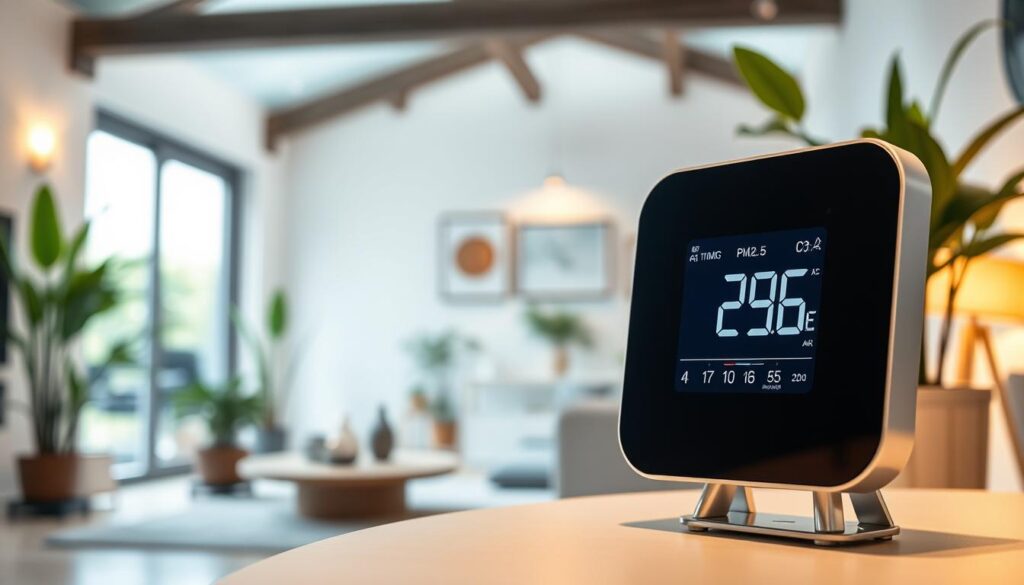
When sensors detect pollutants, they send immediate alerts. These alerts let us act fast to prevent air quality from getting worse. We can adjust our smart HVAC system or open windows for better air flow.
Here are some steps to take when you get alerts:
- Turn up the fan speed on your air purifier.
- Use exhaust fans in the kitchen or bathroom.
- Use fewer aerosol sprays or scented candles.
- Change the ventilation settings on your central climate control.
“The air we breathe inside our homes is often more polluted than the air outside, making constant awareness a vital component of modern wellness.”
Long-Term Health Monitoring
An IAQ monitoring system also gives us historical data. We can look at trends over days or weeks. This shows how our daily habits affect our environment.
This data helps us spot patterns we might miss. It’s key for making our homes healthier.
Remember, these devices are for awareness and lifestyle optimization. They help us create a healthier home. But they’re not medical diagnostic tools. We should see them as a way to support our overall wellbeing, not replace medical advice.
Integrating Smart Air Monitors into Smart Homes
Adding air quality sensors to your home network makes data work for you. With smart home technology, our homes can react to air changes. This means more than just seeing numbers on a screen.
Compatibility with Other Devices
Before buying a monitor, check if it works with your home setup. Many use Wi-Fi, while others need Zigbee or Z-Wave for less power use. Make sure it fits with your system, like Home Assistant or Homey.
Compatibility is key for a smart home to work well. Look if the device needs a special bridge or can connect directly to your system. Choosing one that uses open standards gives you more flexibility for updates.
Automation and Control
The real strength of these systems is in their ability to act on their own. For example, a connected air purifier can start when PM2.5 levels get too high. This keeps our air clean and safe.
Our sensors can also control a smart HVAC system to improve air when CO2 levels go up. If humidity or stale air is detected, it can tell the thermostat to change settings. This keeps our air quality perfect all day and night.
Maintenance and Care for Smart Air Monitors
Keeping your indoor air sensor in top shape is key. Simple habits can make your device last longer and work better. Regular care stops common problems and keeps your air quality data accurate.
Cleaning and Calibration
Dust is a big problem for air quality monitors. Clean the outside with a dry, microfiber cloth every few weeks. Don’t use liquids or compressed air on the sensor openings, as it can harm the inside.
Most devices calibrate themselves, but some need a manual reset. If you can calibrate it manually, put it in fresh air for a few hours. Always update the app for new firmware, which can improve how it works.
Troubleshooting Common Issues
Unusual readings might mean your indoor air sensor is in the wrong spot. Don’t place it near windows, stoves, or air purifiers. These spots can mess up the air quality reading.
Issues with Wi-Fi or low battery? Check your Wi-Fi strength or the power source. If readings are off between devices, make sure they’re both updated. Here’s a quick guide for keeping your device in good shape.
| Task | Frequency | Action Required |
|---|---|---|
| Dust Removal | Bi-weekly | Use a dry microfiber cloth |
| Firmware Update | Monthly | Check the mobile application |
| Sensor Calibration | Quarterly | Place in fresh, outdoor air |
| Placement Check | As needed | Move away from vents or windows |
Stay on top of your air quality monitor to keep your home healthy. Regular care means your data stays reliable and useful.
Setting Up Your Smart Air Monitor
Setting up your new device is easy and ensures you get accurate data about your home. By following a few simple steps, you can make your home healthier for your family. It’s important to place and configure it correctly for the best results.
Installation Steps
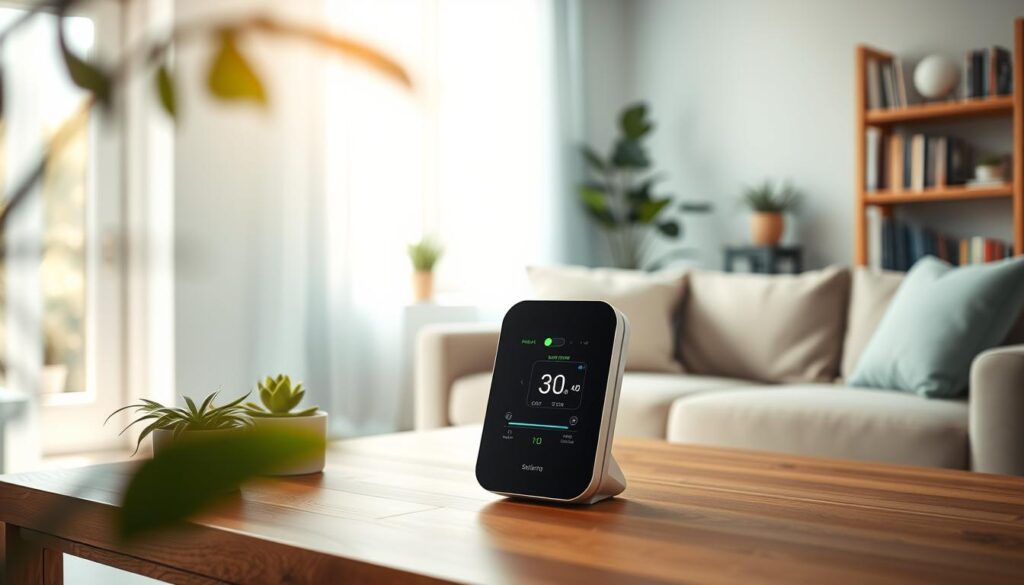
Start by unpacking your smart air monitor and checking all parts. Choose a spot that’s close to where you breathe, like a nightstand or desk. Don’t put it near windows, doors, or air vents, as drafts can affect readings.
Once you’ve picked the right spot, plug it in. Let the sensors stabilize for at least an hour before checking the air quality. This step helps the device adjust to your room’s temperature and humidity.
App Configuration and Setup
After setting up the hardware, download the app on your phone. Create an account and pair your device via Wi-Fi or Bluetooth. Customize your settings, like measurement intervals and notifications, and label your room.
If you have a connected air purifier, link it to your monitor through the app. This lets your IAQ monitoring system turn on the purifier when air quality drops. It creates a smooth, automated system to keep your air clean.
| Setup Task | Action Required | Benefit |
|---|---|---|
| Placement | Avoid direct drafts | Accurate readings |
| Calibration | Wait 60 minutes | Sensor stability |
| Integration | Link connected air purifier | Automated cleaning |
| Permissions | Enable historical data | Long-term tracking |
Lastly, make sure to allow the app to track historical data. This feature lets your smart air monitor create detailed reports over time. Looking at these trends helps you understand patterns and improve your home’s ventilation.
Understanding Air Quality Index (AQI)
The Air Quality Index is a key tool for understanding the air in your home. It simplifies complex data into a single number. This helps us track the health of our indoor spaces.
What AQI Numbers Mean
An indoor air sensor calculates its own AQI. This can be different from outdoor readings given by government agencies. Each brand uses its own scale and algorithm.
Devices might show different ratings for the same room. This is because they focus on different pollutants. Always check which pollutant is being measured. A single number might not show the whole picture.
| AQI Range | Health Impact | Recommended Action |
|---|---|---|
| 0-50 | Good | Maintain current ventilation |
| 51-100 | Moderate | Increase air filtration |
| 101-150 | Unhealthy for Sensitive Groups | Limit outdoor activities |
| 151+ | Unhealthy | Use air purifiers immediately |
How to Use AQI in Daily Life
We can use AQI to plan our daily activities. When numbers rise, it’s time to improve ventilation or use air purifiers. This makes planning outdoor activities easier.
An indoor air sensor offers more than just a number. It shows how air quality changes with activities. This helps us take steps to keep our home healthy and comfortable.
Future Trends in Smart Air Monitoring
We’re moving into a time where our homes will manage their own air. Smart home technology is getting better, making our living spaces more automatic and easy to use.
Innovations in Technology
New sensors will focus on being precise and lasting longer. Expect to see more use of NDIR CO2 sensing and laser-based particle measurement. These methods give more accurate data than older tech.
Also, detecting VOCs and NOx trends in real-time will become common. This lets users spot pollution sources right away. Developers are also moving towards open-source software. This makes your environmental monitoring device work with more systems and scripts.
“The home of the future will not just report on air quality; it will proactively adjust the environment to ensure optimal health and comfort for every occupant.”
Predictions for Market Growth
The market is growing because people want healthier homes and to save on energy. A smart HVAC system will use pollutant trends and who’s home to adjust ventilation.
Being able to work with different systems is key for growth. Learn more about air quality monitoring’s future at this link. Also, see how smart sensors improve homes at this site.
| Feature | Current Standard | Future Trend |
|---|---|---|
| Sensor Accuracy | Basic detection | High-precision laser/NDIR |
| Integration | Limited/Proprietary | Open-source/Universal |
| HVAC Control | Manual/Timer | Automated/Demand-based |
| Data Usage | Static alerts | Predictive analytics |
Frequently Asked Questions about Smart Air Monitors
Choosing the right device means knowing what you need. We get lots of questions about how these tools work in real life.
Common Queries and Clarifications
People often wonder about sensor accuracy and detecting specific pollutants. The SwitchBot mainly tracks CO2 levels in rooms. For more detailed data, the Qingping Gen 2 monitors PM2.5, PM10, CO2, eTVOC, temperature, humidity, and noise. It’s great for different environments.
Some want to detect formaldehyde for safety. The Temtop LKC-1000S is good at this and offers regular checks. It doesn’t have a smart app, so think about if you prefer digital or manual readings.
Comparing Models and Features
Your choice depends on your budget and space size. A good air quality monitor helps decide when to use your connected air purifier. Think about which sensors are most important for your health.
Take charge of your indoor air today by picking the right tech. Share your stories to help others find the best for their homes. Your input improves air quality for all.