
 David Joseph
Modern living has changed a lot with the rise of automated homes. What was once seen as a luxury is now common in many homes in the U.S. Connected technology is making our lives easier and better.
By using IoT devices, homeowners can control their homes like never before. These systems help us track energy use, boost security, and adjust the climate easily. Learning about these basics is key to a smarter, more efficient home.
We aim to help you understand how to use these systems well. Whether you love tech or are just starting, these innovations bring real benefits to families today.
Key Takeaways
- Connected technology has evolved from a niche luxury into a standard residential feature.
- Integrating IoT devices provides homeowners with greater control over their living environments.
- Modern automation systems significantly improve energy efficiency and home security.
- These tools are designed to be accessible and user-friendly for the average homeowner.
- Understanding foundational concepts helps you maximize the potential of your automated home.
What Are Smart Sensors?
Every smart home has a network of intelligent parts that make life easier. These devices watch over your home, collecting data to improve efficiency and safety.
Thanks to connected technology, these parts talk to other systems in your home. This lets your home adjust on its own, without you needing to do anything.
Definition and Overview
A smart sensor is a high-tech gadget that senses things like temperature, movement, or light. It’s key for environmental monitoring, as it gives the data needed for automated actions.
When a sensor spots a change, it alerts your central hub or app. This seamless integration keeps your home comfortable and safe all the time.
Types of Smart Sensors
There are many types of sensors out there, each with its own role in your home. Knowing about them helps you create a smarter, more responsive space.
- Motion Detectors: These spot movement to turn on lights or set off security alerts.
- Water Leak Sensors: Near appliances or pipes, they warn of leaks to avoid water damage.
- Air Quality Detectors: They check for pollutants and humidity to keep your air clean.
Using these tools lets you control your space better with connected technology. A network of smart sensors turns a regular house into a smart home.
Benefits of Smart Sensor Technology
Adding advanced hardware to our homes brings many benefits. A smart sensor helps us control our environment better and cut down on waste. These systems keep our homes running at their best.
Improved Energy Efficiency
Connected technology helps us save money on bills. These devices watch how we use energy and adjust settings to save it. This makes our homes more environmentally friendly.
They track how much energy our appliances use. This helps us change our habits to use less. So, we spend less money each month but still live comfortably.
Enhanced Security Features
Keeping our homes safe is very important. IoT devices help by watching over our homes all the time. They give us real-time insights about our doors and windows.
If something strange happens, we get alerts on our phones. This keeps us safe, whether we’re at work or away on vacation. Our homes become a fortress of safety with these systems.
Increased Comfort and Convenience
These systems also make our lives more comfortable. They help us avoid expensive repairs by spotting problems early. This saves us time and stress.
They also make our homes adapt to our needs. Whether it’s the right lighting or temperature, connected technology makes life simpler. Our homes become more intuitive, always ready to meet our needs.
How Smart Sensors Work
Modern connected technology turns environmental changes into digital signals. When a smart sensor spots a change in temperature, light, or motion, it converts it into an electrical signal. This is the base for all automated systems in today’s homes.
Basic Operating Principles
After capturing the signal, the system uses data analytics to understand it. It decides if an action is needed, like changing the thermostat or turning on a light. This smart action helps with predictive maintenance, spotting problems before they cost a lot.
Advanced machine learning algorithms make these actions better over time. They learn from your habits, making your home more comfortable and energy-efficient. This learning loop keeps your home just right for you.
Communication Technologies Used
Good connectivity is key for IoT devices to work well. They use special wireless protocols that save power and are stable. Standards like Zigbee and Z-Wave let devices talk to each other without using your main Wi-Fi.
Picking the right protocol is crucial for a strong network. Below is a table showing the main differences between common communication standards in homes.
| Protocol | Frequency | Range | Best Use Case |
|---|---|---|---|
| Zigbee | 2.4 GHz | Medium | Large sensor networks |
| Z-Wave | 908.4 MHz | Long | Security and locks |
| Wi-Fi | 2.4/5 GHz | High | High-bandwidth devices |
Knowing how these systems work helps homeowners build a strong home network. By using data analytics and machine learning, your home can stay smart and efficient. Integrating these IoT devices well is the secret to great predictive maintenance and smart home automation.
Smart Sensors in Home Automation
A smart sensor turns a regular house into a smart home. It connects devices, making your home react to you and your needs. This makes your home more than just a place to live.
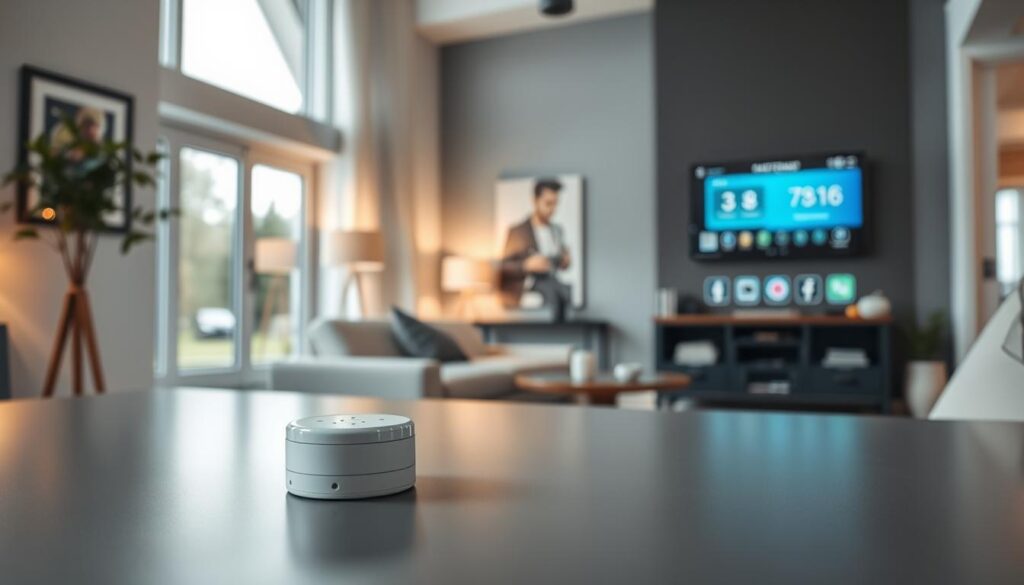
When these sensors talk to a central hub, magic happens. This connected technology makes your home work together as one. It’s not just a bunch of gadgets anymore.
Integration with Smart Home Devices
Today’s homes use many IoT devices for comfort and safety. Adding top-notch smart sensor hardware lets your devices share info. This makes your home run more smoothly.
For example, linking a motion detector with a smart thermostat saves energy. It only heats or cools when someone is around. This cuts down on waste and lowers your bills.
Here are some key benefits of integrating your devices:
- Centralized Control: Control all devices from one app.
- Improved Responsiveness: Devices act fast based on what’s happening around them.
- Scalability: Add new devices easily as your needs change.
Creating Customized Routines
Modern automation lets you make your own routines. Your home learns your habits and adjusts settings for you. This is thanks to data analytics and machine learning.
You can set up routines like “Good Morning” that start when you move. For example, blinds open and the temperature changes as you wake up. These routines use:
- Time-based triggers: Set actions for certain times of the day.
- Occupancy-based triggers: Turn on lights or appliances when you enter a room.
- Advanced data analytics: Look at how you use your home to make it better over time.
Using connected technology and machine learning makes your home work for you. It becomes smarter and more comfortable for your family.
Enhancing Home Security with Smart Sensors
We think peace of mind comes from a strong security system. Adding a smart sensor to your home makes it a proactive defense. It spots trouble before it starts.
These devices are like your home’s eyes and ears. They keep watch on doors and busy spots without needing you to check all the time.
Motion Detection Technology
Today’s motion detectors are way better than old ones. They use infrared or microwave signals to spot movement. This gives you real-time insights into what’s happening at home.
If a sensor sees motion, it sends a quick alert to your phone. This way, you know about visitors, deliveries, or possible intruders, no matter where you are.
“Security is not just about locks and alarms; it is about having the right information at the right time to make informed decisions.”
Video Surveillance Options
Adding cameras to your security system gives you a full view of your home. With connected technology, your sensors start recording video when they see motion.
This combo means you get an alert and video proof of what happened. You can check the footage on your phone to see if you need to act fast.
We suggest setting up your system to cover key areas:
- Front and back entryways
- Garage access points
- Driveways and side yards
By using these tools together, you get real-time insights to keep your home safe. Connected technology helps you create a secure space that fits your life and needs.
Smart Sensors for Energy Management
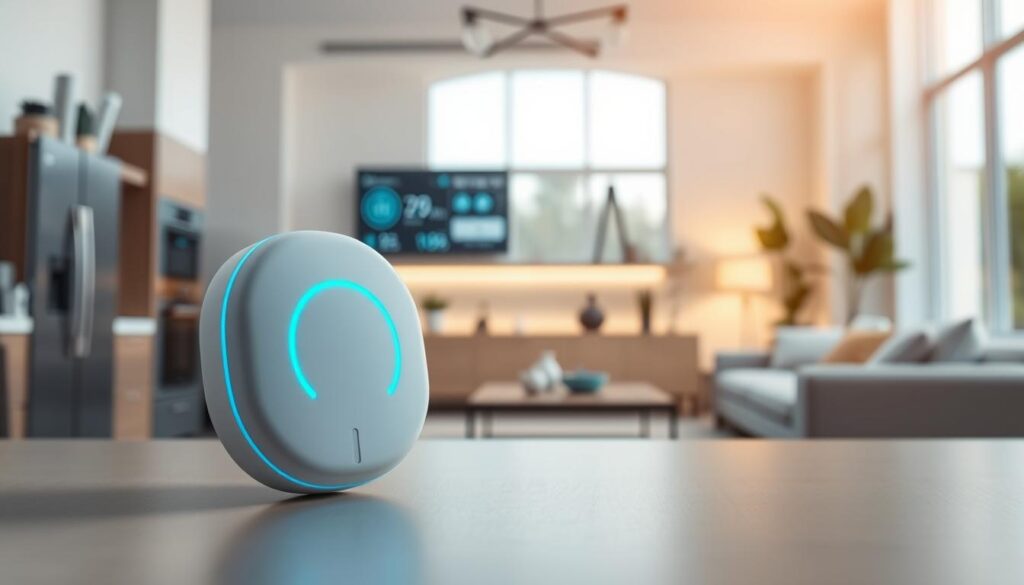
We can cut down our monthly bills by using environmental monitoring smartly. A smart sensor lets us track temperature and light levels in our homes. This connected technology helps us make choices that save energy.
Smart Thermostats
Modern smart thermostats are like the brain of your HVAC system. They give us real-time insights into our home’s climate. They adjust heating and cooling based on if we’re home or not, saving energy.
They also warn us about potential problems before they cost a lot to fix. By looking at how we use them, these systems make sure our home is comfy and cheap to run. This way, our heating and cooling last longer, keeping our home cozy and affordable all year.
Smart Lighting Solutions
Lighting uses a lot of energy, but smart sensors can help. They turn off lights when it’s sunny outside. This connected technology means we only use electricity when we need to.
We can also set lights to turn on and off at the right times. This way, we use less power. These systems give us real-time insights into our energy savings. Using them is a smart move for a greener, more efficient home, thanks to predictive maintenance.
Choosing the Right Smart Sensors
The quality of your home’s components is key to a smooth automated home. Choosing the right smart sensor hardware keeps your system running well. High-quality connected technology lets your system grow with your needs.
Key Features to Consider
When picking new gear, make sure it’s compatible. Look for devices that support the Matter standard. This standard lets different IoT devices talk to each other easily, no matter who made them.
Think about the power source and how far the signal goes. Battery-powered devices are easy to move, while wired ones work well without needing constant checks. Make sure the connected technology doesn’t mess with your Wi-Fi.
Popular Brands and Models
There are many trusted brands out there. Philips Hue, Aqara, and Ecobee are known for being easy to use and having great software. They offer lots of IoT devices that work well with voice assistants and automation systems.
Going with well-known brands means you get better support and updates. These updates keep your smart sensor network safe and working right. Here’s a quick guide to help you pick the right sensors for your home.
| Sensor Type | Primary Use | Connectivity | Key Benefit |
|---|---|---|---|
| Motion Sensor | Security/Lighting | Zigbee/Matter | Energy Savings |
| Contact Sensor | Doors/Windows | Thread/Wi-Fi | Intrusion Alerts |
| Temperature Sensor | Climate Control | Bluetooth/Matter | Comfort Optimization |
| Leak Sensor | Water Detection | Wi-Fi/Zigbee | Damage Prevention |
Installation and Setup Tips
Setting up your smart home is exciting. It changes how you live. Installing everything right is key for a good experience. Make sure each smart sensor works as it should.
DIY vs. Professional Installation
Choosing to install yourself or get a pro depends on your tech comfort. Many devices are easy to set up. If you like DIY, you might save money and enjoy the process.
But, complex systems need a pro. They know how to place devices for best performance. They also handle tricky wiring for IoT devices.
Configuring Your Smart Sensors
After installing, you need to set up the software. Most apps are easy to use. Make sure your Wi-Fi is strong for your connected technology.
Put your smart sensor away from metal or thick walls. Test each device to see if it works right. If you have trouble, try resetting or updating the app.
Take time to adjust your settings. This keeps your smart sensor network working well. Check your logs often to catch issues early. With these tips, your IoT devices will make your home better and safer.
Maintaining Smart Sensors
We think that how well you care for your smart home devices is key. Taking good care of your smart sensor network keeps it safe and efficient for a long time.
Being proactive helps avoid small problems from becoming big ones. Regular care lets us get the most out of our connected technology without worrying about sudden failures.
Regular Updates and Upgrades
Keeping your IoT devices up to date is crucial. Manufacturers often release updates to fix security issues and make systems more stable.
It’s important to check your device settings often to make sure you have the latest software. These updates usually include:
- Stronger encryption for better data privacy.
- Better battery management for longer device life.
- New features that enhance your environmental monitoring abilities.
Troubleshooting Common Issues
Even the best systems sometimes face problems. If your devices aren’t working, try a simple power cycle or check your network signal.
Advanced users can use data analytics to spot patterns in device behavior. Looking at logs can give you real-time insights into why a sensor might be offline.
Using predictive maintenance helps us fix problems before they get worse. If a sensor keeps giving wrong data, it might need to be recalibrated or replaced to keep your system working right.
The Future of Smart Sensor Technology
We are on the edge of a revolution. Our homes will soon know what we need before we ask. Connected technology is making homes proactive, managing our comfort and security with little human effort.
Upcoming Trends and Innovations
The next big thing is innovation in machine learning. It will handle complex data in real-time. High-end industrial applications are now coming to our homes, offering better environmental monitoring than ever.
IoT devices are getting smarter. They will soon work together as a single system. This system will use data analytics to improve energy use and safety. You can see these changes starting today with 6 affordable home gadgets to boost daily safety.
Potential Impact on Home Design
Future homes will focus on adaptability. Sensors will be built into the walls and floors. This will help your home predict and fix problems before they happen.
Advanced smart sensor systems will change how we live. Architects will design homes that adjust lighting and temperature based on who’s there. This makes your home more efficient and better for your health.
| Feature | Current Capability | Future Potential |
|---|---|---|
| Data Processing | Basic Cloud Sync | Edge AI & Machine Learning |
| Maintenance | Reactive Alerts | Predictive Diagnostics |
| Integration | Manual Routines | Autonomous Adaptation |
| Monitoring | Surface Level | Deep Environmental Analysis |
Smart Sensor Technology: A Practical Investment
Investing in your home environment brings long-term benefits with modern automation. It helps control your utility bills and daily comfort. This shift from manual controls to smart systems is a smart choice.
Evaluating the Financial Impact
The cost of setting up a smart sensor system often pays off by saving energy. These tools have been used in industries for years. Now, homeowners can use them too to track their energy use.
As these systems become cheaper and easier to get, the market will grow. This means more people can enjoy their benefits at home.
Real-World Value and User Experiences
Many users find peace of mind with real-time insights about their homes. Devices like Panasonic fans adjust to humidity, and Distech Controls track who’s home. This technology changes how we live in our homes.
Getting these innovations is a wise choice for homeowners. It’s not just about buying gadgets. It’s about setting up your home for a more efficient future. Start with a few devices, see how they help, and add more as you need.