
 David Joseph
Did you know the average American family cooks for over 400 hours a year? Choosing the right kitchen appliance is crucial for our daily lives. It affects our lifestyle for years.
Finding the perfect stove means balancing your cooking habits with your home’s needs. You must think about your home’s utilities, budget, and kitchen layout.
Whether you like gas, induction, or electric stoves, each has its own benefits. This guide helps you choose the right kitchen appliance for your family. By understanding these key factors, you can pick a stove that enhances your cooking.
Key Takeaways
- Assess your current utility connections before purchasing new equipment.
- Match your cooking style to the specific heating technology of the unit.
- Measure your kitchen space carefully to ensure a proper fit.
- Consider long-term energy efficiency and maintenance costs.
- Prioritize safety features that align with your household needs.
Understanding Different Types of Stoves
When you start looking for a new stove, you’ll see how the heating method changes everything. Knowing the main differences between gas, electric, and induction stoves is key. Each type has its own benefits, depending on how you cook and your kitchen setup.
Gas Stoves: Advantages and Disadvantages
A gas stove is loved by many chefs for its instant, visible flame control. You can quickly adjust the heat, which is great for searing meats or sautéing veggies. But, these stoves need a dedicated gas line and good ventilation for safety.
“The beauty of a gas flame lies in its responsiveness; you see exactly how much heat you are applying to your cookware.”
- Pros: Immediate heat adjustment and works well with most cookware.
- Cons: Needs a pro to install gas lines and can be tough to clean because of grates.
Electric Stoves: Pros and Cons
An electric stove is a good choice if you’re on a budget. They usually need a 240-volt electrical service to work well. They heat up slower than gas but are easy to clean.
Many people like electric stoves for their even heat. They’re safer because they don’t have an open flame. But, the glass cooktop can stay hot after cooking.
Induction Stoves: Know Before You Go
An induction stove is the top choice for kitchen efficiency. They heat your pots directly with electromagnetic energy, giving incredibly fast results. They’re also very energy-efficient, but you need special magnetic cookware.
| Feature | Gas | Electric | Induction |
|---|---|---|---|
| Heat Speed | Fast | Moderate | Very Fast |
| Cleaning | Difficult | Easy | Easiest |
| Cookware | Any | Any | Magnetic Only |
Think about your needs before picking a cooking range. Whether you like the feel of a gas flame or the quick heat of an induction cooktop, knowing the differences helps you choose wisely.
Evaluating Your Cooking Style
Your cooking style is key when picking a new kitchen centerpiece. Many choose based on looks, not needs. Knowing your habits ensures your new stove meets your needs for years.
Casual Cooking vs. Expert Cuisine
For simple meals, a basic stove is enough. It’s easy to use and clean. An electric stove might be perfect for you.
But, if you’re a skilled chef, you need more. A high-performance gas stove gives you control for searing. An induction stove is great for precise tasks like tempering chocolate.
How Often Do You Cook?
How often you cook affects your stove’s durability. Busy families need a sturdy stovetop. It withstands daily wear.
For occasional cooks, energy efficiency matters. A quick-heating oven is ideal for weeknight meals. Choose features that make your life easier, not just powerful.
Specialty Cooking Needs
Do you host big dinners or bake a lot? Your oven and burners need to handle big recipes. A stovetop with a high-output burner is great for large pots.
Some need convection for baking or griddles for breakfast. Whether you prefer a gas stove or an induction stove, make sure it supports your cooking. The right equipment makes cooking more fun.
Fuel Source: Gas, Electric, or Induction?
Before you fall in love with a specific cooktop design, you must determine which fuel types are compatible with your home. Choosing the right power source is not just about performance. It’s about matching your appliance to your existing infrastructure.
Cost Considerations
The initial purchase price of a stove varies significantly based on the technology inside. While a basic gas stove is often the most affordable to buy, you must factor in the cost of professional installation if your kitchen lacks a gas line.
On the other hand, an electric stove typically has a lower entry price but may require expensive electrical panel upgrades. An induction stove usually carries a higher upfront cost. Yet, it offers superior speed and precision that many home chefs find worth the investment.
Availability in Your Area
Your location plays a major role in which cooking range you can realistically install. In many parts of the United States, natural gas is readily available. This makes a gas stove a popular choice for those who prefer flame-based heat.
If you live in an area without natural gas access, you might consider a propane conversion kit. Many modern homes are shifting toward high-voltage electrical setups. This makes an electric stove or an induction stove much easier to install without major structural changes.
Environmental Impact
We often look at energy efficiency when choosing a new stove for our homes. Induction technology is widely considered the most efficient. It transfers heat directly to the cookware with minimal energy loss.
While a gas stove provides instant heat, it can release combustion byproducts into your indoor air. An electric stove is generally cleaner at the point of use. Yet, its total environmental footprint depends on how your local utility generates electricity.
| Fuel Type | Initial Cost | Installation Needs | Efficiency |
|---|---|---|---|
| Gas | Low to Moderate | Gas Line Required | Moderate |
| Electric | Low | 240V Outlet | Moderate |
| Induction | High | 240V Outlet | High |
Size and Space Considerations
Finding the right cooking range starts with knowing your space. Before choosing, think about how it fits in your kitchen. Good planning helps avoid future problems.
Measuring Your Kitchen Space
First, measure your kitchen’s width, depth, and height. Most kitchens fit a 30-inch wide stove. But, check your exact size. Remember to leave space for safety and air flow.
Make sure your gas lines or electrical outlets match your new stove’s needs. If switching to an electric stove, you might need a pro to upgrade your power. Also, measure from your front door to the kitchen to ensure easy delivery.
Standard vs. Compact Models
Full-size stoves are common in family homes, with four to five burners and a big oven. But, if you live in a small apartment or have a galley kitchen, a compact model might be better. These stoves are narrower, saving space without losing power.
For more flexibility, consider a cooktop and wall oven combo. This setup lets you place the cooktop on an island and the oven in a cabinet. It’s great for customizing your kitchen and improving workflow.
Placement Options
The layout of your stovetop affects your cooking. Choose a spot that’s safe from traffic and flammable things. Also, think about how close it is to your fridge and sink for better workflow.
Look at the burner spacing on your stove top. A tight layout makes cooking with big pots hard. Make sure the stove’s width allows for easy access and space from cabinets.
Essential Features to Look For
The best kitchen upgrades make life easier, not just fancier. When choosing a new stove, look for features that make it a reliable cooking partner for years.
Self-Cleaning Functions
Cleaning your oven can be a nightmare. Luckily, modern stoves have two main self-cleaning options.
Pyrolytic cleaning uses high heat to turn food into ash, easy to wipe off. Steam cleaning, on the other hand, uses steam to loosen spills. It’s faster and saves energy for quick clean-ups.
Smart Technology Integration
Smart appliances have changed how we use our kitchens. If you want to learn more, check out our guide on choosing the perfect smart oven.
Smart stovetop and oven tech should be useful, like alerting you when food is done or preheating from afar. Think about how reliable and private you want these features to be before deciding.
Adjustable Burners
Having adjustable burners is crucial for managing multiple pots and pans. Look for stovetops that let you change the burner size to fit your pans.
Bridge elements are also great, as they merge two burners into one for griddles. Plus, advanced stove top models often have convection or air-fry settings. These give you pro results without extra appliances.
Budgeting for Your Stove Purchase
Buying a new cooking range is just the start. You need to think about more than just the price. A good budget should cover all the extra costs that might surprise you.

Setting a Realistic Budget
Your budget should include more than just the stove. Don’t forget delivery fees, installation costs, and maybe new kitchen ventilation. If you’re switching to an induction stove, you’ll need new compatible cookware.
“Investing in high-quality kitchen equipment is not just about the immediate cost; it is about the value and efficiency you bring into your home for years to come.”
Cost of Installation and Maintenance
The type of kitchen appliance you choose affects installation costs. An electric stove might be cheaper upfront but could need electrical panel upgrades. On the other hand, a gas stove requires gas line connections, which can be more expensive.
Think about maintenance too. A smart oven might be convenient but could cost more to fix if it breaks. Set aside some money for repairs to keep your stove working well.
| Stove Type | Initial Cost | Installation Complexity | Maintenance Needs |
|---|---|---|---|
| Electric | Low | Low | Moderate |
| Gas | Moderate | High | Moderate |
| Induction | High | Moderate | Low |
Long-Term Energy Savings
Think about how your stove will affect your bills over time. An induction stove is very energy-efficient, saving you money in the long run. Even though it costs more to buy, it’s cheaper to use.
Choosing a durable brand means your stove will last longer. This saves you money by reducing the need for frequent replacements. By considering all these factors, you make a smarter financial decision for your home.
Appliance Aesthetics: Style and Design
The look of your stove can change how your kitchen feels. A kitchen appliance should look good and work well, like your main cooking spot. It’s key to find a balance between a sleek cooktop and a strong exterior for any modern kitchen.
Colors and Finishes
The finish of your stove affects how easy it is to clean. Stainless steel looks professional but shows smudges and fingerprints. Black or white enamel finishes are cleaner and hide spills better than metal.
Glass surfaces on a stove top look modern and are easy to clean. But, they need care to avoid scratches from heavy pots. Here’s a quick guide to help you choose:
| Finish Type | Style Appeal | Maintenance Level |
|---|---|---|
| Stainless Steel | Professional | High (Fingerprints) |
| Black Enamel | Sleek/Modern | Moderate |
| Glass/Ceramic | Minimalist | Low (Easy wipe) |
Matching Your Kitchen Décor
Your new stove should match your kitchen, not clash. A traditional kitchen looks best with a classic white or black stove. Modern kitchens with stone counters go well with stainless steel or industrial cooktop designs.
- Make sure your stove hardware matches your cabinet pulls for a unified look.
- Choose a backsplash color that complements your stove.
- Think about how light reflects off your stove, as metal surfaces reflect differently than matte ones.
Unique Design Trends
Commercial designs are in, with heavy-duty cast-iron supports and big knobs. These add a professional touch to your home kitchen appliance. Many are also choosing hidden control panels for a clean stove top look.
The best design is one that shows your style and lasts through daily use. By focusing on both looks and durability, your kitchen will be a highlight for years.
Brand Reputation: What to Consider
When you look at a new stove, its brand reputation is key to your happiness. Ads can be tempting, but it’s wise to dig into the brand’s history and reliability. This will help you decide if it’s the right choice for you.
Popular Stove Brands
The market offers many choices, from everyday to professional stoves. Brands like GE, Whirlpool, and Frigidaire are known for their reliability. They meet the needs of most people.
For those looking for more, Bosch, Wolf, and Viking offer high-end features and durability. It’s important to know how a brand’s reputation affects the quality of their gas stoves. This ensures your investment is worth it.
Check out the link between brand reputation and. A good brand will keep quality consistent across all products.
Warranty and Customer Support
A long warranty shows a company’s confidence in its products. Look at the warranty’s length and what it covers. Also, reliable customer support and easy access to parts are crucial.
Make sure there’s a local service network near you. This can save you time and hassle if your cooking range needs repairs.
Online Reviews and Recommendations
When reading online, look for patterns, not single complaints. A few bad reviews might be about shipping, but many complaints about parts are serious.
Make sure the reviews match the model you’re interested in. By filtering through reviews, you can choose the right cooking range for your home.
Safety Features You Shouldn’t Overlook
Upgrading your kitchen is not just about looks and performance. It’s also about keeping your home and family safe. When picking a new appliance, safety should always be your top priority.
Reliable Ignition Systems
For gas stoves, the ignition system is key. Look for electronic spark ignition. It means no pilot light and less chance of gas leaks. Plus, it gives you a steady flame every time.
Make sure your stove has a flame-failure device. It shuts off gas if the flame goes out. Also, good ventilation is crucial for clean air while cooking.
Child Safety Locks
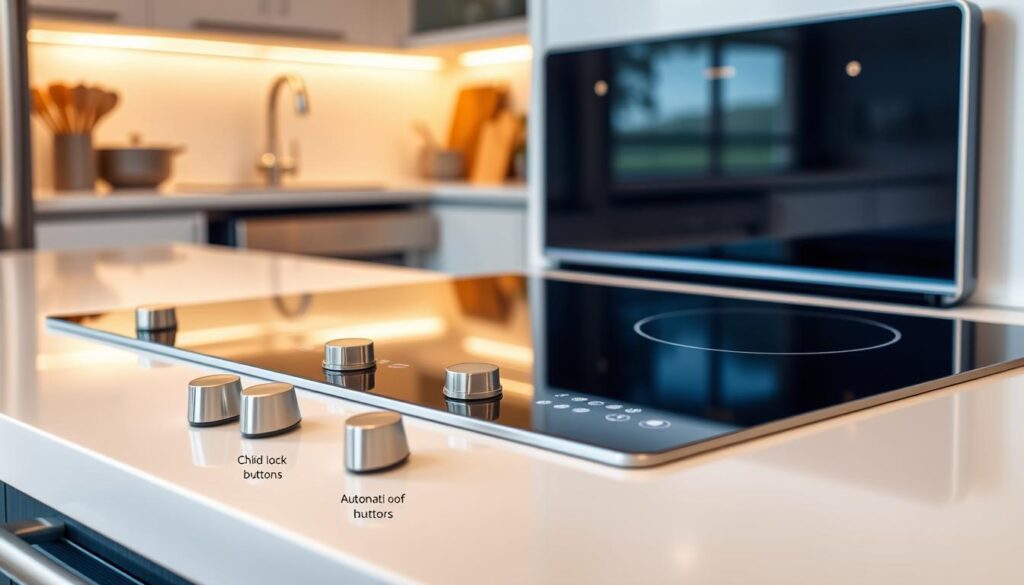
Accidental starts are a big worry, mainly with kids around. Many stoves now have digital lockout features. These require a special button sequence to turn on.
Look for knobs at the back or on the front with a push-to-turn design. These make it tough for kids to turn on the stove by accident. Consistent design keeps your kitchen safe all day.
Heat Resistance
Handling high heat is crucial for kitchen safety. Electric or induction stoves should have residual-heat indicators. These lights warn you when the surface is still hot.
Also, check that your oven door has multi-pane glass. This keeps it cool during hot cycles. And, make sure the edges around the cooktop are heat-resistant. These features make cooking safe and efficient for everyone.
Maintenance Tips for Your Stove
Keeping your stove in top shape is key to a great kitchen. It ensures your meals are cooked right and safely. Regular care helps avoid problems and makes your stove last longer.
Regular Cleaning Routines
Keeping your stovetop clean is crucial. Wipe it down with a damp cloth after each use to stop grease from building up. For tough spills on a stove top, use a gentle cleaner and a soft pad to avoid damage.
Don’t forget to clean your gas stove grates and check the burner caps and ports for blockages. A clean oven interior stops smoke and bad smells during cooking.
Troubleshooting Common Issues
Uneven heating? Make sure your cookware is flat and centered on the stovetop. A gas stove clicking without flame means the igniter is dirty or wet.
Can’t get your oven to the right temperature? Check the door seal and clean it. Unusual sounds might mean loose parts or debris near the heating elements. Always check your manual before fixing anything inside.
When to Call a Professional
Some problems need a pro. If you smell gas or see a leak near your stove, call a technician right away. These are serious safety issues.
Electrical problems, damaged wiring, or constant heating issues? Don’t try to fix them yourself. A pro can safely check your oven or stove top to make sure it’s safe. Safety is the top priority in your kitchen.
Energy Efficiency Ratings
Choosing the right cooking appliance means looking beyond the price. A shiny new stove might look great, but its real value is in energy use over time. Homeowners make better choices by considering both the cost upfront and ongoing utility bills.
Understanding Energy Star Labels
When you buy a new appliance, you’ll see different labels. The Energy Star program helps you find high-efficiency models. These labels mean a electric stove or oven meets strict EPA standards.
Choosing certified products means your kitchen uses less energy. Efficiency saves money and cuts down on carbon emissions. Always look for these labels to ensure your cooktop meets today’s energy standards.
Benefits of Energy-Efficient Stoves
Energy-efficient stoves offer many benefits. For example, an induction stove heats cookware directly, losing less heat than traditional stoves. This makes your stove top cooler, improving safety and comfort.
These stoves also cook faster and control temperature better. A high-efficiency oven retains heat better, cooking meals more efficiently while using less electricity.
Calculating Potential Savings
To figure out your annual savings, compare your current stove’s wattage to a new, efficient model. Then, multiply the difference in kilowatt-hours by your local electricity rate. This shows how much you could save.
Consider the extra cost of an induction stove against long-term savings. Often, the initial cost is worth it for lower bills and better performance. Use the table below to compare efficiency across different technologies.
| Technology Type | Energy Efficiency | Heat Transfer Speed | Estimated Annual Cost |
|---|---|---|---|
| Standard Electric | Moderate | Slow | $80 – $120 |
| Induction | High | Very Fast | $50 – $70 |
| Gas | Low | Fast | $90 – $130 |
Final Thoughts: Making Your Choice
Choosing the right appliance means looking at your daily habits, not just kitchen trends. Create a checklist that matches your cooking style with your home’s needs.
A top-notch Stove is the heart of your kitchen. Think about how it fits with your cabinets and cookware. Whether it’s a gas range or an induction model, choose what fits your budget and energy goals.
Brands like Bosch, GE, or Samsung have options for every household. Look for safety features and good maintenance support. A well-chosen stove top will last for years.
Double-check your space and fuel availability before buying. Your kitchen needs a functional centerpiece that makes cooking easier. Take your time to find the perfect stove for your lifestyle.