
 David Joseph
Did you know that nearly 70% of homeowners say changing their interior atmosphere boosts their mood? Switching to a Smart Light Bulb is a simple way to upgrade your home. It moves you from old incandescent lights to a more modern, efficient lifestyle.
With advanced connectivity, you can control your space with automation and scheduling. We encourage you to learn more about our mission. Choosing the right Smart Light Bulb makes your home both functional and welcoming for years.
Key Takeaways
- Upgrading to modern illumination improves both home functionality and personal mood.
- Automation features allow for seamless control over your daily living environment.
- Transitioning from traditional hardware saves energy and increases overall convenience.
- Understanding your specific needs is essential for choosing the best technology.
- We provide expert guidance to help you navigate the complex lighting market.
Understanding Smart Light Bulbs
Smart lighting is a big step up in how we use our homes. These devices connect to your network for remote control and automation. For more info, check out this guide to smart lighting.
What Are Smart Light Bulbs?
A Smart Light Bulb is a Wi-Fi or Bluetooth-enabled light bulb. It’s different from regular bulbs because you can control it with apps or voice commands. They’re key to a modern, connected home, offering convenience we didn’t have before.
Key Features of Smart Light Bulbs
These bulbs are versatile and easy to use. You can change brightness, color, or set schedules for your day. Imagine your lights getting brighter to wake you up or dimming for bed.
How Smart Light Bulbs Work
Most LED smart bulbs use advanced tech to light up your space. They’re much more efficient than old bulbs, using less energy to light up your room.
Here’s a table showing how smart bulbs compare to old ones:
| Feature | Incandescent Bulb | Smart LED Bulb |
|---|---|---|
| Energy Usage | 60 Watts | 9 Watts |
| Lifespan | 1,000 Hours | 25,000+ Hours |
| Control | Manual Switch | App/Voice/Automation |
| Color Options | Fixed Warm | Millions of Colors |
Knowing how these bulbs work is key to upgrading your home lighting. By picking a top-notch Smart Light Bulb, you save energy and enjoy a better experience.
Types of Smart Light Bulbs
It’s key to know the differences between various bulbs for a smart home. Not all Smart Light Bulbs are made for the same use. Choosing the right one for your fixtures is important for looks and durability.
LED Smart Bulbs
LED smart bulbs are now the top choice for homes. They use less energy and come in many designs. You can find them in shapes like A-shape for lamps, candle for chandeliers, and globe for vanity mirrors.
CFL Smart Bulbs
Compact Fluorescent Lamps (CFL) were once popular, but they’re fading out. They take longer to get bright than LEDs. Most people now choose LEDs for their quick start and energy savings.
Smart Bulbs with Adjustable Brightness
Adjustable brightness is a big plus in Smart Light Bulbs. It lets you dim for movie nights or brighten for work. This feature changes how you use your space all day.
“Lighting is the most powerful tool in your interior design arsenal, capable of shifting the mood of a room in an instant.”
| Bulb Type | Energy Efficiency | Best Use Case | Dimmable |
|---|---|---|---|
| LED | High | General Home Use | Yes |
| CFL | Medium | Utility Areas | Limited |
| Smart LED | Very High | Ambiance & Automation | Yes |
Connectivity Options for Smart Light Bulbs
How your devices connect affects your lighting system’s reliability. Upgrading your home means choosing the right Smart Light Bulb connection. Each protocol has its own strengths in range, speed, and stability.
Wi-Fi-Enabled Bulbs
Wi-Fi light bulbs are popular for their ease of use. They connect to your router without extra hardware. Just screw them in, sync with an app, and control your lights right away.
Yet, they can slow down your network with many devices. They’re best for small homes or apartments with strong router signals.
Bluetooth-Enabled Bulbs
Bluetooth bulbs offer a simple, short-range option. They pair with your phone or tablet, ideal for single rooms or bedside lamps.
They’re quick to respond when you’re nearby. But, their range is short, so you must be in the same room to adjust settings or change colors.
Zigbee and Z-Wave Compatibility
Zigbee and Z-Wave are better for big homes. They need a hub to connect to the internet.
These systems create a mesh network. Each bulb helps signal reach the next one. This keeps even distant lights responsive and reliable. Advanced users often choose these for their network efficiency.
| Protocol | Hub Required | Best For | Range |
|---|---|---|---|
| Wi-Fi | No | Small Homes | Router Dependent |
| Bluetooth | No | Single Rooms | Short (30ft) |
| Zigbee/Z-Wave | Yes | Large Homes | Excellent (Mesh) |
Smart Light Bulb Brands to Consider
We’ve looked at top companies in the smart lighting market. Choosing a well-known brand is key for lasting performance and ongoing support. This ensures your smart home devices stay up-to-date with new tech.
Philips Hue
Philips Hue is a leader in smart lighting. Their Philips Hue A19 Smart Bulb is great for lamps, offering 1100 lumens at 2700K. It’s known for easy integration and quality light.
LIFX
LIFX is known for bright colors without needing a bridge or hub. They’re ideal for those who want simplicity. Their lights are easy to control through apps, making them a favorite for smart home devices.
Wyze
Wyze offers great value for those on a budget. Their bulbs are easy to set up and packed with features. Many choose Wyze to add lights without spending a lot.
Sengled
Sengled is known for reliable performance and energy efficiency. Their bulbs are built to last, ensuring a stable connection. Choosing Sengled means a worry-free home environment.
Energy Efficiency of Smart Light Bulbs
Switching to a smart light bulb does more than make life easier. It also makes your home use less energy. With today’s tech, you can control how and when your lights use power.
Comparing Energy Use
Old incandescent bulbs use a lot of energy but don’t give off much light. Smart bulbs, made with LEDs, use less power and light up better.
Studies show smart bulbs can cut energy use by up to 80% compared to old bulbs. This means you can keep your lights bright but use much less electricity.
Cost Savings Over Time
Smart bulbs might cost more upfront, but they save money in the long run. You’ll see your bills go down every month because they use less energy.
Buying energy-efficient lighting is a smart choice for your wallet. Over time, the money you save will be more than the cost of the bulbs. It’s a wise investment for any homeowner.
Environmental Impact
Choosing the right tech also helps the planet. Using less electricity means your home makes less carbon dioxide. This is good for the environment.
By using sustainable habits and smart lighting, you help save energy. Switching to efficient tech is a small step towards a greener future. It also makes your home more comfortable and responsive.
Smart Home Integration and Compatibility
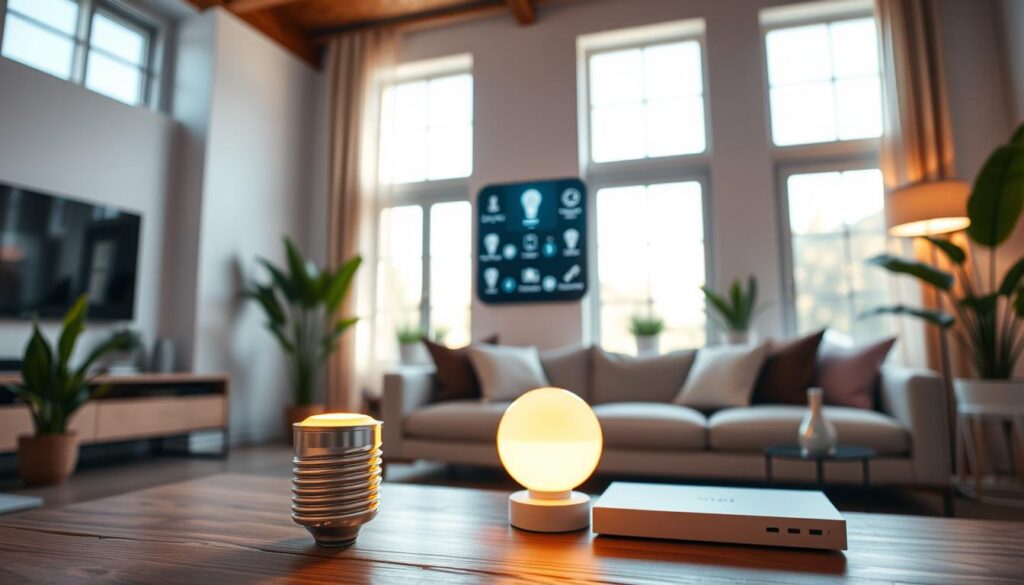
Modern home automation depends on how well devices talk to each other. When you pick a smart light bulb, you’re adding a new part to your digital network. It’s key that your new bulb works well with your smart home devices for a smooth experience.
Works with Amazon Alexa
Many people like Amazon Alexa for its strong support and wide compatibility. Linking your lights to an Echo lets you control them with your voice. You can set up bulbs by room or create scenes for different times of day.
Google Home Compatibility
Google Home makes managing your home easy. If you use Google Assistant, picking a compatible bulb lets you control lights with voice commands. This keeps your lighting in sync with your daily life and other smart devices.
Apple HomeKit Integration
Apple HomeKit is great for those in the Apple family. It lets you control your smart light bulb through the Home app on your iPhone or iPad. Using Siri for voice-controlled lighting makes things easy and feels natural.
Here are some key benefits of good integration:
- Unified Control: Manage all your smart home devices from one place.
- Automated Routines: Set your lights to turn on or off when you arrive or leave.
- Cross-Platform Flexibility: Many bulbs now work with different systems at once.
- Enhanced Security: Good integration often means safer, encrypted connections.
Color Temperature and Brightness
Understanding light in your home starts with color and intensity. Every smart light bulb lets us adjust settings for our needs. We can change a room’s feel from work to relaxation in seconds.
Understanding Color Temperature
Color temperature is in Kelvin (K) and shows a light’s warmth or coolness. Lower numbers, like 2700K to 3000K, give a warm, yellowish glow. This is great for living rooms or bedrooms for a cozy feel.
Higher settings, from 4000K to 5000K, produce a cool white light. This energizing light is like daylight and keeps us focused. Picking the right smart light bulb for each area makes our home lighting perfect for any activity.
“Light is the magical ingredient that makes or breaks a space; it is the soul of interior design.”
Choosing the Right Brightness for Your Space
Brightness, in lumens, shows how much light a bulb gives. We need more lumens for kitchens and home offices for safety and precision. Dining rooms do better with lower brightness for a cozy feel.
| Room Type | Recommended Temp | Brightness Level |
|---|---|---|
| Home Office | 4000K – 5000K | High |
| Living Room | 2700K – 3000K | Medium |
| Bedroom | 2200K – 2700K | Low |
Multi-Color Options Available
Today’s tech lets us use more than just white light. A top-notch smart light bulb can show millions of colors. This is perfect for parties or movie nights.
We can pick a bright blue for fun or a soft amber for calm. Having control over these settings helps us create the perfect look in our homes.
Installation and Setup
Starting your home’s upgrade is easy with the installation of new devices. Most modern gadgets fit right into your current setup. This makes switching to a Smart Light Bulb system simple for anyone.
Step-by-Step Installation Guide
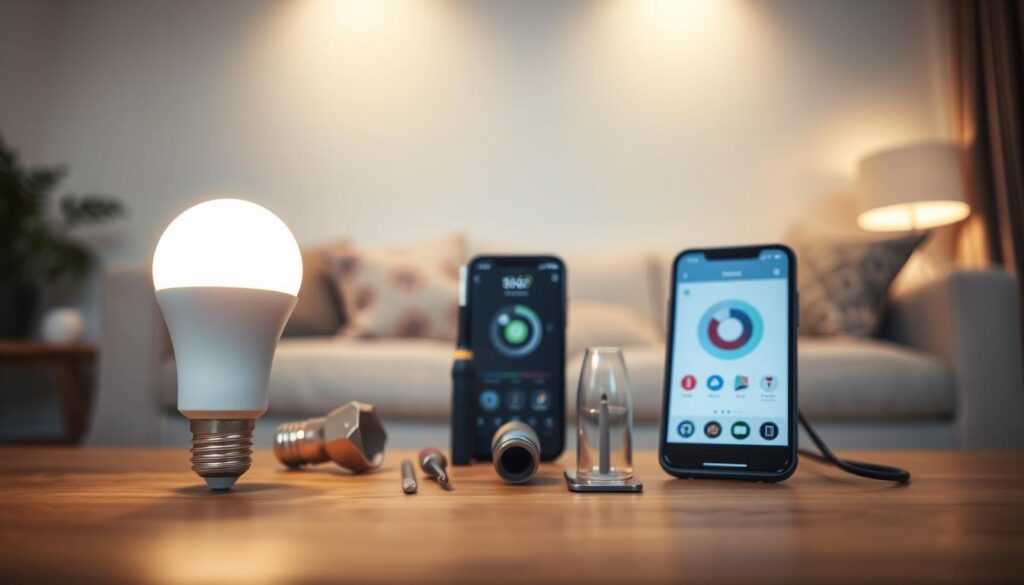
First, turn off your light switch before removing the old bulb. Then, screw in your new Smart Light Bulb just like a regular bulb.
After it’s in, turn the power back on. Download the app on your phone and pair it with your network. This usually takes just a few minutes.
Tips for Easy Setup
Keep your phone near the bulb during pairing for a strong signal. If you’re setting up many Wi-Fi light bulbs, do them one at a time. This avoids network problems.
Make sure your phone is on a 2.4GHz network. Many devices don’t work with 5GHz. Also, turn on Bluetooth during setup to find your device faster.
Troubleshooting Common Issues
If you have connectivity issues, check your router’s distance from your voice-controlled lighting. A simple power cycle might fix minor problems.
If pairing fails, try a factory reset. Most Wi-Fi light bulbs need a specific reset sequence. After resetting, your voice-controlled lighting should show up in the app again.
Smart Light Bulb Use Cases
Adding a Smart Light Bulb to your daily life brings new ease and safety. We see lights as just for seeing, but today’s tech makes them do more. With home automation, our homes can meet our needs better all day.
Home Security Enhancement
Keeping your home safe is easier with smart lights. Set them to turn on and off when you’re not there. It looks like someone is home, scaring off intruders.
Also, lights can turn on when you get home. No more dark houses. Use Smart Light Bulb bulbs outside to save energy and keep your home bright.
Creating Ambiance for Parties
Lighting sets the mood for any event. With smart bulbs, change colors and brightness for any look. Make scenes for easy use with voice or phone.
For dinner or parties, adjust lights for the perfect feel. Your guests will love the atmosphere you create. Thoughtful lighting makes a big difference.
Energy Conservation in Daily Life
Smart bulbs help save money on bills. They track usage and turn off lights when not needed. Use timers or sensors for better energy use.
This smart way to use energy saves without losing comfort. By choosing energy-efficient lighting, you help the planet and enjoy new tech. Here’s how different uses benefit your home.
| Use Case | Primary Benefit | Key Feature |
|---|---|---|
| Security | Deterrence | Automated Scheduling |
| Entertainment | Atmosphere | Color Customization |
| Efficiency | Cost Savings | Motion Sensing |
Maintaining Your Smart Light Bulbs
Keeping your smart light bulbs in top shape is easy. Just follow a few simple steps. Brands like Philips Hue or LIFX make bulbs that last a long time if you take care of them.
Extending Product Life
Make sure your fixtures are clean. This stops heat from building up around the base. Good air flow helps your bulbs work their best for years.
Managing Digital Updates
Always check your app for updates. These updates keep your bulbs safe and working well with your smart home.
Recognizing Replacement Signs
Look out for flickering or dimming that doesn’t go away. These signs mean it’s time to replace your bulbs. Doing this keeps your home bright and energy-efficient.
We hope this guide helps you make your home brighter with smart lighting. Start today by picking the right bulbs for your home.