
 David Joseph
Did you know a 36-inch induction cooktop can make your indoor air quality bad in minutes? Without a good ventilation solution, your kitchen can get really uncomfortable. Choosing the right appliance is a big deal. It affects your health and your home’s look.
Finding the perfect stove hood means finding a balance between power and looks. Whether you want a sleek vent hood or a strong exhaust hood, the goal is the same. You want something that clears the air and fits your style.
We think your cooking environment should be both useful and welcoming. By following our expert tips, you can pick a unit that fits your needs for years.
Key Takeaways
- Check your cooktop’s size to know how much airflow you need.
- Think about noise levels to keep your home quiet.
- Match your appliance’s design with your decor.
- Consider the installation needs for safe ducting.
- Look at the upkeep needs of different filters.
Understanding the Importance of a Kitchen Hood
Getting a top-notch kitchen ventilation system is a smart move for your home. We often think about looks like countertops or cabinets. But, the air quality in your kitchen is key for health and comfort. A good system keeps your home clean, not polluted.
Why Every Kitchen Needs a Hood
Every time you cook, you release steam, smoke, and grease into your home. Without a hood fan, these particles stick to your walls and cabinets. This can damage your kitchen and make it smell bad long after cooking.
Benefits of a Good Ventilation System
A strong ventilation system does more than just clean the air. It also protects your kitchen and family. Here are the main benefits of a top-notch unit:
- Improved Air Quality: It removes smoke and carbon monoxide from gas stoves.
- Cabinet Protection: It stops grease from ruining your expensive cabinets and hardware.
- Fire Safety: It lowers the chance of accidental smoke alarm triggers while cooking.
“Proper ventilation is the silent partner in every great kitchen, ensuring that the focus remains on the culinary creation rather than the cleanup.”
How Hoods Enhance Your Cooking Experience
Beyond just working, these appliances make your kitchen feel better. A modern hood fan turns a basic kitchen into a pro cooking area. With clear air and good lighting, you can focus on your cooking skills and ingredients.
We think true comfort in the kitchen comes from a well-managed space. By focusing on kitchen ventilation, you make your kitchen not just pretty but also efficient. This simple step makes cooking feel like a pro experience.
Types of Kitchen Hoods Available
The design of your kitchen is key to picking the right ventilation. The layout and where your stove is matter a lot. We need to think about looks and function to be happy with our choice.
Under-Cabinet Hoods
These hoods are great for small kitchens. They fit right under your cabinets, making your kitchen look neat. They’re easy to install and don’t take up much space.
Wall-Mounted Hoods
A wall mounted hood can be a kitchen’s centerpiece. They hang on the wall above your stove, often with a tall design. They’re perfect for kitchens without cabinets above the stove, adding a sleek look.
Island Hoods
For kitchens with an island stove, an island hood is essential. They hang from the ceiling, needing strong support. They’re visible from all sides, so they often have fancy designs to match your kitchen’s style.
Downdraft Hoods
Downdraft systems are great for those who like simple designs. They pull smoke down, fitting well in open layouts. They can also be adjusted to fit different venting paths, making them flexible.
| Hood Type | Best For | Installation | Visual Impact |
|---|---|---|---|
| Under-Cabinet | Small Kitchens | Cabinetry | Minimal |
| Wall-Mounted | Standard Ranges | Wall Surface | High |
| Island | Central Islands | Ceiling | Very High |
| Downdraft | Minimalist Design | Countertop | Hidden |
Key Features to Consider When Selecting a Kitchen Hood
Before you choose a kitchen hood, look at its key features. A good ventilation system should match your cooking style. Focus on these main points for a great installation.
Size and Fit
The size of your kitchen hood is very important. It should be as wide as your cooktop. This ensures it catches smoke and grease well.
A wider hood captures more particles. This keeps your home clean and free of bad smells.
Ventilation Options: Ducted vs. Ductless
Decide between ducted and ductless systems based on your home. Ducted hoods vent air outside. Ductless ones filter air back into the room.
- Ducted: Removes moisture and heat better.
- Ductless: Good for places without outside venting.
Look for hoods with over 400 CFM for best performance. You might need a makeup air system for these hoods.
Noise Levels and Sound Ratings
A good kitchen hood doesn’t have to be loud. Look for models that are quiet but still powerful. Check the sone ratings to avoid loud appliances.
Choose a hood with variable speed settings. This lets you lower the noise when cooking isn’t intense. It makes your kitchen a calm place for family.
Measuring for Your Kitchen Hood Installation
Getting your vent hood installed right starts with accurate measurements. Even the best equipment won’t work if it’s not the right size or in the right spot. Measuring carefully keeps your kitchen smoke-free and odor-free.
Key Measurements for a Proper Fit
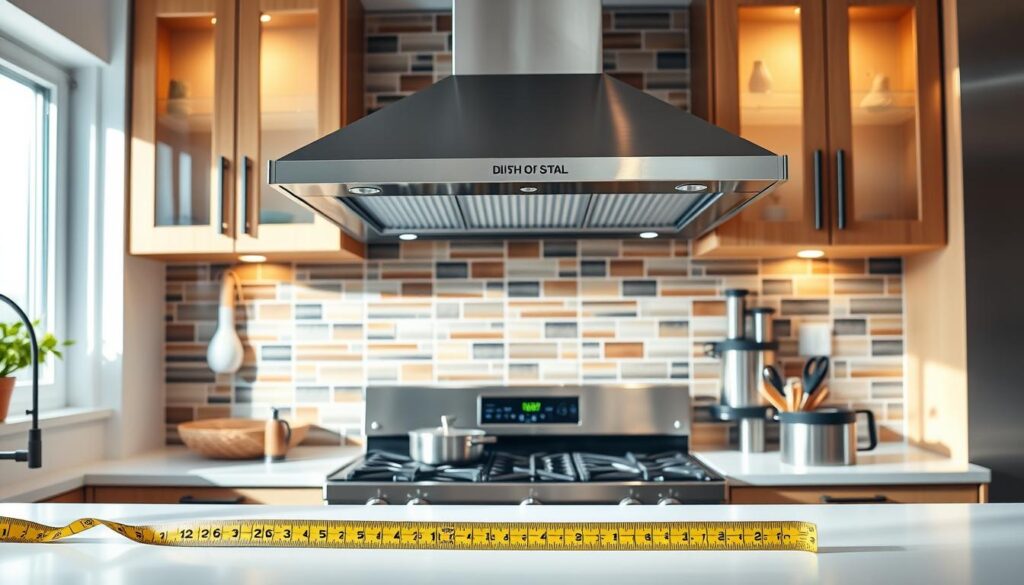
The width of your cooktop is key when picking a stove hood. Add at least 3 inches to each side of your cooktop for the best capture. For example, a 36-inch cooktop needs a 42-inch hood.
This extra width helps catch grease and steam, keeping your kitchen fresh. Make sure to measure the space between your cabinets for a perfect fit. If you’re replacing a hood, check the old dimensions to see if you need to adjust your cabinets.
How to Determine the Right Height
The height of your vent hood is crucial for safety and performance. A hood that’s too high won’t pull smoke away from the stove. A hood that’s too low can be a fire hazard and make cooking harder.
Most hoods should be 24 to 30 inches from the cooktop. Check your model’s manual, as gas ranges need more space than electric ones. Keeping this measurement consistent helps your ventilation system work best.
Common Sizing Mistakes to Avoid
Choosing a stove hood that’s too narrow is a common mistake. A hood that matches the cooktop width exactly might miss smoke that drifts outward. Also, don’t forget the hood’s depth, as a shallow one might not cover the front burners well.
Another mistake is not considering the ductwork path during measurement. Make sure the vent has a clear, direct path out of your home. Planning ahead saves you from costly changes later.
| Cooktop Width | Recommended Hood Width | Ideal Mounting Height |
|---|---|---|
| 30 Inches | 36 Inches | 24-30 Inches |
| 36 Inches | 42 Inches | 26-30 Inches |
| 48 Inches | 54 Inches | 28-32 Inches |
Stylish Designs That Complement Your Kitchen Decor
We think an exhaust hood should be as pretty as it is useful in your kitchen. It’s a key piece that shows off your kitchen’s style and keeps the air clean.
Choosing the Right Finish
The finish of your hood sets the mood for your kitchen. Brushed stainless steel is a favorite for its timeless, industrial look and simple upkeep.
For a cozy feel, try copper or matte black. These finishes add richness and contrast, making your hood a stylish highlight.
Integrating Your Hood with Kitchen Themes
Good kitchen ventilation doesn’t have to mess up your kitchen’s look. Many people choose hoods that blend in with the cabinets.
This design keeps your kitchen looking clean and simple. It hides the mechanics while still keeping the air fresh.
“Design is not just what it looks like and feels like. Design is how it works.”
Custom Vs. Pre-Designed Hoods
Choosing between a custom or pre-made hood depends on your kitchen’s layout. Pre-made hoods are quick to install and cost less.
Custom hoods give you total control over design. You can match your kitchen’s exact look and feel, whether it’s metal or wood.
| Feature | Pre-Designed Hood | Custom Hood |
|---|---|---|
| Installation Speed | Fast and Simple | Requires Planning |
| Design Flexibility | Limited Options | Fully Tailored |
| Cost Efficiency | High Value | Premium Investment |
| Maintenance | Standardized Parts | Specialized Care |
Your kitchen ventilation system should match your style. By picking the right finishes and designs, your kitchen stays healthy and beautiful.
Understanding the Performance Ratings
Learning about CFM and Sones helps you pick the best kitchen equipment. These metrics guide you to find the right ventilation system for your cooking needs. By looking at these numbers, you can avoid mistakes and keep your kitchen comfortable.
CFM (Cubic Feet per Minute) Explained
CFM shows how much air a hood fan moves in a minute. A higher CFM means the fan can clear smoke and grease faster. But, many high-CFM fans can’t be set to lower than 400 CFM without special air requirements.
For an island hood, you might need a higher CFM because they don’t have the capture area of wall-mounted hoods. Always check the specs to make sure it fits your home’s needs and local codes.
Sones: Measuring Noise Levels
Sones measure how loud a ventilation system sounds. They’re different from decibels because they show how we actually hear noise. A lower sone rating is key for open-concept kitchens where you want to talk while cooking.
“Effective ventilation is not just about power; it is about finding the perfect balance between air movement and acoustic comfort for the homeowner.”
Energy Efficiency Ratings For Kitchen Hoods
Energy efficiency is important for those who want to help the environment. Modern hoods have variable speed motors. This lets you adjust power for different cooking tasks, saving energy and keeping air fresh.
| Metric | Purpose | Ideal Range |
|---|---|---|
| CFM | Airflow Capacity | 300 – 600+ |
| Sones | Noise Level | 1.0 – 6.0 |
| Efficiency | Energy Usage | High (Energy Star) |
Choosing the right mix of these ratings is key for a good investment. Whether you want a quiet kitchen or lots of airflow, knowing these details makes cooking better.
Installation Tips and Considerations
Installing a kitchen hood needs careful planning. It’s important for your ventilation to work well and for your kitchen to stay safe. Whether you do it yourself or get a pro, the goal is the same.
DIY Installation vs. Professional Help
Doing it yourself can save money. But, you need to know a lot about electrical work and lifting. A simple wall mounted hood might be doable over a weekend if you’re skilled.
But, more complex setups like island units need special skills. We strongly recommend hiring a licensed professional for these jobs. They can avoid mistakes and keep you safe.
“Quality installation is the silent partner of every high-performing appliance; without it, even the best technology fails to deliver.”
Essential Tools for Installation
To get a professional look, you need the right tools. Having these ready helps avoid delays:
- Power drill with various bits for masonry or wood.
- Leveling tool to ensure the unit is perfectly horizontal.
- Stud finder to locate secure mounting points.
- Duct tape and metal foil tape for airtight connections.
- Safety goggles and work gloves for protection.
Safety Precautions During Installation
Always put safety first. Turn off the power at the circuit breaker before working with electrical wires. This prevents shocks.
Make sure your kitchen hood is mounted right. It should be on wall studs or strong ceiling joists. This prevents it from sagging. If you’re installing a wall mounted hood, check if the wall can hold the unit’s weight. This is important for heavy units.
Maintenance and Cleaning Tips for Your Kitchen Hood
Keeping your ventilation unit clean is key to a healthy kitchen. A little time each week can keep your range hood working great. This stops grease and grime from blocking airflow and causing bad smells.
Regular Cleaning Routines
Using your stove hood for five years can keep grease buildup low if you clean it regularly. How often you clean depends on how you cook and what you make. For most, wiping the outside with a mild cleaner once a week is enough.
Filters need more care to keep suction strong. Metal mesh filters can go in the dishwasher for a deep clean. Always check your manufacturer’s manual to make sure they’re safe for the dishwasher.
Troubleshooting Common Issues
Even with good care, you might run into small problems. A rattling sound often means the filter isn’t right or screws are loose. Tightening these usually fixes the noise.
Less suction is another issue. It’s usually because the filter is clogged. Cleaning or replacing the filters usually fixes this without needing a pro.
Extending the Lifespan of Your Hood
More than just cleaning the surface is needed to protect your investment. Check the ductwork yearly for blockages or leaks. A clean stove hood will last longer if you keep it free of debris.
Don’t use harsh cleaners on stainless steel, as they can scratch. Use a soft cloth and a stainless steel polish to keep it looking new. Regular maintenance is the secret to a long-lasting kitchen ventilation system.
Enhancing Kitchen Functionality with Accessories
Adding specialized accessories to your ventilation system can greatly improve your cooking space. These upgrades make your vent hood fit your cooking style better. The right add-ons turn a basic appliance into a key part of your kitchen.
Lighting Options for Kitchen Hoods
Good lighting is key for safe and precise cooking. Many modern hoods come with built-in LED lights. These lights give you a clear view of your stovetop.
These lights are energy-efficient and offer a natural glow. You can adjust the brightness to suit your kitchen’s mood.
The Importance of Charcoal Filters
For ductless systems, good filtration is crucial. A top-notch exhaust hood uses charcoal filters to catch grease and smells.
These filters need to be replaced often to work well. Without them, your kitchen might smell and have particles in the air.
Adding Smart Features for Convenience
Modern tech adds a lot of convenience to kitchens. Many hoods now have sensors that detect smoke or heat. They adjust the fan speed automatically.
These smart features make your vent hood work only when needed. This saves energy and keeps the air clean. It’s great for busy homes that value ease and efficiency.
| Accessory Type | Primary Benefit | Maintenance Level |
|---|---|---|
| LED Lighting | Improved Visibility | Low |
| Charcoal Filter | Odor Neutralization | High |
| Smart Sensors | Automated Efficiency | Very Low |
| Remote Control | User Convenience | Low |
Top Brands and Models Recommended for Homeowners
Choosing a well-known manufacturer means your investment will last and work well. Look at leaders like Broan-NuTone, Zephyr, and Wolf. They have many options for different kitchens and tastes.
Industry Leaders and Quality Standards
Good kitchen ventilation needs top-notch parts that handle heat and grease well. Bosch and Viking are known for their strong builds and motors. A trusted brand means your hood fan will be quiet and efficient for years.
Balancing Budget and Performance
It’s smart to compare prices to find the right fit for you. A high-end island hood might cost more but has cool features like heat sensors. GE’s entry-level models are great for a good wall mounted hood without spending too much.
Leveraging Real-World Feedback
User reviews are key when making your choice. Check what real buyers say to see how a hood works in a home. This way, you’ll know if it meets your needs for quietness and power. Now, you’re set to upgrade your kitchen with the perfect system.