
 David Joseph
Did you know that using a ceiling fan can cut your air conditioning costs by up to 40% in summer? Many think these fans are old-fashioned. But today, they come in modern styles that are both energy efficient and stylish.
Finding the right ceiling fan is about mixing performance with your home’s look. Whether you want better air flow in a big bedroom or a stylish touch in your dining room, the best ceiling fans offer both. Our guide will help you understand the technical details to make a smart choice for your home.
Key Takeaways
- Proper sizing ensures maximum airflow efficiency in any room.
- Modern designs offer aesthetic versatility for contemporary homes.
- Strategic placement significantly lowers monthly cooling expenses.
- Motor quality determines the longevity and noise level of your unit.
- Selecting the right blade pitch improves overall air circulation.
Understanding Ceiling Fan Basics
We often overlook our overhead cooling systems until we examine them closely. Learning about their mechanics helps us make better choices for our homes. Whether you need a standard fan or a portable fan for small areas, knowing the basics is key.
What Are Ceiling Fans?
A ceiling fan is a device hung from the ceiling. It uses spinning blades to move air, making us feel cooler by evaporating sweat. These fans are very versatile, adding beauty and function to any room.
How Do Ceiling Fans Work?
These fans work by using the motor and blade angle. The motor’s spin pushes air down, creating a breeze. A top-notch quiet ceiling fan has a motor that reduces noise and vibration, keeping your space calm and cool.
Today’s fans can move a lot of air quietly. By picking a fan with a balanced motor, we get smooth and silent airflow. This is a big plus for places like bedrooms or home offices where quiet is crucial.
Types of Ceiling Fans
We sort fans by their mounting, motor, and use. Knowing these categories helps us find the perfect fan for our needs:
- Standard Mount: These are the most common, hanging from a downrod for optimal airflow.
- Flush Mount: Designed for rooms with low ceilings, these sit close to the surface.
- Energy-Efficient Models: These use DC motors for better performance with less power.
Choosing the right fan depends on your room size and style. By understanding these basics, we can find a fan that looks good, works well, and lasts long.
Selecting the Right Size Fan for Your Room
Finding the right ceiling fan size is key for good airflow. A fan that’s too small can’t move air well, leaving hot spots. On the other hand, a fan that’s too big can be too much to handle and make the room feel cold.
Measuring Room Dimensions
To find the right fan size, start by figuring out your room’s square footage. Just multiply the room’s length by its width. Accurate measurements are crucial for your fan to work its best.
If your room isn’t a perfect rectangle, break it into smaller parts. Then add those together. This helps pick a ceiling fan that covers the whole room well. Remember, big pieces of furniture can also affect air flow.
Fan Size Recommendations
After figuring out your room’s size, pick a blade span that fits. Stick to these standards for the best performance. The right size fan keeps your home cool during hot months.
| Room Size (Sq. Ft.) | Recommended Blade Span | Performance Level |
|---|---|---|
| Up to 75 | 29 to 36 inches | Optimal for small nooks |
| 75 to 144 | 36 to 44 inches | Ideal for bedrooms |
| 144 to 225 | 44 to 54 inches | Best for living areas |
| Over 225 | 54 inches or larger | Great for open floor plans |
Picking the right ceiling fan size is a foundational step in home improvement. Following these guidelines ensures your fan cools well and looks good for years.
Motor Types and Efficiency Ratings
The motor is key to a ceiling fan‘s performance. Knowing how they work helps you choose wisely for your home. The right motor means comfort and lower bills.
AC vs. DC Motors
Most fans use Alternating Current (AC) motors. They’re reliable and affordable. But, they use more power than newer options.
Direct Current (DC) motors are the latest in cooling tech. They use up to 70% less power than AC motors. Though pricier upfront, they save money in the long run.
| Feature | AC Motor | DC Motor |
|---|---|---|
| Energy Usage | Standard | Very Low |
| Operation | Quiet | Ultra-Quiet |
| Cost | Budget-Friendly | Premium |
| Speed Control | Basic | Advanced |
Energy Star Ratings
Look for the Energy Star label on an energy efficient ceiling fan. It means the fan meets EPA standards. This ensures you get a top-notch, eco-friendly product.
Choosing an affordable ceiling fan with Energy Star means you’re making a smart choice. These fans are efficient and effective. They help you save energy and live greener.
Ceiling Fan Styles to Complement Your Decor
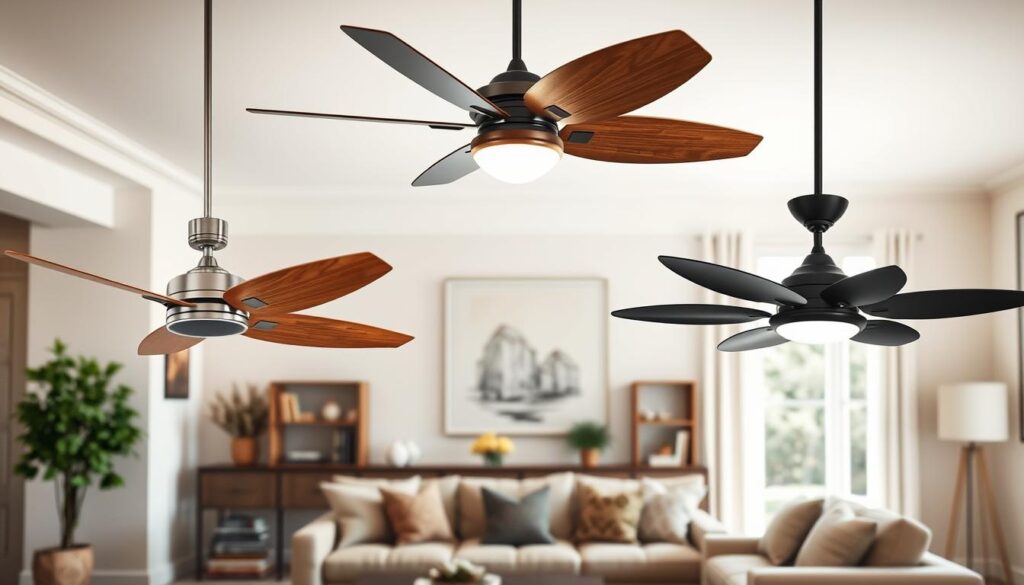
Finding a stylish ceiling fan is key to a unified look in any room. Instead of being an eyesore, it should match your furniture and architecture. Learn how to integrate a ceiling fan into your home by choosing finishes that match your ceiling.
Traditional and Classic Designs
Traditional fans have ornate details and warm wood tones. They’re perfect for classic rooms like dining areas or master bedrooms. With curved blades and detailed motor housing, they add elegance and history.
Modern and Contemporary Styles
Modern ceiling fans are ideal for a minimalist look. They have clean lines and simple shapes, staying stylish over time. Choose matte white or brushed nickel finishes to make the fan blend into the ceiling, keeping your room open and airy.
Rustic and Industrial Looks
Industrial designs are great for a rugged or workshop feel. These fans use materials like galvanized steel, oil-rubbed bronze, or reclaimed wood blades. They add a bold character to lofts and open-concept areas, making a statement while improving airflow.
| Style Category | Primary Material | Best Room Type |
|---|---|---|
| Traditional | Dark Wood/Brass | Formal Living Room |
| Modern | Steel/Plastic | Home Office/Bedroom |
| Industrial | Iron/Reclaimed Wood | Kitchen/Loft |
Blade Material and Design
Every stylish ceiling fan needs the right blade design for comfort and style. The materials used affect the fan’s life and how well it works. Finding the right balance is crucial for your home.
Wood vs. Metal Blades
Wood or metal blades depend on your design goals. Wood blades add a warm, organic look to traditional or rustic homes. But, they might warp in humid places like bathrooms.
Metal blades give a sleek, industrial vibe and are durable and easy to clean. They’re great for modern homes where a minimalist design is wanted. Here’s a quick guide to help you choose:
| Material | Best For | Durability |
|---|---|---|
| Wood | Living Rooms | Moderate |
| Metal | Kitchens/Patios | High |
| Composite | All Environments | Very High |
“Design is not just what it looks like and feels like. Design is how it works.” — Steve Jobs
Blade Pitch and Airflow
The blade pitch is the angle of the blade in the air. A steeper pitch means more air moves with each spin, perfect for big rooms. A shallow pitch might make the fan spin fast but won’t move much air.
Look for a pitch between 12 and 15 degrees for the best airflow. This range keeps your ceiling fan quiet and effective. Paying attention to these details ensures your fan is both comfortable and stylish for years.
Considering the Ceiling Height
The height between your floor and ceiling is key for your ceiling fan‘s performance. The right mounting hardware is crucial. It ensures your fan works safely and circulates air well in your space.
Best Practices for High Ceilings
High ceilings require the fan blades to be closer to you. Use an extended downrod to reach the ceiling. This crucial adjustment makes sure the air moves down to you, not just near the ceiling.
Positioning your ceiling fan right in high-ceiling rooms is important. It stops air from getting stuck. Lowering the fan makes the breeze reach you better, boosting comfort in warm months.
Options for Low Ceilings
For lower ceilings, safety and space are key. Opt for a hugger-style ceiling fan. These fans mount directly to the ceiling without a downrod. They’re perfect for rooms needing more headroom but still want air movement.
Hugger models also make rooms look more open and less cluttered. They’re safe because they’re close to the ceiling, avoiding accidental blade contact. This is a smart choice for rooms with standard eight-foot ceilings.
Fan Features to Enhance Functionality
Today’s technology turns a simple ceiling fan into a key part of home convenience. Modern fans do more than just circulate air. They let you control your home’s climate with precision. Choosing the right features can make your living space more comfortable and efficient.
Remote Controls
A remote controlled ceiling fan makes life easier in any room. Forget about using pull chains or wall switches. Now, you can change speeds, reverse the motor, and dim lights from your couch or bed.
Modern remotes also have cool features like timers and sleep modes. These help save energy while keeping you cozy at night. With a remote controlled ceiling fan, managing your home becomes simpler, all from your hand.
Smart Fan Technology
The smart ceiling fan is a hit with tech lovers. These fans connect to your Wi-Fi, working with voice assistants like Amazon Alexa or Google Home. Adjust your fan with voice commands or mobile apps.
Smart tech brings big benefits:
- Automated scheduling fits your daily life.
- Works with smart thermostats to save energy.
- Access your fan from anywhere, even when you’re not home.
Integrated Lighting Options
Opting for a ceiling fan with built-in lighting saves space and looks good. Many come with energy-saving LED kits for bright, cozy light. This combo means no extra light fixtures needed, perfect for small rooms or tight spaces.
Think about these when picking your lighting:
- Dimmable bulbs for the perfect mood.
- Choose from warm yellow to cool daylight colors.
- Make sure it works with smart dimmers for better control.
By mixing air movement with top-notch lighting, you get a ceiling fan that’s both useful and stylish. These features make your fan a standout piece in your room for years.
Typical Fan Placement Guidelines
Where you hang your fan is as important as the model you choose. Proper installation is the key to maximizing airflow and keeping your space looking good. Whether it’s a standard or a modern remote controlled ceiling fan, following specific rules ensures you’ll be happy with it for a long time.
Centering the Fan in the Room
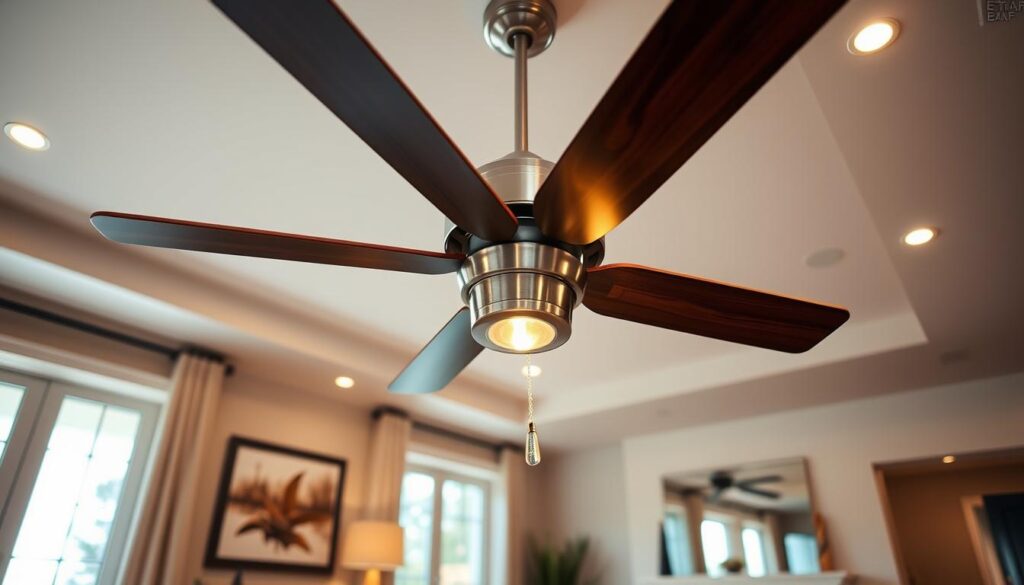
Mounting your fan in the room’s center is best for air circulation. This spot creates a balanced aesthetic that makes the space feel anchored and evenly cooled. A fan in the center ensures air flows evenly to all corners.
“Design is not just what it looks like and feels like. Design is how it works.”
Symmetry is key in interior design, like in bedrooms or living areas. A centered fan keeps the room balanced and avoids clutter. If you choose a remote controlled ceiling fan, centering it also makes sure the signal receiver is easy to reach from anywhere.
Avoiding Overhead Obstacles
Safety is always first when installing a fan. Make sure the blades can rotate freely without hitting cabinets, tall furniture, or lights. We recommend having 18 to 24 inches of space between the blades and any walls or obstructions.
Look out for hazards like open cabinet doors or high shelves before you decide where to mount the fan. If your room is tricky, consider using a downrod to lower the fan. These steps protect your investment and keep your home safe and functional.
Seasonal Use: Summer vs. Winter
Fans are not just for summer. They also help in winter. A good ceiling fan keeps your home comfortable all year. Just change the blade direction to boost your home’s climate control.
Cooling Benefits in Warm Weather
In summer, you want a cool breeze. Set your fan to counter-clockwise. This makes the room feel cooler.
An energy efficient ceiling fan in this mode lets you use less air conditioning. This saves money and keeps your home cool. Here are summer tips:
- Ensure the fan is spinning counter-clockwise.
- Run the fan only when people are present in the room.
- Combine with natural ventilation for better airflow.
Heating Benefits in Cold Months
A ceiling fan can also help in winter. Heat rises and gets stuck near the ceiling. A clockwise fan at low speed pulls cool air up.
This method, called destratification, spreads warm air down. An energy efficient ceiling fan in reverse makes your heating system work less. This keeps your home warm and cozy in winter.
Maintenance Tips for Longevity
Keeping your ceiling fan in good shape is easy and saves you money. A little effort in regular care makes it work better and last longer. It’s a key part of your home’s comfort for years.
Cleaning Your Ceiling Fan
Dust on blades can make them unbalanced and wear out the motor. Clean your blades twice a year with a soft, damp cloth or a special duster.
First, turn off the power to be safe. Then, wipe each blade from base to tip. Use a vacuum to clean the motor vents. Regular cleaning keeps the motor running well.
Troubleshooting Common Issues
Even with good care, you might see some problems. If your ceiling fan wobbles, check the screws. Tightening them or adjusting the brackets can fix it.
Strange sounds like clicking or humming mean something’s loose or needs oil. Check the canopy and tighten any loose bolts. If the sound doesn’t go away, look in your manual for oiling instructions.
| Maintenance Task | Frequency | Expected Benefit |
|---|---|---|
| Blade Dusting | Every 3 Months | Improved Airflow |
| Tightening Screws | Every 6 Months | Reduced Wobbling |
| Motor Inspection | Once a Year | Extended Ceiling Fan Life |
| Cleaning Vents | Every 6 Months | Prevents Overheating |
Top Ceiling Fan Brands to Consider
Choosing the right cooling solution means finding a balance between performance and reliability. Reputable brands like Hunter, Minka-Aire, Haiku, Harbor Breeze, and Honeywell are great for every home. They offer unique benefits for different environments.
Opting for a best ceiling fan from these leaders means you get top-notch motor tech and durable materials. These brands focus on energy efficiency and quiet operation. This makes them a wise choice for your home.
Evaluating Performance and Value
Look for models that fit your room’s size and style. Whether you want a sleek fan for a minimalist bedroom or a strong one for a big living room, these brands have you covered.
Check out what customers say about installation and noise. A quality ceiling fan can save you money on energy and keep you comfortable all year.
Finding Your Ideal Match
Even on a budget, you can find a reliable cooling solution. Affordable ceiling fans are out there, offering great craftsmanship and design.
Our research shows that top ceiling fans come with smart tech and built-in lighting. Choosing these brands means you get a product that lasts and improves your home’s comfort.