
 David Joseph
Did you know we move over 13 trillion cubic feet of air every year? This huge effort keeps 110 million homes in North America healthy.
We know that good air flow is key for building safety and health. Whether you’re building, fixing, or just living in a home, our top-notch gear keeps it fresh and safe.
Our systems get rid of moisture and bad air, saving your property from harm. For smaller spaces, we have portable fans that work well with our big units. Choosing the right air system makes your life better every day.
Key Takeaways
- We serve over 110 million homes across North America with reliable ventilation.
- Our systems process 13 trillion cubic feet of air annually to ensure safety.
- Proper airflow is essential for maintaining building health and structural longevity.
- We provide professional-grade solutions for both residential and commercial properties.
- Effective ventilation helps remove harmful pollutants and excess moisture from indoor spaces.
Understanding Exhaust Fans: A Quick Overview
We often overlook the silent workhorses that keep our living spaces fresh and free from excess moisture. These devices are essential components of modern building design. They ensure that the air we breathe remains clean and comfortable throughout the day.
What is an Exhaust Fan?
An exhaust fan is a mechanical device designed to remove stale air, odors, and airborne contaminants from an indoor environment. It pulls air out of a room, creating negative pressure. This encourages fresh air to enter from other sources like windows or vents.
Whether you are cooking in the kitchen or showering in the bathroom, these systems act as the lungs of your home. They effectively allow your living space to exhale. This prevents the buildup of pollutants that can compromise your indoor air quality.
How Do Exhaust Fans Work?
The operational mechanics of a ventilation fan are straightforward yet highly effective. When activated, the motor spins a set of blades. These blades draw air into the unit and push it through a duct system leading directly outside.
“Proper mechanical ventilation is not just a luxury; it is a fundamental requirement for maintaining the structural integrity and health of any residential or commercial building.”
On a national scale, these systems are incredibly active. In fact, it is estimated that ventilation fans move 13 trillion cubic feet of fresh air per year across the United States. This massive exchange of air is vital for keeping our indoor environments safe and breathable.
Key Benefits of Installing Exhaust Fans
Understanding the primary exhaust fan benefits is crucial for any homeowner looking to improve their property. Beyond simply removing unpleasant smells, these units play a critical role in protecting your home from long-term damage.
- Moisture Control: By venting steam outside, they prevent the growth of mold and mildew in damp areas.
- Improved Air Quality: They actively remove cooking fumes, cleaning chemicals, and other indoor pollutants.
- Structural Protection: Consistent humidity management helps preserve paint, drywall, and wood fixtures from water damage.
Investing in a high-quality exhaust fan is a smart decision for your health and your home’s longevity. By choosing the right ventilation fan, you ensure a cleaner, drier, and more comfortable living space for years to come.
Types of Exhaust Fans for Residential Spaces
Every room in your house has its own needs for airflow. The right exhaust fan makes each space comfortable and clean. By solving the unique problems of each room, we can greatly improve your air quality.
Kitchen Exhaust Fans
The kitchen is the heart of the home but can be a source of bad air. Cooking releases moisture, smoke, and particles that need to be vented. A good kitchen exhaust fan catches these pollutants at the source.
These fans are critical for a clean kitchen and to protect your cabinets from grease. Choose a fan that matches the size of your kitchen. This keeps odors from spreading.
Bathroom Exhaust Fans
Bathrooms face challenges from high humidity. Without a bathroom exhaust fan, moisture can cause mold and mildew. These fans pull damp air out and vent it outside.
Installing a ventilation fan in your bathroom is key to your home’s health. Pick a quiet model for comfort. Regular use keeps your bathroom surfaces dry.
Attic Exhaust Fans
Attics are crucial but often ignored. An attic ventilation fan helps control temperature by removing hot air in summer. This reduces cooling system strain.
These fans also prevent moisture buildup in attics. A dry attic protects your roof and insulation from water damage. A well-ventilated attic is vital for energy efficiency.
Commercial Exhaust Fan Solutions
Professional settings need special fans to handle big air flows. Unlike home fans, a commercial exhaust fan must move more air. This keeps the workplace safe for everyone.
Importance in Commercial Spaces
Keeping air clean is key for safety and code compliance. Good ventilation stops bad air, moisture, and smells in busy areas.
A good ventilation fan system keeps buildings strong and people healthy. It helps avoid problems like mold and bad air. These issues can hurt work performance.
Types Used in Businesses
Choosing the right fan depends on your space’s needs. An industrial exhaust fan is best for big places like warehouses.
For smaller spaces or direct venting, a wall mounted exhaust fan works well. These fans move a lot of air and are easy to maintain.
Features to Look For
Look for fans that last long and work well. High Cubic Feet per Minute (CFM) ratings are important. They ensure the fan can handle your space’s size.
Energy efficiency is also key to save money. Make sure your exhaust fan meets energy standards. This keeps your business green and your bills low.
Factors to Consider When Choosing an Exhaust Fan
Choosing the right exhaust fan is key for good indoor air. You need to think about room size, ductwork, and what you find comfortable. This ensures your fan works well.
Size and Placement
Getting the fan size right is crucial. Measure your room’s square footage to find the right capacity. Place the fan near the source of moisture or pollutants for best results.
Airflow Requirements
Airflow is measured in Cubic Feet per Minute (CFM). Calculate your needs based on room size and air changes. For better climate control, check out our air conditioner options. Make sure your exhaust fan meets the CFM requirements for your space.
Noise Levels
Noise is measured in sones, with lower numbers meaning quieter fans. Choose a model with a low sone rating for bedrooms or quiet areas. A quieter fan improves your home comfort without losing performance.
| Feature | Small Bathroom | Large Kitchen | Commercial Office |
|---|---|---|---|
| CFM Range | 50 – 80 | 150 – 300 | 300+ |
| Noise Level | Below 1.0 Sone | 2.0 – 4.0 Sones | 4.0+ Sones |
| Placement | Above Shower | Above Stove | Ceiling Grid |
Installation Tips for Homeowners
Installing an exhaust fan right is key to a healthy home. Whether it’s for your kitchen or bathroom, how you mount it matters a lot. Always follow the maker’s guide to meet safety standards and work well.
DIY Installation Vs. Professional Help
Choosing between DIY or a pro depends on your skills with electrical work and renovations. A simple wall mounted exhaust fan might seem easy, but complex jobs need a pro. Experts ensure your system is safe, improves air quality, and meets local codes.
“Quality ventilation is not just about moving air; it is about creating a living space that breathes, protects your home from moisture, and keeps your family healthy.”
Common Mistakes to Avoid
One big mistake is not sealing ducts well. Leaks can cause mold and less airflow. Also, picking the wrong spot means the fan won’t work right.
Too much noise often means it’s installed wrong, not the fan itself. If it’s not fixed well, it will vibrate and disturb your home. For tips on keeping airflow steady, check out this guide on continuous running exhaust.
Steps for Proper Installation
Installing a ceiling exhaust fan or a wall unit follows a few steps. Always turn off power at the breaker box first to avoid shocks.
- Measure the space right to fit the housing well.
- Mount the fan housing to the framing with brackets to avoid vibrations.
- Connect the ductwork with metal foil tape for tight seals.
- Wire it up as shown in the diagram, making sure all connections are in a box.
- Check airflow and noise before finishing with the cover plate.
Maintenance for Optimal Performance
Proper care of your air circulation equipment ensures you enjoy the exhaust fan benefits. Regular upkeep extends your ventilation system’s life and keeps air quality high. Spending a little time on routine tasks prevents dust and grease buildup.
Cleaning Your Exhaust Fan
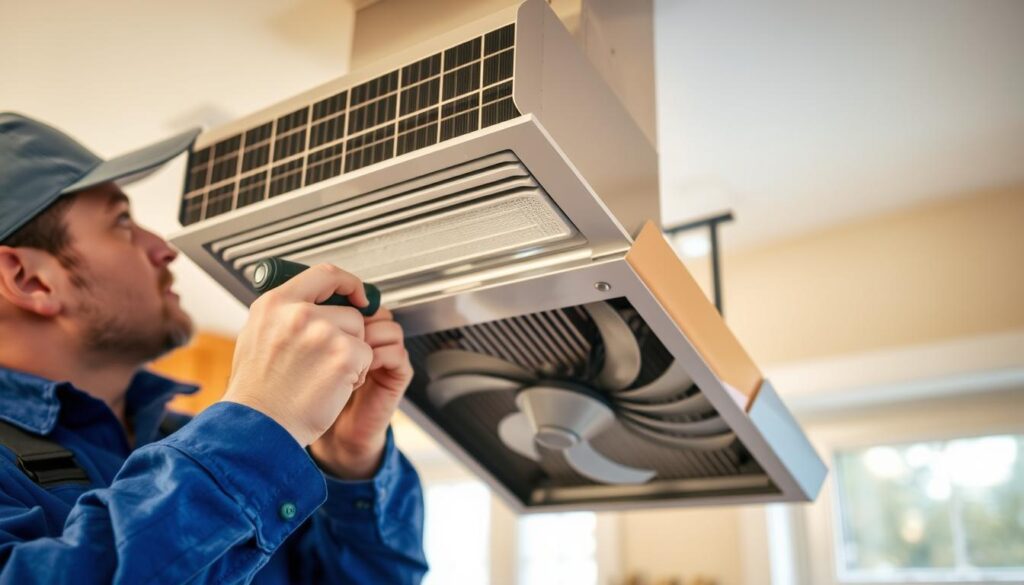
Clean your unit at least twice a year for smooth operation. Always turn off the power at the circuit breaker first for safety.
Remove the cover and vacuum with a brush attachment to remove loose debris. For tough grease, use mild detergent and a soft cloth. Never use harsh chemicals that could harm your exhaust fan.
Regular Inspection Tips
Do more than just clean; check parts regularly. Listen to the motor while it’s running for any odd sounds.
- Check that the exterior vent flap opens and closes freely.
- Inspect the ductwork for any visible blockages or disconnected joints.
- Verify that the fan blades spin without obstruction or wobbling.
Signs Your Exhaust Fan Needs Repair
Even with good care, parts can wear out. If you notice unusual vibrations or a grinding sound, it’s time to call a pro.
If your fan can’t handle steam or odors, it might be clogged or failing. Fixing these issues quickly keeps your home healthy and comfy.
Energy Efficiency and Exhaust Fans
Today, keeping our homes healthy and saving energy is key. We often think about insulation and windows. But, how we manage airflow is also crucial for our energy bills. Choosing the right ventilation fan helps keep our homes fresh without wasting power.
Eco-Friendly Options
Modern tech brings us systems that save energy and resources. Energy Recovery Ventilators (ERVs) and Heat Recovery Ventilators (HRVs) are great for saving energy. They exchange heat between outgoing and incoming air.
These systems make your home comfortable all year while reducing your carbon footprint. They’re a wise choice for any eco-conscious home.
How Exhaust Fans Save Energy
Many think fans use a lot of power, but they can actually save you money. An efficient exhaust fan stops moisture damage. This saves you from costly repairs later.
The main exhaust fan benefits are:
- Less strain on your heating and cooling systems.
- Lower humidity makes air easier to heat or cool.
- ERVs can cut ventilation energy use by up to 50%.
Understanding Energy Ratings
When buying a ventilation fan, check the energy labels. These labels help compare models based on power and efficiency. Look for the ENERGY STAR to ensure it’s energy-efficient.
Choose fans with variable speed settings. They use less energy when not running at full power. By focusing on these details, you can find a fan that saves you money and is good for the planet.
Frequently Asked Questions About Exhaust Fans
Homeowners often ask us about improving their home’s air flow. Choosing the right fan can seem hard, but knowing a few basics makes it easier. Here are the most common questions to help you choose the best for your home.
How to Select the Right Exhaust Fan Size?
The size of your room determines the fan you need. You must figure out the Cubic Feet per Minute (CFM) rating. This ensures the exhaust fan moves enough air. A good rule is one CFM per square foot of floor space.
Rooms with high ceilings or special shapes might need a stronger fan. Always check the manufacturer’s advice to make sure your kitchen exhaust fan or bathroom unit fits your space well.
Can Exhaust Fans Remove Humidity?
Yes, these systems are great at controlling moisture in your home. They remove damp air, stopping mold and protecting your walls from water damage.
Today’s technology makes it easier for busy families. You can find units with humidity sensing technology that turn on when it gets too moist. This is super helpful for a bathroom exhaust fan, keeping the air dry without needing to manually switch it on.
What Maintenance is Necessary?
Regular care is key to keeping your system working well for a long time. Not taking care of it can cause it to work poorly and make more noise.
Here are some easy steps to keep your fan in top shape:
- Clean the grilles: Dust and dirt on the cover can block airflow.
- Inspect the ductwork: Make sure there are no blockages stopping air from leaving your home.
- Schedule professional checks: Regular exhaust fan installation inspections can catch small problems before they get big.
By being proactive, your exhaust fan will keep bringing in clean, fresh air. Consistency is the key to keeping your home comfortable and reliable for a long time.
Exploring Smart Exhaust Fan Technology
Modern ventilation is changing fast with digital innovation in our homes. Now, we see smart systems that focus on air quality and ease of use.
Advanced Connectivity Features
Top brands like Broan-NuTone are adding Bluetooth to their fans. This lets you control your ceiling fan from a smartphone app. You can adjust it without a wall switch.
The Power of Automation
Smart sensors are the next big thing in home health. They sense moisture or pollutants and turn on the fan. This keeps your air fresh and saves energy.
Future Trends in Ventilation
We’ll see more connection with smart home systems like Amazon Alexa or Google Home. Fans will soon share data with HVAC systems for a healthier home. Getting this tech now means your home will be ready for the future. Talk to local contractors to see how it fits your needs.