
 David Joseph
Did you know that nearly 40% of home energy use in the U.S. is for climate control? Many people waste a lot of money by using old, inefficient heaters. We think the best way to stay warm and save money is to pick the right space heater.
Finding the perfect heater isn’t just about picking one off the shelf. You need to think about the size of your room, the heater’s technology, and safety features. Our guide will help you make an informed purchase that meets your needs.
Knowing how different heaters work can help you stay warm while saving energy. Let us guide you to a reliable space heater for a cozy home all winter.
Key Takeaways
- Assess your room dimensions to determine the necessary wattage for effective warming.
- Prioritize safety features like tip-over switches and overheat protection for peace of mind.
- Compare convection and radiant technologies to see which suits your specific living area.
- Focus on energy-efficient settings to reduce your monthly electricity costs significantly.
- Read user reviews to verify the long-term durability of your chosen appliance.
Understanding the Different Types of Space Heaters
Knowing how heating units work is key to a cozy home. An electric heater is 100% efficient. It turns every watt of electricity into heat for your space.
Convection Space Heaters
Convection heaters warm the air around them. This air then rises and spreads through the room. They’re great for heating big areas and are silent because they don’t have fans.
Radiant Space Heaters
Radiant heaters use infrared to warm objects and people directly. They’re perfect for targeted heating in spots you often use, like a desk. You’ll feel the warmth right away.
Oil-Filled Heaters
Oil-filled heaters have oil that gets hot and radiates warmth. The oil keeps the heat for a while, even when the power goes off. They’re known for being energy-efficient and quiet.
Fan-Forced Heaters
Fan-forced heaters blow air over a ceramic heater core. This makes them quick to warm up a cold room. A good ceramic heater is also small, fitting well in many homes.
| Heater Type | Best For | Heat Distribution | Noise Level |
|---|---|---|---|
| Convection | Whole Room | Natural Airflow | Very Low |
| Radiant | Personal Space | Direct Infrared | Silent |
| Oil-Filled | Long-term Use | Radiated Heat | Silent |
| Fan-Forced | Rapid Warming | Forced Air | Moderate |
Assessing Your Heating Needs
Finding the right heater starts with knowing your home’s layout and thermal needs. Take time to evaluate your space before buying. This ensures your indoor heater works best.
Room Size and Layout
The room’s square footage is key when picking a heater. A heater that’s too small won’t warm the room well. On the other hand, a heater that’s too big will turn on and off too much.
Heating just one room can cause damp and mold problems in unheated areas. Open internal doors to improve air flow if heating only one zone.
Insulation Quality
Your home’s heat retention depends on its insulation. Rooms with drafty windows or thin walls need more power to stay warm. Well-sealed spaces are easier to heat.
Poor insulation means you might need a stronger ceramic heater. Check for gaps around doors and windows to boost your heating setup’s efficiency.
Desired Temperature Increase
Knowing how much you want to raise the temperature helps choose the right heater. A thermostat-controlled heater is great for precise control. It stops using power once the temperature is right.
These heaters are good because they prevent overheating. They help you use less energy during winter.
Energy Efficiency and Safety Features
We think the best heating experience is when you get high performance and safety. Choosing an indoor heater means more than just staying warm. It’s about making your home comfortable and safe.
Energy Star Ratings
Looking at utility bills? High efficiency ratings are key. An energy efficient heater is certified to warm your space well while using less electricity.
These ratings show which heaters are best at turning energy into heat. By picking a certified one, you save on bills and help the planet. Plus, your home stays warm all winter.
Overheat Protection
Safety is our top priority when we check out heating gear. Modern heaters often have a sophisticated safety cut-out feature. It turns off the heater if it gets too hot.
This stops the heater from overheating or causing fires. It gives you essential peace of mind. This is crucial if you use the heater in bedrooms or areas where it might be left alone.
Tip-Over Safety Switch
Accidents can happen, like in homes with pets or kids. A tip-over safety switch is a must. It turns off the heater if it’s knocked over.
If the heater falls, the sensor cuts off power. This vital safety feature makes your indoor heater safe. It works even if it gets bumped or moved accidentally.
Portability and Design Considerations
The best heating experience combines performance with design. Your new device should warm your home and fit well with your layout. Good design makes your heater a useful asset all winter.
Weight and Size
The size of your heater matters for convenience. In small homes, a space-saving heater is ideal to avoid clutter. Fan heaters are great because they’re often smaller and fit in tight spots.
“Good design is actually a lot harder to notice than bad design, in part because good design fits our needs so perfectly that the design is invisible.”
Wheels and Handles
Smaller heaters are easy to carry, but bigger ones need better design. Look for sturdy wheels and ergonomic handles on larger heaters. These make moving a portable heater easy, without lifting.
- Integrated handles: Ensure they are heat-resistant and comfortable to grip.
- Caster wheels: Look for smooth-rolling wheels that do not scratch hardwood floors.
- Cord storage: A built-in wrap keeps the area tidy when the unit is not in use.
Aesthetic Appeal
Modern heaters are stylish and functional. You don’t have to choose between looks and warmth. Many heaters have sleek designs that match your home’s style.
Choosing the right portable heater means it should look good in your home. Think about how it looks and moves to ensure it’s both beautiful and effective.
Noise Levels: What to Expect
When picking a new heating unit, sound quality is key. You want warmth without background noise. We aim to help you find a device that keeps you cozy and quiet.
Silent Operation vs. Sound Output
Heating techs vary in sound levels. Fan-forced units are louder because of their fans. Radiant or oil-filled models are near-silent since they don’t have moving parts.
If you dislike background noise, go for a convection unit. These use air flow, not fans. The right portable heater depends on your space, like a bedroom or office.
Measuring Decibels
Decibel ratings help you know how loud a heater is. Lower numbers mean it’s quieter. Here’s a sound level guide:
- 20-30 dB: Like a whisper or leaves rustling.
- 40-50 dB: Quiet like a library or soft hum.
- 60+ dB: As loud as a normal conversation or office.
Quiet Models Available
Look for space-saving heaters with sound-reducing features. Modern units have insulated casings and quiet motors. These features let you enjoy heat without fan noise.
Check for “quiet mode” settings in product specs. A space-saving heater with adjustable fan speeds is ideal. Choose models that heat well but are also quiet for a peaceful home.
Budgeting for Your Space Heater Purchase
When you buy a space heater, the cost is more than the sticker price. It’s smart to think about the total cost over time. This way, you can choose a heater that fits your budget and energy needs.
Choosing a thermostat-controlled heater can save you money. It turns off when your room is warm, saving energy. This can lower your electricity bills during cold months.
Price Ranges for Different Models
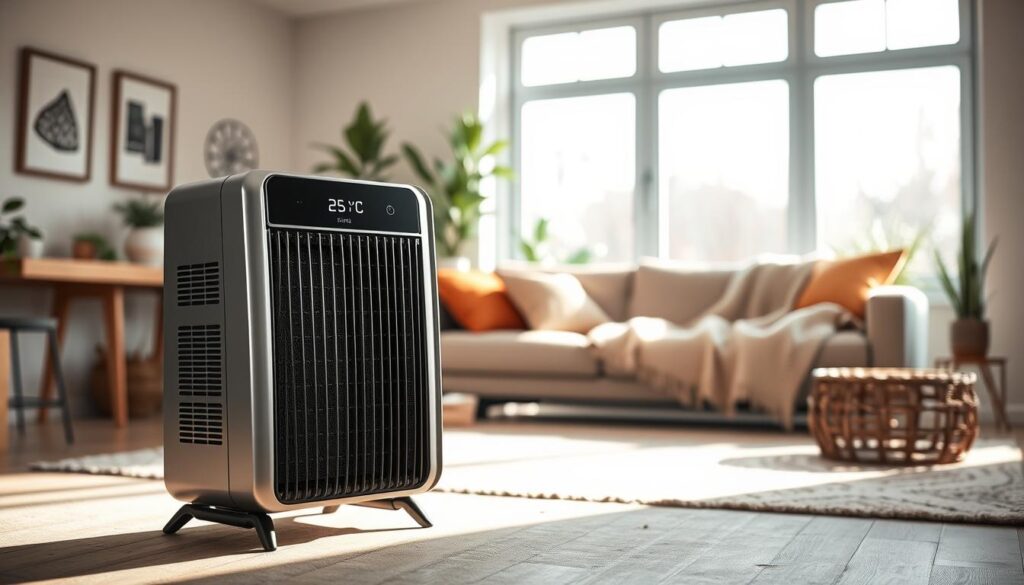
Space heaters come in many prices to fit different budgets. The cheapest are basic fan-forced models, costing less than $50. They heat up fast but might not have all the features.
Mid-range heaters have better safety and digital displays. They cost more than basic models. But, they offer more features. Think about what you need and how much you can spend.
Long-Term Energy Costs
Your energy bill depends on how you use your heater. To estimate costs, multiply the heater’s power rating by your electricity cost. A thermostat-controlled heater helps keep costs steady by adjusting power based on room temperature.
Using your heater a lot in big, cold rooms will increase your bill. Choose a heater that fits your room size to avoid wasting energy. How you use it is just as important as the heater itself.
Warranty and Maintenance Expenses
Reliability is key when buying a heater. Better heaters often have longer warranties. This means they might cost more upfront but last longer and need fewer repairs.
Keeping your heater clean and safe is important. Dusting vents and checking cords regularly helps it work better and safer. Think of your heater as a long-term investment in your home’s comfort.
| Heater Type | Initial Cost | Energy Efficiency | Maintenance Needs |
|---|---|---|---|
| Fan-Forced | Low | Moderate | Frequent Cleaning |
| Oil-Filled | Moderate | High | Minimal |
| Ceramic | Moderate | High | Occasional Dusting |
| Infrared | High | Very High | Low |
Choosing Between Electric and Gas Heaters
Homeowners often face a tough choice between electric and gas heaters. Each has its own benefits and drawbacks. The right choice depends on your home’s setup and safety needs.
Pros and Cons of Electric Models
The electric heater is loved for its ease of use and simple setup. It doesn’t need complex venting, making it ideal for apartments or rooms where changes are hard.
These units are also great as a space-saving heater. They can fit into small spaces. Just plug it into a wall outlet for instant warmth.
- Pros: High portability, no ventilation needed, and quiet.
- Cons: Costs more to run than natural gas in many places.
Pros and Cons of Gas Models
Gas heaters are popular for warming up big spaces fast. But, they’re not as energy-efficient as electric models. This is because some heat is lost during burning.
They need a pro to install and proper ventilation. Yet, they can save money over time for those who need a lot of heat. If you want a space-saving heater for your basement or workshop, gas might be best.
Your choice should consider local energy prices and your home’s layout. Think about the initial setup costs and long-term efficiency of your system.
Smart Features in Modern Space Heaters
Managing your indoor climate has never been easier thanks to recent advancements in heating technology. We’ve moved beyond simple manual dials. Now, our appliances talk to our mobile devices. These changes offer unmatched convenience and make keeping your home cozy easy.
Remote Control and Apps
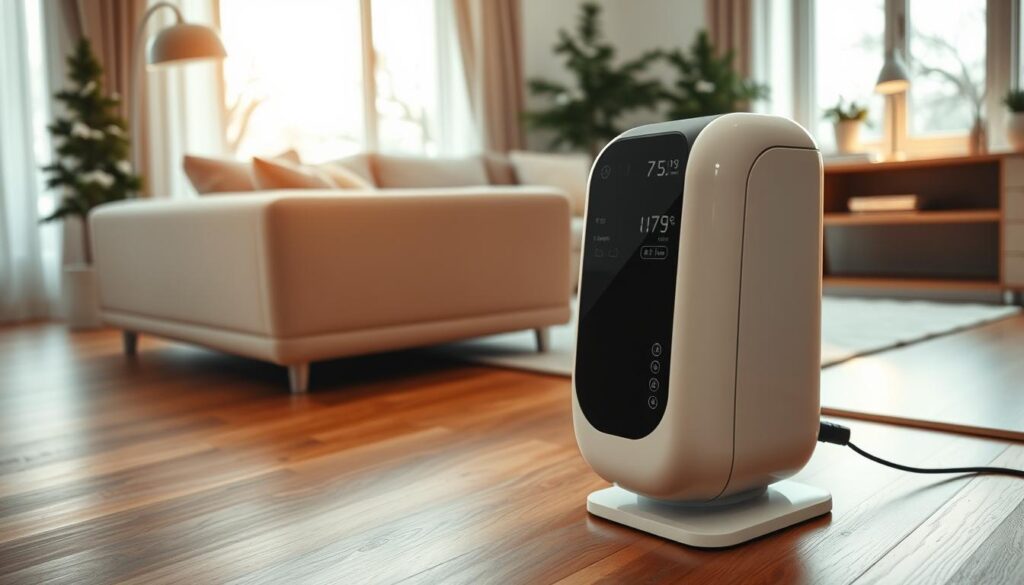
Many modern units have Wi-Fi or Bluetooth. This lets you change settings from anywhere in your home with a smartphone app. No need to get up from your couch to adjust your ceramic heater.
These apps show your room’s temperature in real-time. This info lets you make informed decisions about energy use all day.
Programmable Timers
A programmable heater lets you set schedules for your day. Your living room will be warm when you wake up or come home. This stops the unit from running when you’re not there.
Setting your device to turn off when you’re sleeping or away saves money. This makes your heater a key tool for home comfort.
Integration with Smart Home Systems
The most advanced models work with popular smart home systems. You can control them with voice commands through virtual assistants. This is great for busy homes that want streamlined automation.
Linking your programmable heater to a smart home network lets you create complex routines. For example, you can connect it to smart sensors that detect when someone is in a room. This means your ceramic heater only works when needed, saving energy and giving you peace of mind.
Maintenance Tips for Longevity
Looking after your home heating units is key to their long life. Regular upkeep keeps your indoor heater safe and working well during the cold months. It stops small problems from becoming big, expensive fixes.
Cleaning and Care Guidelines
Dust and dirt harm heating devices. Clean the outside with a soft cloth every few weeks to avoid buildup. If your unit has a removable filter, vacuum or wash it as the maker says to keep air flowing right.
Safety is our top priority in maintenance. Never put anything on or cover a portable heater to avoid fire risks. Keep the area around your unit free of curtains, furniture, and blankets for safe use.
Seasonal Check-up Recommendations
Before winter, check your equipment carefully. Look at the power cord for frays or damage and make sure the plug fits well in your outlet. If you have a thermostat-controlled heater, test the settings to see if it turns on and off right with room temperature changes.
Also, run your device briefly in a room with good air flow before the first cold spell. This gets rid of dust that settled in storage. A well-kept thermostat-controlled heater keeps your home warm and safe. Taking good care of your indoor heater boosts its performance and life span.
Understanding Energy Consumption and Costs
Learning how much energy your heating system uses is key to saving money and staying cozy at home. Knowing how much power your devices use helps you control your bills. We think making smart choices can help every family save money.
Calculating Wattage Needs
Most devices show their power use in watts on the label. To find your hourly cost, multiply the wattage by your electricity rate. For example, a 1,500-watt electric heater uses 1.5 kWh of electricity for one hour.
This info helps you compare different heaters before buying. If you want an energy efficient heater, look at the wattage and heat output. Lower wattage means less power use, but it’s not always better.
Impact on Utility Bills
The real cost of heating might surprise you when you see your bill. A smart meter helps you see how much a heater costs compared to your main heating system. For more info, check out our guide on Electric Heater Energy Consumption Explained.
“Energy management is not just about turning things off; it is about understanding the relationship between comfort and consumption.”
Tracking your energy use can show you why your bills go up. By watching your usage, you can figure out when to use extra heaters and when to turn down the thermostat.
Tips for Reducing Energy Use
Using a programmable heater can cut your costs. These heaters let you set when to heat your room, so it’s only warm when you’re there. Efficiency is often found in the settings we choose to ignore.
Here’s a table to show how different settings affect your costs at $0.15 per kWh.
| Heater Setting | Wattage | Cost per Hour |
|---|---|---|
| Low | 750W | $0.11 |
| Medium | 1,000W | $0.15 |
| High | 1,500W | $0.23 |
Using a programmable heater is just the start. Make sure your home is well-insulated to keep the heat in. Simple steps like sealing drafts can make your electric heater work better. When your home keeps heat better, your energy efficient heater doesn’t have to work as hard.
Frequently Asked Questions About Space Heaters
Choosing the right equipment for your home is important. We want to help you understand how these devices work. This way, you can enjoy a warm home without worries.
Clearing Up Misconceptions
Some think a space heater will dry out the air or be a fire hazard if touched. But, modern units from brands like Lasko or Vornado have advanced safety sensors. These devices heat objects and people, not just the air, keeping humidity levels right.
Essential Safety Protocols
When using a portable heater, safety is key. Never leave it on when you’re asleep or not in the room. Keep flammable things at least three feet away from the heater to avoid accidents. Watching it closely keeps your home warm and safe.
Optimizing Your Device Performance
To get the most from your energy efficient heater, place it in a central spot. Using a programmable heater lets you set warmth for when you need it, saving on bills. Smart placement and scheduling make your heater a powerful tool for winter comfort.