
 David Joseph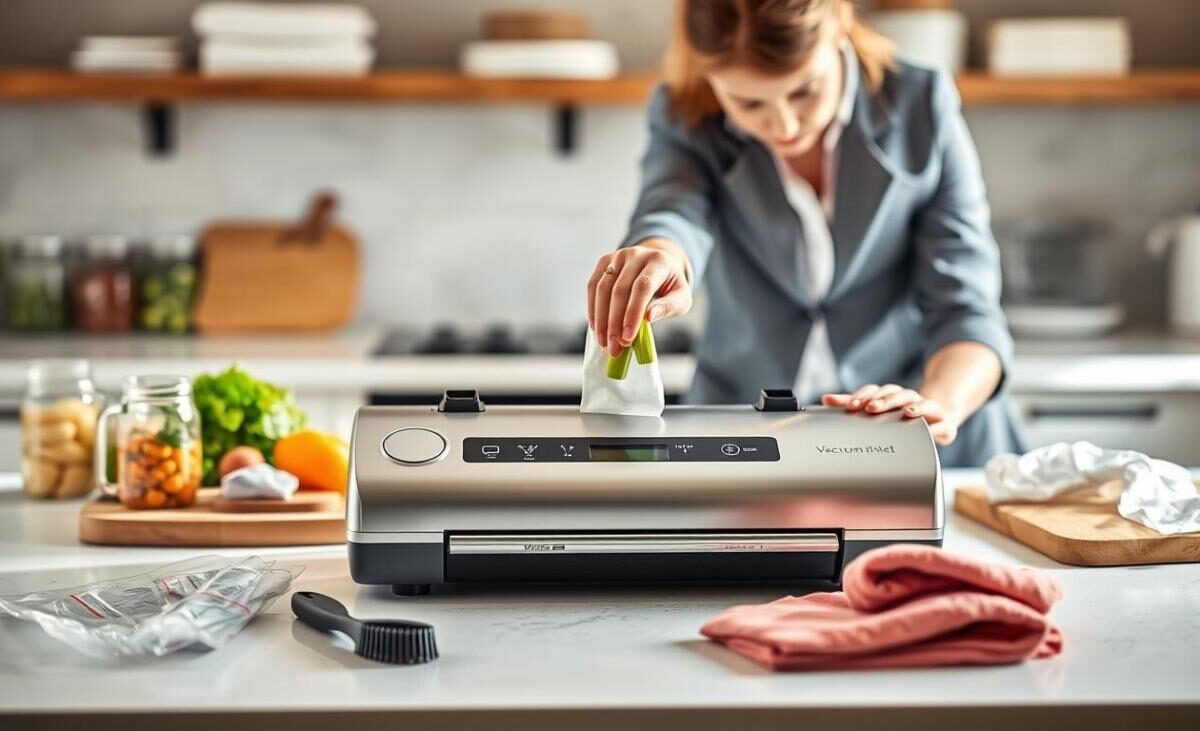
Did you know that households throw away 2.5 million tonnes of food every year? This huge waste costs families between $2,000 and $2,500 each year. It’s sad to see our money go to waste because food spoils before we can use it.
But there’s a way to stop this waste. A vacuum sealer can help. It removes oxygen from bags, creating a tight seal that stops food from rotting. This keeps our groceries fresh for longer than usual.
Getting a reliable kitchen tool is smart for your wallet and the planet. A good vacuum sealer for food makes it easy to save leftovers and big buys. Let’s see how this simple tech can change your cooking and cut down on waste.
Key Takeaways
- Household food waste costs families thousands of dollars every year.
- Removing oxygen significantly extends the shelf life of fresh ingredients.
- Modern kitchen technology helps prevent spoilage and saves money.
- Using specialized storage bags protects the quality of your meals.
- Adopting these tools supports a more sustainable home environment.
What is a Vacuum Sealer?
We often look for ways to reduce food waste, and the vacuum sealer has become our favorite tool for the job. This countertop appliance works by removing air from a specialized bag and sealing it shut to create an airtight environment.
By eliminating oxygen, you effectively slow down the oxidation process that causes food to spoil. This simple process helps preserve the texture, color, and nutritional value of your ingredients for much longer than traditional storage methods.
Definition and Functionality
A vacuum sealer machine is designed to be user-friendly for any home cook. Once you place your food inside a compatible bag, the device uses a pump to extract the air from the interior space.
After the air is removed, the machine applies heat to the opening of the bag to create a permanent, airtight seal. This barrier prevents freezer burn and keeps moisture from escaping, ensuring your food stays fresh until you are ready to use it.
Types of Vacuum Sealers
There are two primary categories of these devices that you should know about. External models are the most common choice for home kitchens because they are compact and easy to store.
These external units require the use of micro-channel bags, which have a textured surface to allow air to escape. In contrast, chamber vacuum sealers are larger, professional-grade machines that use smooth bags.
While chamber models are better suited for high-volume tasks or sealing liquids, they take up significant counter space. Choosing the right vacuum sealer machine depends on your specific storage needs and how often you plan to preserve your food.
Benefits of Using a Vacuum Sealer
Discovering the many vacuum sealer benefits can truly transform your daily meal preparation routine. By removing air from storage bags, we create an environment that significantly slows down the natural spoilage process of our favorite ingredients.
Extended Shelf Life
One of the most impressive advantages is the ability to keep items fresh for much longer. In fact, a quality vacuum sealer for food can extend the shelf life of your groceries by three to five times compared to standard storage methods.
This process effectively eliminates freezer burn, which is the primary enemy of frozen meats and vegetables. When we remove oxygen, we prevent the formation of ice crystals that typically degrade the quality of food over time.
Flavor Preservation
Oxygen exposure often leads to the oxidation of fats and the loss of natural moisture in food. By using a vacuum sealer, we lock in the original taste and texture of our meals. This ensures that when you decide to cook your stored items, they taste just as fresh as the day you bought them.
Time and Cost Efficiency
We find that this technology is a practical solution for busy households looking to save money. Buying in bulk becomes a viable strategy when you know your purchases will remain preserved for months rather than days.
Preparing meals in advance allows us to streamline our weekly schedules. You can portion out ingredients for specific recipes, making dinner preparation a quick and stress-free experience.
| Storage Method | Shelf Life (Fridge) | Shelf Life (Freezer) |
|---|---|---|
| Standard Ziploc | 1-2 Days | 3-6 Months |
| Vacuum Sealer | 1-2 Weeks | 1-3 Years |
| Plastic Wrap | 1 Day | 1-2 Months |
How to Choose the Right Vacuum Sealer
Finding the right vacuum sealer starts with knowing what you need. It’s about your kitchen, space, and how often you seal food. We’ll look at the differences to find the best match for you.
Size and Portability
Most people prefer external machines because they’re small and easy to store. They’re great for small kitchens or when you need to put the device away. Portability is key for those who move things around a lot.
Chamber machines, on the other hand, are big and heavy. They offer more power but need a lot of space. Make sure you have enough room before getting a big one.
Features to Look For
A top rated vacuum sealer has cool features like a pulse function. This lets you control air removal for things like berries or bread. It keeps them from getting crushed while sealing well.
Adjustable vacuum levels are also important. They let you choose between soft and strong settings based on what you’re sealing. Getting a model with these features means you’re getting the best vacuum sealer for your needs.
Budget Considerations
It’s important to think about cost and value. Cheaper models might not last long if you use it a lot. A top rated vacuum sealer might cost more but can save you money by reducing waste.
Think about how often you’ll use it before buying. If it’s just now and then, a simple model is fine. But if you seal food a lot, it’s a smart investment. The right best vacuum sealer balances your budget with what you need.
Setting Up Your Vacuum Sealer
Getting your kitchen ready is the first step to making great food at home. When you get a new vacuum sealer, organize your space well. This makes using it much easier.
Unboxing and Assembly
First, take out all the packaging from the box. Make sure you have everything, like the power cord and starter bags. Your vacuum sealer machine should come with these.
Put the unit on a flat, dry area with enough room. Always leave 75–100mm of space at the bag’s open end. This helps get an airtight seal every time.
Power Requirements
Check if your outlet matches the voltage on the label before plugging in. Using the right power source is essential. It keeps your vacuum sealer working well.
Try not to use extension cords. They can mess with the power needed for a good vacuum sealer. By following these steps, your vacuum sealer machine will last for years, keeping your food fresh.
Best Practices for Vacuum Sealing
Getting top-notch results with your vacuum sealer for food begins with the right prep. A little extra time before you start can make a big difference in how well your food stays fresh.
Preparing Food for Sealing
Remember, never seal warm or hot food. The steam inside the bag can cause the seal to fail and lead to freezer burn. Always let your food cool down to room temperature before sealing.
When sealing meats with bones, wrap the sharp edges in a paper towel. This keeps the bone from poking holes in the bag and ruining the seal.
Ziploc Bags vs. Vacuum-Safe Bags
Some might think standard storage bags work with their vacuum sealer. But they don’t. These bags don’t have the micro-channels needed for effective air removal.
Vacuum-safe bags, on the other hand, are made to let air out while keeping everything else in. Using the right bags helps your vacuum sealer work better and keeps your food fresh longer.
Sealing Techniques
Make sure the open end of the bag is clean and smooth before putting it in the machine. A flat surface is key for a tight, airtight seal every time.
Place the bag so the open end fits well in the vacuum chamber or on the sealing strip. Leave about two inches of space at the top for a perfect seal.
| Storage Method | Air Removal | Seal Quality | Best Use |
|---|---|---|---|
| Standard Ziploc | Manual/Poor | Weak | Short-term fridge |
| Vacuum-Safe Bag | Professional | Airtight | Long-term freezer |
| Canister System | High | Reusable | Dry goods/Liquids |
Common Mistakes to Avoid
Even the most skilled home cooks can face issues with a vacuum sealer if they ignore basic safety rules. These machines are very efficient but need careful handling. Knowing these common mistakes helps keep your food safe and your equipment in good shape.
Overfilling Bags
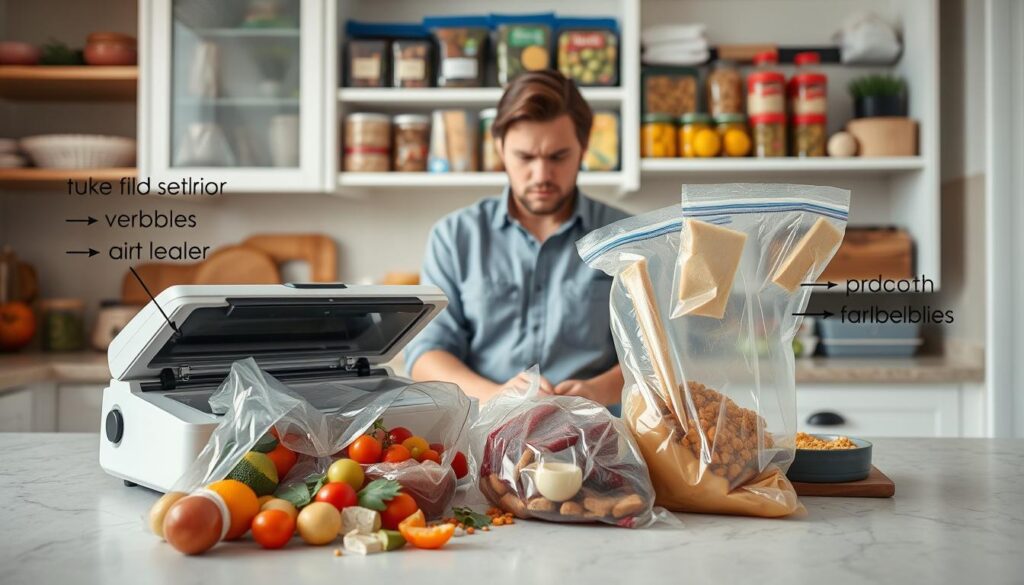
One big mistake is putting too much food in a bag. You should leave at least three inches of space at the top for a tight seal. If the bag is too full, the vacuum sealer can’t remove all the air, causing a weak seal.
“Proper food preparation is the foundation of safe preservation; never compromise on space or cleanliness when sealing your ingredients.”
Incorrect Settings
Many people forget to change their machine settings for different foods. For example, soft items like berries or bread need a gentle setting to avoid damage. Also, never vacuum-seal raw garlic because it can grow harmful toxins in low-oxygen environments.
Neglecting Maintenance
Your vacuum sealer needs regular care to work well. Not cleaning the sealing bar or gasket can cause residue, which stops a tight seal. Always wipe down your machine after each use to prevent mechanical problems.
| Mistake | Consequence | Solution |
|---|---|---|
| Overfilling | Weak seal | Leave 3 inches of space |
| High-pressure setting | Crushed food | Use pulse or gentle mode |
| Dirty gasket | Air leakage | Wipe with damp cloth |
| Sealing raw garlic | Health hazard | Avoid this specific item |
Recipes to Try with Vacuum Sealed Food
A vacuum sealer is more than just for freezing food. It’s a key tool for quick and efficient cooking. With it, you can turn simple ingredients into gourmet meals easily.
Meal Prep Ideas
Using our device, we portion out grains like quinoa and brown rice. This makes our weekday lunches easy to grab. It keeps the grains perfectly fresh and stops them from drying out.
Pre-cooked meals like stews or chili are also great. We seal them in flat bags for easy storage. This way, we always have a healthy meal ready after a long day.
Snack Preparation
Keeping snacks crunchy is easy with a vacuum sealer. We portion out nuts, dried fruits, or granola into small bags. This stops moisture from ruining their texture.
“The secret to great cooking is not just the ingredients, but the way you prepare and store them to maintain their peak quality.”
Sealing snacks in small batches keeps them fresh. You don’t have to open a big container often. This keeps your snacks crunchy for weeks.
Marinating and Infusing Flavors
One great use of a vacuum sealer is marinating proteins fast. The pressure pushes marinades deep into the meat. This significantly reduces marinating time.
Just put your protein and marinade in a bag and seal it. The vacuum ensures even coating. This makes your dishes taste like they’re from a pro kitchen.
Maintaining Your Vacuum Sealer
Looking after your vacuum sealer with a bit of routine care is key. A few minutes each day can stop it from breaking down early. This way, it will work like new for years.
Regular Cleaning Tips
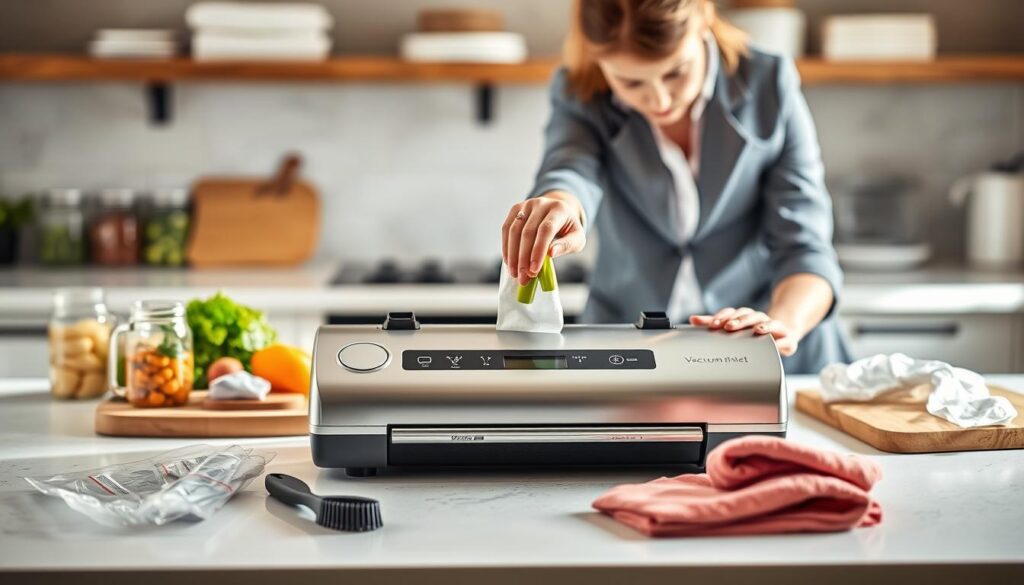
Keeping your vacuum sealer machine clean is the best way to avoid problems. Wipe the outside with a damp cloth after each use. This removes food bits and spills.
Check the sealing strip and inside channels for dirt. Use a soft brush or dry cloth to clean them. Regular cleaning stops bacteria and keeps the seal tight.
Troubleshooting Common Issues
Weak suction? First, check the foam gaskets. They can wear out, so replace them about once a year. This keeps the suction strong.
Seals not even? Maybe the bag is wrong or the strip is dirty. Make sure the bag is flat and smooth before sealing. If it still doesn’t seal, look for bag tears.
By following these easy care steps, you protect your investment. Keeping your vacuum sealer machine in good shape makes your kitchen work better. Regular maintenance keeps it reliable for food storage.
Comparing Vacuum Sealers for Home Use
Finding the best vacuum sealer means looking at how they work in real kitchens. The market can be tough to navigate. But, focusing on key performance areas helps narrow your options. Whether you cook at home or prep meals, knowing the differences between brands is key to happiness.
Brand A vs. Brand B
Big brands offer two main types: external suction machines and chamber sealers. Brand A makes compact, external suction units great for dry goods. On the other hand, Brand B specializes in chamber sealers, perfect for liquids and sous vide cooking.
Deciding between these depends on your needs. Chamber-style vacuum sealers are better for soups, sauces, and marinated meats. They offer a professional seal and handle moisture well.
| Feature | External Suction | Chamber Sealer |
|---|---|---|
| Liquid Handling | Limited | Excellent |
| Size/Footprint | Compact | Large |
| Price Range | Budget-Friendly | Premium |
| Best For | Dry Goods | Sous Vide |
Reviews and User Experiences
Vacuum sealer reviews offer great insights into a machine’s reliability and build. Look for feedback on long-term performance, not just the first use. Users often talk about how easy the machine is to clean and if the seal bar lasts long.
“The true value of a food preservation system lies in its consistency; a reliable machine should perform just as well on its hundredth seal as it did on its first.”
By reading these vacuum sealer reviews, you can spot common issues before buying. Focus on comments about suction strength and bag compatibility. The best vacuum sealer for your home balances cost with the features you need to keep food fresh.
Frequently Asked Questions About Vacuum Sealers
We get a lot of questions about vacuum sealers in a busy kitchen. Knowing how to use them makes meal prep easier.
Extending Shelf Life
Storing food right can make it last longer. For example, beef and lamb can stay good for 2–3 years in the freezer with a good vacuum sealer. But, regular storage only keeps them fresh for about 6 months.
Handling Liquids and Produce
Many people ask about using their vacuum sealer for different things. Liquids need special care to avoid damaging the pump. For more info, check out our vacuum sealer uses guide. Also, remember that raw produce can release gases that might break the seal over time.
Evaluating the Investment
Getting a good vacuum sealer is worth it. It helps reduce food waste and keeps food tasting better. It changes how you manage your food at home. With the right care, your vacuum sealer will last for many years.