
 David Joseph
Did you know nearly 70% of store-bought ground beef comes from many cows? This fact makes many home cooks want to control their food better. By grinding your own meat, you get maximum freshness and quality in every bite.
Finding the best meat grinder can change your kitchen game. These tools let you adjust fat and texture for the perfect burgers or sausages. Our guide will help you pick the right one for your cooking style.
Getting a good meat grinder lets you try new flavors. We aim to make your search easier and boost your confidence in home butchery.
Key Takeaways
- Understand the health benefits of processing your own proteins at home.
- Learn how to identify the most durable equipment for your kitchen.
- Discover why controlling fat ratios leads to better tasting meals.
- Explore the versatility of modern appliances for various culinary tasks.
- Gain expert insights to make an informed purchase decision today.
Understanding Meat Grinders: What They Are and How They Work
Ever wondered how butchers make meat so tender? It’s time to dive into the world of the meat grinder. This tool turns raw meat into small, even pieces. It’s key for both new cooks and experienced chefs to learn how to use a meat mincer.
A meat grinder machine has parts that work together. Meat goes into the hopper and meets the auger, a screw-like part. It pushes the meat through the machine with steady pressure.
The meat then hits a sharp knife and a metal plate with holes. The size of these holes directly determines the texture. You can get coarse for chili or fine for sausages.
Knowing how your meat grinder works helps fix problems and get better results. By understanding the auger, knife, and plate, you keep your meat mincer running well. This lets you try new textures and flavors, making your cooking more professional and tasty.
Types of Meat Grinders for Home Use
The market has many grinding tools for different needs. Picking the right meat grinder is key for efficient and fun kitchen projects.
Manual vs. Electric Meat Grinders
A manual meat grinder is great for small batches. It’s light, easy to carry, and doesn’t need power. It’s ideal for camping or small kitchens.
An electric meat grinder is best for big jobs. It’s fast and powerful, saving time and effort for large meat tasks.
Standalone Grinders vs. Attachments
Choosing between a standalone unit and a mixer attachment depends on your kitchen. A standalone meat grinder is strong and built for tough tasks.
For those with a good stand mixer, attachments are a good option. They’re smaller and easier to store, but might not have as much power as a dedicated electric meat grinder.
Features of Specialty Grinders
Some grinders have special features for certain cooking needs. Check out the best meat grinders for ones with multiple grinding plates.
Many grinders also have reverse functions to avoid clogs. These features make a manual meat grinder or electric one versatile for creative cooks.
Key Features to Look for in a Meat Grinder
Understanding what makes a meat grinder great is key to finding the right one for you. Look for models with stainless steel parts. These are durable and easy to clean, unlike plastic.
Motor Power and Performance
The power of your meat grinder is crucial for handling tough meat. For an electric meat grinder, a 500-watt motor is a good starting point. This power helps prevent overheating and stalling during tough tasks.
On the other hand, a manual meat grinder depends on your strength. These are great for small batches because they’re compact and quiet. No matter the type, a consistent motor or smooth manual operation is essential for the perfect texture.
Grinding Plates and Knives
The quality of your grinding plates and knives greatly affects your final product. Sharp, high-quality blades ensure a clean cut, not a torn one. Here’s what to look for:
- Stainless steel construction to prevent rust and corrosion.
- Multiple plate sizes for coarse, medium, and fine grinds.
- Self-sharpening blades that maintain their edge over time.
Additional Accessories and Attachments
Having a versatile machine is a big plus. Many modern grinders come with extra tools that let you do more than just grind meat. These tools can make your kitchen tasks easier.
Look for kits with sausage stuffing tubes or kibbe attachments. These let you make professional-grade sausages and specialty dishes at home. Make sure these accessories fit your meat grinder model before buying.
Benefits of Using a Meat Grinder at Home
Many home cooks are finding out the great benefits of grinding their own meat. By grinding their own meat, they ensure their family eats only the best ingredients. They avoid additives found in store-bought meat.
Freshness and Quality of Meat
Using a meat mincer means no preservatives or fillers. You know exactly where your meat comes from and its fat content. This control leads to superior flavor and texture in every bite.
Versatility in Meal Preparation
Having a reliable meat grinder lets you get creative in the kitchen. You can mix different meats to make unique sausages and burgers. Even a small unit can give you the same quality as a commercial meat grinder.
Cost Savings and Portion Control
Buying meat in bulk saves money over time. Grinding your own meat means you don’t pay extra for pre-ground products. A meat mincer also lets you make just the right amount for a meal. This reduces waste and helps with portion control.
| Feature | Store-Bought Meat | Home-Ground Meat |
|---|---|---|
| Preservatives | Often included | None |
| Fat Content | Inconsistent | Fully Customizable |
| Cost | Higher per pound | Lower (Bulk buying) |
| Texture | Standardized | Adjustable |
Popular Brands of Meat Grinders
Finding the right meat grinder can be tough with so many choices. Choosing a trusted brand is key to getting great results for years.
Need something small for occasional use or a big industrial meat grinder for lots of meat? These brands are top picks in American kitchens for their performance.
KitchenAid
KitchenAid is famous for its stand mixers. Their meat grinder attachment turns your mixer into a strong electric meat grinder easily.
It’s great for saving space and doing simple grinding tasks. It’s perfect for making fresh burgers or sausages.
LEM Products
For top-notch results, LEM Products is the top choice. They make gear that’s great for both home and commercial meat grinders.
Their machines can handle lots of meat without getting too hot. People love them for their strong build and stainless steel parts.
“Quality is never an accident; it is always the result of high intention, sincere effort, intelligent direction and skillful execution.”
Cuisinart
Cuisinart is known for its mix of power and easy use. Their electric meat grinder models are easy to use, even for beginners.
They’re also known for looking good and being easy to clean. They’re a great starting point for grinding meat at home.
How to Choose the Right Size Meat Grinder
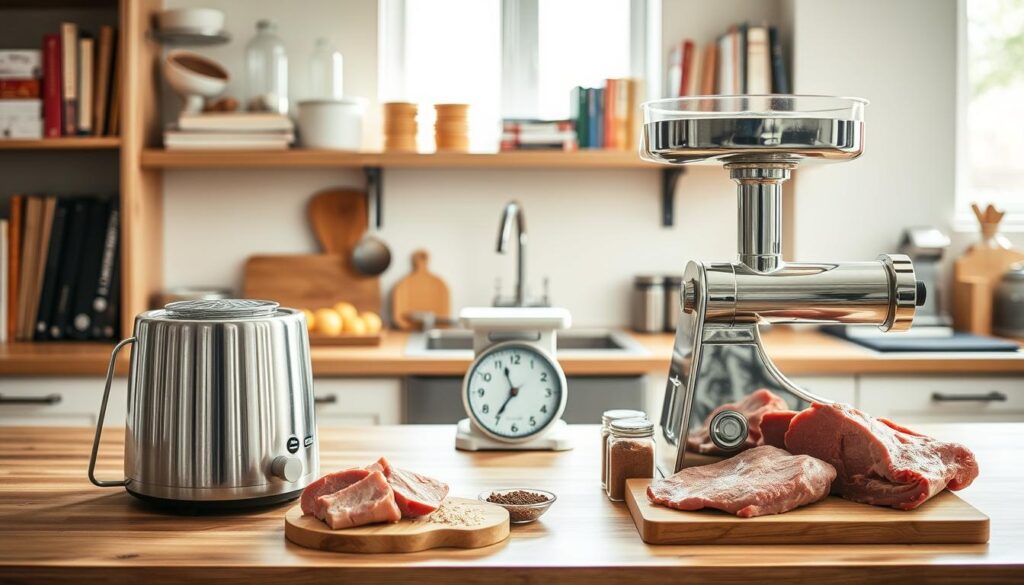
Finding the right meat grinder means balancing your needs with the space you have. When looking for the best meat grinder, it’s easy to get caught up in extra features and high prices. But, the size and capacity of the grinder are key to your long-term happiness.
Grind Volume Considerations
Think about how much meat you usually grind at once. Hunters or those who buy meat in bulk need a heavy-duty grinder. These grinders can handle big cuts without getting stuck, saving you time.
For those who only grind meat for burgers or meatballs, a smaller grinder is enough. A smaller meat grinder saves you money by not wasting power. Make sure the grinder size fits your needs to avoid wasting money.
Space and Storage Solutions
Kitchens are often small, so the size of your grinder matters a lot. Look for grinders that are slim or have detachable parts for easy storage. Some people like attachments for their stand mixers because they save space.
If you have lots of room, a dedicated grinder might be better for you. Always measure your space before buying to make sure it fits. A well-chosen grinder keeps your kitchen organized and clutter-free.
| User Type | Typical Volume | Recommended Size |
|---|---|---|
| Casual Cook | 1-3 lbs per month | Compact/Attachment |
| Family Chef | 5-10 lbs per month | Mid-size Electric |
| Bulk Processor | 15+ lbs per session | Heavy-duty Standalone |
Safety Tips for Using a Meat Grinder
Mastering the safe use of your meat grinder is key, just like the quality of your ingredients. It’s crucial to stay focused to keep your kitchen safe for everyone.
Proper Handling and Care
Always use the food pusher when grinding meat. Never push meat with your fingers or knives. This can cause serious injury from the internal auger.
Make sure your meat grinder machine sits on a stable, flat surface. A wobbly base can make it tip over, which is dangerous. Keep loose clothes, long hair, and jewelry away from the intake to avoid getting caught.
Cleaning and Maintenance Procedures
After grinding, clean your meat grinder right away to keep food safe. Take it apart to clean hidden spots. Wash parts in warm, soapy water and sanitize them well.
Don’t soak the motor housing in water to avoid damaging electrical parts. Clean the outside with a damp cloth and dry it well. Regularly sharpen blades and oil gears to keep your grinder working well for years.
| Safety Action | Frequency | Importance |
|---|---|---|
| Use food pusher | Every use | Critical |
| Sanitize parts | After every use | High |
| Check blade sharpness | Monthly | Medium |
| Inspect power cord | Before each use | High |
By following these steps, your meat grinder will stay a trusted tool in your kitchen. Regular care keeps you safe and extends your grinder’s life.
How to Prepare Meat for Grinding
Getting the best results with your meat grinder machine begins before you start it up. It’s all about how you prepare your meat. This ensures your grinder works its best and your food tastes great.
Selecting Cuts of Meat
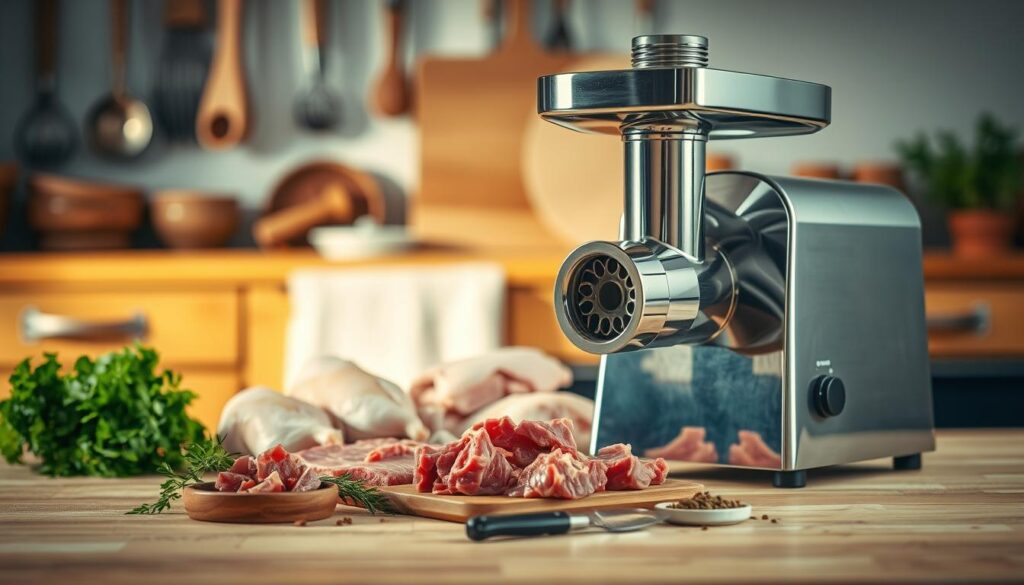
The quality of your dish depends on the meat you pick. Look for a mix of lean and fat to keep your meat juicy and tasty.
- Chuck roast is a top pick for beef because of its perfect fat-to-lean mix.
- Pork shoulder, also known as Boston butt, is great for homemade sausages.
- Make sure your meat is fresh and cold to keep it safe to eat.
Trimming and Cubing Meat Efficiently
Before grinding, remove any tough parts or silver skin. These can clog the grinder and make it work too hard.
After trimming, cut your meat into cubes that fit the feed tube. Aim for cubes about one to two inches big. This size helps the meat move smoothly through the grinder.
Pro tip: Freezing your meat for 15 to 20 minutes before grinding helps. It makes the fat firm up, preventing it from smearing. This ensures a clean, professional grind every time.
Recipes to Try with Your Meat Grinder
We love using our meat grinder to try new flavors and textures. Store-bought options just can’t compare. With your meat mincer ready, you can make many tasty dishes with fresh ingredients. You can change the meat’s texture by using different grinding plates.
Classic Hamburger Patties
For the perfect burger, mix chuck and brisket. This mix has an 80/20 fat-to-lean ratio. Grinding your meat at home means the fat is spread evenly. This makes your patties juicier and more flavorful.
Homemade Sausage Varieties
Making sausages is fun with your meat mincer. You can pick the exact salt, herbs, and spices you like. Whether you want spicy Italian links or mild breakfast sausages, your meat is pure.
Ingenious Meatball Recipes
Meatballs are great for mixing different proteins. We mix ground pork and beef for a tender and savory texture. A medium grinding plate keeps the meatballs light and airy.
Frequently Asked Questions about Meat Grinders
Many people ask about the uses and care of meat grinders. They wonder if their meat grinder can grind more than just beef or pork. Knowing the limits and care needs of your grinder keeps it working well for years.
Can I Grind Non-Meat Foods?
Yes, your electric meat grinder is very versatile. It’s made for proteins, but you can also grind other foods. Make sure the food is firm enough to pass through the auger without turning into a paste.
Here are some common uses for your grinder:
- Vegetables: Onions, peppers, and garlic are great for fresh salsas or relishes.
- Breadcrumbs: Dry, stale bread turns into perfect crumbs for meatballs or coatings.
- Spices: Hard spices can be ground, but check your manual first.
- Cheese: Firm cheeses like cheddar can be shredded quickly for mac and cheese.
How Do I Clean My Meat Grinder Properly?
Keeping your meat grinder clean is key to its longevity. You should take it apart right after use to stop food from hardening. Never leave it dirty, as this invites bacteria and rust.
Here’s how to clean it effectively:
- Disassemble: Remove the hopper, auger, cutting blade, and grinding plate.
- Wash: Use warm, soapy water to scrub all parts well.
- Dry: Dry each part with a clean towel to prevent rust.
- Lubricate: If your manual says so, apply a light coat of food-grade mineral oil to the metal plates before storage.
By following these cleaning tips, you protect your investment and keep your kitchen safe. A clean electric meat grinder is a sign of a well-organized kitchen.
Where to Buy the Best Meat Grinders
Choosing the right equipment is the first step in your cooking journey. Look for a high-quality meat grinder that suits your kitchen. You can find it through various retail channels.
Online Retailers
Amazon and brand sites like KitchenAid and LEM Products have lots to offer. These places have user reviews and detailed specs. They help you pick the best meat grinder for your needs.
Local Appliance Stores
Local kitchen shops let you see the meat grinder’s quality up close. You can talk to experts. They know the difference between home and commercial grinders.
Comparing Prices and Features
Make a list of what you need before buying. Whether it’s a small device or a big industrial one, compare warranties and return policies. This way, you get the best deal. Share your favorite recipes with us once you start making your own blends.