
 David Joseph
Did you know the right equipment can cut your cooling costs by up to 25%? Many homeowners face uneven temperatures, relying too much on expensive HVAC systems. But, optimizing your indoor environment doesn’t have to break the bank.
We explore advanced movement technology for home cooling. Unlike regular fans, these units mix air throughout the room. By choosing a whole-room air circulator vs traditional fans, your home stays cool all year.
This approach ensures even air flow, getting rid of hot spots. It makes your home more efficient. By using this smart cooling strategy, you control your comfort better and save energy.
Key Takeaways
- Properly sized units can reduce central cooling run-time by 10–25%.
- Whole-room devices focus on mixing air rather than just localized breezes.
- Strategic placement helps maintain consistent temperatures across larger floor areas.
- Using these tools allows for higher thermostat setpoints without sacrificing comfort.
- Modern designs offer superior efficiency compared to standard pedestal or box models.
What is an Air Circulator?
Choosing the right portable fan means knowing the difference between basic fans and air circulators. They may look alike, but they serve different purposes in your home.
Definition and Functionality
An air circulator is a high-tech air movement device. It creates a steady, columnar airflow. Unlike simple fans, it covers the whole room.
The air keeps moving until it hits a wall. Then, it bounces back, mixing the air in the room. This keeps the temperature even everywhere.
How It Differs from Traditional Fans
The main difference is in the airflow quality. A traditional oscillating fan cools a small area. It creates a turbulent breeze that feels only when you’re right in front of it.
An air circulator, on the other hand, moves all the air in a room. It’s better for controlling the climate all year, not just in summer.
| Feature | Traditional Fan | Air Circulator |
|---|---|---|
| Airflow Pattern | Turbulent/Localized | Columnar/Whole-Room |
| Primary Goal | Direct Cooling | Even Air Mixing |
| Movement Type | Oscillating Fan | Fixed/Directional |
| Efficiency | Low | High |
Knowing these differences helps you choose the right fan for your needs. Whether it’s a simple fan for your desk or a powerful circulator for your living room, understanding how they work is key to better comfort.
Benefits of Using Air Circulators
Many homeowners find that an air circulator is key for cooling homes today. These devices move air all over a room, not just one spot. This makes the room feel more even and comfortable.
Improved Air Quality
Stagnant air can feel heavy and trap smells or allergens. An indoor fan keeps air moving. This makes air cleaner and fresher.
- Reduces the buildup of stale air in corners.
- Promotes better ventilation throughout the home.
- Helps maintain a consistent temperature from floor to ceiling.
Enhanced Comfort Levels
Using a cooling fan can make us feel cooler. It works by making our skin sweat, which cools us down. This lets us stay cool without using too much air conditioning.
An air circulator gets rid of hot spots in big rooms. This makes the room feel even and cool. It’s a great way to stay comfortable all day.
Energy Efficiency Advantages
Using a fan can also save money on bills. An energy-saving air circulator works with your AC to save energy. You can turn up the AC a bit without losing comfort.
This smart move saves money and helps the planet. An indoor fan helps spread cool air evenly. This is key for keeping your home cool and efficient in summer.
Ideal Locations for Air Circulator Use
Putting your cooling devices in the right spots changes how air flows in your home. Knowing how air moves helps make sure every part of a room gets air. The best way to make any unit work better is to place it right.
Living Rooms and Bedrooms
In big rooms like living areas or master bedrooms, put your device in the middle. For rooms up to 300 square feet, one energy efficient air circulator is enough. Positioning the unit to point towards a corner helps air move all over the room.
Offices and Workspaces
Your workspace needs a special setup for comfort and focus. A small desktop fan is perfect for these areas, as it cools without taking up space. Place the fan a bit off to the side to get a gentle, consistent breeze instead of a strong blast.
Outdoor Patios and Garages
Air flow is key in semi-outdoor spots like garages or covered patios. A strong fan keeps air moving and the temperature down in warm months. Always ensure your fan is on a stable, level surface for safety and best airflow while you’re outside.
Types of Air Circulators
Modern cooling technology has evolved a lot. Now, we have specialized hardware for every living space. Manufacturers use advanced motors and electronics to make these devices work better. Whether you need a small cooling fan for your desk or a big one for a large room, knowing about these variations is key.
Pedestal and Tabletop Models
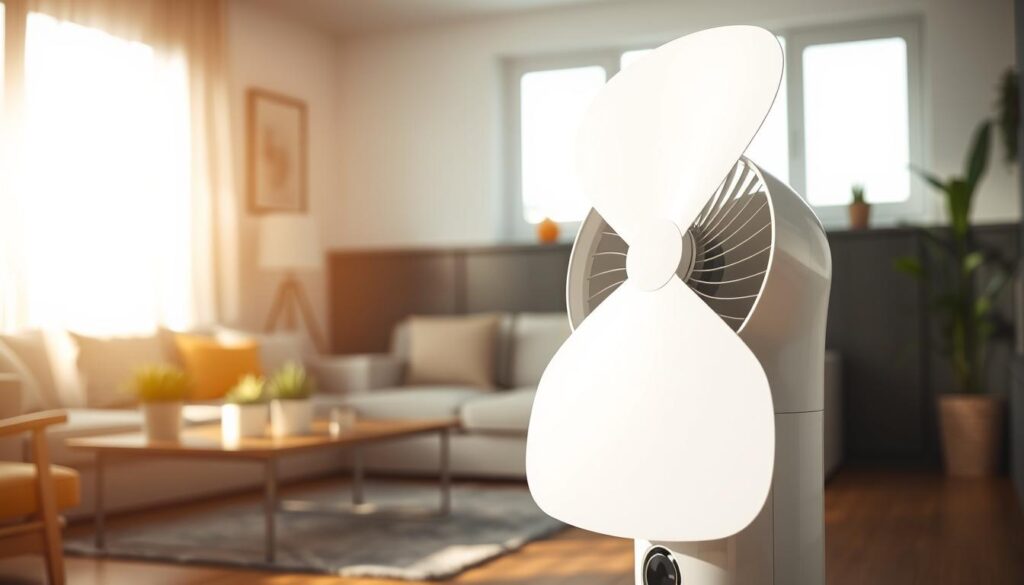
Pedestal units are great for adjusting height and direction often. They’re perfect for living areas where you want to direct air over furniture or across a wide space. On the other hand, tabletop versions are a compact solution for smaller surfaces like nightstands or office desks.
Wall-Mounted Options
Wall-mounted units are perfect when floor space is limited. They’re often used in workshops, garages, or kitchens to keep air moving without taking up space. By mounting your air circulator high on the wall, you can cover more of the room.
Oscillating vs. Non-Oscillating Fans
Choosing between an oscillating fan and a stationary model depends on your comfort needs. An oscillating unit moves back and forth to spread air over a wider area, great for cooling multiple people. A non-oscillating fan gives a focused, steady stream of air, perfect for cooling a single area.
“True comfort is not just about the temperature, but the consistent movement of air throughout your environment.”
Some modern designs use bladeless fan technology for a smooth air flow. These units are safer for households with children or pets. Below is a comparison of the main types to help you choose what fits your needs.
| Type | Best Use Case | Key Advantage |
|---|---|---|
| Pedestal | Large Living Rooms | Adjustable Height |
| Tabletop | Desks and Nightstands | Space-Saving |
| Wall-Mounted | Garages and Kitchens | Zero Floor Footprint |
| Bladeless | Modern Households | Safety and Design |
Features to Look for in Air Circulators
Finding the right air circulator means looking for top performance and easy use. Knowing the technical details is key for lasting comfort at home.
Noise Levels and Operation Modes
A good fan should move air well without being too loud. Today’s fans have special blade shapes and motor mounts to cut down on noise and shake.
This design makes fans quieter than old models. Whether you need a big floor fan or a small desktop fan, find ones with different speeds. This helps keep noise down during quiet times like sleep or work.
Energy Star Ratings
Energy saving is important for cutting down on bills. Look for an Energy Star rating. It means the fan meets high energy standards set by the government.
- Less power use over time.
- Less harm to the environment over the fan’s life.
- Longer motor life thanks to smart power use.
Adjustable Settings and Remote Controls
Keeping comfortable shouldn’t mean always adjusting the fan. Many fans, like the bladeless fan, have smart controls to make life easier.
When choosing, look for these key features:
- Remote controls for easy changes from afar.
- Timers to set when the fan turns on and off.
- Oscillation to spread air evenly.
Choosing a fan with these features means you get great cooling and easy use. A well-chosen air circulator will bring comfort and save energy for years.
How to Maximize Air Circulator Performance
Putting your air circulator in the right spot and using it wisely changes how it works in your home. Knowing how airflow works helps your device keep your space comfortable all year. Even small changes can make a big difference in room temperature.
Placement Tips for Optimal Airflow
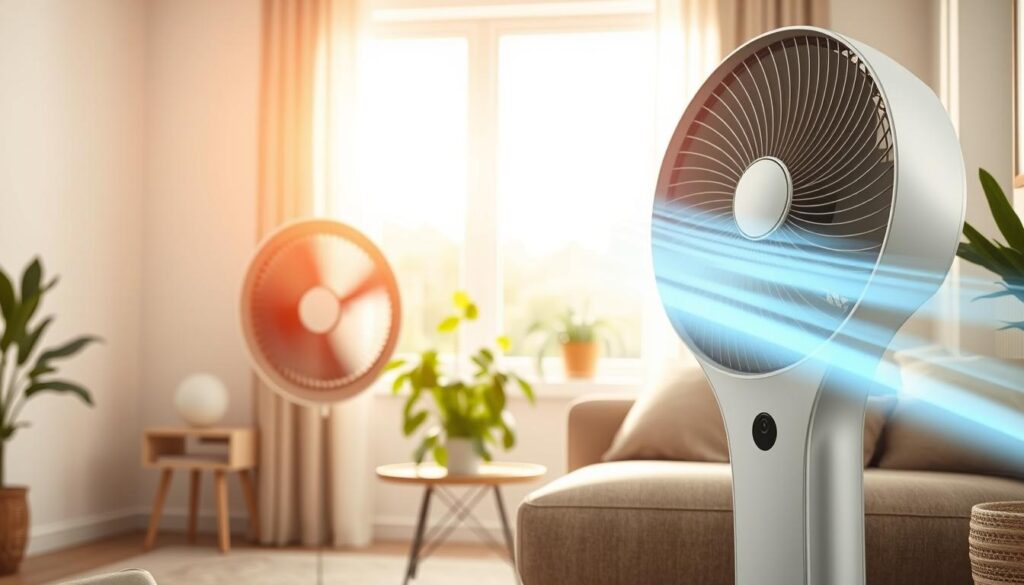
For the best results, place your air movement device in a room corner. Point it towards the opposite corner for a smooth air flow across the room. This way, the air moves gently, not harshly.
Don’t put your indoor fan behind furniture or curtains. These block the air flow. A clear path lets the fan pull in more air and spread it well. This keeps your room balanced.
Combining with HVAC Systems
Using your fan with your HVAC system can save energy. In winter, warm air rises and gets stuck near the ceiling. Pointing your circulator up helps push this heat back down.
This trick makes your furnace work less, keeping your room warm without raising the thermostat. In summer, the fan helps spread cooled air from your AC. This stops hot spots and keeps your room comfy everywhere.
Seasonal Usage Strategies
Change how you use your fan with the seasons. In summer, aim for a breeze to cool you down. In winter, use a lower speed to mix the air gently.
| Season | Placement Strategy | Fan Speed | Primary Goal |
|---|---|---|---|
| Summer | Facing occupants | High | Cooling effect |
| Winter | Facing ceiling | Low | Heat distribution |
| Spring/Fall | Open window | Medium | Fresh air intake |
By following these tips, your air movement device will work its best. Regular care and smart placement will make your home comfy and extend your device’s life.
Energy Savings with Air Circulators
We often overlook how simple air movement can drastically reduce our monthly utility bills. By integrating an air circulator into your daily routine, you can maintain a pleasant environment while keeping your energy consumption in check. These devices work by creating a consistent flow of air, which helps distribute temperature more evenly throughout your rooms.
How Air Circulators Reduce Cooling Costs
The primary advantage of using a cooling fan is its ability to make a room feel much cooler than it actually is. Research shows that using a ceiling fan or a dedicated circulator allows you to adjust your thermostat by 4 to 8 degrees without any loss in comfort. This simple adjustment significantly lowers the workload on your central air conditioning system.
When you raise your thermostat setting, you directly reduce the amount of electricity your HVAC system consumes. Over the course of a summer season, these small changes lead to substantial financial savings on your utility statements. Investing in an efficient air circulator is a smart way to manage your home cooling budget effectively.
Combining Air Circulators with Fans and Air Conditioners
You can maximize your efficiency by using a fan in tandem with your existing air conditioning unit. Instead of forcing your AC to work harder to cool stagnant air, the circulator helps push chilled air into every corner of the room. This synergy ensures that your home cooling efforts are both effective and sustainable.
Many homeowners find that running a cooling fan alongside their AC allows them to keep the thermostat at a higher, more economical setting. This combination prevents hot spots and ensures that the air remains fresh and moving. The following table illustrates how different strategies impact your overall energy usage and comfort levels.
| Strategy | Energy Impact | Comfort Level |
|---|---|---|
| AC Only | High Consumption | Consistent |
| AC + Air Circulator | Moderate Consumption | Enhanced |
| Fan Only | Very Low Consumption | Variable |
Maintenance Tips for Air Circulators
We think that regular maintenance is key to getting the best from your air circulator. A little time each day can make it last longer and work better. Keeping it in good shape also makes your home feel fresher and more comfortable.
Regular Cleaning Practices
Dust is the biggest problem for any indoor fan. It builds up on the grille and blades, making it harder to breathe and work. Wipe the outside with a soft cloth every few weeks to stop dust from getting inside.
For a deeper clean, take off the front grille as the maker says. Use a vacuum or a damp cloth on the blades. Make sure they’re dry before putting everything back. Regular cleaning makes your fan quieter and more efficient, saving your motor.
Seasonal Maintenance Checklist
When the seasons change, it’s time for a closer look at your cooling gear. If you have a air circulator with an HVAC system, check the filters. Clean filters help your indoor fan move air better.
Here’s a simple checklist to keep your system running well:
- Check the power cord for any damage.
- Make sure the air circulator is steady and level.
- Check that all screws and fasteners are tight.
- If it’s connected to an HVAC unit, check the refrigerant levels.
By following these steps, you can avoid sudden breakdowns when it’s hottest. Keeping your fan in good shape means you’ll always have a cool breeze when you need it.
Popular Air Circulator Brands
Three brands stand out in the market for their innovation and reliability. Choosing a reputable brand means your air circulator will work well and last long in your home.
Vornado
Vornado is known for its top-notch cooling products. Their designs move air all over the room, not just at you.
The Vornado 630 Medium Air Circulator shows their dedication to quality. It’s a quiet, yet powerful fan that moves a lot of air.
Lasko
Lasko offers a wide range of cooling solutions for different budgets. They’re famous for their oscillating fan models that spread air far and wide.
They have units for small spaces and larger areas. Their focus on affordability makes them a favorite in many U.S. homes.
Dyson
Dyson is at the top end of the market, known for advanced tech and sleek looks. Their bladeless designs are easy to clean and look great.
People love their desktop fan options for quiet offices. These fans are pricey but offer innovative airflow technology and stylish designs.
How to Choose the Right Air Circulator
Getting the right home cooling equipment is a smart move. It makes your home better all year. With so many choices, it’s key to pick wisely for lasting happiness.
Assessing Room Size and Airflow Needs
Start by measuring your room’s size. A small fan might not work well in big rooms. On the other hand, a huge fan might be too much for small spaces.
Look at the CFM per watt rating. This tells you how much air the fan moves for each watt of electricity. It helps you choose the right fan for your needs.
“Efficiency is not just about the power of the motor; it is about how effectively that power is translated into consistent, comfortable airflow throughout the entire room.”
When comparing fans, remember these points:
- Room Volume: Measure the square footage to find the right power.
- Airflow Velocity: Make sure the fan can adjust speed for different times.
- Directional Control: Check if the fan can tilt or move to reach all areas.
Budget Considerations and Quality
Don’t just pick the cheapest air circulator. Think about the long-term benefits. Better quality means less noise and a longer life for your fan.
When deciding on a budget, consider these:
- Build Materials: Choose sturdy plastics and metals for durability.
- Warranty Coverage: A longer warranty shows the maker’s confidence in the product.
- Energy Savings: Spending a bit more on an efficient fan can save you money on bills.
The best home cooling plan balances your budget and quality. Focus on these details to get a reliable fan for years.
Conclusion: Invest in Comfort with Air Circulators
Choosing the right equipment changes how we live every day. Adding a top-notch air circulator to your home is a simple way to control the climate better and save on bills.
Summary of Key Advantages
These devices move air well to get rid of stale spots and hot areas. By picking a reliable fan from brands like Vornado, Lasko, or Dyson, you get steady performance and lasting quality. You get a flexible tool that works well with your heating and cooling systems.
Final Thoughts on Efficiency
Smart homeowners look for ways to save money by improving airflow all year. A good air circulator helps your HVAC system less, cutting down on energy costs. We encourage you to think about what you need and pick a fan that fits your room. This upgrade makes your home more comfortable for your family and helps the planet.