
 David Joseph
Did you know over 60% of coffee lovers say the drink’s texture is as key as the roast? Many stick to simple add-ons, but you can turn your morning into a luxurious treat.
A top-notch milk frother lets you whip up café-style foam at home. We think upgrading your gear is the quickest way to make your coffee a work of art.
Finding the right coffee gadget can be tough. We aim to guide you to the best milk frother that matches your lifestyle and budget.
Key Takeaways
- Texture greatly affects how much you enjoy your coffee.
- With the right tools, your home-brewed coffee can be as good as a café’s.
- The right device depends on your brewing style.
- Quality equipment means you save money on coffee shop visits.
- We make the complex market easier to navigate, helping you choose wisely.
Understanding Milk Frothers: What to Know
Ever wondered how coffee shops make that perfect, velvety foam? You’re in the right spot. A milk frother is a kitchen tool that aerates milk, making it light and airy. It’s key for any beverage, whether you like dairy or plant-based options.
What is a Milk Frother?
This device is simple yet powerful. It introduces air into liquid, creating a stable foam. With a milk frother, you can turn plain milk into a creamy topping for drinks like lattes and hot chocolate.
How Does a Milk Frother Work?
The way these devices work varies by model. Most use a high-speed whisking motion to whip air into the milk. This expands the volume and creates bubbles. An electric milk frother heats and froths at the same time, ensuring consistent results.
Precision is key for quality foam. Advanced models use specific speeds to create fine, silky microfoam. This process is highly efficient and easier than manual whisking.
Different Types of Milk Frothers
Choosing the right tool depends on your brewing habits and space. We categorize these devices into three main types:
- Handheld Wands: These are compact, battery-operated tools that are easy to use and portable.
- Electric Jugs: An electric milk frother in this category offers automated heating and frothing, ideal for busy mornings.
- Manual Pumps: These require effort but give you full control over your foam’s texture.
The Importance of Frothing Milk
Frothing milk is more than just a visual touch. It’s a key step in balancing your drink’s flavor. Using a top-notch milk frother changes your drink’s chemistry, not just adds foam.
Enhancing Coffee Beverages
Aeration makes your coffee feel richer and sweeter. It introduces air, creating a velvety texture. This texture coats your tongue, making the coffee taste more luxurious.
This process also hides the bitterness of dark roasts. It lets the coffee’s natural flavors shine.
Creating Café-Style Drinks at Home
You don’t need to go to a barista to enjoy fancy coffee drinks. Learning how to use a milk frother lets you make these drinks at home. A good frother for coffee turns a simple cup of coffee into a fancy café drink.
“The texture of the foam is the soul of the drink; it dictates how the coffee hits your tongue and how the flavors linger.”
The Science Behind Milk Frothing
Frothing changes milk’s proteins and traps air bubbles. As milk heats, its lactose breaks down. This naturally enhances sweetness without adding sugar.
This science is why frothed drinks taste smoother than those with cold, un-aerated milk.
| Milk Type | Frothing Potential | Flavor Profile |
|---|---|---|
| Whole Milk | Excellent | Creamy and Sweet |
| Oat Milk | Very Good | Neutral and Silky |
| Almond Milk | Moderate | Nutty and Light |
| Skim Milk | High Volume | Light and Airy |
Choosing the right frother for coffee depends on your milk preference and foam density. Whether you like thick foam or light micro-foam, mastering this skill will make your home brewing top-notch.
Key Features to Look for in a Milk Frother
Understanding the core features of a milk frother is key to making great coffee at home. Many devices look alike, but it’s the inside that matters. Choosing the right milk frother machine depends on your coffee habits and how much space you have.
Power and Heating Capacity
The motor’s strength is crucial for smooth, velvety foam. A top-notch automatic milk frother should be powerful enough to whisk quickly without stopping. This is important for thick, cold-pressed milks to froth up fast.
For hot lattes, the heating capacity is key. Choose a model with precise temperature control to avoid burnt milk. A good frother will heat your drink to the perfect range, around 140°F to 150°F, for the best taste.
Ease of Use and Clean-Up
Who wants to spend too much time cleaning their coffee gear? Opt for a milk frother with a non-stick interior to avoid sticky messes. Many modern frothers are dishwasher-safe, making mornings easier.
Easy controls are a must for a user-friendly frother. Look for a milk frother machine with simple one-touch settings for different types of foam. This lets you focus on your coffee, not figuring out the frother.
Versatility and Functionality
The best automatic milk frother models work well with all kinds of milk. Whether it’s dairy, almond, soy, or oat milk, your frother should froth it all well. Some advanced frothers even have special settings for plant-based milks.
| Feature | Basic Model | Premium Model |
|---|---|---|
| Heating Control | Fixed | Adjustable |
| Cleaning | Manual | Dishwasher Safe |
| Milk Types | Dairy Only | Dairy & Plant-Based |
| Operation | Single Button | Multi-Function |
Popular Milk Frother Brands on the Market
Looking for the best milk frother? You’ll find a few big names leading the way. These brands are known for their reliable results and long-lasting designs. We’ve looked into the top choices to guide you.
Breville Frothers
Breville is famous for its professional-grade performance. The Milk Café model is a standout. It uses induction heating for even temperature control. It’s ideal for those who like to adjust their foam for different coffee drinks.
Nespresso Aeroccino
The Nespresso Aeroccino is great for those who value ease. It’s simple to use, needing just one button for hot or cold foam. Its small size is perfect for tight spaces, like small kitchens or offices.
BODUM Milk Frothers
BODUM focuses on simplicity and manual control. Their designs are iconic, letting you watch the frothing process. These models are affordable and don’t need electricity, making them an eco-friendly choice for your morning.
| Brand | Primary Strength | Ease of Use | Best For |
|---|---|---|---|
| Breville | Advanced Control | Moderate | Serious Enthusiasts |
| Nespresso | Convenience | High | Quick Daily Use |
| BODUM | Simplicity | Manual | Budget-Conscious |
Choosing the best milk frother depends on your needs and how much time you have for coffee. Whether you prefer Breville’s tech or BODUM’s manual charm, a good milk frother will make your coffee better.
Comparing Handheld and Electric Frothers
Many home baristas debate between a portable wand and a countertop electric machine. Each milk frother has its own benefits, depending on your coffee habits and kitchen setup.
Pros and Cons of Handheld Frothers
A handheld milk frother is great for those who like simplicity and portability. These small devices, known as a milk frother wand, fit easily in a drawer.
They run on batteries, making them perfect for travel or small kitchens. But, you need to work them manually to get the right texture. They also don’t heat the milk for you.
Benefits of Electric Milk Frothers
An electric milk frother is ideal for those who want a hands-off experience. These machines make frothing easy and consistent every time.
Most electric models can heat the milk while frothing it. They take up more space, but they make better professional-grade foam than manual tools.
| Feature | Handheld Wand | Electric Carafe |
|---|---|---|
| Ease of Use | Manual/Active | Automatic/Passive |
| Heating | None | Integrated |
| Portability | High | Low |
| Consistency | Variable | High |
Frothing Techniques: Getting It Right
Making your coffee just right is an art that can make your mornings special. Having a good frother for coffee is a start, but how you use it matters a lot. Even small changes in how you hold your frother can make a big difference.
Frothing Milk for Lattes
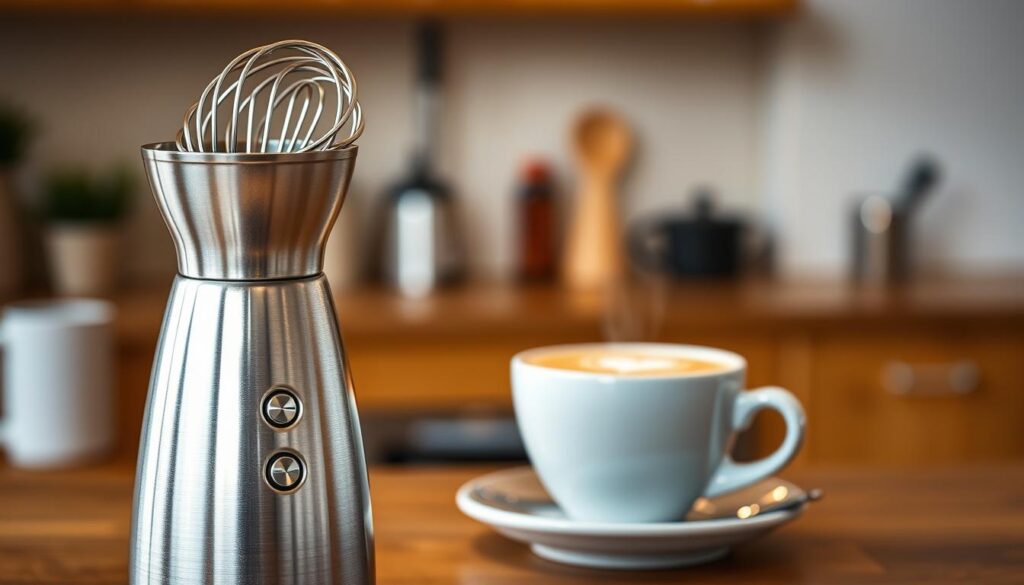
For a perfect latte, you want the milk to be smooth and creamy. Aim for a thin foam that’s creamy, not bubbly. To get better, try using a handheld frother to make silky milk.
To froth milk like a pro, whisk just below the milk’s surface. This makes a whirlpool that gets rid of big bubbles. You want the milk to look like wet paint for a great latte.
Making Microfoam for Cappuccinos
Cappuccinos need thicker, fluffier foam than lattes. Start by frothing with more air. Hold your milk frother higher to add air, then lower it to smooth out the foam.
The foam should be thick and keep its shape when poured. This fluffy top is what makes cappuccinos so loved. Tap the pitcher on the counter to get rid of big bubbles.
Tips for Non-Dairy Milk Frothing
Plant-based milks froth differently because of their unique makeup. Choose “barista edition” oat or almond milk for better foam. These are easier to froth with a milk frother.
Make sure your non-dairy milk is cold before frothing. Cold milk froths better for longer before it gets too warm. With practice, you can froth any milk to perfection.
Understanding Frothing Temperature
Temperature control is key to making milk into a smooth, café-quality foam. Using a milk frother changes the milk’s proteins and sugars. This balance makes your drink taste professional every time.
Ideal Temperatures for Frothing Milk
The best temperature for most coffee drinks is 140°F. At this point, the milk’s natural sweetness increases. A good milk frother will help you hit this temperature every time.
“The perfect foam is not just about the bubbles; it is about the temperature that locks in the creamy texture and natural sweetness of the milk.”
Avoiding Scalding Milk
It’s important not to overheat your milk. Temperatures above 160°F can make it taste burnt. When milk is scalded, the foam becomes thin and watery.
Watch your process closely to avoid ruining your drink. If the milk starts steaming too much or smells like cooked cereal, it’s too hot. A milk frother with automatic shut-off can help. This way, you get a rich, stable foam that lasts until the end.
Maintenance and Care for Your Milk Frother
Looking after your milk frother machine makes every latte taste like it’s from a pro shop. Just a few minutes of upkeep each day keeps your frother in top shape. This way, you get perfect coffee every morning.
“Quality maintenance is the silent partner of every great cup of coffee; it preserves the integrity of your equipment and the flavor of your brew.”
Cleaning Tips for Easy Maintenance
Modern frothers have parts you can easily take out for cleaning. Always check your manual to see if the whisk or carafe can go in the dishwasher. Some parts have special coatings that need gentle washing by hand.
It’s a good idea to rinse the inside right after you use it. This stops milk proteins from sticking. Use a soft sponge and mild soap. Make sure the electrical base of your milk frother never gets wet.
Troubleshooting Common Issues
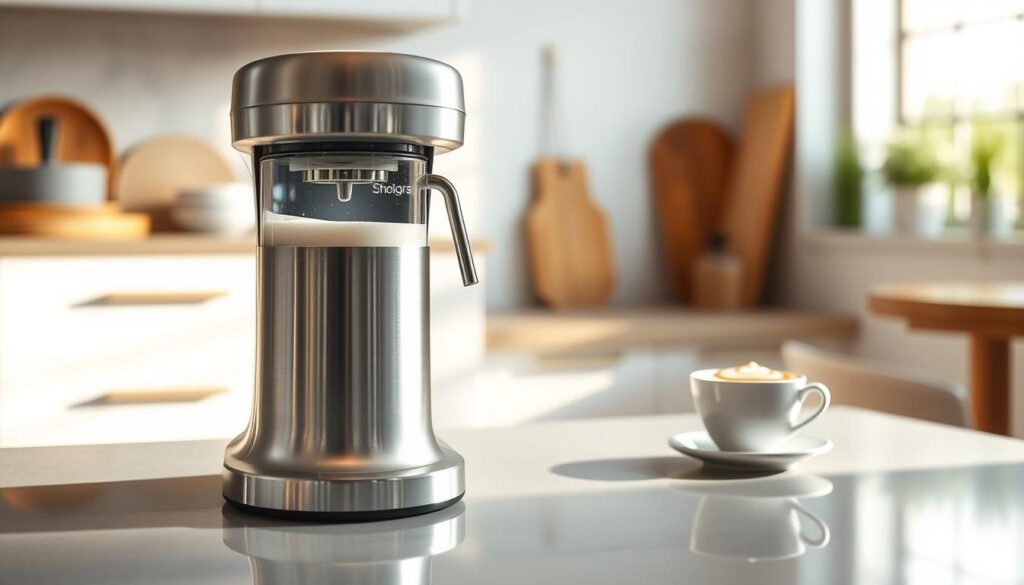
If your milk frother makes thin or bubbly foam, it might be because of the wrong milk. Use cold, fresh milk for the best foam. High-fat milk works best for creamy foam.
If your frother won’t turn on, check the power cord and make sure the carafe fits right. If the whisk stops moving, look for dried milk on the magnetic drive. Regular cleaning usually fixes most problems before they get worse.
How to Use a Milk Frother Effectively
Making perfect foam at home is easier than you think. Just follow a few steps. Whether you use an automatic milk frother or a manual one, the goal is to be consistent. This will make your coffee drinks taste like they were made by a pro.
Step-by-Step Frothing Guide
First, make sure your frother is clean and dry before adding milk. Cold, fresh milk makes the best foam. Here’s how to use an electric milk frother for the best results:
- Pour your milk into the container, making sure not to exceed the maximum fill line indicated inside.
- Secure the lid firmly to prevent any splashing during the high-speed aeration process.
- Select your desired setting, such as cold froth, warm froth, or hot milk, depending on your specific milk frother model.
- Wait for the cycle to complete automatically, then pour the foam slowly over your espresso or coffee base.
Common Mistakes to Avoid
Even pros can make mistakes when frothing milk. One big error is ignoring the fill lines, which can cause overflow or poor foam. Also, using warm milk can stop the proteins from making that velvety texture we love.
Another mistake is not cleaning the frother right after use. Milk residue can harbor bacteria and harm your machine. Always rinse the whisk and inside with warm water after you’re done.
| Common Error | Resulting Issue | Recommended Fix |
|---|---|---|
| Overfilling the container | Milk spills and weak foam | Follow the internal fill lines |
| Using warm milk | Thin, bubbly consistency | Always start with cold milk |
| Skipping the rinse | Build-up and poor function | Clean immediately after use |
| Wrong whisk attachment | Inconsistent texture | Use the correct whisk for your drink |
The Cost of Milk Frothers: What to Expect
Choosing the right milk frother depends on your coffee habits and what you expect. The market has everything from simple manual tools to advanced machines. Knowing the differences helps you find the best value for your money.
Budget Options vs. High-End Models
For a low-cost option, consider a handheld milk frother. These small, battery-powered devices are great for quick milk foam. You can find a basic milk frother wand for under twenty dollars, perfect for those who use it now and then.
High-end electric models offer more convenience and consistent results. They have induction heating and settings for different foam textures. Though they cost more upfront, they’re great for daily coffee lovers.
What Influences the Price?
Several things affect the price of your milk frother. High-quality stainless steel makes the device last longer and keep heat better. Features like advanced programming and automatic shut-off also add to the cost of a top-notch milk frother.
The table below shows the main differences between different types of milk frothers:
| Device Type | Typical Price Range | Key Benefit |
|---|---|---|
| Handheld wand | $10 – $25 | Portability and low cost |
| Manual pump | $20 – $40 | No electricity required |
| Electric automatic | $50 – $150+ | Hands-free, consistent results |
When picking your milk frother, think about these key points:
- Frequency of use: If you drink coffee every day, an electric model is more convenient.
- Desired foam quality: High-end models make denser, more stable foam.
- Ease of cleaning: More expensive models are often dishwasher-safe.
Your choice should match how much time you want to spend on your coffee. Whether it’s a simple milk frother wand or a fancy electric machine, the right one will make your coffee better.
Final Thoughts: Choosing the Right Frother for You
Choosing the right tool for your kitchen is key. It’s all about understanding your coffee habits. Knowing what you need makes your morning routine better.
Assessing Your Coffee Needs
Consider the drinks you love. For latte art, you need a frother that controls texture and temperature well. But, if you just like simple cappuccinos, a basic frother that makes foam fast is enough.
Making a Confident Purchase Decision
The best frother matches your lifestyle and budget. Brands like Breville and Nespresso have great options for home baristas. Think about what’s important to you. A good frother makes every cup at home special.