
 David Joseph
Did you know that your home can be up to five times more polluted than outside? We spend almost ninety percent of our time indoors. Yet, we rarely think about the tiny particles in our living rooms.
It’s crucial for your health to track these hidden dangers. An air quality monitor lets us see what we breathe. It helps us control our home environment.
We aim to guide you through the complex world of air sensors. We want to help you find the best air quality monitor for your needs. Knowing what’s in your air is the first step to a healthier life.
Key Takeaways
- Indoor spaces often contain higher concentrations of pollutants than outdoor areas.
- Continuous tracking helps identify hidden health risks in your home.
- Proactive management of your environment leads to better respiratory health.
- Selecting the right device depends on your specific household requirements.
- We provide expert guidance to simplify your purchasing decision.
Why Monitor Air Quality?
Many people think their homes are safe, but indoor air can be worse than outside air. We spend most of our time indoors, making air quality crucial for our health. An air quality monitor lets us see what’s in the air we breathe every day.
Understanding the Importance of Clean Air
Indoor spaces can trap pollutants from cleaning, furniture, and cooking. These pollutants build up over time, hiding in plain sight. An indoor air quality monitor spots these threats early on.
Knowing what’s in our air helps us choose better ventilation and filters. Clean air is essential for a healthy life. Monitoring air quality keeps our homes fresh and safe.
Health Impacts of Poor Air Quality
Poor air can cause serious health issues that we might not notice until it’s too late. Studies link indoor pollutants to cardiovascular disease and brain decline. We must protect our families and ourselves from these risks.
Short-term effects include headaches, fatigue, and eye and throat irritation. By staying alert, we can stop these problems from becoming long-term issues. Awareness is key to avoiding these health risks.
Benefits of Air Quality Monitoring
Using an air quality monitor for home gives us peace of mind with real-time data. It helps us spot pollution quickly and act fast, like opening a window or using an air purifier. This is crucial for a healthy home environment.
For offices, an air quality monitor for office spaces boosts productivity and focus. Clean air makes us more alert and less foggy. An indoor air quality monitor is a simple yet powerful tool for better health and performance.
Key Features to Look For in an Air Quality Monitor
Finding the right air quality monitor is key. Not all devices are the same. Knowing what you need is crucial. This ensures your choice is worth it for your space.
Types of Pollutants Measured
Good devices track many pollutants. Look for ones that detect PM2.5, tiny particles that harm your lungs. Also, check if they monitor VOCs and CO2 levels. This keeps your indoor environment healthy.
Real-Time Data Tracking
Getting instant feedback is important. Real-time tracking shows how activities like cooking affect the air. This info helps you make quick changes to keep your air clean.
User-Friendly Interfaces
The interface should be easy to use, whether for home or office. Complex data is useless if you can’t understand it fast. Choose devices with clear displays or apps that give you useful info easily.
Portable vs. Stationary Units
Choosing between portable and stationary units depends on your needs. Stationary units are more powerful for one room. Portable units are great for checking air quality in different places or while traveling.
| Feature Type | Stationary Monitor | Portable Monitor |
|---|---|---|
| Primary Use | Dedicated Room | Multi-Room/Travel |
| Power Source | Wall Outlet | Rechargeable Battery |
| Sensor Range | High Precision | Moderate Precision |
| Best For | Air quality monitor for home | Air quality monitor for office |
The best choice depends on your needs. For constant, detailed analysis, a stationary device is best. For flexibility and mobility, a portable option is better.
Types of Air Quality Monitors Available
Choosing the right device depends on whether you need to monitor your home or be on the move. The market offers many options, each for different needs and places.
Knowing the differences helps you pick the best tool for your life. Whether you stay at home or travel a lot, there’s a device for you.
Indoor vs. Outdoor Monitors
Many start with an indoor air quality monitor for living spaces. These units track VOCs, carbon dioxide, and particles in closed areas.
Outdoor monitors, on the other hand, have weather-resistant casings. They handle rain, humidity, and temperature changes. They also track pollen and smog, helping you know when it’s safe to go outside.
Handheld Devices
A portable air quality monitor is great for those always on the move. These small devices let you check air quality anywhere, like hotels or public places.
They’re light, so you can carry them easily. A portable air quality monitor keeps you in control of the air you breathe, no matter where you are.
Smart Home Integration
For those who love connected homes, a smart air quality monitor is the top choice. These devices work with your smart home systems, like Amazon Alexa or Google Home.
With a smart air quality monitor, you can set your air purifiers or HVAC to turn on when pollution goes up. This makes your home healthier without needing to adjust it manually.
Accuracy and Calibration of Air Quality Monitors
Precision is key for any air quality monitor. Small errors can lead to bad health choices. We must trust the sensors to give us true readings.
Without checking, we might miss dangerous toxin spikes or worry over small changes.
Importance of Calibration
Sensors inside your device can lose sensitivity over time. This is called sensor drift. Regular calibration keeps your air quality monitor accurate.
Calibration is like a tune-up for your health gear. It resets the device to a known standard. This keeps the data reliable and useful.
Consistent maintenance stops sensors from getting worse. This is crucial for your safety over time.
How to Test Accuracy
Testing your device is easy. Place it near a certified monitoring station for a few hours. If the readings match, you know your device is working well.
You can also compare it to a professional air quality monitor. Run both in the same place to see any differences. If there are big gaps, it’s time to reset or calibrate it.
Understanding Air Quality Index (AQI)
If you own an air quality monitor, learning to read the Air Quality Index is your next big step toward a healthier home. This tool acts as a universal language for reporting daily air pollution levels. It translates complex sensor data into simple numbers, helping us make informed decisions about our activities.
What is the AQI?
The Air Quality Index is a system used by government agencies to communicate how clean or polluted the air is in a specific area. It focuses on the health effects that you might experience within a few hours or days after breathing polluted air. Your air quality monitor tracks these specific pollutants to provide you with a real-time snapshot of your immediate environment.
Think of the index as a yardstick that runs from 0 to 500. The higher the AQI value, the greater the level of air pollution and the greater the health concern. When the index remains low, it indicates that the air is safe for everyone to breathe without significant risk.
How to Interpret AQI Readings
Interpreting these readings is straightforward because the system uses color-coded categories to signal safety levels. When you check your air quality monitor, you should look for these specific ranges to determine if you need to increase ventilation or use an air purifier. Understanding these thresholds allows you to take proactive steps to protect your family from harmful particles.
| AQI Range | Category | Health Impact |
|---|---|---|
| 0 – 50 | Good | Air quality is satisfactory. |
| 51 – 100 | Moderate | Acceptable for most people. |
| 101 – 150 | Unhealthy for Sensitive Groups | Increased risk for vulnerable individuals. |
| 151 – 200 | Unhealthy | Everyone may begin to experience effects. |
| 201+ | Very Unhealthy | Health alert; emergency conditions. |
By monitoring these levels, you can adjust your daily habits effectively. If your air quality monitor shows a spike into the “Unhealthy” range, it is time to close windows and run your filtration systems. Staying informed is the best way to ensure your indoor air remains a safe haven.
Additional Features to Consider
Today’s devices offer more than just sensors. They come with advanced features for better health management. When you buy an air quality monitor, you get a tool to help keep your home healthy.
Connectivity Options
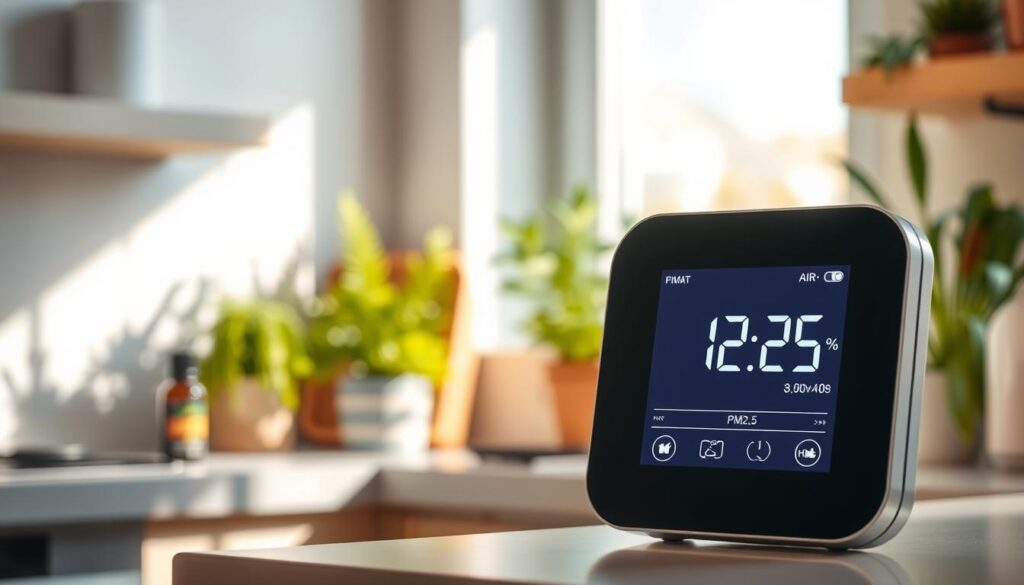
The wifi air quality monitor is a big upgrade. It lets you check your home’s air from anywhere with your phone or tablet.
It connects to your network, so you can monitor air quality while away. This seamless integration means you always know your indoor air is safe.
Data Logging Capabilities
A top-notch smart air quality monitor tracks more than current numbers. It logs data over time, showing how air quality changes.
This data is key for spotting patterns, like pollution spikes during cooking or cleaning.
“Knowledge is the first step toward meaningful change in our daily habits.”
Alerts and Notifications
Modern systems offer peace of mind with automated alerts. If your wifi air quality monitor finds harmful particles, it alerts you right away.
These real-time updates let you act fast, like opening a window or turning on an air purifier. Using a smart air quality monitor helps you stay ahead of health issues.
Popular Brands of Air Quality Monitors
We’ve looked into the market to find the most trusted brands for your home. To get the best air quality monitor, look for companies that focus on accurate sensors and lasting performance. Choosing well-known brands means your device will give you useful data for a healthier home.
Overview of Leading Brands
Several top brands lead the market with unique solutions for various needs. Airthings is known for its easy-to-use system and top-notch radon detection, making it a favorite for many. PurpleAir is loved for its community-driven data and precise laser particle counters.
If you need a air quality monitor for home, Temtop is a great choice. It offers a mix of performance and simplicity. These brands are often praised for their updates and support, ensuring your air quality monitor works well for years.
Price Ranges for Different Brands
Prices vary based on sensor count and smart features. You can find an affordable air quality monitor for under $100. These basic units track PM2.5 and VOCs, perfect for those who want essential data without extra costs.
Premium models cost between $200 and $400. They offer detailed insights into humidity, temperature, and chemicals. Spending more on the best air quality monitor means better app integration and data logging. It’s wise to consider your needs to find an affordable air quality monitor that’s reliable for your home.
| Brand | Primary Focus | Price Tier | Best For |
|---|---|---|---|
| Airthings | Radon & Smart Home | Premium | Comprehensive Health |
| PurpleAir | Outdoor/Indoor Particles | Mid-Range | Data Enthusiasts |
| Temtop | Portability & Value | Budget | Quick Spot Checks |
| IQAir | Professional Grade | High-End | Sensitive Environments |
Setting Up Your Air Quality Monitor
Setting up your air quality monitor is easy and improves your home’s air right away. Make sure it’s installed correctly to get accurate air readings. Follow a few simple steps to keep your device working well for years.
Ideal Locations for Placement
Where you put your indoor air quality monitor matters a lot. Place it at a height of three to five feet, not on the floor or ceiling. This spot gives a true picture of your home’s air quality.
Don’t put it in still air spots like cabinets or behind curtains. Also, keep it away from pollution sources like stoves or open windows. Consistent airflow is key for precise readings.
Connecting to Wi-Fi and Apps
Today’s tech lets you monitor your home’s air from anywhere with a wifi air quality monitor. Most need a 2.4GHz network to send data to the cloud. Then, you can see live data and past readings on your phone.
Linking your smart air quality monitor to a mobile app is important for ongoing health checks. These apps send customizable alerts when air quality gets bad. For top-notch devices and open data, check out AirGradient.
Maintenance Tips for Longevity
Getting an air quality monitor is just the start to a healthier home. To keep your device working well, you need to take care of it regularly.
Just like you take care of a humidifier to keep your home comfy, your air quality monitor needs special care. This care stops the sensors from getting off track and keeps your data accurate.
Regular Cleaning and Maintenance
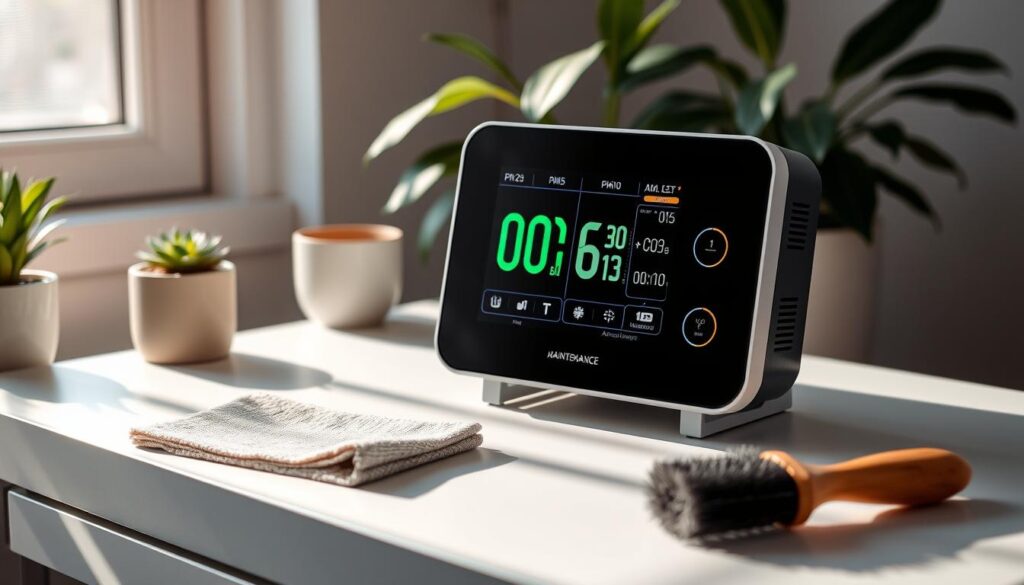
Dust is the biggest foe of any indoor air quality monitor. It can block the airflow needed for the sensors to work right.
Use a soft, dry microfiber cloth to clean your device’s outside every month. Never use harsh chemicals or liquid cleaners because they can harm the inside parts or the outer shell.
“The secret to a long-lasting device is not just in the initial purchase, but in the daily habits of care that keep it running at peak performance.”
Also, check for firmware updates through your manufacturer’s app. These updates often include changes that help your air quality monitor for home stay up to date with air quality standards.
When to Replace Filters
Many advanced models have replaceable filters or special sensor cartridges that wear out. If your indoor air quality monitor has a physical filter, check it every three to six months.
If the filter looks dirty or if your device starts giving weird readings, it’s time for a new one. Always check your user manual for the right time to replace the filter.
Keeping your air quality monitor for home in great shape is easy and worth it. By following these maintenance tips, you make sure your family breathes the cleanest air possible.
Interpreting Data and Taking Action
Turning sensor data into lifestyle changes is key to getting the most from an air quality monitor. It’s not just about tracking numbers. It’s about noticing patterns and acting on them to improve your environment.
Understanding Your Monitor’s Data
Modern devices show trends over time. Look for spikes in your indoor air quality monitor readings. These might happen when you cook, clean, or use sprays.
By analyzing these charts, you can find pollution sources. For example, if PM levels go up at night, it might mean your kitchen needs better ventilation. Knowing these patterns helps manage your health better
Practical Steps for Improvement
When you find a problem, you can fix it right away. Opening windows can help with CO2 or VOCs.
If dust or allergens are a problem, get a good air purifier. Also, choose non-toxic cleaners and use fewer scented candles. Keep monitoring to see if these changes help.
| Pollutant Type | Common Source | Immediate Action |
|---|---|---|
| Particulate Matter (PM2.5) | Cooking or Smoking | Increase Ventilation |
| VOCs | Cleaning Products | Use Natural Alternatives |
| Carbon Dioxide (CO2) | Poor Air Circulation | Open Windows or Doors |
| Humidity | Dampness or Leaks | Use a Dehumidifier |
Cost Considerations
Choosing the right air quality monitor means weighing your budget against health benefits. The device’s price often shows its data depth and sensor life.
Initial Investment vs. Long-Term Benefits
Buying a top-notch device is a health investment for your family. Even though it might cost more, it offers superior accuracy and features. These help spot pollutants early.
Spotting problems like mold or high CO2 levels early can save money. A good portable air quality monitor lets you check air quality in different rooms. This keeps your home safe and comfy.
Budget-Friendly Options
You don’t have to spend a lot to get useful data. Many makers offer affordable air quality monitors. These track common pollutants like PM2.5 and VOCs.
To save money, pick a monitor that focuses on pollutants you care about. A simple, affordable air quality monitor can still give you peace of mind. It helps you decide on air flow and purification.
| Device Category | Typical Price Range | Best For |
|---|---|---|
| Entry-Level | $50 – $100 | Basic PM2.5 tracking |
| Mid-Range | $100 – $250 | Smart home integration |
| Professional | $250+ | Comprehensive pollutant analysis |
The best air quality monitor matches your lifestyle and gives reliable data. Whether it’s a fixed unit or a portable air quality monitor, aim for a healthier home.
Conclusion: Choosing the Right Air Quality Monitor
Controlling your home’s air starts with smart choices. Getting an air quality monitor is a step ahead. It protects you from harmful particles before they cause health problems.
Essential Factors for Your Purchase
Look for precise sensors and easy connection options when buying. Accurate data lets you spot and fix air quality issues at home. A top-notch air quality monitor gives you the insights to improve your daily life.
Prioritizing Long-Term Wellness
Choosing cleaner air brings comfort and peace of mind. Pick the best air quality monitor for your life. Start now for a healthier home for everyone.