
 David Joseph
Did you know the average home cook spends over 400 hours a year on meal prep? Much of this time is lost to tasks like chopping, slicing, and grating. A good food processor can cut this time in half, making these tasks quick and easy.
We think practical usability is as important as raw power. While speed matters, the best food processor is the one you use every day without hassle. It should make tasks like kneading dough, grinding nuts, or puréeing veggies simple.
In this guide, we look at top models for their capacity, ease of cleaning, and safety. We aim to help you find a reliable kitchen tool that offers real value and fits your space.
Key Takeaways
- Prioritize ease of cleaning to ensure you use your appliance regularly.
- Consider the motor power based on your specific cooking needs, such as kneading or grinding.
- Check the capacity to ensure it matches your typical household meal size.
- Safety features and stable base designs are essential for daily operation.
- The best model is one that balances performance with intuitive storage solutions.
What is a Food Processor?
A food processor is a powerful tool that quickly chops and slices food. It’s different from blenders or stand mixers, which are made for other tasks. This machine is great at handling solid ingredients with precision.
Understanding the Basics
The main job of a food processor is to save you time in the kitchen. It has a strong motor that powers a central shaft. This shaft connects to blades or discs in a sturdy bowl.
By spinning fast, it can turn raw veggies, nuts, or dough into the right texture quickly.
Choosing the right tool depends on your kitchen needs. Here’s how a food processor compares to other gadgets:
| Feature | Food Processor | Blender | Stand Mixer |
|---|---|---|---|
| Primary Use | Chopping/Slicing | Liquids/Purees | Mixing/Kneading |
| Blade Type | Interchangeable Discs | Fixed Blades | Beaters/Hooks |
| Texture | Coarse to Fine | Smooth/Liquid | Aerated/Combined |
Key Components Explained
Every food processor has key parts for safe and effective use. The work bowl holds your ingredients, and the lid keeps things from spilling. A feed tube in the lid lets you add items while it’s running.
The attachments you use make your machine versatile. S-shaped blades are good for chopping or making nut butters. Slicing and shredding discs are perfect for salads and gratins. You can switch these parts to go from making dough to fresh salsas with the same food processor.
Why You Need a Food Processor in Your Kitchen
Many home cooks find a food processor to be a secret weapon. It makes cooking faster and more consistent. This appliance automates repetitive tasks, letting you focus on the creative side of cooking.
Time-Saving Benefits
A reliable food processor for home use saves a lot of time. Instead of spending twenty minutes with a knife, you can get uniform results in seconds.
Tasks like slicing vegetables for a stir-fry, grating cheese, or shredding cabbage for coleslaw become easy. You don’t need advanced knife skills to make professional-looking ingredients for your meals.
Versatility for Various Recipes
This machine’s true power is in its wide range of functions. It’s not just for chopping. It’s great at kneading heavy pizza dough, making creamy dressings, and puréeing ingredients into silky textures.
You can make fresh pesto, smooth hummus, or homemade nut butters with just a few pulses. It’s versatile, but remember, it’s not a blender’s replacement.
Blenders are better for liquid-heavy recipes like smoothies or hot soups. But for solid ingredients and thick mixtures, the food processor gives you the control and power you need for perfect results every time.
Types of Food Processors
Choosing the right food processor can make cooking easier. The best one depends on your family size and recipe complexity.
Full-Size Models
Full-size units are great for big kitchens. They’re perfect for families or those who cook in bulk. They handle lots of veggies, dough, or cheese easily.
They have wide feed tubes and strong motors. This means you can process ingredients fast. If you bake a lot or cook for many, a full-size food processor is a must-have.
Mini Food Processors
For small tasks like chopping herbs or making hummus, a mini food processor is best. They save space and work well for small amounts.
“The best tools are the ones that make the most difficult tasks feel effortless, allowing the cook to focus on the joy of creation.”
They’re easy to clean and store. We suggest having one for quick, precise cuts without using a big machine.
Specialty Processors
Some processors have special features like continuous juicing or precise dicing. These add value for certain recipes but take up more space and cost more.
Think if you’ll really use these features often. Versatility is key, but make sure it fits your cooking habits.
Essential Features to Consider
We think a well-informed buyer is a happy cook. So, let’s look at the key features you need to think about. When you check a food processor buying guide, it can be hard to understand all the tech talk. But, focusing on a few main points will help you find the right machine for your cooking needs.
Motor Power and Capacity
Many people think more wattage means better performance. But, motor strength is just one part of the story. You also need to think about bowl shape, the base’s weight, and how stable the unit is while it’s working.
A strong motor doesn’t help if the bowl design stops ingredients from reaching the blades. Look for a food processor that has a good balance between a strong motor and a well-designed bowl. This mix helps you get consistent results, whether you’re kneading dough or chopping herbs.
Blade Options and Accessories
It’s tempting to pick a model with lots of attachments. But, more isn’t always better. We suggest choosing versatility over quantity to avoid kitchen clutter. Focus on these key parts:
- S-Blade: Great for chopping, mixing, and pureeing.
- Slicing Disc: Offers adjustable thickness for the best value.
- Shredding Disc: Ideal for cheese and root vegetables.
“The best kitchen tools are those that you reach for every single day, not the ones that gather dust in the back of a cabinet.”
Safety Features
Safety is crucial when using sharp blades and high-speed motors. A good food processor buying guide will highlight the importance of safe use. Always check for these key safety features before you buy:
First, make sure the unit has a locking lid system that stops the motor unless the bowl is in place. Next, look for non-slip feet to keep the machine steady on your counter. Lastly, an automatic shutoff feature is a big plus, as it prevents overheating during tough tasks.
By keeping these features in mind, you can choose a food processor that is safe, efficient, and fits your home kitchen perfectly.
Top Food Processor Brands
We’ve looked at top kitchen appliance makers to find the best food processor for you. We check their durability, attachment quality, and how easy they are to put together. Choosing a well-known brand means you get better parts and warranty support.
Cuisinart
Cuisinart is a legend in the American kitchen world. It’s known for robust construction and easy use. Home cooks love them for their useful simplicity. They’re built to last, making them a favorite in many kitchens.
KitchenAid
KitchenAid is famous for its beautiful design. But it’s not just about looks. These machines perform well in all food tasks. They might cost more, but their quality and power are worth it for serious cooks.
Breville
For innovation, choose Breville. They’re known for intuitive controls and wide feed tubes. This means you can put in big chunks without chopping first. Plus, they’re quiet and efficient, unlike many other powerful models.
Hamilton Beach
Hamilton Beach is great for those who want quality without spending a lot. Their machines are easy to use and simple to set up. They might not have all the fancy features, but they’re perfect for everyday cooking.
How to Choose the Right Size Food Processor
Finding the perfect food processor is all about matching it to your cooking style and kitchen space. The best food processor for home use should fit your daily cooking needs without cluttering your kitchen.
Small vs. Large Capacity
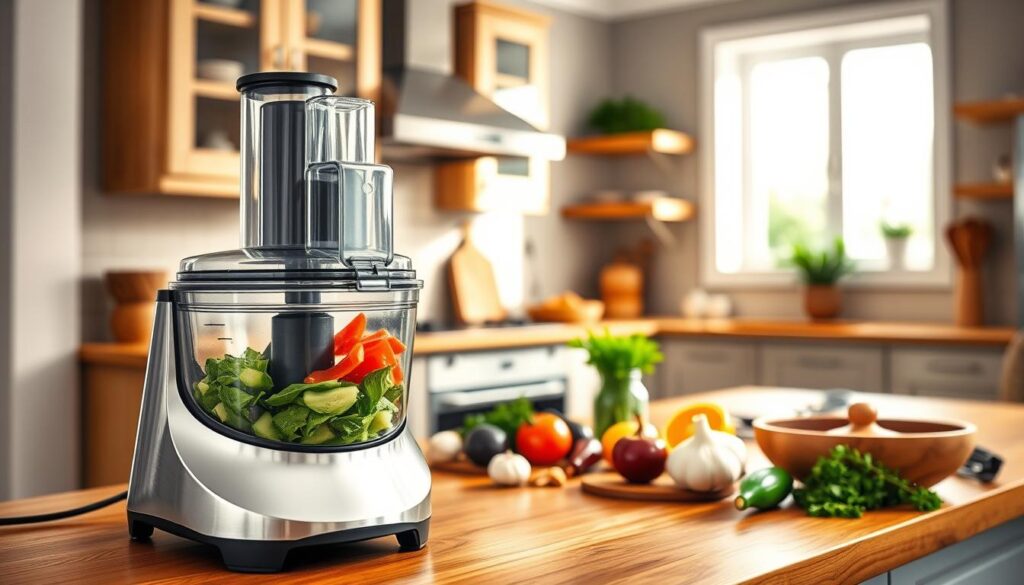
If you mostly make small dishes like dips, sauces, or chopped herbs, a mini food processor is perfect. These small units save space and are a breeze to clean.
On the other hand, bigger models are great for batch cooking, baking, or handling lots of veggies. They let you process big amounts at once, which saves a lot of time when cooking.
Assessing Your Kitchen Space
Before buying, measure your counter and cabinet space. Big machines take up a lot of room, so think if you’ll keep it out or store it.
Also, think about the weight of the device. If you’ll store it in a low cabinet, make sure you can lift it easily. Cord storage features and a slim design are key if your kitchen is tight.
Popular Food Processor Recipes
The real power of a food processor comes alive when you try new recipes. With the right attachments, you can cut down on prep time a lot.
Quick Chopped Salads
Making uniform salads is a top use for this appliance. The slicing or shredding disc makes quick work of carrots, cabbage, and cucumbers.
Use the pulse button to control the texture. This keeps your veggies crisp, not mushy.
Smoothies and Nut Butters
The S-blade is perfect for homemade nut butters. Just process roasted nuts until they’re smooth and creamy.
But, be careful with smoothies. A food processor might leak with too much liquid. For thinner drinks, a blender is better.
Homemade Sauces and Dips
Make fresh pesto, hummus, or salsa with ease using the pulse function. It helps you get the right texture for your dips.
For thick sauces like curry pastes, the high-speed motor is a big help. Start with a low pulse to mix everything well before speeding up.
Tips for Maintaining Your Food Processor
Keeping your food processor in top shape is easy with a few simple steps. By following these habits, your appliance will stay reliable for many years.
Proper Cleaning Techniques
Even though some parts are dishwasher-safe, we recommend hand-washing the plastic bowls and lids. High heat and harsh detergents can warp or crack plastic over time.
Don’t soak the base of your food processor in water. This can harm the motor inside. Instead, clean the outside with a damp cloth and mild soap. Check the blade area for trapped food to prevent bacteria.
After cleaning, dry all parts well before putting them back together. Moisture can cause bad smells or mold in the bowl or lid.
Storing and Handling Tips
Storing your food processor right is key to keeping it in good condition. Store blades in a case or sleeve to avoid dulling from other utensils.
If you have limited space, look for integrated storage solutions. Many modern models come with:
- Storage caddies for blades and discs.
- Bowl-nesting designs to save space.
- Cord-management features to avoid tangles.
Handle your food processor with care and keep parts organized. These small steps help prevent damage. This way, your machine will always be ready for meal prep.
Budgeting for Your Food Processor
Finding the right balance between price and performance is key. When you look at a food processor buying guide, you’ll see prices vary. We aim to help you find the features that matter most for your cooking.
Finding Good Value Options
An affordable food processor is great for basic tasks. It’s perfect for chopping veggies, grating cheese, or making simple sauces. You don’t need the most expensive machine for everyday meal prep.
When looking for budget-friendly options, check for reliable warranty support. These machines might have plastic or smaller motors but are still useful. Make sure the capacity fits your needs, as smaller units are often cheaper.
High-End Models Worth the Investment
For frequent cooks or those processing tough ingredients, a premium machine is worth it. These models have stronger motors and are quieter. They’re built to last, with heavy-duty materials for years of use.
High-end units offer better controls and larger feed chutes. These save time during complex recipes. A food processor buying guide shows that durability and accessories add to a machine’s value.
| Feature | Affordable Model | High-End Model |
|---|---|---|
| Motor Power | Standard | High-Torque |
| Durability | Moderate | Long-Lasting |
| Operation | Basic | Quiet & Precise |
The best affordable food processor fits your lifestyle without unnecessary costs. Focus on total value, not just price. Choose a machine that matches your cooking habits for long-term benefits.
User Reviews and Recommendations
Finding a reliable food processor is all about real-world performance. Star ratings give a quick look, but they miss the daily kitchen details. Look beyond marketing to see how a processor works in your cooking.
Real Experiences with Food Processors
When reading food processor reviews, pay attention to assembly and stability. A heavy base is key to keep it steady during tasks like kneading. Also, check comments on noise and cleaning ease.
Storage is a common issue. See if accessories fit inside the bowl or need a separate case. Consistency in chopping, shredding, and puréeing shows a motor’s quality.
Expert Opinions and Ratings
Experts say long-term testing shows reliability issues missed in demos. A top rated food processor keeps performing after many uses. The Cuisinart Custom 14-Cup is a top choice for durability in professional kitchens.
If you want precision, the Breville Sous Chef is recommended. These models last long, giving consistent results. We’ve compared these top options to help you choose based on your needs.
| Model | Best For | Key Strength | Durability |
|---|---|---|---|
| Cuisinart Custom 14 | Heavy Duty Tasks | Simple Design | Excellent |
| Breville Sous Chef | Precision Cooking | Refined Control | High |
| KitchenAid 13-Cup | Versatility | Easy Cleanup | Good |
Common Issues and Troubleshooting
When your food processor stops working, a few simple checks can help. Most problems come from small setup mistakes, not mechanical failures. Start with the basics before thinking it’s broken.
Unresponsive Motor
If the motor won’t start, check the power cord first. Make sure it’s plugged into a working outlet. Many models have a safety interlock system that only works when everything is in place.
Ensure the bowl clicks onto the base and the lid fits right. If it stops during heavy use, it might be the overload protection kicking in. Let it cool down for a few minutes before trying again. If it still doesn’t work, look for debris or safety switch issues.
Uneven Chopping Results
Uneven textures often come from wrong loading or overloading. Cut ingredients to similar sizes for even chopping. Don’t fill the bowl too much, as it stops food from moving around.
Use the pulse function for better control over your ingredients. Running it continuously can make veggies mushy. Short pulses help you get the right texture. Make sure the blade is sharp and seated right for best results.
| Issue | Potential Cause | Recommended Fix |
|---|---|---|
| Motor won’t start | Safety lock not engaged | Realign bowl and lid |
| Uneven texture | Overfilled bowl | Process in smaller batches |
| Unit stops suddenly | Overload protection | Let motor cool down |
| Food stuck to sides | Poor circulation | Scrape bowl and pulse |
By following these steps, you can make your food processor last longer. If you smell burning or hear grinding noises, it might need a pro. Always unplug it before checking the blades or drive parts for safety.
Final Thoughts on Choosing a Food Processor
Finding the right appliance means balancing your cooking habits with your kitchen space. It’s better to focus on what you really need. Don’t buy too much that just takes up space.
Refining Your Search
Our food processor buying guide helps you consider important factors. Look at motor power, safety, and warranty. Choose machines that are stable and easy to clean for long-term happiness.
Making the Right Investment
Models like the Cuisinart Custom 14-Cup or the Breville Sous Chef are great for home cooks. The best food processor fits your cooking needs and your maintenance commitment.
Think about your kitchen space before buying. A good food processor can change your cooking routine for years. Take your time to find the perfect model for your daily cooking.