
 David Joseph
Did you know that nearly 40% of your home’s energy budget goes toward heating and cooling? Installing the right overhead unit is a smart way to improve comfort while lowering those monthly bills.
Finding the best ceiling fan is more than just picking a pretty look. You need to balance airflow with your room’s size for the best results.
Whether you want a modern designer ceiling fan or a classic style, we guide you. We cover sizing, mounting, and energy efficiency. This ensures your home stays comfortable all year. Let us help you pick the perfect model for your space.
Key Takeaways
- Proper sizing is essential for effective air circulation in any room.
- Energy-efficient motors significantly reduce long-term utility costs.
- Mounting height impacts both safety and the quality of airflow.
- Aesthetic choices should complement your existing interior design theme.
- Smart controls offer modern convenience for managing your home climate.
Understanding Ceiling Fan Basics
Before buying a ceiling fan, it’s key to know how they work. Whether you want one for indoors or an outdoor ceiling fan, understanding the basics is crucial for comfort.
What is a Ceiling Fan?
A ceiling fan is a device hung from the ceiling that moves air with its blades. Many think they lower room temperature. But, they actually make the air feel cooler by creating a wind-chill effect.
“True comfort is not just about the temperature on the thermostat, but how the air moves around you to create a sense of well-being.”
How Do Ceiling Fans Work?
A ceiling fan moves air efficiently in your space. Its blades push air down, cooling your skin. In winter, you can change the motor direction to pull cool air up and warm air down.
Different Types of Ceiling Fans
Choosing the right fan depends on where you’ll put it. There are different types for various environments. An outdoor ceiling fan, for example, is made to resist rust and water.
| Fan Type | Best Location | Moisture Resistance |
|---|---|---|
| Indoor | Living rooms, bedrooms | None |
| Damp-Rated | Covered porches, bathrooms | Moderate |
| Wet-Rated | Open patios, pergolas | High |
Choosing the right rating ensures your ceiling fan stays safe and works well for years. Always check the specs to make sure it fits your space.
Benefits of Installing a Ceiling Fan
Home improvements that make life better often do two things: they’re comfortable and useful. Adding an energy-efficient ceiling fan to your home lets you control the temperature better and easier.
Energy Efficiency and Cost Savings
A ceiling fan is not a replacement for air conditioning. But it’s a great helper. It makes you feel cooler by creating a wind-chill effect.
This lets you turn up your thermostat without losing comfort. So, you save money on your bills and stay cool during hot months.
Enhanced Comfort and Air Circulation
Better air movement makes you feel cooler. It’s true in bedrooms, great rooms, or sunrooms. Good airflow stops air from getting stuck.
Put fans in busy spots like porches or laundry rooms for fresher air. Proper circulation changes how we feel about the temperature.
Year-Round Usability
Many think fans are just for summer. But an energy-efficient ceiling fan is useful all year.
Use the reversibility feature to push warm air down in winter. This keeps your home warm when it’s cold outside.
Factors to Consider When Choosing a Ceiling Fan
Choosing the right ceiling fan for your space is about more than just looks. You need to think about how your room’s layout affects air flow. Look at size, mounting needs, and style to find the best ceiling fan for you.
Room Size and Fan Size Compatibility
The fan’s size is key for good air flow. A fan that’s too small won’t move enough air in big rooms. On the other hand, a fan that’s too big can make a small room feel cold.
Measure your room to pick the right fan size. The right size ensures your ceiling fan works well without wasting energy.
| Room Size (Sq. Ft.) | Recommended Blade Span | Ideal Application |
|---|---|---|
| Up to 75 | 29–36 inches | Small offices or nooks |
| 75–150 | 42–48 inches | Standard bedrooms |
| 150–300 | 52–56 inches | Living rooms or kitchens |
| 300+ | 60+ inches | Great rooms or open lofts |
Ceiling Height Considerations
How high your ceiling is affects the fan’s mounting. For low ceilings, a flush-mount fan is safer and more efficient. High ceilings need a downrod to get the blades in the right spot.
“The secret to a comfortable room is not just the power of the motor, but the precise distance between the blades and the floor.”
Make sure your fan works with sloped ceilings if you have them. The right installation is key for the best ceiling fan performance and safety.
Style and Design Options
Style matters too. A designer ceiling fan can be a room’s centerpiece, mixing style with function. Whether you like simple or detailed designs, there’s something for everyone.
For outdoor spaces, look at outdoor ceiling fans. They’re made to handle the weather and keep you cool outside. Picking the right look makes your new fan feel like part of your home.
Ceiling Fan Features to Look For
Modern ceiling fans do more than just cool the air. They come with advanced features that make our lives easier. When you start looking, it’s good to know what to consider. This ensures you find a fan that fits your needs. Quality components mean your fan will keep you comfortable for a long time.
Motor Quality and Fan Speed Options
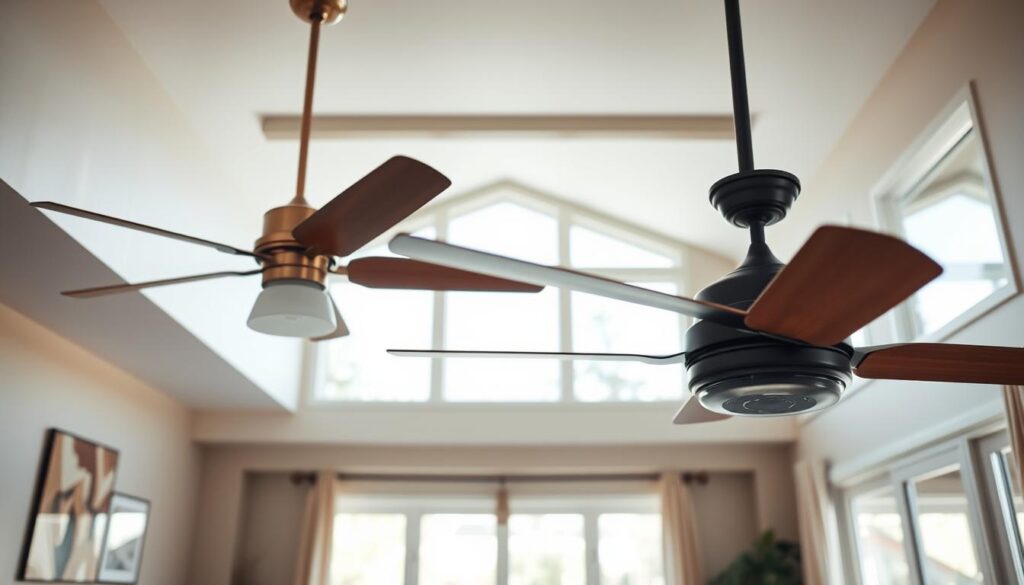
The motor is the fan’s heart, affecting its performance and life span. Look for high-quality motors for steady airflow without shaking. A quiet ceiling fan is key for quiet spaces like bedrooms or home offices.
Quality fans usually have different speed settings. This lets you adjust the air flow with the seasons. Here are important things to look for:
- DC Motor Efficiency: These motors are lighter, cooler, and use less power than AC motors.
- Variable Speed Control: Having 3 to 6 speed options lets you customize the breeze.
- Reversible Rotation: This feature changes the blade direction to push warm air down in winter.
Integrated Lighting Features
Many people want fans that also light up a room. These fans come with energy-saving LED bulbs that last long. Dimmable settings are great for setting the mood in living rooms or dining areas.
When picking a light kit, think about these:
- Color Temperature: Pick between warm, soft white or cool daylight to match your decor.
- Remote Control Access: A remote lets you adjust light and fan speed from your couch.
- Frosted Glass Covers: These diffuse light evenly, avoiding harsh glares.
Smart Fan Technology
A smart ceiling fan brings home automation to a new level. These fans connect to your Wi-Fi, letting you control them with a smartphone app or voice commands. You can set them to turn off when you leave, for example.
Smart technology offers many benefits for today’s homes:
- Scheduling: Set your fan to turn on or off at specific times to save energy.
- Voice Integration: Connect your fan with virtual assistants for easy control.
- Automation Routines: Some fans adjust their speed based on room temperature, keeping you comfortable.
Choosing the Right Blades for Your Ceiling Fan
When you start looking for the best ceiling fan, you’ll see how important blade design is. Many people focus on the motor or light kit. But, the blades actually move air in your space. Choosing the right ones ensures comfort and style.
Want to know more about choosing the right ceiling fan for your home? You can learn how to choose the perfect one. It’s about matching your design goals with your room’s needs.
Blade Material and Design
The material of your blades affects durability and looks. You can choose from wood, plastic, or metal. Each has its own benefits for different settings.
- Wood blades: Great for a traditional or rustic look, but may warp in humid areas.
- Plastic or ABS blades: Durable and moisture-resistant, perfect for outdoor spaces.
- Metal blades: Ideal for industrial settings where air movement is key.
For a modern look, consider simple three-blade designs. They offer a clean, minimalist style. This makes the best ceiling fan fit well in modern homes without being too much.
The Impact of Blade Pitch on Performance
Blade pitch is the angle of the blade to the floor. It’s crucial for air movement. A steeper pitch means more air can be moved.
But, a very steep pitch needs a strong motor to work well. If the pitch is too steep, the fan may not work quietly or efficiently. Aim for a pitch between 12 and 15 degrees for best air movement and energy use in homes.
Energy Efficiency Ratings for Ceiling Fans
Knowing how much power your cooling device uses is key to a greener, cheaper home. The cost of a ceiling fan isn’t just about the price tag. It’s also about how much electricity it will use over time. Look beyond the initial cost and think about the long-term energy use.
Understanding the Energy Star Label
The Energy Star label is a sign of top-notch performance. It means the ceiling fan has passed tough tests from the Environmental Protection Agency. Fans with this label use way less energy than others, saving you money each month.
Check out energy-efficient ceiling fans to find one that fits your style. These fans move air well while using less power. Choosing one means you’re picking a product that’s good for the planet and works great.
Benefits of Choosing Energy-Efficient Fans
Choosing an energy-efficient ceiling fan cuts down your energy use a lot. These fans work better, so you can stay cool without using too much AC. They also help you feel warmer in winter.
These fans are good for the planet too. Using them wisely, like turning them off when you leave, makes them even better. Making a smart choice now means more comfort and savings for years.
Noise Levels: What to Expect from Ceiling Fans
When you buy a new ceiling fan, the noise level is key. You want a soft sound of air moving, not loud mechanical noises. A gentle “whoosh” is okay, but rattling, clicking, or humming means there’s a problem.
Test your fan at both high and low speeds to see how it sounds. A good motor stays steady, even at top speed. If it vibrates too much, check the screws. Loose ones can cause noise.
Quiet Operation Features
For quiet fans, look for special features. High-end fans have balanced blades to stop wobbling and noise. Also, DC motors are quieter than AC ones, making them smooth and silent.
Choose brands that focus on quiet motors. You might also want to look at exhaust fan solutions for better cooling. Reading what others say can also help you pick the right fan.
Noise Ratings and Standards
There’s no one “decibel rating” for all ceiling fans. But, many makers share how quiet their motors are. Knowing this helps you pick fans that won’t be too loud.
| Noise Level (dB) | Sound Description | Recommended Room |
|---|---|---|
| 20 – 30 dB | Whisper quiet | Bedroom / Nursery |
| 30 – 45 dB | Soft airflow | Living Room / Office |
| 45 – 60 dB | Noticeable hum | Garage / Workshop |
| Above 60 dB | Distracting noise | Not recommended |
By looking at these numbers, you can find a quiet ceiling fan that fits your needs. Make sure it’s installed right, too. Even the best fans can be noisy if not set up well.
Installing a Ceiling Fan: DIY or Professional?
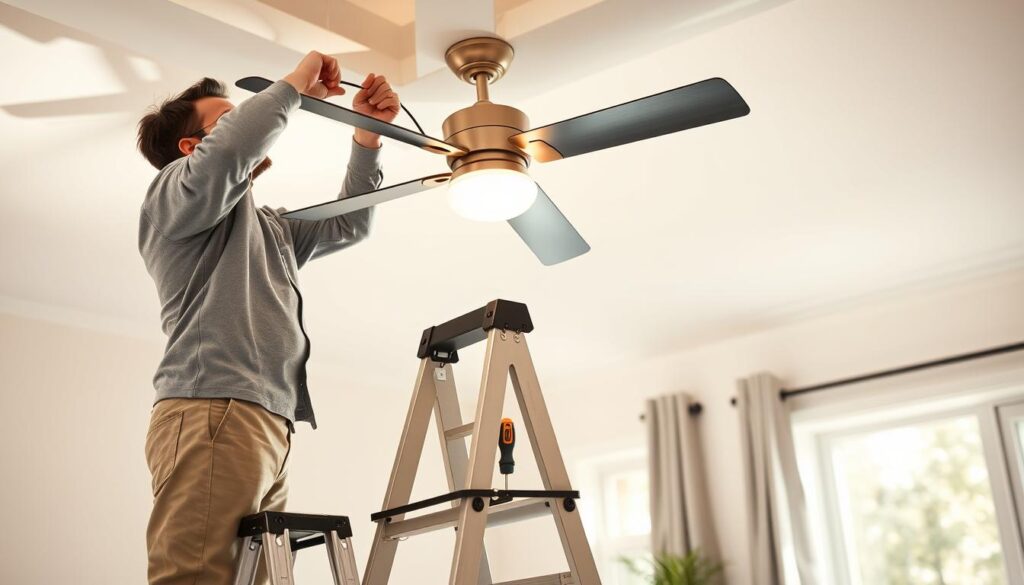
Deciding whether to install a ceiling fan yourself or hire a pro depends on your comfort level. A simple upgrade can be a fun weekend project. But, it’s risky if you’re not careful with electrical work. Make sure you know your limits before starting.
Assessing Your Comfort Level with Installation
Think about your experience with electrical tasks. You should be okay with turning off power and using a voltage tester. If you’re new to wire nuts and mounting brackets, it might seem tough.
Installing a ceiling fan needs a strong junction box that can hold the fan’s weight. If your current box is for lights only, it won’t work. Check if your ceiling can handle the fan’s movement and vibration.
When to Hire a Professional Electrician
There are times when hiring a pro is safer. If your wiring is old or you need a new box in a joist, a pro will follow local codes. Safety is key when working with high-voltage.
Choosing a smart ceiling fan means checking your Wi-Fi and wiring. Pros can fix any connection problems and make sure everything works right away. Here’s a guide to help you choose the right option for your home.
| Factor | DIY Installation | Professional Help |
|---|---|---|
| Electrical Experience | Intermediate | Not Required |
| Ceiling Box Type | Fan-Rated Box | New Box Installation |
| Smart Features | Basic Setup | Advanced Integration |
| Safety Risk | Low (with caution) | Minimal |
Maintaining Your Ceiling Fan
We often overlook our ceiling fans until they start making strange noises or wobbling. Regular upkeep is key to keep your unit working well. By spending a little time on routine checks, you can avoid expensive repairs and keep your home comfy.
Regular Cleaning and Care Tips
Dust on blades is a big reason for poor performance. Wipe the blades with a damp cloth every few months. This keeps your Energy-efficient ceiling fan running smoothly.
Also, check all screws and fasteners now and then. Loose parts can cause rattles. Tightening these connections keeps your fan stable and safe.
“An ounce of prevention is worth a pound of cure when it comes to home appliance longevity.”
Troubleshooting Common Issues
If your fan is quieter than usual, it might need a quick check. A Quiet ceiling fan should run without noise. If it’s noisy, look for loose light kits or debris in the motor.
Wobbling often means uneven blade weight. Use a balancing kit to fix this. If it still wobbles, make sure the mounting bracket is tight.
Remember, regular care saves energy. A well-maintained Energy-efficient ceiling fan cuts down on utility bills. For electrical problems or motor failure, call a pro to keep your Quiet ceiling fan in top shape.
Trending Ceiling Fan Designs for Your Home
Modern interior design trends have changed how we see ceiling fans. They’re no longer just hidden objects. Now, homeowners pick the best ceiling fan to be a key part of the room’s look.
Modern vs. Traditional Styles
Think about your home’s style when picking a ceiling fan. Modern designs are simple, with clean lines and hidden parts. They fit well in modern homes or updated apartments.
Traditional styles have more details, like carved blades or fancy motors. A designer ceiling fan can mix both styles. This makes your fan look like it was meant to be there.
Popular Finishes and Colors
The finish of your fan is key to matching your home’s look. Indoors, white or light finishes make rooms feel bigger. For a cozy feel, try rustic wood tones with farmhouse or coastal decor.
Industrial fans are also popular, with matte black or brushed nickel. For outdoor use, make sure the fan is weatherproof. A designer ceiling fan is a smart choice for lasting style and function.
| Design Style | Key Characteristics | Best Room Type |
|---|---|---|
| Modern | Minimalist, hidden hardware | Home Office |
| Traditional | Ornate, classic detailing | Living Room |
| Industrial | Matte metal, exposed bolts | Covered Patio |
| Farmhouse | Rustic wood, soft colors | Bedroom |
Frequently Asked Questions About Ceiling Fans
Choosing the right hardware for your home is important. We get many questions about installing a new Ceiling fan in different spaces.
Determining the ideal size for your space
The size of your room affects your choice. For rooms under 75 square feet, 29- to 36-inch blades are best. Rooms over 175 square feet need 52-inch blades to circulate air well.
Mounting on sloped surfaces
Sloped ceilings can be tricky to install on. Use a special adapter if your ceiling is over 34 degrees. This keeps your fan stable.
Understanding product longevity
A good Ceiling fan can last a long time with care. Its lifespan depends on the motor, maintenance, and use. Clean it regularly and replace parts when needed to make it last longer.
Today’s technology makes controlling your home’s climate easy. Smart ceiling fans offer better control and energy savings. If you need help, contact local experts. Your comfort is our main concern as you enhance your home.