
 David Joseph
Did you know over 70% of local climate reports use data from miles away? This can mean missing alerts for sudden frost or storms near you. These could affect your garden or daily commute.
With a home weather station, you get professional-grade data right at your fingertips. This helps you make smarter, data-driven choices every day.
Finding the best weather station means looking at sensors and connectivity that fit your lifestyle. In this guide, we cover the key parts for a reliable setup. Let us guide you to a high-quality weather station that meets your needs.
Key Takeaways
- Professional-grade data improves your daily decision-making process.
- Local readings are far more accurate than regional broadcast reports.
- Choosing the right hardware depends on your specific environmental goals.
- Modern systems offer seamless connectivity to your smartphone or computer.
- Investing in quality equipment ensures long-term reliability and performance.
Understanding Weather Stations: What They Are and How They Work
Getting a home weather station changes how you see the world outside. These devices give you direct access to local weather data. They let you see changes as they happen.
They collect detailed information about your area’s climate. This helps you understand the weather patterns around you better.
The Basics of Weather Stations
A weather station is a set of sensors that track the weather. Most are indoor outdoor weather stations. They have an outside sensor group and an inside display.
These systems are more accurate than apps on your phone. They measure the weather at your exact location. This is key for gardening, safety, or just being curious.
Common Types of Weather Stations
There are many types of weather stations for different needs. The right weather station for home depends on how much data you want.
- Digital weather station: Great for beginners. They show temperature, humidity, and pressure easily.
- Professional weather station: For those who want more. They track solar radiation, UV, and wind precisely.
- Smart home-integrated units: Connect to Wi-Fi. You can see data on your phone from anywhere.
How Weather Stations Measure Data
Special sensors send data to a central hub. The outside sensors use wireless signals to reach the indoor console. This keeps your data up to date.
Sensors change physical changes into electrical signals. For example, thermometers measure heat, and anemometers track wind. The professional weather station then shows this data clearly on your screen.
Key Features to Consider When Choosing a Weather Station
Finding the right features is key when looking for a weather monitoring system. Choosing the best weather station means balancing technical specs with your needs for data handling.
Accuracy and Precision
The heart of a good digital weather station is its sensors. Look for models with high-resolution readings for temperature, humidity, and pressure. This ensures your data stays reliable.
If you’re into gardening or tracking local weather, precision matters. High-quality sensors give you accurate readings. This helps you understand your backyard’s climate better.
Ease of Setup and Use
Today’s tech makes setting up easier for everyone. A wireless weather station is great because it doesn’t need complicated wiring.
When picking a weather station for home, think about how it fits your space. A design that’s easy to use means you can start tracking weather fast, without needing help.
Data Logging and Connectivity Options
Advanced connectivity changes the game for those who want to monitor weather from anywhere. Many stations now connect to Wi-Fi, letting you see live data from your weather station remotely.
These features often come with mobile apps for tracking trends. A digital weather station with good data logging lets you analyze past weather patterns. This is a big plus for any weather station for home.
Essential Instruments Found in Weather Stations
Every reliable weather station has key tools to build a detailed picture of the atmosphere. These parts work together to turn raw data into useful information for your daily life.
Anemometer and Wind Sensors
Anemometers are vital for measuring wind speed and direction accurately. They help you manage tasks like preventing soil erosion and controlling spray drift.
A wireless weather station makes it easy to place these sensors. Make sure the anemometer is in an open area to get the most accurate readings for your home weather station.
Rain Gauge
A good rain gauge is essential for gardeners and outdoor lovers. It tracks how much rain your landscape gets, helping you keep plants healthy and water them right.
When picking a weather station for home, make sure the rain gauge is level. This prevents wrong readings during heavy storms.
Thermometer and Hygrometer
The thermometer and hygrometer are crucial in any indoor outdoor weather station. The thermometer shows temperature changes, and the hygrometer measures air humidity.
These sensors give a full picture of your local weather. A top-notch wireless weather station lets you check these values from home. This way, you can stay updated on weather changes all day.
The Importance of Calibration and Maintenance
Even the most advanced home weather station needs some care to stay accurate. Technology has come a long way, but the environment can still affect sensor precision. By spending a little time on upkeep, you keep your local data reliable for planning.
Why Regular Calibration is Crucial
Calibration checks your device against a known standard to ensure accuracy. Over time, sensors can drift, showing values that don’t match real conditions. This is common with temperature and humidity sensors in extreme conditions.
Some devices come pre-calibrated, making it easier to get accurate forecasts. But even these need occasional checks. If your weather station often shows different values than nearby stations, it’s time for a manual calibration.
Maintenance Tips for Longevity
To keep your wireless weather station working for years, protect it from the elements. Clean the outdoor sensors regularly to remove debris like spider webs and leaves. A soft, damp cloth usually does the trick.
Managing your wireless weather station‘s batteries is crucial. Check battery compartments at least twice a year to avoid corrosion. Use high-quality lithium batteries in cold climates for better performance.
Also, make sure your weather station is mounted securely and level. A tilted rain gauge or blocked anemometer can skew data, no matter the price. By following these tips, you protect your investment and keep your home weather station readings accurate.
Popular Weather Station Brands in the Market
The world of home weather monitoring is led by a few key players. They are known for their innovation and reliability. When you start looking for a weather station, finding brands with a good track record is key. You can find top-rated options by checking out the best home weather stations available. This ensures you make a smart choice.
Davis Instruments
Davis Instruments is the top choice for those who need extreme accuracy and durability. Their gear is often used in professional settings. This makes them a great pick for serious enthusiasts who want a reliable wireless weather station.
Their systems can handle tough weather while giving you precise, real-time data.
AcuRite
AcuRite is known for offering great value and functionality. They have a wide range of products that make it easy for homeowners to monitor their local climate. Their home weather station models are easy to use and set up.
Netatmo
Netatmo is perfect for those who love the smart home lifestyle. Their devices are sleek and integrate well with mobile apps. Choosing Netatmo means your wireless weather station will connect to your digital world. This lets you check the weather from anywhere.
Weather Station Connectivity: Smart Technology Integration
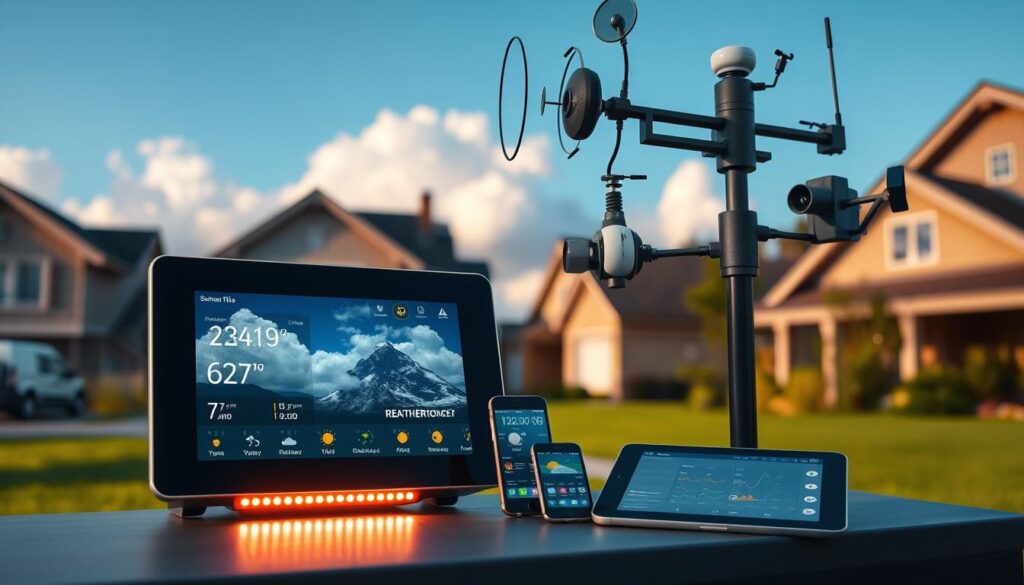
We can now check the weather from anywhere in the world thanks to new tech. Modern tech has made the home weather station a smart device. It connects easily with our digital lives, offering a flexible and reliable way to track the environment.
Wi-Fi and Bluetooth Features
Wireless tech is key for the modern weather station experience. Many models use Wi-Fi to send data to the cloud. This means your weather data is always available.
Bluetooth helps with setup and syncing data over short distances. It makes sure your devices stay connected without needing constant manual help.
Mobile Apps for Home Monitoring
A weather station app on your phone changes how you see your home’s data. These apps give you live updates on temperature, humidity, and wind speeds. This is great for keeping an eye on your home, even when you’re not there.
These apps also let you set up alerts. You can get notified if the wind gets too strong or if it gets too cold. This smart monitoring helps keep your property safe from sudden weather changes.
| Connectivity Type | Primary Use | Range | Key Benefit |
|---|---|---|---|
| Bluetooth | Initial Setup | Short | Ease of pairing |
| Wi-Fi | Cloud Syncing | Long | Remote access |
| USB Cable | Direct Data | Limited | Stable connection |
How to Interpret Weather Station Data
Getting raw numbers from your device is just the start. It’s about turning those numbers into useful weather insights. With a home weather station, you get a lot of data. But it’s how you understand it that really matters.
By using a weather station app, you can track changes over time. This helps you understand your local weather better.
Understanding Temperature and Humidity Readings
Temperature and humidity are key for any indoor outdoor weather station. Together, they tell you how hot or cold it feels outside. Tracking these values helps you plan your day, whether it’s gardening or choosing what to wear.
- Dew Point: A high dew point means the air is full of moisture, making it feel sticky or uncomfortable.
- Relative Humidity: This shows how much moisture the air can hold compared to its maximum capacity.
Wind Speed and Direction Basics
Wind data is crucial for understanding weather patterns. Your weather station shows wind speed and gusts. Knowing the wind direction helps you guess where weather is coming from.
“The wind is the invisible hand that shapes our daily weather experience, carrying the story of the atmosphere from distant lands to our own backyards.”
Analyzing Barometric Pressure Trends
Barometric pressure is a top tool for short-term weather forecasts. Watching how this pressure changes helps you predict weather shifts.
Rising barometric pressure usually means good, stable weather is coming. On the other hand, falling pressure often signals a storm or low-pressure system is near. Your weather station app can help you see these trends easily.
Benefits of Owning a Personal Weather Station
Managing your property well starts with knowing the exact weather. A weather station lets you watch the weather right where you live. This is better than using reports from far away airports.
Enhanced Weather Awareness
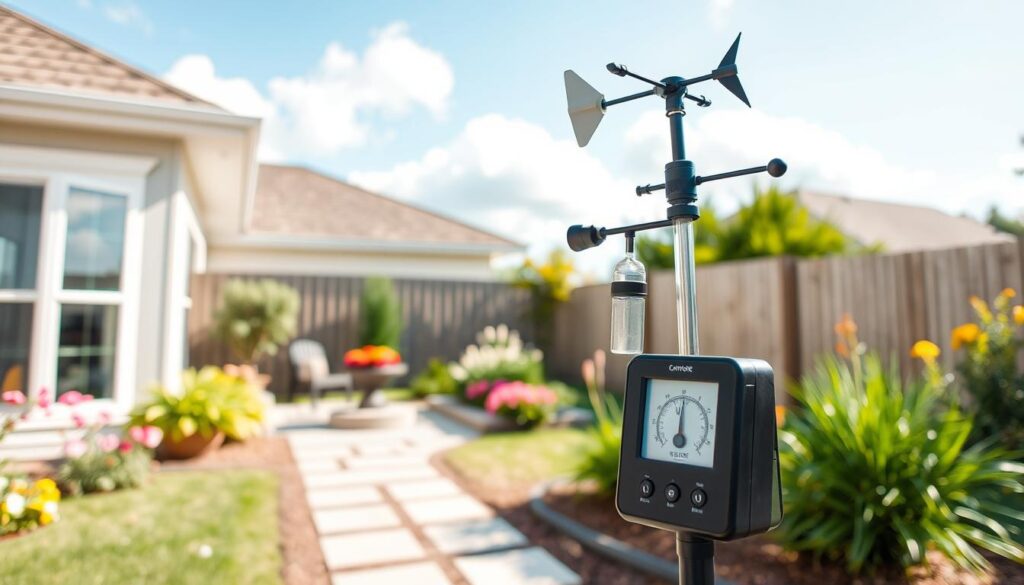
A home weather station gives you updates as they happen. You can see when the weather is about to change. This helps you know when storms are coming.
- Get alerts for high winds or freezing temps.
- Keep an eye on humidity to know about comfort and air quality.
- Look at past data to see patterns in your area.
Supporting Agricultural Decisions
For those who farm or garden, knowing the weather is key. A professional weather station helps you decide when to water, plant, and protect from frost.
Knowing the exact moisture and temperature in the soil helps you use water wisely. This stops you from using too much water. It makes sure your plants or garden gets the right care to grow well.
Engaging in Educational Opportunities
These devices are also great for learning. A weather station lets people dive into meteorology by watching it happen.
By looking at the data from your home weather station, you can teach about the water cycle and air pressure. It makes science real and fun for kids. Whether you love science or just want to learn, a professional weather station opens a window into our world.
Budgeting for Your Weather Station Purchase
Buying a reliable monitoring system means knowing what you need and how much you can spend. Focus on the most important measurements to get the most value for your money.
Finding the Right Balance Between Features and Price
A basic digital weather station is great for casual users. But, advanced models give more detailed insights. Some top models even come with solar panels for up to 2.5 years of power.
You can pick the best outdoor weather station by weighing its features against your needs.
Don’t forget about extra costs like mounting hardware or adding more sensors later. A mid-range home weather station from a trusted brand usually lasts longer than the cheapest one. Good customer support and a strong warranty also add value to your purchase.
Where to Look for Deals and Discounts
Watch for seasonal sales to get a top-notch device at a lower price. Bundles with extra sensors or mounting kits often save you money. Reading reviews from other users helps you avoid bad choices and find the best weather station for your budget.
Take your time to compare different models before you buy. Planning carefully lets you get accurate, real-time data without spending too much.