
 David Joseph
Did you know that changing your home’s temperature by just two degrees can cut your yearly energy costs by almost 10%? Many of us ignore the simple tools that keep our environment balanced. Yet, these devices are key to maintaining peak comfort and health.
We think picking the right indoor thermometer is the first step to a smarter, more efficient home. By watching your climate, you can make better choices about heating and cooling all year.
Finding the best indoor thermometer doesn’t have to be hard. When you choose a good indoor thermometer for home use, your family stays warm and your utility bills stay low. Let us show you what features really matter for your home.
Key Takeaways
- Small temperature changes can lead to big savings on your monthly energy bills.
- Proper climate monitoring improves your home’s health and comfort.
- Choosing the right device helps you make smarter choices about ventilation and heating.
- Reliable data lets you better control your living environment all year.
- Quality monitoring tools are important investments for every modern home.
Understanding Indoor Thermometers
Keeping a comfortable environment starts with the right tools. Whether it’s your home or office, a steady temperature is key. It’s important for health, saving energy, and staying productive.
An indoor thermometer helps you make smart choices about your space’s climate. If your air feels dry or off, think about getting a high-quality humidifier to balance it out.
What is an Indoor Thermometer?
An indoor thermometer is a tool for measuring indoor temperature. It’s essential for both homeowners and professionals to keep an eye on the temperature.
Using an indoor thermometer for home keeps your space cozy all year. For offices, it helps create a comfortable environment that boosts focus and productivity.
How Indoor Thermometers Work
Today’s thermometers use electronic sensors for precise readings. These sensors pick up on tiny temperature changes and turn them into digital signals.
Older thermometers used liquid-filled glass tubes. But now, we have speed and accuracy thanks to modern tech. These devices give you instant readings to adjust your heating or cooling.
Types of Indoor Thermometers
Knowing the differences in indoor thermometers is key to a comfortable home. We sort these tools by their tech, power needs, and how they connect. This helps you pick the perfect one for your home.
Digital Thermometers
A digital indoor thermometer is great for today’s homes. It has a clear LCD screen for easy reading. These devices give exact temperature readings and sometimes show humidity too.
People like how fast these thermometers update. They run on batteries and are small, fitting easily on shelves or walls.
Analog Thermometers
Analog thermometers offer a timeless look. They show temperature with a dial or liquid tube, needing no batteries.
Being mechanical, they’re very durable and low maintenance. They’re perfect for places where you always want to see the temperature.
Smart Thermometers
For those who love tech, a smart indoor thermometer is ideal. It connects to Wi-Fi, letting you track climate data on your phone.
These devices also work as wireless indoor thermometers. They’re great for watching temperature in different rooms at once. You can get alerts if the temperature gets too high or low.
- Remote Access: See your home’s climate from anywhere with your phone.
- Data Logging: Look at past trends to better use your heating and cooling.
- Integration: Connect with other smart home systems for easier climate control.
Choosing the right thermometer depends on what you need. Whether you like the simplicity of an analog model or the tech of a smart thermometer, having one ensures your home stays comfy all year.
Key Features to Consider
Understanding the core features of home monitoring tools is key to long-term satisfaction. When you buy a device for your home, you want reliable and useful data. Knowing the technical details helps you pick the right tool for your needs.
Accuracy and Precision
For homeowners, accuracy is crucial when tracking environmental conditions. An accurate indoor thermometer gives you the data you need to make smart decisions about your heating and cooling. Look for models that have been tested to ensure they stay precise through the seasons.
Display Readability
A top-notch digital indoor thermometer should be easy to see in different lights. Many modern ones have big, backlit screens for quick temperature checks. Clear, high-contrast displays are key for those who want to monitor their home easily without straining.
Additional Sensors
Getting an indoor thermometer with humidity is wise for a healthy home. These devices track moisture levels, which is important for preventing mold growth and keeping your air clean. They let you see the full picture of your home’s comfort.
| Feature | Why It Matters | Benefit |
|---|---|---|
| High Accuracy | Reliable data collection | Better climate control |
| Backlit Display | Easy reading at night | Improved convenience |
| Humidity Sensor | Mold prevention | Healthier air quality |
| Digital Interface | Quick data updates | Real-time monitoring |
Placement of Your Indoor Thermometer
Finding the right spot for your device is key to precise climate control. Proper installation is vital for accurate readings of your space.
Best Locations for Placement
For the most accurate results, install your sensors about 5 feet (1.5 meters) above the floor. This height captures the average breathing zone temperature.
For a wireless indoor thermometer, mount it on an interior wall, away from doors or windows. A central location ensures balanced room temperature readings.
In an indoor thermometer for office setting, place it on a desk or wall partition not near air conditioning vents. This way, it measures the room’s general temperature, not just the cold air.
Avoiding Common Mistakes
Many users place sensors in poor spots, skewing their data. Always avoid placing your device near heat sources like radiators, lamps, or electronic equipment.
Direct sunlight can also cause false high readings. Even a top-notch wireless indoor thermometer can struggle with sun-drenched spots.
Make sure the sensor has good airflow. Whether in a home bedroom or an indoor thermometer for office space, avoid tight spots. This prevents trapped air and ensures accurate temperature readings.
Benefits of Using an Indoor Thermometer
Understanding your home’s climate starts with an indoor thermometer with humidity. It helps us keep our homes stable and comfortable. This tool guides us in making smart choices about our living space.
Enhanced Comfort
Most of us want our homes to be just right in terms of warmth and moisture. An indoor thermometer with humidity shows us when our rooms are too dry or stuffy. With this info, we can tweak our fans or open windows to make our homes feel better.
Energy Efficiency
Keeping an eye on temperature changes helps us use less energy. By tracking these shifts, we can adjust our HVAC systems to save energy. This not only cuts down on our bills but also makes our systems last longer.
Home Health Monitoring
It’s important to keep humidity between 40–60% for our health. Too little humidity can cause dry skin, allergies, and breathing problems. An indoor thermometer with humidity lets us catch these issues early and protect our family’s health.
| Environmental Factor | Ideal Range | Potential Risk |
|---|---|---|
| Temperature | 68°F – 74°F | Discomfort or Fatigue |
| Humidity | 40% – 60% | Respiratory Issues |
| Air Quality | Low Pollutants | Allergic Reactions |
How to Calibrate Your Indoor Thermometer
Getting an accurate indoor thermometer reading is easy if you know the steps. Even top-notch sensors can drift over time due to the environment or battery wear. Regular upkeep keeps your device giving you trustworthy data for your home.
Step-by-Step Calibration
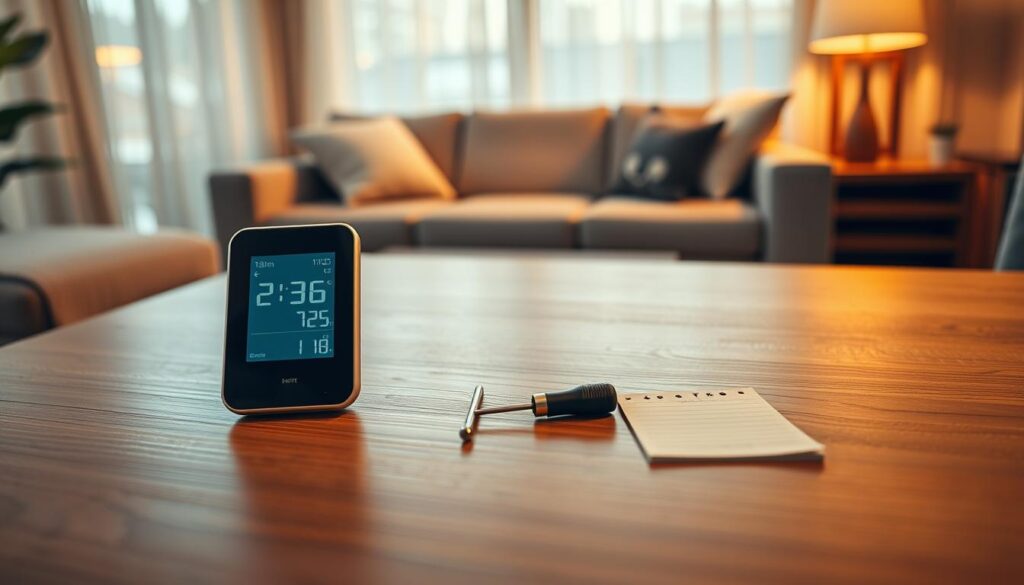
Most modern devices let you tweak settings for small errors. First, check your manual to see if calibration is supported. If it is, use a reference like an ice bath to find the needed adjustment.
To do an ice bath test, mix crushed ice with a bit of water to make a slush. Put the sensor probe in the middle, away from the glass sides. Wait for three minutes for the reading to settle, then compare it to the 32°F (0°C) mark.
If the reading is off, use the manual settings to fine-tune it until it matches the reference temperature. This easy adjustment process keeps your accurate indoor thermometer working well for years.
Frequency of Calibration
Check your device every six to twelve months for best performance. If your data suddenly changes, check it sooner. A regular check-up helps catch problems before they affect your comfort or energy use.
Big temperature changes or high humidity can make recalibration more urgent. Being proactive ensures your accurate indoor thermometer stays a reliable tool for tracking your home’s conditions.
Comparing Indoor Thermometer Brands
Choosing the best indoor thermometer means looking beyond the price. It’s about understanding the brand’s reputation. The market is crowded, but focusing on well-known brands helps. This way, you can find a thermometer that’s affordable, durable, and has the latest features.
Popular Brands in the Market
Many companies are known for making accurate and easy-to-use devices. For example, the TempPro TP60B is a top pick for tracking indoor and outdoor conditions. It shows how modern tech can give you reliable data about your home.
Other brands focus on special features like wireless connections or big displays. When you look at these brands, check if they offer clear instructions and good customer service. Choosing a well-known brand usually means you get a product that meets high standards.
Brand Reliability and Reviews
Always check user reviews before buying. Real feedback shows how a device performs over time. Consistency is key, and user experiences are the best way to see this.
Reliability also comes from the manufacturer’s focus on precision. A brand that values calibration accuracy will likely give better results. By choosing a reputable brand, your best indoor thermometer will be a reliable tool for years.
Budget Considerations
Choosing the right climate monitoring tool means looking at upfront costs and long-term benefits. Every home has different needs, from simple temperature checks to detailed data tracking. By knowing what you need, you can find a good deal without spending too much.
Low-Cost vs. High-End Options
For basic monitoring, affordable analog models are a good choice. They are durable but might not be as precise as digital ones. They are easy to use but lack some features of more expensive models.
High-end smart thermometers offer significant advantages for tech lovers. They have features like data logging, smartphone connectivity, and alerts. If you also want to check outdoor temperatures, look into high-quality outdoor thermometers.
Value for Money
Finding the best value depends on how you plan to use the device. A mid-range digital thermometer is often the best choice for quick temperature checks. You don’t always need fancy smart features for basic comfort.
Focus on features that matter to you, like clear displays or accurate sensors. Spending a bit more on a reputable brand can mean better quality and more reliable readings. Here’s a table to help you see how different prices match your needs.
| Device Type | Price Range | Key Benefit | Best For |
|---|---|---|---|
| Analog | Low | No batteries required | Simple, basic monitoring |
| Digital | Mid | High accuracy/readability | General home comfort |
| Smart | High | Remote data/alerts | Advanced climate control |
Using an Indoor Thermometer Effectively
Creating the perfect home or office starts with tracking data. Using an indoor thermometer for office spaces helps keep a stable environment. Experts say the best temperature for focus is between 68°F and 72°F.
Regular Monitoring Tips
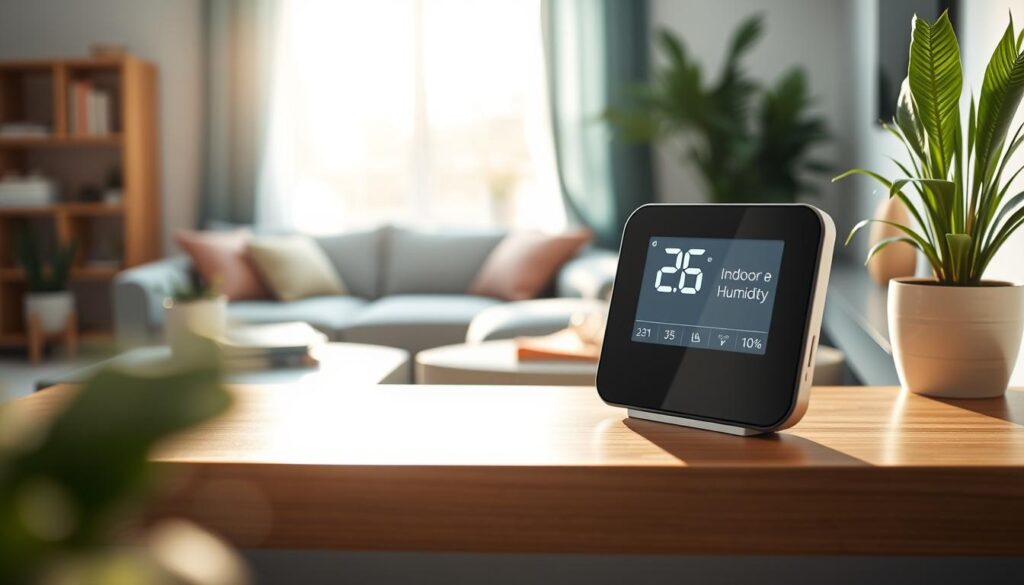
To use your device well, learn to understand the data. Use an indoor thermometer with humidity sensors to track moisture too. High humidity makes rooms feel stuffy, while low humidity can cause dry skin and breathing issues.
Check your readings daily to set a baseline for your home. If the temperature gets out of range, adjust your window coverings or ventilation right away. This keeps your space comfortable all year round.
Integrating with HVAC Systems
Modern tech lets you control your climate with a smart indoor thermometer that talks to your HVAC. By linking these devices, you can set temperature changes automatically. This helps your HVAC system work less, saving energy and making it last longer.
Here are some tips to keep your living and work spaces just right:
| Environment Type | Target Temperature | Ideal Humidity |
|---|---|---|
| Home Office | 68°F – 72°F | 40% – 50% |
| Living Room | 70°F – 74°F | 35% – 45% |
| Bedroom | 65°F – 68°F | 45% – 55% |
Maintenance of Your Indoor Thermometer
Looking after your indoor thermometer for home is key to its long-term reliability. A simple routine protects the internal parts from damage. This keeps your device working well.
Cleaning Tips
Dust and dirt can build up around the sensor vents, causing inaccurate readings. Use a soft, dry microfiber cloth to clean the outside once a month. Stay away from harsh chemicals and water to avoid damaging the sensors inside your indoor thermometer for home.
For tough dust near the intake ports, compressed air works well. Keep the nozzle six inches away to avoid damaging the internal parts. Clearing these vents is crucial for accurate climate monitoring.
“Consistent maintenance is not just about cleanliness; it is about preserving the integrity of the data you rely on every single day.”
Signs of Malfunction
Even with good care, your indoor thermometer for home might show signs of trouble. A frozen display that won’t update, or wild temperature swings without reason, are common signs. These could mean it’s time for a new one.
First, try new batteries to solve power issues. If the problem persists, the sensor might need replacing. Spotting these signs early helps you make informed decisions.
| Maintenance Task | Frequency | Purpose |
|---|---|---|
| Surface Dusting | Monthly | Prevent sensor blockage |
| Battery Check | Every 6 Months | Ensure consistent power |
| Sensor Inspection | Quarterly | Identify physical damage |
| Calibration Test | Annually | Verify accuracy levels |
Troubleshooting Common Issues
When your environmental data seems off, a few simple steps can fix it. Even the most accurate indoor thermometer can have minor glitches. By following basic maintenance, your home stays comfortable and your data reliable.
Inaccurate Readings
If your device shows inconsistent data, check the sensor’s placement first. Make sure it’s not near heat, drafts, or direct sunlight. A simple hard reset might be all you need to fix it.
For wireless indoor thermometers, signal interference from other electronics can cause issues. If problems continue, check your HVAC system settings. Also, ensure the base station and remote sensor are within range.
Battery Replacement
Weak batteries are a common reason for device failure. Weak batteries can harm signal strength and accuracy. Replace them regularly to avoid data loss or connectivity problems.
When replacing batteries in your wireless indoor thermometer, use fresh, high-quality alkaline ones. Avoid mixing old and new batteries to prevent damage. A consistent power supply keeps your thermometer reliable.
Where to Buy an Indoor Thermometer
Finding the right indoor thermometer means looking at what you need and the seller’s reliability. You can choose from big online stores or local shops. Each option has its benefits for finding the best tool for your home.
Shopping Through Digital Marketplaces
Amazon and Home Depot have lots of indoor thermometers to choose from. These sites give you lots of feedback from users and good prices. You can compare different models to find one that’s reliable and comes with a good warranty.
Visiting Local Hardware Retailers
Ace Hardware and Lowe’s are great for getting climate tools fast. Going to a store lets you see the thermometer’s quality before buying. The staff can also help pick the best model for your area.
Make sure to choose brands with clear return policies and good customer service. A good device will give you accurate readings for a long time. Start looking today to make your home more comfortable and efficient.