
 David Joseph
Did you know that nearly 20% of public supply systems in the United States have reported violations of safety standards in recent years? Ensuring your home has access to clean liquid is a top priority for every family. We understand that finding the best water purifier can feel overwhelming given the endless options on the market today.
Our team spent months conducting rigorous, data-driven tests on the latest models for 2026. We evaluated each affordable water purifier based on filtration performance, long-term maintenance costs, and ease of use. Through our objective scoring system, the AquaTru emerged as the leader with an impressive 9.57 rating. This guide helps you navigate these choices to find the perfect water purifier for your specific household needs.
Key Takeaways
- We tested 2026 models using a strict, data-driven scoring system.
- The AquaTru achieved the highest overall score of 9.57.
- Performance, maintenance, and budget are the three pillars of our selection process.
- We prioritize products that balance high-level contaminant reduction with ownership value.
- Our recommendations focus on helping you make an informed, confident purchase decision.
Understanding the Importance of Clean Drinking Water
Having access to safe, clean water is essential for every home. While cities work to purify our water, a water purifier for home adds an extra layer of protection. It ensures your water is free from harmful particles and chemicals.
Health Benefits of Purified Water
Using a water purifier for home greatly improves water quality. Clean water aids digestion, improves skin, and boosts overall health. It makes water refreshing and encourages better hydration habits for your family.
“Water is the driving force of all nature. Ensuring its purity is the first step toward maintaining long-term health and wellness.”
Environmental Impact of Clean Water
Filtering your own water reduces your environmental impact. A water purifier for home cuts down on plastic bottle use. This action helps decrease waste in our landfills and oceans.
- Reduces plastic bottle consumption significantly.
- Lowers the carbon footprint associated with transporting bottled water.
- Promotes a sustainable lifestyle within your own kitchen.
Common Contaminants in Tap Water
Tap water, even in regulated areas, may contain unwanted substances. A good water purifier for home targets these contaminants. It removes:
- Chlorine and disinfection byproducts used during treatment.
- Heavy metals like lead or copper that may leach from aging pipes.
- Naturally occurring minerals such as fluoride or uranium in certain regions.
Water quality varies by location. Testing your local water helps you know what to filter out for safety and peace of mind.
Types of Water Purifiers Available
Choosing the right water purifier means knowing the different technologies out there. An advanced water purifier should be judged by its filtration, certifications, and upkeep needs. Don’t just look at the marketing.
Reverse Osmosis Systems
Reverse osmosis (RO) is a top choice for purifying water. It pushes water through a thin membrane. This removes solids, metals, and fluoride.
“Reverse osmosis remains the gold standard for households seeking the highest level of contaminant reduction in their daily drinking water.”
But, RO systems also waste water. Make sure to check the model’s efficiency ratio. This ensures it fits your environmental goals.
UV Water Purifiers
Ultraviolet (UV) tech kills microorganisms. It uses strong light to destroy bacteria, viruses, and cysts in your water.
Remember, UV light doesn’t remove chemicals or metals. Many people use UV units with other filters for better protection.
Activated Carbon Filters
Activated carbon filters are key for improving water taste and smell. They’re great at catching chlorine, VOCs, and sediment.
These filters are often used before or after other stages. Their success depends on the carbon quality and water contact time.
| Technology | Primary Target | Best For |
|---|---|---|
| Reverse Osmosis | Dissolved Solids | Heavy Contamination |
| UV Purifier | Microorganisms | Biological Safety |
| Activated Carbon | Chlorine/Odors | Taste Improvement |
The best water purifier for your home depends on your water quality. Knowing these technologies helps you choose wisely. This protects your family’s health for years.
Factors to Consider When Choosing a Water Purifier
Choosing the right water purifier for home or water purifier for office is about finding a balance. It’s important to know what you need to be happy with your choice in the long run.
Filtration Technology
There are many ways to clean water, from simple carbon blocks to complex reverse osmosis. When comparing water purifiers, look at how well they work. Some systems waste a lot of water, but others, like the AquaTru, are very efficient, using only 1 gallon of water for every 4 gallons of clean water.
Water Source Type
The quality of your water affects what kind of filter you need. Tap water is usually treated, but well water might need a stronger filter to remove sediment and harmful substances. Always test your water before buying a filter to make sure it will work for you.
Size and Capacity
The size and how fast it can filter water are key for daily use. Offices need a water purifier for office that can handle lots of people and filters water quickly. Homes might prefer smaller, space-saving options like under-sink units or pitchers.
| System Type | Best Use Case | Filtration Strength | Space Required |
|---|---|---|---|
| Reverse Osmosis | High Contamination | Excellent | Large |
| Activated Carbon | Taste & Odor | Moderate | Small |
| UV Purifiers | Microbial Safety | High (Biological) | Compact |
Top Water Purifiers on the Market
Finding the right water filter can be easier if you know what you need. Whether you’re looking for a best water purifier for a small space or a big family home, knowing about water purifier brands is key.
We’ve looked at top brands to guide you. Check out more detailed reviews of the best water filters to see how they meet your water quality needs.
Brand A
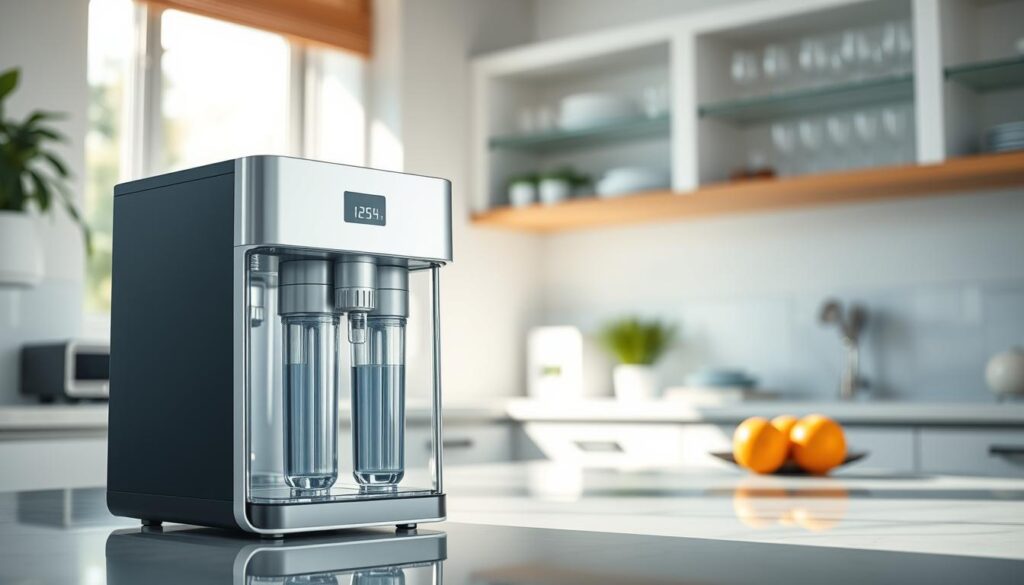
The AquaTru Carafe is our top pick for a mix of quality and ease. It’s the best water purifier for countertops because it removes many contaminants easily. Its compact design fits well in small kitchens.
Brand B
The Cloud RO system is great for deep filtration. It’s a top choice for under-sink use, offering clean water at every tap. It’s perfect for those wanting a reliable, high-capacity solution.
Brand C
The SpringWell CF series is top for whole-house protection. It provides filtered water at every faucet. If you need the latest water purifier tech for your home, this brand is durable and has the flow rate for big homes.
“Water is the driving force of all nature, and ensuring its purity is the most fundamental step toward a healthier lifestyle.”
We’ve made a table to compare these and other water purifier brands based on key features.
| Brand | Category | Key Strength |
|---|---|---|
| Waterdrop G3 | Under-sink | High flow rate |
| Clearly Filtered | Pitcher | Contaminant removal |
| British Berkefeld | Gravity | Off-grid reliability |
Choosing the best water purifier depends on your water source and how much you use. By looking at these top options, you can make sure your family has safe, clean water for years.
How to Install a Water Purifier
Setting up your new filtration system is key to having clean water at home or work. Whether it’s for your kitchen or a water purifier for office, installing it right is crucial. It ensures your system works well for a long time.
DIY Installation Tips
Countertop units are easy to set up, needing just a few tools. You’ll connect the diverter valve to your faucet and make sure the tubing is tight. Always read the manual to avoid mistakes.
Under-sink systems need more work, like drilling for a faucet and connecting to the cold water line. Leak checks are very important. Turn on the water slowly and check for leaks. Flush the system as directed to remove any residue before using it.
Professional Installation Services
While many systems are easy to install, complex ones need a pro. Whole-house systems or big water purifiers for offices should be installed by experts. They make sure everything is set up right, including water pressure and safety.
Getting a pro also keeps your warranty valid. Many makers won’t cover it if you install it yourself. An expert ensures your system meets your water needs perfectly.
Maintenance Guidelines for Water Purifiers
Keeping your water purifier in top shape is key to getting clean water at home. The lifespan of parts can vary based on how much you use it and the water quality. So, you might need to service it more often than expected.
Regular Filter Replacement
Filters are crucial for your system. They can only hold so much before needing a change. It’s better to set a reminder for filter swaps than wait for them to fail.
Consistency is key to avoid clogs. This helps keep your water clean and free from contaminants.
Cleaning Procedures
It’s not just about the filters. You also need to clean the outside and inside parts. Use a gentle, food-safe cleaner to wipe down the faucet and exterior. This stops bacteria from growing.
Don’t forget the storage tank if your system has one. Clean it with warm, soapy water every few months. This keeps your water purifier clean and safe.
Check the tubing and connections for leaks. A small leak can cause big problems. If you find a leak, fix it right away to avoid damage.
Signs Your Purifier Needs Maintenance
Your system will give you hints when it needs help. A slower flow rate means it’s time for a new filter. Also, pay attention to any changes in taste or smell.
Modern units often have lights that show when it’s time for maintenance. Don’t ignore these signals. Also, watch for sediment or color changes in your water. These are signs your water purifier is working hard.
| Maintenance Task | Frequency | Importance |
|---|---|---|
| Filter Replacement | Every 6-12 Months | High |
| Reservoir Cleaning | Every 3 Months | Medium |
| Leak Inspection | Monthly | High |
| Surface Sanitization | Weekly | Low |
Cost Analysis of Water Purifiers
When we look at the best water treatment options, we must think about both the upfront cost and long-term expenses. A detailed water purifier comparison helps us see beyond the initial price. This way, we can make sure our choice is cost-effective over time.
Upfront Costs vs. Long-Term Savings
The cost to buy varies a lot, from simple pitchers to complex whole-house systems. A basic pitcher might seem cheap, but it can cost more over time because of frequent filter changes. On the other hand, under-sink systems cost more upfront but save money in the long run, which is good for big families.
“The true cost of water filtration is not found at the point of sale, but in the consistent delivery of quality over the lifespan of the device.”
Average Maintenance Costs
Maintenance costs can surprise new owners. We need to think about the cost of replacement cartridges, which differ by brand and technology. Some systems need professional help, while others are easy to maintain at home.
It’s smart to figure out the yearly cost of parts before buying a model. Skipping these replacements can lead to bad water quality and damage to the unit. Keeping up with maintenance ensures our system works well.
Energy Consumption Considerations
Energy use is another hidden cost that affects our bills. Reverse osmosis systems use electricity to filter water and may waste water. For example, some high-end countertop units, like the AquaTru, have a four-to-one recovery rate, which cuts down on water waste.
We should also think about the power needs of UV purifiers, which kill bacteria using electricity. Choosing an energy-efficient model helps our planet and keeps our household costs down. The table below shows how different systems compare over time.
| System Type | Initial Cost | Filter Frequency | Energy Usage |
|---|---|---|---|
| Pitcher Filter | Low | Monthly | None |
| Countertop RO | Moderate | 6 Months | Low |
| Under-Sink System | High | Annual | Minimal |
| Whole-House Unit | Very High | Annual | Moderate |
By doing a detailed water purifier comparison, we can find the best mix of quality and price. Whether we focus on low initial costs or long-term savings, knowing these details helps us make the best choice for our homes.
Water Quality Testing After Installation
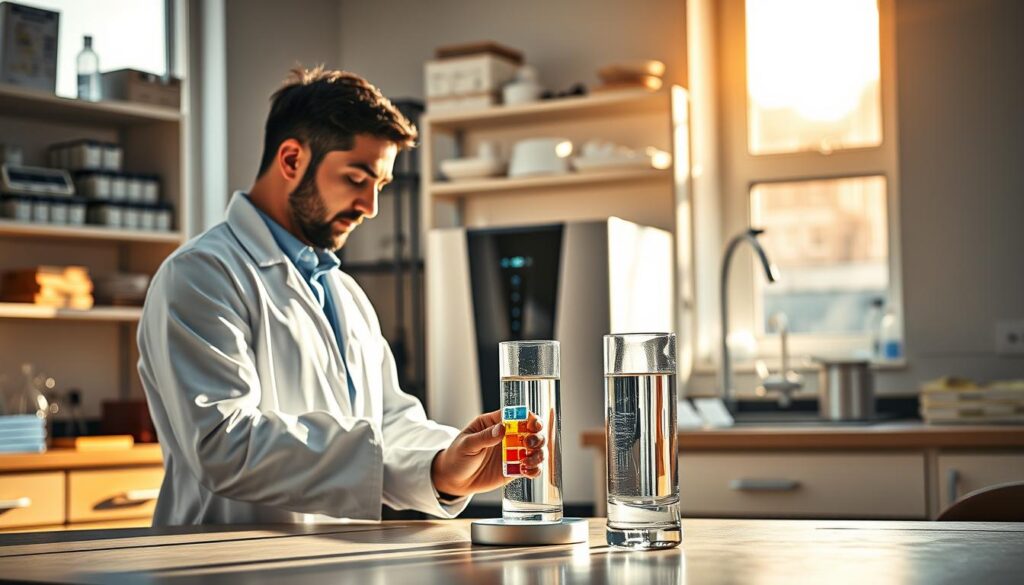
After installing your water purifier, it’s smart to test the water quality. Just because the water tastes good or looks clear doesn’t mean it’s safe. Many harmful substances are invisible to our senses.
Importance of Testing
Testing is the only way to know for sure if your purifier is working right. A water purifier display might show it’s on, but that doesn’t mean the water is clean.
Testing gives you a clear picture of how well your purifier works. It shows if it’s really protecting your water from harmful stuff.
Recommended Testing Kits
For a quick check, many people use at-home test kits. These kits test for pH, chlorine, and hardness. They’re great for simple checks to see if your system is working.
But for a detailed look, certified laboratory services are best. Labs can find heavy metals, chemicals, and other stuff that home kits can’t. They give you the most accurate info about your water.
Interpreting Test Results
When you get your lab report, it’s key to understand what the numbers mean. Don’t think a low Total Dissolved Solids (TDS) reading means your water is perfect.
TDS meters are helpful, but they don’t catch everything. Look for specific contaminant removal rates in your report. This way, you’ll know your water purifier is keeping your water safe and clean.
Ensuring Safe Drinking Water for Families
Choosing the right water purifier for home is key. It must balance advanced tech with family needs. We must think about how age affects use to keep everyone safe and hydrated.
Kid-Friendly Water Purification Options
For families with kids, we focus on ease of use and safety. A good system should have simple dispensing that’s easy for kids to use.
The AquaTru Carafe is great for families. It uses a glass carafe and doesn’t need permanent plumbing. It’s perfect for small spaces or renters. Plus, filtered water tastes better, so kids might drink more of it.
Special Considerations for Seniors
For seniors, we look at accessibility and ease of use. We suggest systems with big, clear displays and simple controls. They should be easy to read and use without straining.
Maintenance should be easy too. We seek systems with tool-free filter replacements. This lets seniors keep their water clean on their own. A good water purifier for home should work well with little effort.
| Feature | Kid-Friendly Systems | Senior-Friendly Systems |
|---|---|---|
| Dispensing | One-touch or gravity flow | Easy-grip levers or buttons |
| Maintenance | High-durability components | Tool-free filter changes |
| Visibility | Low-profile, secure placement | Large, high-contrast indicators |
| Portability | Lightweight carafes | Countertop stability |
Common Misconceptions About Water Purifiers
Exploring home water filtration can be confusing due to false information. Many think all systems work the same, but they don’t. Picking the right water purifier means knowing the difference between marketing and science.
Dysphoria Regarding Tap vs. Purified Water
People worry about losing good stuff when removing bad stuff from water. Reverse osmosis gets rid of impurities but might take away minerals too. This can change how your water tastes and its pH level.
Now, some systems have remineralization to fix this. It’s key to pick a water purifier that fits your health needs and taste.
“The quality of the water we drink is the foundation of our overall health and well-being.”
Myths About Filter Lifespan
Many think all filters last the same amount of time. But, how long a filter lasts really depends on its design and how much water it filters.
- Culligan ZeroWater: These filters are made for precise filtration and usually last about 20 gallons.
- Kind E-3000: These are built for heavy use and can filter up to 80,000 gallons.
Always check the maker’s specs, not just assume all filters last the same. Using general advice can cause filters to fail too soon or need to be replaced too often.
Clarifying Purifier Effectiveness
No single water purifier can tackle every contaminant. How well it works depends on its technology, certifications, and your local water quality.
Before buying, make sure the system is certified to handle the pollutants in your water. A good water purifier is a safety investment, but you must know its limits and upkeep needs.
Future Trends in Water Purification Technology
The world of home water purification is changing. We’re moving towards smarter, greener solutions. These new systems aim to be both effective and kind to the planet.
Innovations in Filtration
Today, engineers are working to save more water. They’re creating advanced water purifiers that save space and give you clean water fast. These designs cut down on waste by using less brine during the filtering process.
Eco-Friendly Solutions
Companies are making filters last longer to cut down on waste. Modern designs also help you keep track of when it’s time for a replacement. This makes your water purifier a lasting, eco-friendly choice for your home.
Smart Water Purifiers
Technology is changing how we use our water purifiers. Devices like the AquaTru Carafe Smart and Cloud RO let you monitor filter life and water use on your phone. These tools give you updates on water levels and system health. Exploring these smart options ensures your family always has clean drinking water.