
 David Joseph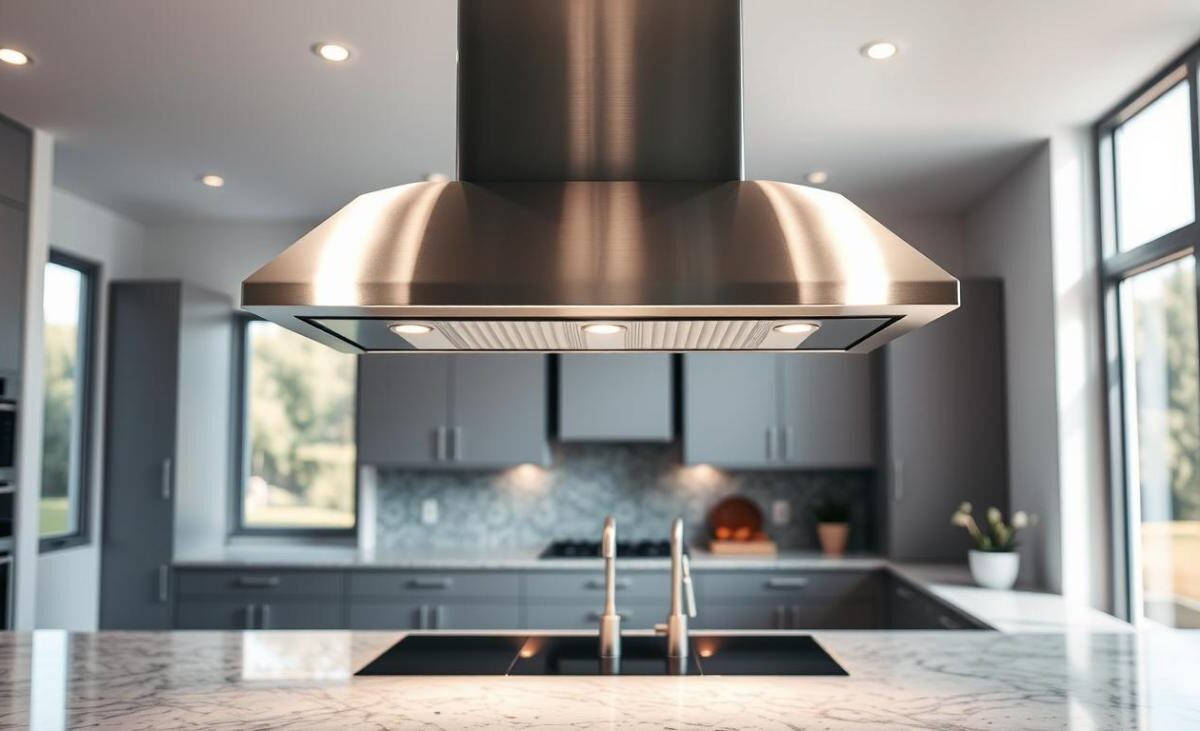
Did you know indoor air quality can be up to five times worse than outside air? Many of us don’t think about how cooking affects our home’s air. A good kitchen hood is key to removing smoke, grease, and steam.
These units are not just functional. They also make a stunning visual centerpiece. A well-chosen exhaust fan can make your kitchen look better. It adds light and keeps your space clean from grease.
In this guide, we’ll show you how to pick, measure, and install the right system. We’ll also give tips on cleaning and matching your new fan with your home’s design. Let’s make your kitchen a fresher, more welcoming place.
Key Takeaways
- Proper ventilation significantly improves indoor air quality by removing pollutants.
- A modern unit acts as a stylish focal point for your home design.
- Effective systems prevent grease buildup on your cabinetry and walls.
- Integrated lighting enhances visibility for safer and easier meal preparation.
- Choosing the right size ensures optimal performance for your specific layout.
Understanding Kitchen Hoods and Exhaust Fans
A top-notch ventilation system is key in every kitchen. It keeps the air clean, making cooking safe and enjoyable.
What is a Kitchen Hood?
A range hood catches smoke, steam, and smells near your stove. It pulls in these pollutants before they spread.
Each hood has important parts. The enclosure holds everything, the blower sucks in air, and filters catch grease. Lights help you see, and ductwork takes air outside.
Benefits of Using a Kitchen Hood
A good ventilation system makes your kitchen better right away. It stops grease from getting on walls and cabinets, saving you cleaning time.
“Proper kitchen ventilation is not just about comfort; it is a fundamental requirement for maintaining healthy indoor air quality and protecting your home from moisture damage.”
These systems also keep you healthy by removing harmful fumes. Whether it vents outside or recirculates air, it keeps your kitchen air clean.
Common Types of Exhaust Fans
Choosing the right range hood depends on your kitchen and style. We group them by how they fit into your space.
| Hood Type | Best For | Installation Style |
|---|---|---|
| Under-Cabinet | Small Kitchens | Mounted beneath cabinets |
| Chimney-Style | Modern Aesthetics | Wall-mounted with visible flue |
| Island | Open Floor Plans | Ceiling-mounted over island |
| Downdraft | Minimalist Designs | Integrated into the cooktop |
Each type has its own benefits. For example, island hoods are eye-catching, while downdraft systems are hidden. The right range hood makes your ventilation system work well for years.
Key Features to Consider When Choosing a Kitchen Hood
Choosing the right ventilation system is more than just looks. A stove hood must have good internal mechanics and keep the air clean. If you’re looking to upgrade, learn how to pick the perfect kitchen hood by focusing on performance.
Size and Installation Requirements
Getting the right size is key for good ventilation. Your exhaust hood should match your cooktop’s width to catch all the smoke and grease. It should also be mounted at the right height for safety and best suction.
Also, check the duct size needed for your hood. The wrong size can cause bad airflow and damage. Make sure the sizes match before buying to avoid installation problems.
Ventilation Type: Ducted vs. Ductless
Choosing between ducted and ductless systems depends on your home. Ducted stove hoods vent air outside, which is best for removing moisture and heat. Ductless models clean the air with filters before recirculating it.
“Good ventilation is not just about moving air; it is about creating a healthy environment where you can cook with confidence and comfort.”
Ductless units are good for apartments or older homes because they’re easy to install. But, they need regular filter cleaning to work well. For better performance, choose a ducted system if you can.
Noise Levels and Fan Speeds
A good exhaust hood should be quiet enough to use often. Many people don’t use their fans because they’re too loud. Look for models with adjustable fan speeds for quieter operation.
Check the sones rating, which shows the fan’s sound level. A lower sone rating means a quieter kitchen. Prioritizing quiet operation helps keep your kitchen clean and peaceful.
How to Measure Your Kitchen for a Proper Fit
Take careful measurements of your cooking zone for a seamless fit. Precision is key to avoid costly errors and ensure your kitchen exhaust fan works well. By checking your space first, you get a setup that meets your cooking needs perfectly.
Calculating Airflow Needs
To find the right power level, look at the cubic feet per minute (CFM) rating. A good rule is 100 CFM for every 10,000 BTUs of your cooktop. If you do a lot of high-heat cooking, choose a higher CFM.
The size of your kitchen also matters. Bigger kitchens need stronger ventilation to remove smoke and odors well. Always check the manufacturer’s advice to make sure your kitchen exhaust fan is safe and meets standards.
Measuring Height and Width
Start by measuring your cooktop’s width. Your hood should be at least as wide as the stove. But, adding three inches on each side is highly recommended.
Then, figure out the vertical space between the cooktop and the hood. Most say 24 to 30 inches for safety and performance. Don’t forget to check the unit’s depth, as it needs to cover the front burners.
Considerations for Different Kitchen Layouts
Your kitchen layout affects your choice. A wall mount range hood is great for kitchens with a stove against a wall. These units look sleek and provide strong ventilation for tough cooking.
For island cooktops, you need a ceiling-mounted unit with a wide capture area. Under-cabinet models work well in small spaces with limited wall room. No matter the style, make sure your ductwork is clear for future maintenance.
Installation Tips for Kitchen Hoods
Setting up your ventilation system right is key to a safe and efficient cooking space. Whether you’re updating your kitchen or starting from scratch, the installation is crucial. It needs careful attention to detail.
DIY Installation vs. Professional Help
Many homeowners debate whether to install a range hood themselves or call a pro. If you’re putting in a simple under cabinet range hood, you might do it yourself. You just need basic electrical and carpentry skills.
But, an island range hood is more complex. It needs strong ceiling support and precise alignment. We suggest getting a pro for big ductwork changes, gas line work, or complex wiring. This keeps your home safe and up to code.
Tools You’ll Need for Installation
Before starting, make sure you have all the right tools. The right equipment makes the job easier and ensures a professional-grade finish.
- Measuring tape and a reliable level for perfect alignment.
- Power drill with appropriate bits for mounting hardware.
- Safety gear, including goggles and work gloves.
- Ducting components and high-quality metal foil tape.
- Electrical supplies like wire nuts and voltage testers.
Common Mistakes to Avoid
Even DIY experts can make mistakes. One big error is ignoring the manufacturer’s instructions on proper clearance between the cooktop and hood.
Another mistake is using the wrong size ducting. This can block airflow and make the hood noisy. Always make sure your connections are tight to avoid grease buildup and air leaks.
| Feature | Under Cabinet Hood | Island Range Hood |
|---|---|---|
| Mounting Point | Wall or Cabinet | Ceiling Joists |
| Complexity | Low to Moderate | High |
| Ducting | Direct to Wall | Through Ceiling |
| Alignment | Standard | Critical Precision |
Maintenance and Cleaning of Kitchen Hoods and Fans
We know keeping your kitchen hood clean is key for safety and performance. A dirty system can cause fires and bad air. So, we make sure to clean it regularly. By following these steps, your ventilation system will stay in great shape for years.
Cleaning Frequency for Optimal Performance
How often you clean depends on how you cook. If you fry or grill a lot, grease builds up fast. Check your filters monthly to see if they need a deep clean.
Seeing grease on the hood means it’s time to clean. If you cook less, clean every three months. Regular cleaning is the key to a clean kitchen and a lasting exhaust fan.
Best Products for Cleaning
Use the right cleaners to avoid damaging your hood. Choose non-abrasive cleaners for stainless steel, glass, and paint. Harsh chemicals or steel wool can harm your surfaces.
Soak removable filters in hot, soapy water with degreaser. Make sure everything is dry before putting it back. This stops moisture and keeps your system working well.
Troubleshooting Common Issues
Even with regular cleaning, problems can still happen. Weak airflow, strange noises, or smells mean it’s time to check. Usually, these problems come from a clogged filter or debris.
For vibration or light issues, check screws or bulbs first. But if the motor won’t start or you see electrical problems, call a pro. Safety is always first when dealing with electrical parts of a kitchen hood.
Energy Efficiency and Sustainability in Kitchen Hoods
Choosing the right ventilation system is key to a sustainable home. We need to remove harmful fumes without wasting energy. The right equipment keeps our home healthy and saves electricity.
Identifying Energy Star Rated Models
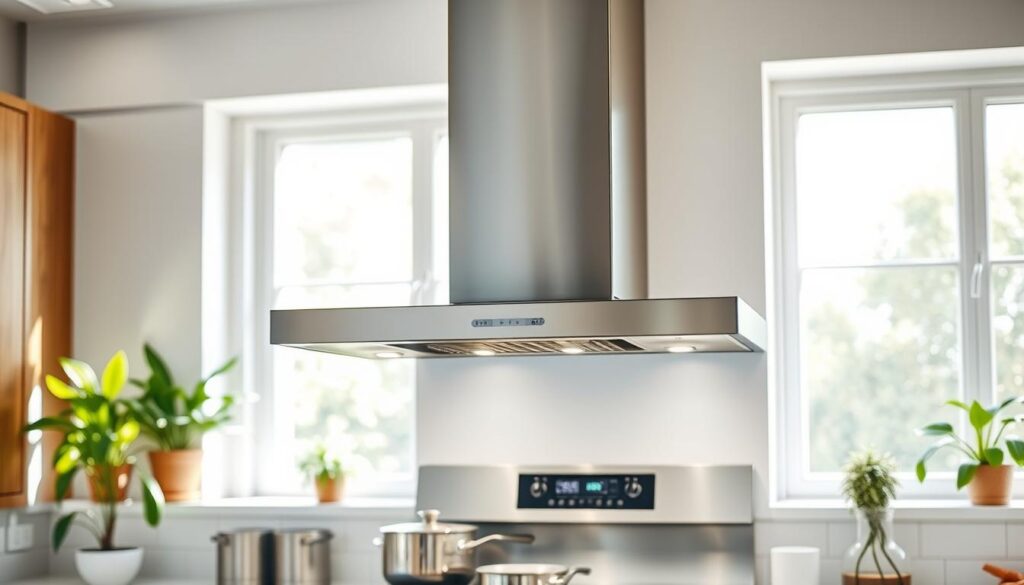
When looking for a new range hood, check for the Energy Star label. This label means the unit is very efficient. These models use less power and move more air than standard ones.
Look at the CFM to watt ratio in the product specs. A higher ratio means it’s more efficient. Don’t get a fan too big for your kitchen. It will use too much energy and be too loud.
Benefits of Energy Efficiency
Cooking fumes can have over 200 harmful gases. An efficient ventilation system keeps us safe and saves money. Use variable speed controls to save energy during light cooking.
“Sustainability is not just about the products we buy, but how we integrate them into our daily lives to minimize our impact on the planet.”
Efficient units also have better lighting, like LED bulbs. These lights are bright and use little power. Using these features right makes our range hood safe and energy-saving.
Eco-Friendly Installation Choices
How we install our equipment affects its performance. Use short, straight, and sealed ducts to reduce resistance. This makes the motor work less, saving energy and extending the device’s life.
When planning your installation, consider these factors for sustainability:
| Feature | Standard Model | Eco-Friendly Model |
|---|---|---|
| Motor Type | Single-speed | Variable-speed |
| Lighting | Halogen | LED |
| Filter Material | Disposable | Recyclable/Washable |
| Ducting | Flexible/Long | Rigid/Short |
Choose durable materials and recyclable filters to reduce waste. Install smart controls to prevent the fan from running too long. This keeps your kitchen eco-friendly and functional.
Frequently Asked Questions About Kitchen Hoods
We get a lot of questions about exhaust hoods in homes. Choosing the right ventilation system is key for good air quality and comfort. Here, we answer the most common questions to help you choose the best for your kitchen.
How Do I Know If My Kitchen Needs a Hood?
If you cook with high heat often, like searing or frying, you need a stove hood. These activities release grease, smoke, and particles that can dirty your cabinets and walls. Gas appliances also need good ventilation to remove harmful byproducts.
Look out for these signs in your kitchen:
- Lingering food odors long after cooking.
- Excessive steam or condensation on windows and surfaces.
- A greasy film on nearby cabinets.
- Difficulty breathing or eye irritation during cooking.
What is the Lifespan of an Exhaust Fan?
A good exhaust hood lasts 10 to 15 years with proper care. Its lifespan depends on usage and filter maintenance. Not cleaning filters can damage the motor and shorten its life.
To make your unit last longer, follow these tips:
- Clean or replace filters every one to three months.
- Wipe down the exterior to prevent grease buildup.
- Get a professional check if you hear grinding noises.
Can I Use My Kitchen Hood Without Ducting?
Yes, you can use a ductless stove hood. But, know its limits. These models use filters to trap odors and recirculate air. They manage smells well but don’t remove moisture or heat as an outdoor vent does.
Choosing ductless means it won’t stop steam during boiling. For serious cooking, an outdoor vent is better for a cool, dry kitchen. Think about your cooking habits before picking a exhaust hood.
Enhancing Kitchen Design with Hoods
Choosing the right ventilation unit is key to balancing beauty and function in your kitchen. Instead of hiding your kitchen exhaust fan, make it a stunning feature that sets the room’s tone.
Stylish Options for Any Kitchen Decor
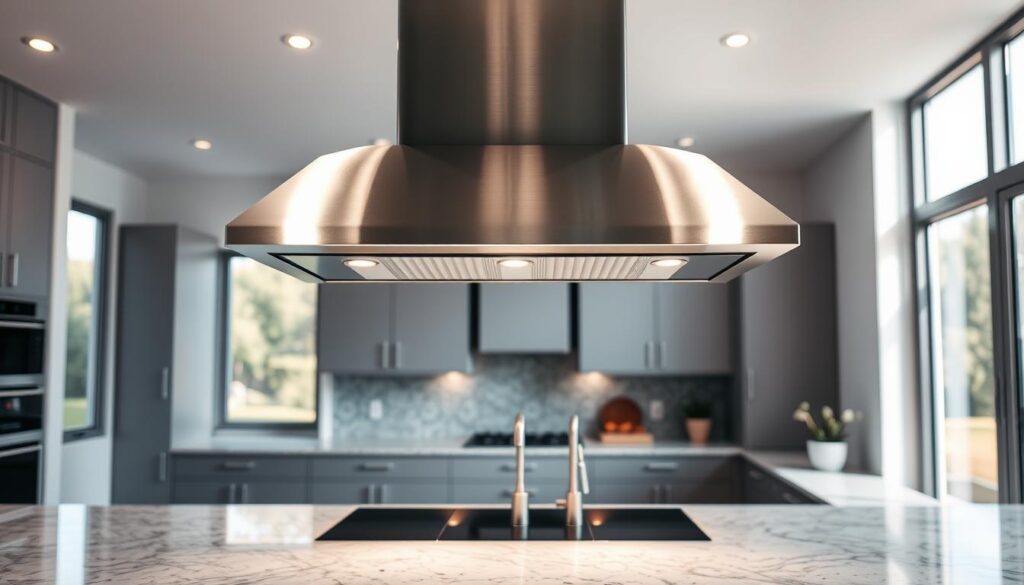
There’s a wide range of styles to fit every home, from classic to modern. For a bold statement, a statement hood can be the main attraction above your stove. For a simpler look, choose minimalist designs or panels that match your cabinets, making the ventilation system almost invisible.
Integrating Hoods into Open Concept Spaces
In open-concept homes, the view between your kitchen and living area is crucial. A wall mount range hood can act as a focal point, setting a clear boundary without blocking the view. When placing a hood in an open layout, think about how its height and shape fit with your island and ceiling lines for a balanced look.
Color and Finish Choices
Picking the right finish is vital for a cohesive kitchen design. While stainless steel is still popular for its toughness, trends now lean towards matte black, wood, or custom colors. A wall mount range hood can stand out against your backsplash or match your cabinets, adding a personal touch.
Your kitchen exhaust fan should show off your style while also being effective. By choosing the right materials and colors, your ventilation system becomes a thoughtful design choice, not just an afterthought.
Preparing for Kitchen Renovations: Exhaust Fan Considerations
When upgrading your kitchen, it’s key to match your ventilation system with your kitchen’s layout. Plan your duct routes and electrical needs before you decide on your cabinets.
Strategic Planning for Renovations
Choosing between an under cabinet or island range hood affects your backsplash and ceiling. Decide if your tile will go up to the ceiling or stop at the hood early on. This choice shapes your kitchen’s look and function for years to come.
Compliance and Contractor Coordination
Check local building codes for makeup-air and exterior termination rules before starting. Give your contractor a detailed list of the model, installation height, and airflow needs. This ensures your system is safe and efficient.
Finalizing Your Installation
Good communication with your team avoids costly errors. Make sure your chosen range hood fits your appliance power needs. A well-planned project leads to a cleaner, safer, and more stylish kitchen.