
 David Joseph
Did you know nearly 70% of home cooks struggle to get that perfect, golden-brown crunch? This is often because of one key thing: precise temperature control. Choosing the best deep fryer lets you cook food with consistent, professional results every time.
Finding the right deep fryer can be tough. You might be looking at small countertop models or big commercial ones. The right choice depends on your kitchen space, how much you cook, and how you manage oil. A good deep fryer makes cooking better by keeping heat well and being safe.
Our guide makes it easier to find a reliable deep fryer that fits your budget. We look at practical features that keep your food crispy on the outside and tender inside.
Key Takeaways
- Precise temperature control is essential for achieving a perfect, crispy texture.
- Assess your kitchen space and cooking volume before selecting a model.
- Commercial units offer more power but require significantly more oil and storage.
- Safety features like automatic shut-off and cool-touch handles are vital for home use.
- Proper oil management extends the life of your equipment and improves food flavor.
Understanding the Different Types of Deep Fryers
Knowing the differences between various frying units is key to getting perfect, crispy results at home. The market offers many options, each suited for different needs and spaces. The right deep fryer depends on your kitchen size and how much food you cook.
Electric vs. Traditional Fryers
Electric models are popular in home kitchens for their ease of use and precise temperature control. They plug into standard outlets, making them easy for occasional use. On the other hand, gas-powered units are better for commercial use where quick heat recovery is crucial.
Gas fryers heat up faster than electric ones, which is important for cooking large amounts of food. They need a gas line but are very efficient for professional use.
Countertop vs. Stand-Alone Fryers
Consider your kitchen space when choosing between countertop and floor-standing fryers. Countertop units are great for home cooks who need a deep fryer that’s easy to store. They’re perfect for small kitchens where space is limited.
Stand-alone or floor fryers are for heavy-duty use and larger oil volumes. They’re common in restaurants and catering businesses that need constant, high-output frying. These units offer stability and capacity for long hours.
Specialty Fryers: Air Fryers and More
There are also specialty fryers for specific cooking styles. Air fryers use hot air to make food crispy with less oil. Other models are designed for donuts, tempura, or delicate fish.
These specialized tools help you achieve professional results for unique recipes. Whether you need a dedicated deep fryer for chicken or a versatile multi-cooker, there’s a design for you.
| Fryer Type | Best Use Case | Primary Benefit | Power Source |
|---|---|---|---|
| Electric Countertop | Home Cooking | Ease of Use | Electric |
| Gas Floor Unit | Commercial Kitchens | Fast Recovery | Natural Gas/Propane |
| Air Fryer | Health-Conscious | Low Oil Usage | Electric |
| Specialty Fryer | Specific Foods | Consistent Results | Electric/Gas |
Key Features to Look for in a Deep Fryer
Understanding a deep fryer’s core components is key to making crispy, delicious food every time. When searching for the perfect deep fryer, focus on specific technical capabilities. These deep fryer features turn a standard kitchen appliance into a reliable tool for your culinary adventures.
Temperature Control and Settings
Precision is crucial for a great fried meal. Unlike stovetop methods, a dedicated deep fryer offers consistent heat. Models like the T-fal EZ Clean have an adjustable range from 300°F to 375°F. This allows you to maintain the exact temperature needed for different foods.
“The secret to perfect frying is not just the recipe, but the unwavering control of your oil temperature.”
Oil Capacity and Filtration Systems
Managing your oil effectively is a game-changer for any home cook. Advanced filtration systems clean the oil after each use, preserving its quality. This feature also simplifies storage, keeping your kitchen clean and organized.
Choosing a model with a built-in filtration system saves time and money. Your oil will last longer, and your food will taste fresher. It’s a smart investment for anyone who enjoys frying regularly.
Safety Features and Durability
Safety is our top priority when working with hot oil. Look for units with automatic shutoff functions and secure, locking lids to prevent accidental spills. These protections give you peace of mind while you cook.
Durability is also key for a long-lasting appliance. Consider these elements when evaluating construction:
- Cool-touch handles to prevent burns during operation.
- Sturdy, high-grade materials that withstand high heat.
- Non-slip bases to keep the unit stable on your countertop.
By prioritizing these essential deep fryer features, you ensure a safe, efficient, and enjoyable cooking experience. A well-built machine is a staple that will serve your kitchen for years to come.
Choosing the Right Size for Your Needs
Choosing the right size for your deep fryer is key to avoid issues like uneven browning or soggy food. The right amount of oil to food is crucial for keeping the temperature right. Too much food in the basket can lower the oil temperature too fast, making food greasy and undercooked.
Home Use vs. Commercial Use
Home cooks focus on convenience and manageable portions. Commercial kitchens need equipment that can handle lots of food all day.
Professional kitchens use split-tank models to fry different foods at once without mixing flavors. These are built for lasting use and quick heating, not needed for home cooking.
Family Size Considerations
The right size depends on how many you’re cooking for. A small 1.8-liter T-fal model is perfect for singles or couples for quick snacks.
Bigger families need a 3.5-liter unit for frying more food at once. Proper capacity means food can cook evenly, giving that crispy texture everyone loves.
Storage Space in Your Kitchen
Think about the space the fryer will take up before buying. A big deep fryer might hold more, but it can take up too much space if you don’t have room.
Measure your space to make sure the fryer fits well. If you only fry sometimes, a smaller model keeps your kitchen tidy.
| Household Size | Recommended Capacity | Primary Use Case |
|---|---|---|
| 1-2 People | 1.5L – 2.0L | Small snacks and side dishes |
| 3-4 People | 2.5L – 3.5L | Standard family meals |
| 5+ People | 4.0L+ | Large batches and entertaining |
The Importance of Oil Types
Getting the perfect crunch in a deep fryer begins before you start cooking. The oil you pick is key, affecting the taste and texture of your food. It’s important to choose an oil with the right smoke point to avoid burning and bad flavors.
Types of Cooking Oil
For high-heat frying, you need an oil that stays stable at about 350°F. Avocado oil is great because it has a high smoke point and doesn’t taste much. Grapeseed oil and canola oil are also good choices. They’re affordable and work well in a deep fryer.
These oils are plant-based and don’t mess with the taste of your food. Make sure your oil is fresh to keep your fried dishes tasting good.
Health Considerations for Oil
It’s important to read labels, even if you’re not watching your diet. Some vegetable oils have soybean or peanut oil, which can cause allergies. Always check what’s in your oil before using it in your deep fryer.
Think about the fat content of your oils too. Choosing oils with less saturated fat can make fried foods a bit healthier.
Oil Recycling and Disposal
Keeping your oil in good shape saves money and extends its life. After each use, check for food particles and filter them out. If the oil gets dark or smells bad, it’s time to change it.
Don’t pour used oil down the drain, as it can harm your pipes. Instead, cool the oil and put it in a sealed container. Then, follow your local guidelines for disposing of it.
| Oil Type | Smoke Point | Flavor Profile | Best Use |
|---|---|---|---|
| Avocado Oil | 520°F | Neutral | High-heat frying |
| Grapeseed Oil | 420°F | Light | General frying |
| Canola Oil | 400°F | Neutral | Everyday cooking |
| Vegetable Oil | 400°F | Neutral | Budget frying |
Understanding Cooking Performance
To get restaurant-quality food at home, you need a deep fryer that keeps heat steady. High wattage is important, but it’s not everything. What really matters is how well it performs in your kitchen.
We look for deep fryers that give you the same great results every time. This means your food turns out right, without fail.
Heating Time and Temperature Consistency
A top-notch deep fryer heats up fast and stays hot after adding cold food. If the oil gets too cold, your food will soak up too much oil. This makes it greasy.
Getting the oil temperature back up quickly is key. It keeps your fries or chicken crispy, not soggy.
When cooking many batches, consistency is crucial. A good deep fryer keeps the oil at a steady temperature. This stops the oil from burning and ensures each batch cooks evenly.
Cooking Basket Design and Capacity
The basket’s design affects how your food cooks. A good basket lets oil flow around the food evenly. This ensures heat reaches all sides at once.
If the basket is too small or the wrong shape, you’ll overcrowd it. This drops the oil temperature and messes up browning.
Choose a basket size that fits your cooking needs. Overcrowding ruins the texture of fried foods. Make sure there’s enough space for oil to flow around each piece.
Multi-Functionality: Can It Do More?
Today’s appliances do more than just fry. Some handle frozen foods, which need a special heat setting to avoid splatters. Others support double frying for a soft inside and crunchy outside.
When picking a deep fryer, think about extra features. Adjustable timers and special modes for different foods can open up new recipes for you.
| Feature | Basic Model | Advanced Model |
|---|---|---|
| Recovery Time | Slow | Fast |
| Temp Stability | Moderate | Excellent |
| Basket Design | Standard | Enhanced Airflow |
| Versatility | Frying Only | Multi-Mode |
Analyzing Maintenance and Cleaning
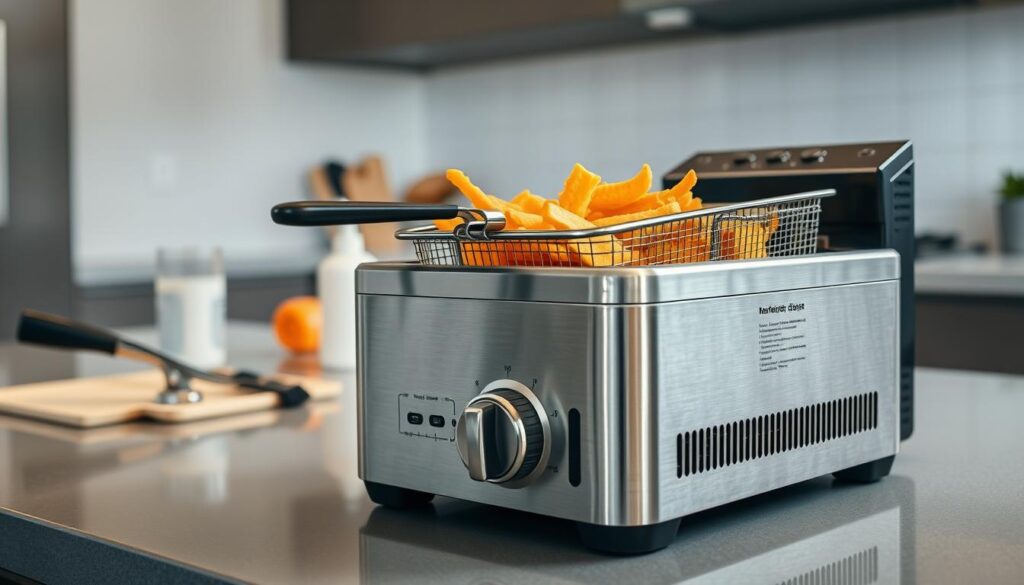
Cleaning up after frying can be a hassle, but it doesn’t have to be. Taking good care of your deep fryer helps it last longer and cook food better. Choosing a model that’s easy to clean means less scrubbing and more time for fun snacks.
Non-Stick Coatings and Ease of Cleaning
Today’s appliances come with materials that make cleaning easier. For example, the T-fal EZ Clean system has parts that are safe for the dishwasher. These removable components make cleaning up after cooking a breeze.
When you’re shopping, look for deep fryers with top-notch non-stick coatings. These coatings stop food from sticking, making cleanup a breeze. Make sure the parts are dishwasher-safe to avoid extra work.
Oil Management and Replacement
Managing your cooking oil is key when you have a deep fryer. Always filter your oil after each use to get rid of burnt bits. If you’re going to reuse the oil, keep it in a cool, dark spot to slow down oxidation.
It’s time to change your oil when you see these signs:
- The oil looks dark or cloudy.
- It smells bad even when it’s cold.
- The oil smokes at lower temperatures than before.
- Your food doesn’t get crispy and golden anymore.
Cleaning Frequency for Optimal Use
For the best results, clean your deep fryer regularly. Always unplug the appliance and let it cool down before cleaning. This keeps the heating element safe.
Regular cleaning stops carbonized grease from building up. This keeps your food tasting good and your deep fryer safe. By cleaning the outside and inside parts often, your fryer will stay reliable for years.
Budgeting for Your Deep Fryer
When planning your deep fryer budget, think about both upfront costs and long-term use. Many people focus only on the initial price, missing ongoing expenses. Understanding the total cost helps you choose wisely for your kitchen.
Price Ranges for Different Models
There are many options for every budget. Small home units are the cheapest, costing $30 to $70. They’re great for occasional frying but may not have the power of bigger models.
Mid-range models cost $80 to $150. They offer better temperature control and larger capacity. For heavy-duty use, expect to spend more on commercial equipment.
Value for Money: What to Expect
Looking for an affordable deep fryer doesn’t mean you’ll get low quality. A well-made unit with key features is often a better deal than a cheap one that breaks easily. Focus on features that enhance your cooking and the fryer’s life span.
- Filtration systems: These extend oil life, saving on replacements.
- Durable construction: Stainless steel lasts longer than thin plastic.
- Practical capacity: The right size prevents oil waste.
Long-Term Costs: Oil and Maintenance
After buying your deep fryer, your real investment grows. Cooking oil costs add up, mainly if your fryer lacks a good filtration system. Quality oil lasts longer, cutting down on oil changes.
Don’t forget energy costs and replacement parts. A cheap fryer might seem good at first but can cost more over time. A reliable, affordable deep fryer that’s easy to clean saves money and keeps your kitchen running well for years.
Popular Deep Fryer Brands to Consider
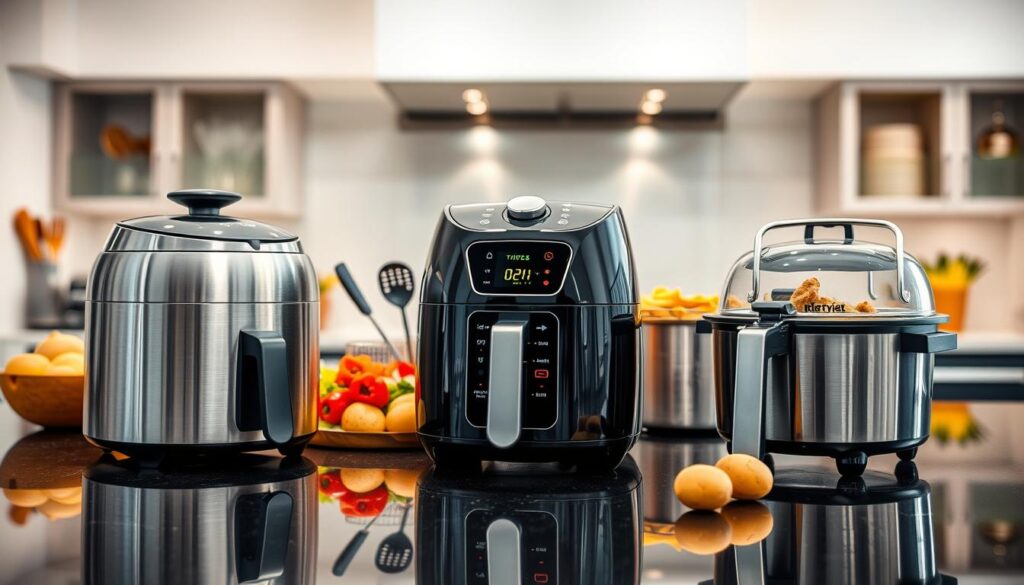
Looking for the perfect kitchen appliance? Start by checking out deep fryer brands. It’s good to know the brand, but don’t forget to look at features like size, safety, and how easy it is to clean. This way, you’ll find a fryer that really fits your needs.
T-fal: A Kitchen Staple
T-fal is known for making appliances easy to use. Their fryers are made of durable stainless steel, adding a professional touch to your kitchen. They also have an EZ Clean design, which includes a special oil filter to keep your oil fresh longer.
Many parts of their fryers are dishwasher-safe, making cleaning up a breeze. If you value convenience and durability, T-fal is a great choice.
Cuisinart: Versatile and Reliable
Cuisinart is all about versatility and reliability. Their fryers can handle everything from appetizers to main dishes. They often have precise temperature controls, which help you get the perfect fry every time.
This brand is known for being dependable, making it a top pick for home cooks. Their designs are powerful yet easy to use, even for beginners.
Fry Daddy: Compact and Efficient
If you have a small kitchen, Fry Daddy is perfect. These fryers are space-saving but still make delicious fried foods. They’re great for small households or those who fry in small batches.
They’re simple to use and store, making them a great choice for those who value ease. While they might not have all the bells and whistles, their simplicity is a big plus.
| Brand | Best Feature | Ideal For |
|---|---|---|
| T-fal | Oil Filtration | Frequent Users |
| Cuisinart | Temperature Control | Versatile Cooking |
| Fry Daddy | Compact Size | Small Kitchens |
The right deep fryer depends on your needs, not just the brand. Compare features and safety before buying. This way, you’ll get a fryer that will serve you well for years.
Reviews and Recommendations
We think informed choices come from real feedback. When searching for a deep fryer, the web is full of opinions. Learning to spot real facts from personal stories helps you buy wisely.
Customer Ratings and Testimonials
Customer feedback shows how a product works in real homes. But, look for patterns in reviews, not just one good or bad comment. If many talk about temperature or cleaning issues, it’s likely a real problem.
Check out verified purchases. These are people who’ve actually used the deep fryer at home. Look for comments on oil filter ease and heating element durability over time.
Cooking Blogs and Influencer Insights
Cooking blogs and videos give a visual look at an appliance’s function. Influencers often show the whole process, from heating oil to cleaning up. This helps you see if the basket size is right for family meals.
“The best way to evaluate a kitchen tool is to watch how it handles the messiest parts of the job, like oil disposal and filter replacement.”
Watch these demos for a consistent golden-brown finish on food. A top rated deep fryer keeps heat steady, even with cold ingredients. This shows quality performance.
Expert Reviews: What’s the Consensus?
Professional tests give detailed data on safety and efficiency. Experts measure recovery times and check for hot spots. Relying on these deep fryer reviews helps avoid models that fail in use.
| Review Source | Primary Focus | Best For |
|---|---|---|
| Customer Ratings | Long-term durability | Identifying common flaws |
| Cooking Blogs | Practical usability | Visualizing daily workflow |
| Expert Testing | Technical performance | Finding a top rated deep fryer |
The goal is to mix different views into a clear picture. By combining expert data with home cook experiences, you can choose the best deep fryer for your kitchen.
Making the Final Decision
Choosing the right appliance means knowing what you need and where you have space. Think about your cooking goals and the size of your kitchen. Look at the features that fit your daily cooking habits.
Utilizing Data for Better Choices
Comparing deep fryers online helps you see what’s out there. Use tables to compare different models. This way, you can pick the best deep fryer for your home.
Shopping Methods and Value
Buying a deep fryer in person lets you check its quality and size. Online stores have more choices, including top-rated deep fryers. Make sure to check return policies before buying.
Investing in Quality
Expensive deep fryers have better temperature control and filters. These features are worth it if you fry food often. A high-end model will give you better results and last longer than cheaper ones.