
 David Joseph
Did you know that the average American household loses hundreds of dollars every year on spoiled groceries? This is because their cooling unit fails to maintain optimal conditions. Choosing the right appliance is a big deal. It affects your daily routine and your long-term utility bills.
Finding the ideal refrigerator can feel overwhelming. There are so many styles and technical specs out there. Our refrigerator buying guide makes it easier. We focus on your kitchen size, storage habits, and energy efficiency needs.
The perfect fridge isn’t always the most expensive. It’s the one that fits your lifestyle and budget. We’ll guide you through every important step. From measuring your space to checking out modern features and maintenance needs.
Key Takeaways
- Measure your kitchen space accurately before browsing models to ensure a proper fit.
- Consider your household size and grocery shopping habits to determine the necessary capacity.
- Prioritize energy-efficient units to lower your long-term operating costs significantly.
- Evaluate essential features like water dispensers and smart technology against your actual needs.
- Research brand reliability and warranty options to protect your investment for years to come.
Understand Your Needs and Lifestyle
Before looking at models, think about how your household works every day. Choosing the right appliance is more than looks. It’s about finding refrigerator features that fit your life. By checking your habits, we make sure you’ll be happy with your choice for a long time.
Consider Your Household Size
The number of people in your home is key. A good rule is to have 4 to 6 cubic feet of space for each adult. For a family of four, a fridge with about 20 cubic feet is often perfect.
If you live alone or with a partner, a smaller fridge might be better. But bigger families need more space to stay organized. Use the guide below to find the right size for your family.
| Household Size | Recommended Capacity | Primary Usage |
|---|---|---|
| 1-2 People | 10-15 Cubic Feet | Light grocery shopping |
| 3-4 People | 18-22 Cubic Feet | Standard family meals |
| 5+ People | 25+ Cubic Feet | Bulk buying and storage |
Assess Your Cooking Habits
Your cooking style affects the fridge freezer you need. Meal preppers need lots of shelf space. Shoppers who buy fresh produce might want special crisper drawers.
If you love to entertain, think about storage for drinks and platters. Models with flexible shelving are great for tall bottles or trays. This prevents the hassle of a small interior.
Think About Your Storage Needs
Volume isn’t everything. Modern fridges have features like ice makers and water dispensers that take up space. It’s important to look beyond the numbers and think about how the layout helps you store food.
Consider your shopping list when choosing a fridge freezer. Do you buy mostly frozen items or fresh food? Focusing on these refrigerator features helps find a model that keeps your food fresh and your kitchen tidy.
Types of Refrigerators: Which One is Right for You?
Your choice of refrigerator layout affects how you store groceries and access food. When looking at refrigerator reviews, the layout is key to kitchen efficiency. Think about your storage habits before choosing a model.
French Door Refrigerators
French door units are loved for their convenience. They have two side-by-side doors for easy access to fresh food. A pull-out freezer drawer is at the bottom for frozen goods.
This design is great for wide items like pizza boxes. Many top-rated refrigerators use this layout for style and storage.
Side-by-Side Models
Side-by-side fridge units are perfect for small kitchens. They have two vertical doors, with the freezer and fresh food sections on either side.
- Space-saving: Narrow doors need less swing space.
- Organization: Vertical shelving helps categorize items.
- Accessibility: Both fresh and frozen items are at different heights.
Top Freezer vs. Bottom Freezer
Choosing between top-freezer and bottom-freezer fridge freezer depends on budget and ergonomics. Top-freezer models are cheaper and reliable. They’re good for those who want lots of space without extra features.
Bottom-freezer units put fresh foods at eye level. This makes it easier to access without bending. Think about how often you use your freezer versus fresh produce when reading refrigerator reviews.
| Type | Best For | Key Advantage |
|---|---|---|
| French Door | Large Families | Wide Storage |
| Side-by-Side | Tight Kitchens | Vertical Access |
| Top Freezer | Budget Shoppers | High Efficiency |
The best fridge for your home depends on your lifestyle. Whether you want the modern look of top-rated refrigerators or the simple design of a traditional fridge freezer, there’s a model for every household.
Size Matters: Measuring Your Space
Measuring your space correctly can save you from big delivery problems. A refrigerator buying guide must talk about your kitchen’s size. Even the best fridge won’t fit if it’s too big for your door or doesn’t match your cabinets.
Standard Refrigerator Dimensions
Refrigerators come in two types: standard-depth and counter-depth. Standard-depth ones have more room but stick out more. Counter-depth ones look sleek and fit with your cabinets.
Think about how much space you can give up in your kitchen. Counter-depth fridges are stylish but smaller inside. Always check the exact size before you buy.
Clearances and Accessibility
Good air flow is key for your fridge freezer‘s life. Most need at least one to two inches on sides and top for heat to escape. Without this, your fridge works too hard, uses more energy, and might break.
Make sure your fridge door can open fully without hitting anything. Also, check if your front door is wide enough for the fridge to get through.
How to Measure Your Space
Measure your cutout’s height, width, and depth in three spots. Walls and floors are not always square, so use the smallest number for a good fit. Write down these numbers to compare with your new refrigerator.
Don’t forget to measure doorways, hallways, and stairs on the way to your kitchen. A fridge that’s too wide for tight spots will be hard to install. Use the table below to plan better.
| Feature | Standard-Depth | Counter-Depth |
|---|---|---|
| Cabinet Alignment | Extends past cabinets | Sits flush with cabinets |
| Storage Capacity | High volume | Moderate volume |
| Required Clearance | 1-2 inches | 1-2 inches |
| Best For | Large families | Modern, tight kitchens |
Energy Efficiency: Saving Money and the Planet
Choosing an efficient unit is smart for the planet and your wallet. When you look at a refrigerator buying guide, focus on energy performance. Today’s tech keeps food fresh without using a lot of power.
Understanding Energy Star Ratings
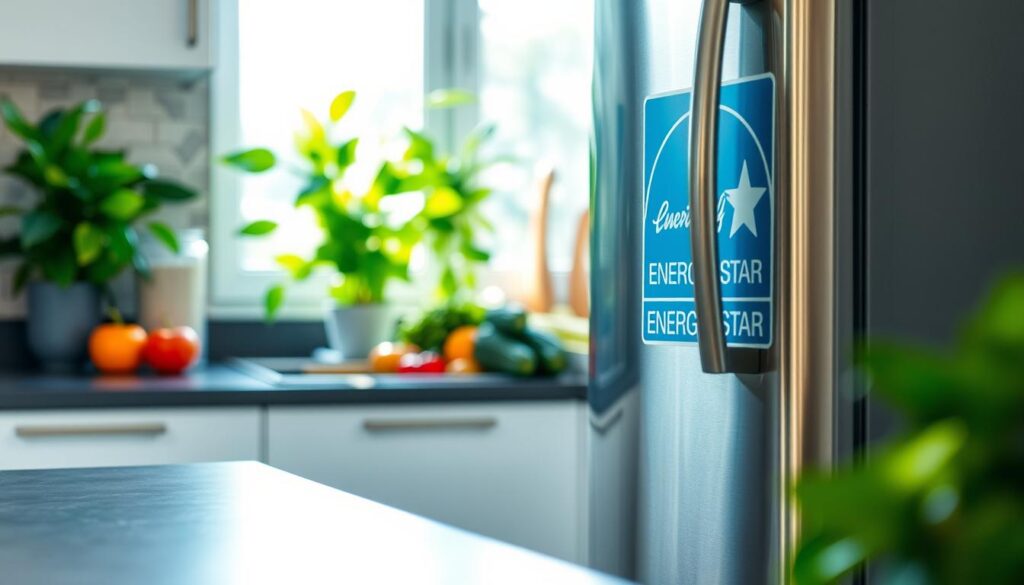
The Energy Star label is key for buyers. It shows a Refrigerator meets EPA standards for energy use. But, remember, it’s best for comparing similar models.
Design differences, like in side-by-side vs. top-freezer models, affect ratings. Always check the EnergyGuide label for energy use estimates. This helps you understand the appliance’s electricity use in your home.
Long-Term Savings on Bills
Don’t just look at the upfront cost. The real cost of owning a fridge is over time. An inefficient fridge can cost over $500 more in 10 years. Opting for a high-efficiency model saves you money.
“Sustainability is not just about the planet; it is about making smart, long-term financial decisions that benefit our households and our future.”
By focusing on refrigerator energy efficiency, you keep your bills low. The table below shows how different fridge types affect energy use.
| Refrigerator Type | Average Annual kWh | Estimated Yearly Cost |
|---|---|---|
| Top Freezer | 350 – 450 | $45 – $60 |
| Bottom Freezer | 400 – 500 | $55 – $70 |
| Side-by-Side | 550 – 700 | $75 – $95 |
| French Door | 600 – 750 | $80 – $100 |
Eco-Friendly Features to Look For
Look for features that boost refrigerator energy efficiency. Models with advanced cooling systems and tight door seals are better. They keep temperatures steady and cold air in.
Also, think about the fridge’s size. A too-large fridge wastes energy when it’s not full. Skip unnecessary features like extra door dispensers to save energy.
Features to Enhance Your Refrigeration Experience
The best fridge combines advanced tech with practical storage. It’s not about fancy gadgets but about what makes your life easier. Knowing the top benefits of a smart refrigerator helps you choose wisely.
Smart Technology and Connectivity
Today’s fridges have amazing digital features. You can use app connectivity to check temperatures or get alerts for open doors. Some even have cameras to see what’s inside while you shop.
Knock-to-view glass panels let you peek inside without opening the door. This keeps the temperature steady and saves energy. It also helps reduce food waste by keeping you updated on what you have.
Adjustable Shelves and Interior Layout
A tidy fridge is key to keeping food fresh. Look for fridges with adjustable shelving for tall items. Flexible drawers with different temperature zones add extra storage for meats and veggies.
When picking a fridge, think about these storage features:
- Humidity-controlled crispers to keep veggies fresh.
- Gallon door bins for more shelf space.
- Slide-out trays for easy access to back items.
- Modular dividers for small containers.
Ice Makers and Water Dispensers
Choosing between internal and external dispensers depends on your needs. External ones offer quick water and ice but use door space. Internal ones look cleaner but might not be as convenient.
If you love hosting, consider dual ice systems for different ice types. Remember, these need regular care, like changing filters every six months. Always follow the manufacturer’s advice to keep your fridge in top shape.
Color and Style: Finding the Right Aesthetic
The look of your refrigerator can change how your kitchen feels. It’s not just for keeping things cold. The design, handle, and how it fits in your home matter a lot.
Popular Finish Options
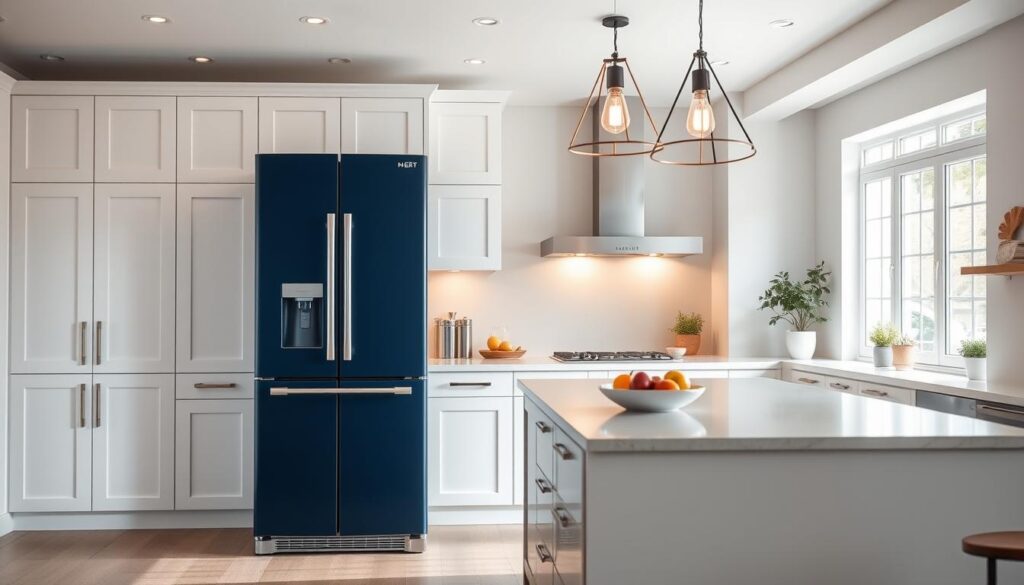
Choosing the right finish is key for happiness. Stainless steel is classic and always in style. Black stainless steel adds a modern touch.
White or matte black finishes are great for a simple look. Many fridges now have fingerprint-resistant coatings. These keep your fridge looking new without needing to clean it all the time. Glass-front panels give a sleek, modern look that shows off your organized fridge.
Matching Your Kitchen Décor
Think about how your new fridge will fit with your kitchen. Check if the finish matches your cabinets, countertops, and hardware. To make your fridge stand out, pay attention to how light reflects off it.
Having appliances that match can make your kitchen look professional. But, mixing metals can also work if done right. For example, matte black appliances with brass pulls can look great.
Customization and Personalization
For a kitchen that’s truly yours, go for panel-ready units. These let you cover the fridge with custom panels, making it look like part of your cabinets. This makes your kitchen look seamless and high-end.
Column-style fridges offer the most built-in look but cost more. If you’re on a budget, you can still make your fridge your own with decorative handles or magnets. Customization lets you show your style while keeping your fridge working well.
Budgeting for Your New Refrigerator
Buying a big appliance is a big deal for any home. A good refrigerator buying guide looks at more than just the price tag.
Setting a Realistic Budget
When setting your budget, remember to add in extra costs. These include delivery fees, installation, and plumbing work.
Don’t forget sales taxes and the cost to remove your old fridge. If your kitchen needs changes for the new fridge, include those costs too.
“An investment in quality today prevents the headache of unexpected repair bills tomorrow. Always prioritize long-term value over the lowest immediate price.”
Understanding Price Ranges
Prices for appliances vary a lot. This depends on size, features, and type. Luxury models cost more, while basic ones are cheaper.
Here’s a table to help you plan your budget:
| Model Type | Price Range | Key Characteristics |
|---|---|---|
| Top Freezer | $600 – $1,200 | Basic, energy-efficient, reliable |
| Side-by-Side | $1,000 – $2,500 | Spacious, convenient access |
| French Door | $1,500 – $4,000 | Modern, high-tech, flexible |
| Built-in Luxury | $5,000+ | Custom fit, premium materials |
Financing Options Available
Many stores offer financing plans. But, read the fine print before you sign.
Look at interest rates, promotional periods, and deferred-interest terms. It’s better to know the total cost than just the monthly payment. High-interest rates can make the final cost much higher.
To save money, wait for sales or check out floor models at independent stores. A warrantied refurbished fridge can be a great deal without spending too much.
Maintenance Tips for Longevity
Keeping your fridge in top shape starts with simple habits. A little time each week can make a big difference. It keeps your food fresh and your fridge running efficiently all year.
Regular Cleaning and Care
Begin by cleaning the shelves and bins with soap and water. This stops bacteria and keeps food fresh. Also, check the door seals often. Cracks or looseness let cold air out, making the fridge work harder.
Change the water filters every six months for better ice and water. Also, clean the condenser coils to prevent overheating. These steps save energy and cut down on utility bills.
Troubleshooting Common Issues
For uneven temperatures, check if vents are blocked. Strange noises might mean the fridge is not level or has a fan problem. Frost? Make sure the door seals well and isn’t left open too long.
Modern fridges have self-check displays for errors. If the ice maker stops, check the water line. Fixing small issues early saves you from big, expensive repairs.
When to Call a Professional
Some problems need a pro to avoid safety risks. Call a technician for electrical issues or strange smells. Also, for refrigerant leaks or compressor failures, get a certified expert.
Still having temperature issues after trying basic fixes? It might be a control board or sensor problem. Trying to fix it yourself can damage your fridge or void the warranty. Always err on the side of caution and call a professional.
| Task | Frequency | Benefit |
|---|---|---|
| Clean Condenser Coils | Every 6 Months | Improves Energy Efficiency |
| Replace Water Filter | Every 6 Months | Ensures Clean Water |
| Check Door Gaskets | Every 3 Months | Maintains Seal Integrity |
| Wipe Interior Surfaces | Monthly | Prevents Odors and Bacteria |
Top Brands to Consider
Looking for the best refrigerator brands means more than just looks. We check if they’re reliable, have easy-to-find parts, and good customer service. Even with a good reputation, different models can perform differently.
Whirlpool: Reliability and Innovation
Whirlpool is known for making appliances that are both practical and durable. Many refrigerator reviews praise their steady temperature and easy-to-use designs. They focus on solving everyday problems, not just adding fancy features.
- Extensive service network across the United States.
- Affordable access to replacement parts.
- Proven track record for long-term mechanical reliability.
Samsung: Technology and Design
Samsung is great for those who want a modern kitchen. They make top-rated refrigerators that fit well with smart homes. Their fridges often have sleek designs and touch-screen displays that tech lovers will appreciate.
They’re always pushing design limits. But, it’s smart to check model feedback to see if the tech lasts long enough for you.
LG: Style Meets Functionality
LG combines stylish looks with cool tech. Their fridges have special compressors that keep food fresh longer. They’re perfect for those who want style and performance.
| Brand | Primary Strength | Best For |
|---|---|---|
| Whirlpool | Reliability | Value-conscious buyers |
| Samsung | Smart Tech | Modern, connected homes |
| LG | Cooling Tech | Design and freshness |
Choosing the best refrigerator brands means finding the right balance between your needs and budget. By looking at top-rated refrigerators and reading refrigerator reviews, you can pick a fridge that will last for years.
Buying Options: Where to Shop
Finding the right appliance is more than just picking a model. Check out this refrigerator buying guide to make sure you’ve thought of everything. Look at prices at big-box stores and independent shops to find the best deals.
Timing Your Purchase for Maximum Value
Waiting for holidays like Labor Day or Black Friday can get you the best fridge prices. Summer months also see price drops as stores clear out old stock. Always ask for a discount, like when buying floor models or open-box items.
Evaluating Logistics and Long-Term Care
Make sure you know the delivery and installation details to avoid stress. Check the return policy and warranty to protect your investment. After installation, keep your fridge in top shape with regular maintenance.
Exploring Budget-Friendly Alternatives
Used appliances from trusted repair shops can be a budget-friendly option. They often come with warranties for extra peace of mind. Whether you pick a top brand or a budget-friendly model, double-check your measurements and energy needs for a perfect fit.