
 David Joseph
Nearly 70% of store-bought ground beef contains trimmings from multiple cows, sometimes spanning different countries. Processing your own protein gives you control over your family’s meal quality and safety.
We believe investing in a high-quality meat grinder transforms your kitchen into a professional culinary space. Whether you make artisanal sausages, perfect meatballs, or custom burger blends, the right meat grinder for home use makes cooking simple and rewarding.
This guide covers motor strength, plate selection, and safety features. After extensive testing, we found the STX 3000 Turboforce stands out as the top choice for most households. Let us help you choose the right tool for better cooking.
Key Takeaways
- Processing your own protein ensures superior freshness and flavor control.
- A dedicated appliance allows for customized fat-to-lean ratios in your blends.
- Motor power and material durability are critical factors for long-term performance.
- Proper maintenance and cleaning are essential for food safety and machine longevity.
- The STX 3000 Turboforce is currently our top-rated recommendation for home cooks.
Understanding the Importance of a Meat Grinder
Freshness and quality define a great meal. An electric meat grinder changes how you cook each day. Grinding meat just before cooking gives better flavor and texture than pre-packaged options.
Benefits of Grinding Your Own Meat
Grinding at home lets you control the final texture. You can choose the right grind for delicate sausages or hearty burger patties. Review the basics of meat grinding to build a strong foundation. Freshness is never compromised when you control the process.
Cost Savings Compared to Store-Bought Meat
Many home cooks find that an electric meat grinder pays for itself over time. Buying bulk cuts, such as whole chuck roasts or pork shoulders, costs less, and you avoid the “convenience tax” from retailers. Breaking down larger cuts at home stretches your grocery budget while preserving quality.
Better Control Over Ingredients
Grinding your own meat puts you in charge of each recipe. Choose cuts to manage the fat-to-lean ratio for juicy burgers or flavorful sausages, and avoid unwanted additives or fillers. An electric meat grinder lets your family eat only ingredients you trust.
| Feature | Store-Bought Meat | Home-Ground Meat |
|---|---|---|
| Freshness | Unknown/Variable | Maximum |
| Fat Ratio | Fixed/Standardized | Fully Customizable |
| Cost | Higher per pound | Lower (Bulk savings) |
| Quality Control | Limited | Complete |
Types of Meat Grinders Available
Knowing the differences between grinding machines helps you choose the right tool for your home kitchen. Each model handles specific tasks with different levels of power and speed.
Manual vs. Electric Grinders
If you prefer a traditional method, a manual meat grinder is an excellent choice. These grinders are small, quiet, and easy to carry. They suit kitchens without electricity or cooks who prefer not to use it.
Electric machines reduce the physical effort needed during large processing sessions. They are ideal for home cooks who often make large batches of ground meat for burgers or sausages. They also reduce fatigue from hand-cranking.
Countertop Grinders vs. Handheld Models
Countertop models provide stability and steady performance. They often use suction bases or strong clamps to stay firmly in place while you work.
Handheld models offer flexibility for small, quick tasks. Although they have less motor power than countertop units, they are easy to store and suit kitchens with limited counter space.
Specialty Grinders for Different Meats
People who process wild game or need high-volume output may choose a commercial meat grinder. These machines handle tougher cuts and larger amounts than standard household equipment.
Many modern grinders accept specialty attachments for making sausages or creating specific textures. A manual meat grinder suits small batches, while a heavy-duty machine handles bulk preparation. The right tool processes ingredients to your liking.
Key Features to Consider
Understanding kitchen tools helps you achieve professional results with a Meat grinder at home. When you assess a meat grinder, look beyond its design and examine what drives its performance.
Power and Motor Strength
The motor powers the machine. Models like the LEM Big Bite and the STX 3000 show how horsepower improves efficiency. A strong motor prevents stalls when processing tough cuts or connective tissues.
“Quality is never an accident; it is always the result of high intention, sincere effort, intelligent direction and skillful execution.”
Choose a motor that delivers steady torque. This helps your best meat grinder handle heavy workloads without overheating during long sessions.
Grinding Plates and Blades
Your device’s versatility often depends on its accessories. Smaller plate holes create fine textures for delicate pâtés or fine sausages.
Larger holes create a coarse grind for chili or rustic, chunky sausages. Choose blades made from high-quality stainless steel to help them stay sharp. A dull blade mashes meat instead of cutting it cleanly, ruining the final texture.
Size and Capacity Considerations
Your workflow depends on the hopper size and the machine’s output rate. A larger hopper holds more meat, speeding up large batches.
For large amounts of game or bulk meat, choose a model with a wide throat and high-capacity tray. Finding the best meat grinder means balancing its size with your storage space. Consider how much counter space you can give the machine before buying.
Material Choices: Plastic vs. Metal
Home cooks often compare metal and plastic parts when upgrading kitchen gear. When you evaluate different meat grinder parts, material can change how the machine works each day. Knowing these differences helps you choose a tool for your cooking needs.
Durability and Maintenance
Stainless steel is the top choice for high-quality meat grinder parts. These components offer exceptional resistance to rust and corrosion when you use moist ingredients. Aluminum and heavy-duty plastic may cost less at first, but they often last less than steel.
Durable meat grinder parts are easier to maintain. Read our guide on are metal or plastic grinders better to learn more about these trade-offs for your home. Strong materials help blades stay sharp and plates resist warping over time.
Impact on Flavor and Quality
Grinder material does not directly change food’s flavor. Instead, output quality depends greatly on clean, well-kept meat grinder parts. When parts are not cleaned well, leftover fat or bacteria may affect your next batch’s taste.
Rust or worn surfaces on lower-quality plates may add metallic flavors or debris to your grind. Choose stainless steel for every surface that touches food. This lowers contamination risks and helps protect your ingredients’ quality.
Weight and Portability
The appliance’s weight often affects how you use it. Heavier metal grinders offer superior stability because they resist sliding across your countertop. This helps when processing tougher meat cuts that need more motor torque.
Models with lighter meat grinder parts are easier to move and store in tight spaces. If counter space is limited, or you store the machine after each use, a lighter model may help. Balance stability and portability to find the right fit for your home.
Top Brands in the Meat Grinder Market
When you read meat grinder reviews, you will quickly notice that a few major brands lead the market. Do not judge them only by motor wattage; consider the full support each brand offers home cooks. Our meat grinder buying guide for American home cooks stresses that long-term support matters as much as initial power.
KitchenAid: Versatility and Accessories
KitchenAid is a household name, best known for its iconic stand mixers. Its grinder attachments suit owners who want to save counter space. Versatility is the main benefit, letting you switch plates for different textures.
LEM Products: Heavy-Duty Options
If you process large meat batches or hunt game, LEM Products is often the gold standard. Its machines offer durability and handle frequent use, with strong motors that manage tough gristle. They deliver professional-grade performance for demanding work.
Cuisinart: User-Friendly Designs
Cuisinart serves casual home cooks who value simple, efficient tools. Its models have approachable controls and a simple setup process. These units suit beginners who want reliable results without a steep learning curve.
When choosing your machine, consider these factors to help your investment last for years:
- Warranty Coverage: Check if the manufacturer offers a solid guarantee on the motor and housing.
- Replacement Parts: Ensure that blades and plates are widely available for future maintenance.
- Customer Support: Look for brands that provide easy access to service teams and instructional resources.
By comparing these brands through professional meat grinder reviews, you can find a machine that fits your cooking needs. Choose brands that balance performance, ease of use, and long-term reliability.
Price Ranges: What to Expect
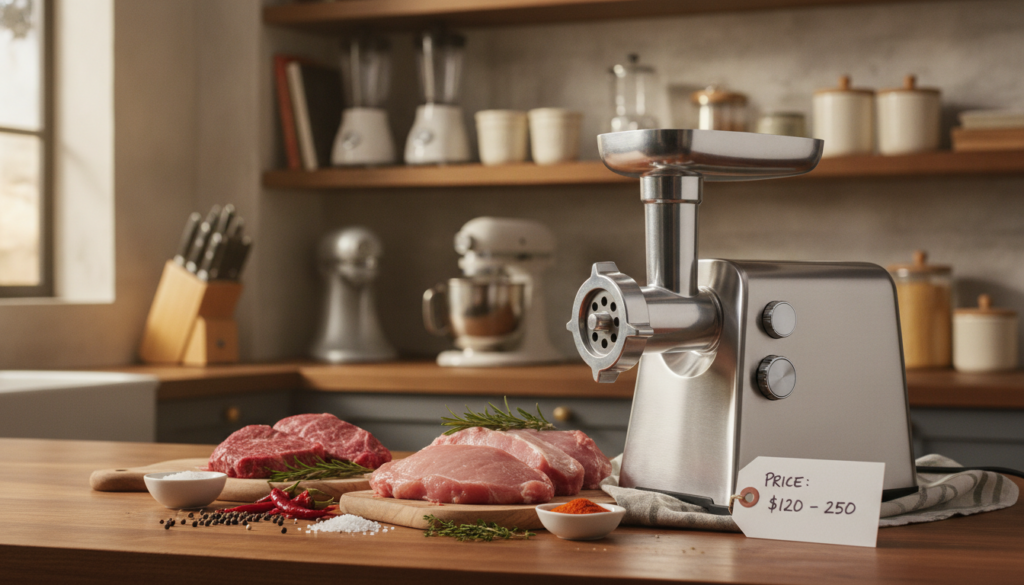
Choosing home processing tools starts with a clear budget and an understanding of your needs. In meat grinder reviews, price often shows how often a grinder should work and how durable its parts are.
Budget Options for Beginners
If you only plan to grind meat occasionally, entry-level models are a practical choice. Brands like ALTRA offer affordable tools that work well without costing too much.
These machines usually have plastic housings and smaller motors. They may grind meat more slowly, but they suit beginners making homemade sausages or custom burger blends.
Mid-Range Grinders: Features vs. Cost
For cooks who grind meat often, mid-range models balance power and convenience. These units often include stronger metal parts and more grinding plates.
We find these grinders easier to clean, with more reliable motor strength. They suit home cooks who want efficiency without the professional price of top-tier meat grinder reviews.
High-End Models for Serious Cooks
Serious cooks, hunters, and large households should see high-end grinders as long-term investments. These machines handle heavy-duty tasks throughout the year without overheating or stalling.
They have powerful motors, stainless steel construction, and high-capacity hoppers. The initial cost is higher, but their longevity and performance make them essential for anyone processing large meat batches often.
| Category | Best For | Key Material | Expected Use |
|---|---|---|---|
| Budget | Occasional Users | Plastic/Light Metal | Low Volume |
| Mid-Range | Regular Home Cooks | Metal/Sturdy Plastic | Moderate Volume |
| High-End | Hunters/Large Families | Heavy-Duty Steel | High Volume |
Essential Accessories for Meat Grinders
The basic grinder unit is only the start of a larger culinary journey. The machine does the heavy work, while the right meat grinder accessories expand your kitchen options. These add-ons help you create professional results with little effort.
Sausage Stuffers for Homemade Creations
If you enjoy making fresh links, a dedicated sausage stuffer attachment is essential. Its tubes come in various diameters for different casing sizes, from thin breakfast links to thick bratwursts. Mastering the art of sausage making becomes easier when you choose the correct funnel size for your recipe.
Additional Grinding Plates for Variety
Most machines include a standard plate, but extra plates give you more texture control. Choose fine plates for smooth pâtés, medium plates for standard burger blends, or coarse plates for hearty chili meat. A full set of these meat grinder accessories prepares you for any recipe.
Cleaning Brushes and Tools
Good maintenance helps your equipment last longer. Specialized cleaning brushes reach deep into the auger housing and plate holes, removing stubborn residue. A sturdy food pusher also improves safety by keeping fingers away from the feed tube and maintaining a steady meat flow.
| Accessory | Primary Function | Best For |
|---|---|---|
| Sausage Tubes | Filling casings | Homemade links |
| Coarse Plate | Large grind | Chili and stew |
| Fine Plate | Small grind | Sausage and pâté |
| Cleaning Brush | Sanitation | Removing residue |
Organizing your meat grinder accessories in a dedicated storage drawer or container prevents loss and keeps your kitchen tidy. Clean, well-maintained tools help make every grinding session safe and efficient. These small investments can make a big difference in home cooking success.
Safety Tips for Using Meat Grinders
Safety comes first when you prepare fresh ingredients with a meat grinder. Simple precautions help keep cooking productive and injury-free.
Preventing Injuries and Accidents
Always use the plastic pusher from the manufacturer to feed meat into the chute. Never use your fingers or metal utensils, which could contact the internal blades.
Before starting, check that the power cord has no frays. Tie back loose clothing, jewelry, and long hair to keep them away from moving parts of the meat grinder.
Proper Cleaning and Maintenance Procedures
Safety matters after grinding, too. Always unplug the machine before disassembling it.
Carefully separate removable parts, including the grinding head, auger, and plates. Wash them in warm, soapy water. Make sure they are completely dry before reassembly or storage to prevent rust.
Avoiding Contamination
Food safety matters as much as physical safety. Keep meat chilled because warm meat can harbor bacteria and clog the grinding mechanism.
Do not process bones through your meat grinder unless the manual says it is designed for them. Use the machine only as intended to protect your health and extend its life.
How to Choose the Right Size Grinder
Choosing the right grinder size keeps cooking enjoyable, not a chore. Match the machine to your volume needs to avoid frustration and create the right texture for each dish.
Understanding Different Sizes and Capacities
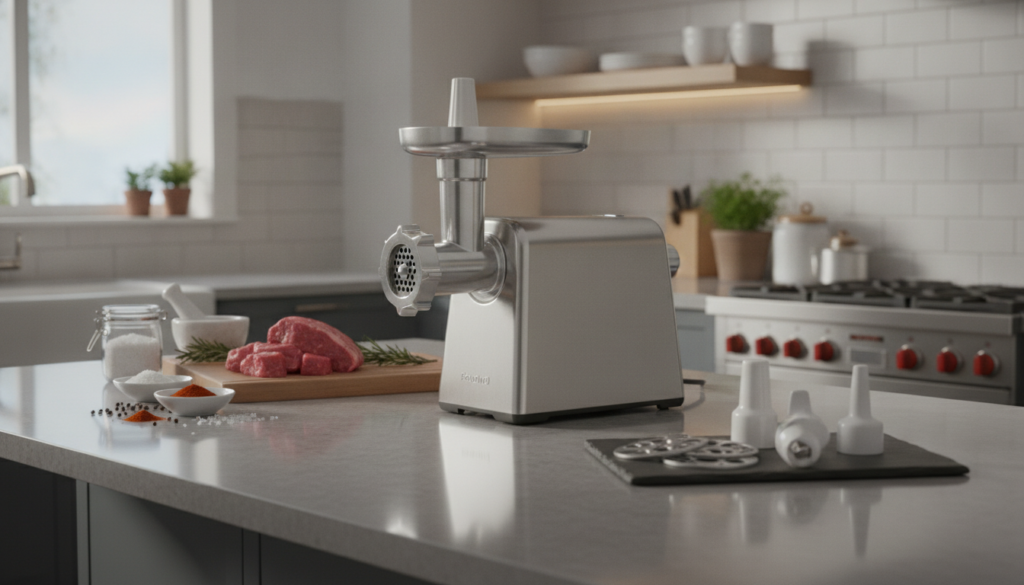
Meat grinders use plate sizes ranging from #5 to #32. A #5 or #8 model is usually the ideal meat grinder for home use for occasional beef or pork batches. These smaller units suit households that process a few pounds of meat at once.
For larger quantities, a #12 or #22 machine provides more power and speed. While a commercial meat grinder supports heavy-duty, continuous operation, most home cooks find anything above #22 excessive for kitchen tasks. The right size also helps prevent motor overheating during longer sessions.
Grinding Meats for Different Recipes
Your grinder size should match the recipes you prepare most often. If you often make sausage or double-ground chili meat, choose a grinder with a steady feed rate. This helps maintain the correct fat-to-lean ratio and prevents clogging.
“The secret to a perfect burger blend lies not just in the meat quality, but in the precision of the grind.”
For burgers, use a grinder that handles cold, firm fat without smearing. A stable, properly sized plate keeps your meat chilled and textured, not mushy. This care lifts homemade meals to a professional standard.
Storage Considerations for Smaller Kitchens
Space often limits modern kitchens, so appliance size matters. A manual meat grinder suits limited counter space because it is compact and stores easily in a standard cabinet. It offers a reliable, low-maintenance choice for occasional use.
If you prefer an electric model, choose a unit with a detachable head for easier storage. Measure your available shelf space before buying a larger, high-capacity machine. The right balance of power and portability keeps your meat grinder for home use useful, not bulky.
DIY Recipes for Using Your Meat Grinder
Once you use a meat grinder, store-bought options cannot match fresh, custom blends. Controlling the ratio of lean muscle to fat improves each dish’s texture and flavor. Keep your meat well-chilled before processing for a clean cut and consistent results.
Classic Burger Blends
The secret to a restaurant-quality burger lies in its fat content. We suggest an 80/20 lean-to-fat ratio for juicy burgers. A coarse grinding plate keeps the meat firm and prevents a mushy texture during cooking.
- Chuck and Brisket: A classic combination that offers deep, beefy flavor.
- Short Rib Blend: Adds a rich, buttery texture that melts in your mouth.
- Sirloin and Suet: Perfect for those who prefer a leaner profile with added moisture.
Homemade Sausage Recipes
Crafting your own sausages lets you try bold spices and fresh herbs. When preparing sausage, a meat grinder is essential for the right consistency. A medium plate suits most traditional links, while a fine plate suits emulsified sausages like frankfurters.
Always trim away excess gristle and connective tissue before grinding. This gives the final product a smooth, professional mouthfeel. Mix pork shoulder with garlic, fennel seeds, and red pepper flakes for classic Italian-style sausage that beats grocery-store options.
Unique Meat Mixtures for Specialty Dishes
Beyond burgers and links, your machine is a versatile tool for global cuisine. Use it to prepare finely ground lamb for traditional Kibbeh or coarse beef-and-pork blends for hearty taco fillings. For game meat, such as venison, mixing in pork fat is a game-changer that prevents dryness.
Consider these creative applications for your next kitchen project:
- Meatballs: Use a medium grind to keep the texture light and airy.
- Chili: A coarse grind provides a rustic, chunky texture that holds up well to long simmering.
- Pasta Sauces: Freshly ground meat adds a level of depth to Bolognese that pre-packaged varieties simply lack.
Troubleshooting Common Issues
We know how frustrating it is when equipment stops working mid-recipe, but most issues are easy to fix. Understanding how different meat grinder parts work together helps your machine run smoothly for years. Regular maintenance keeps your appliance reliable in the kitchen.
Addressing Clogging Problems
Clogs often occur when meat contains too much silverskin, tendons, or sinew. Trim these tough tissues before grinding to help meat flow smoothly. Cut meat into small strips that fit the hopper without forcing them.
If output slows, do not push meat too hard. Most modern machines have a reverse function that can clear jams quickly. Switch off and unplug the unit before inspecting internal components for safety.
Fixing Power Problems in Electric Grinders
Motor stalls often happen when too much meat overloads the machine. If the motor stops, turn off the power at once to prevent overheating. Let the unit rest for a few minutes before clearing the blockage.
Check that the power cord is fully seated and the outlet works correctly. Never make the machine work harder than its motor capacity allows. Feed meat at a steady, moderate speed to protect internal meat grinder parts from strain.
Maintaining Sharp Blades
Poor ground-meat texture often means the blades have become dull. Sharp blades and aligned plates create a clean cut instead of a mushy grind. Inspect the cutting set after every few uses to ensure it remains in good condition.
Proper assembly matters as much as sharpness. Ensure the blade sits flush against the plate to maintain steady pressure. If meat is mashed instead of cut, sharpen or replace your meat grinder parts.
| Common Issue | Likely Cause | Recommended Solution |
|---|---|---|
| Machine Clogging | Excessive sinew or fat | Trim meat and use reverse |
| Motor Stalling | Overloading the hopper | Feed smaller portions slowly |
| Mushy Meat Texture | Dull blades or loose fit | Sharpen blades and tighten |
| Slow Output | Misaligned plates | Reassemble and check alignment |
Final Thoughts on Choosing a Meat Grinder
The right equipment can improve your kitchen work and make meals better. The best meat grinder for your home depends on cooking frequency and the amount of meat you process.
Finding the Best Fit for Your Cooking Style
Occasional cooks can choose compact, budget-friendly models for small batches. Frequent users need faster, high-performance machines, such as the LEM Big Bite. This unit processed a 4-pound brisket flat in just over three minutes, showing why power matters for demanding tasks.
Investing in Quality for Longevity
Durability matters when you want a machine to last for years. Sturdy metal construction and reliable motors support consistent grinding sessions. Choose a model that fits your needs to avoid paying for features you may never use.
Overall Satisfaction for Home Cooking
Your satisfaction grows when the grinder matches your recipes, capacity needs, and build-quality expectations. Prioritize long-term performance instead of the lowest price tag. A well-chosen tool makes fresh, high-quality ingredients rewarding to prepare each week.