
 David Joseph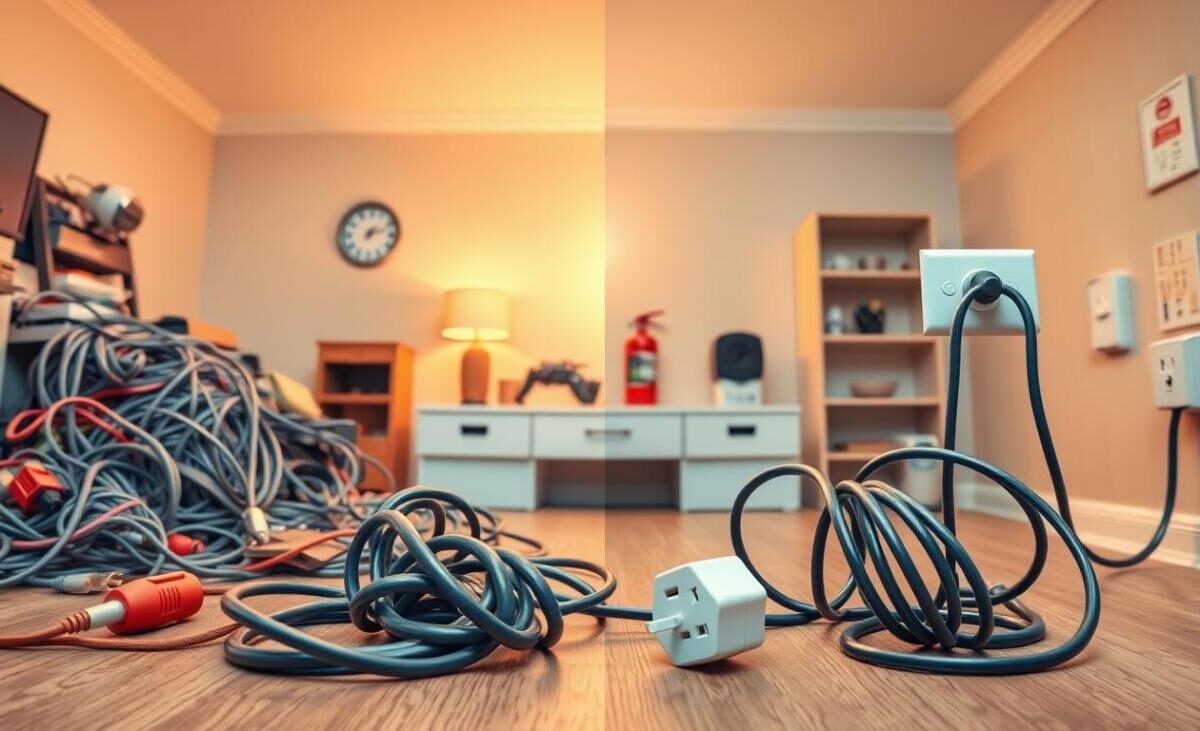
Did you know that electrical failures cause over 50,000 home fires in the United States every year? Many of these fires happen because people misuse a common extension cord. These cords are meant for short-term use, not as a permanent fix.
It’s crucial to know the difference between flexible power strips and permanent wiring. We aim to keep your home safe by spotting dangers early. By following our advice, you can make sure every extension cord is used right and works well.
Key Takeaways
- Recognize that these power tools are strictly for temporary use.
- Never daisy-chain multiple units together to avoid overheating.
- Check for frayed wires or damaged plugs before every use.
- Ensure the gauge of the wire matches your appliance’s power needs.
- Keep cables away from high-traffic areas to prevent tripping hazards.
Understanding Extension Cords: Basics and Types
Starting with electrical accessories means knowing about the extension cord. These tools help us reach outlets that are hard to get to. But remember, they’re not meant to replace permanent wiring in your place.
What is an Extension Cord?
An extension cord is a flexible cable with a plug and sockets. It gives power to things when outlets are too far. But, using them all the time can be very dangerous.
Common Types of Extension Cords
There are many types, each for different needs. For big power users like heaters or tools, you need a heavy duty extension cord. These cords have thicker wires and better insulation for safety.
| Cord Type | Best Use Case | Durability |
|---|---|---|
| Light-Duty | Lamps and clocks | Low |
| Medium-Duty | Computers and fans | Moderate |
| Heavy-Duty | Power tools and heaters | High |
Choosing the Right Extension Cord
Choosing the right cord depends on your needs and where you’ll use it. Make sure the cord’s wattage matches your device’s. A heavy duty extension cord is best for high-wattage items.
Also, check the cord’s length. Longer cords need thicker wires to work well. This keeps your home and appliances safe from electrical harm.
Safety Tips for Using Extension Cords
Keeping your home safe from fires starts with simple habits. We focus on safety because many fires happen at home due to bad handling of electrical stuff. By following key rules, you can keep your home safe for everyone.
Inspecting Your Extension Cord
Always check your extension cord before using it. Look for frays, cuts, or exposed wires. Even small damage can cause big problems like short circuits or shocks.
Never ignore a cord that feels warm to the touch while in use. If you see discoloration, melting, or a burning smell, turn off the power right away. These signs mean the cord is not safe to use.
“Electrical safety is not just about the devices you use, but the integrity of the pathways that deliver power to them.”
Avoiding Overloading Circuits
Don’t plug too many high-wattage appliances into one multi outlet extension cord. Each cord has a power limit. Going over this limit can cause the wires to overheat and increase fire risk.
Check the wattage needs of your appliances before plugging them in. If you need more power, get a permanent wall outlet instead of a multi outlet extension cord. Keeping your electrical load balanced is key to a safe home.
| Practice | Status | Reasoning |
|---|---|---|
| Regular visual checks | Recommended | Identifies wear early |
| Daisy-chaining cords | Prohibited | Causes overheating |
| Using a damaged extension cord | Prohibited | High fire risk |
| Checking wattage limits | Recommended | Prevents circuit overload |
Proper Use of Extension Cords
Managing electrical cords is key for a safe home. We often overlook the path power takes, but it’s crucial for safety.
Length Considerations
Choosing the right cord size is vital for safety. A long extension cord might seem handy, but it can cause voltage drop. This can lead to overheating or malfunctioning of your tools or electronics.
On the other hand, a short extension cord is safer. It reduces resistance and fire risks. If you need more reach, pick a thicker cord to handle the load better.
Proper Placement
Where you place your cords matters a lot. Don’t hide a flat extension cord under rugs or carpets. This traps heat and can cause fires.
Also, avoid running cords through doorways or busy areas. These spots are trip hazards and can damage the insulation. To keep your home safe, follow these tips:
- Keep cords away from heat sources like radiators or stoves.
- Use cord covers if you must cross a walkway to prevent tripping.
- Never staple or nail cords to walls or baseboards.
- Ensure the plug fits snugly into the outlet without any tension.
Being careful with cord placement protects your gear and family. Proper placement keeps your long extension cord or short extension cord working well for a long time.
Outdoor vs. Indoor Extension Cords
Knowing the difference between indoor and outdoor extension cords is crucial for home safety. They may look alike, but they serve different purposes. Picking the wrong extension cord can lead to electrical failures or fires.
Differences in Construction
An outdoor extension cord is made to handle tough weather. It has thick insulation to protect the wiring from moisture, sunlight, and cold. These cords feel stiffer and more durable than indoor ones.
An indoor extension cord is for light use in controlled environments. It has thinner insulation since it doesn’t need to fight off water or extreme heat. It’s safe for lamps or small electronics indoors but not for the outdoors.
Recommended Usage
Don’t mix these cords. An indoor extension cord isn’t safe outside because it can’t keep water out. Water can cause a short circuit or shock.
While you can use an outdoor extension cord indoors, it’s not needed. These cords are big and for heavy tools or outdoor lights. Always check the cord’s label to make sure it fits your needs.
| Feature | Indoor Cord | Outdoor Cord |
|---|---|---|
| Insulation Thickness | Thin/Light | Thick/Heavy-duty |
| Water Resistance | None | High |
| Primary Use | Household Appliances | Power Tools/Patio |
| Flexibility | High | Low |
Maintaining Your Extension Cords
We think regular maintenance is key to a long-lasting power supply. Taking good care of your gear means every extension cord in your home stays safe and reliable for years.
Regular Checks for Damage
Always check your cables before using them. Look for frayed insulation, exposed copper wires, or bent prongs that could cause a short circuit.
If you see deep cuts or soft spots on the jacket, it’s time to replace it. Even a small crack in a flat extension cord can lead to overheating if not fixed.
Cleaning and Storage Tips
Keep your cables clean to prevent dust and grime buildup. Just wipe them with a dry cloth to remove dirt, avoiding harsh chemicals that can damage the plastic.
Storing your cords right is also crucial. For a retractable extension cord, make sure the mechanism is clean so it winds up smoothly without kinking.
Don’t wrap cords tightly around sharp corners or heavy objects. This can stress the internal wires. Instead, coil them loosely to keep the wiring alive.
| Cord Type | Cleaning Method | Storage Recommendation |
|---|---|---|
| Standard Cord | Dry cloth wipe | Loose coil |
| Flat Extension Cord | Soft brush | Flat lay or spool |
| Retractable Extension Cord | Compressed air | Internal housing |
Extension Cord Power Ratings Explained
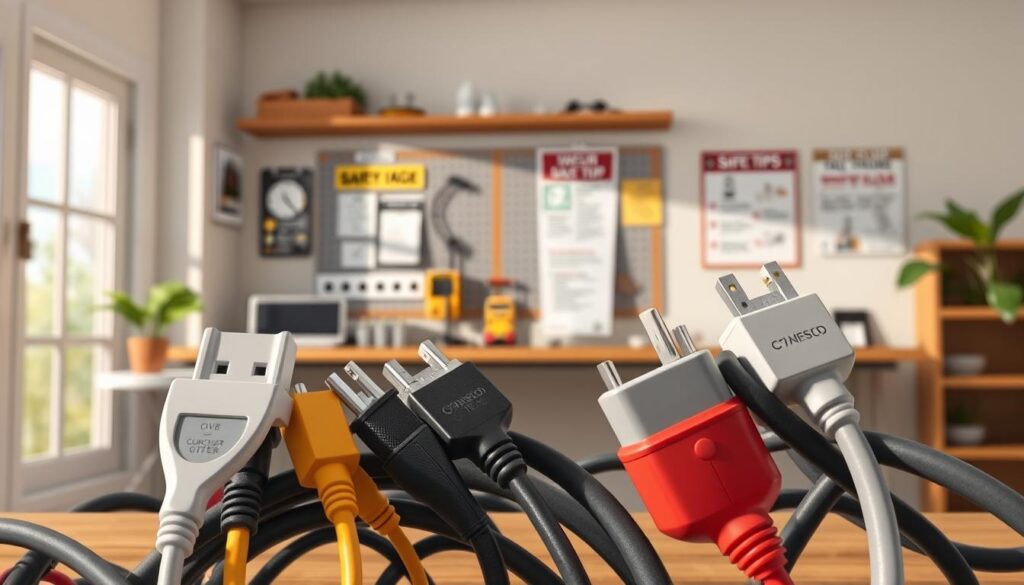
Choosing the right power for your tools is key to avoid overheating and fire risks. When picking an extension cord, make sure it can handle your device’s electrical load. Knowing these specs is crucial for a safe home.
Amperage and Wattage Basics
Every device has a power need in watts or amps. You can find this on the manufacturer’s label or nameplate. For more on how to choose, check this guide on extension cords.
Amperage is the flow of electricity, and wattage is the power use. If your device uses more power than the cord, it will heat up fast. This can melt insulation or start a fire.
How to Calculate Power Needs
Figuring out your needs is easy if you know the distance to your power source. A long extension cord may lose power, making your tool weaker. For an outdoor extension cord, use thicker wire to handle this loss.
To find the right cord, multiply your device’s amps by the voltage (120V in the US). Choose a cord with a bit more power than you need for safety. Use this table to pick the right wire gauge and length for you.
| Cord Length | 10-13 Amps | 14-15 Amps |
|---|---|---|
| Up to 50 feet | 16 Gauge | 14 Gauge |
| 50 to 100 feet | 14 Gauge | 12 Gauge |
| Over 100 feet | 12 Gauge | 10 Gauge |
Understanding Grounded vs. Ungrounded Cords
When you look for an extension cord, you might see some with three prongs and others with two. This isn’t just about the plug’s shape. It’s about how electricity gets to your devices. Knowing the difference helps you choose safer options for your space.
Benefits of Grounded Connections
Grounded connections offer a key safety path for electricity if there’s a fault. They send excess current to the ground, greatly reducing the risk of electric shock. This is crucial when using an extension cord with surge protection for sensitive items like computers or TVs.
Without a ground, a short circuit could energize a device’s metal casing. A grounded system cuts off power before an accident can happen. We suggest using grounded options to keep your gear safe during power changes.
Identifying Grounded Cords
A grounded cord has a third, round prong on the plug. This pin connects to the grounding wire in your outlet. If you’re using an extension cord with surge protection, it will have this design.
Remember, never modify a plug to avoid safety features. Removing the grounding pin to fit a two-slot outlet is dangerous. Always use an adapter or a grounded outlet instead.
Common Mistakes to Avoid with Extension Cords
Using an extension cord right is more than just plugging it in. Many people make simple mistakes that can be very dangerous. Knowing these common errors helps keep your electrical devices safe and your home safe too.
Using Multiple Cords Together
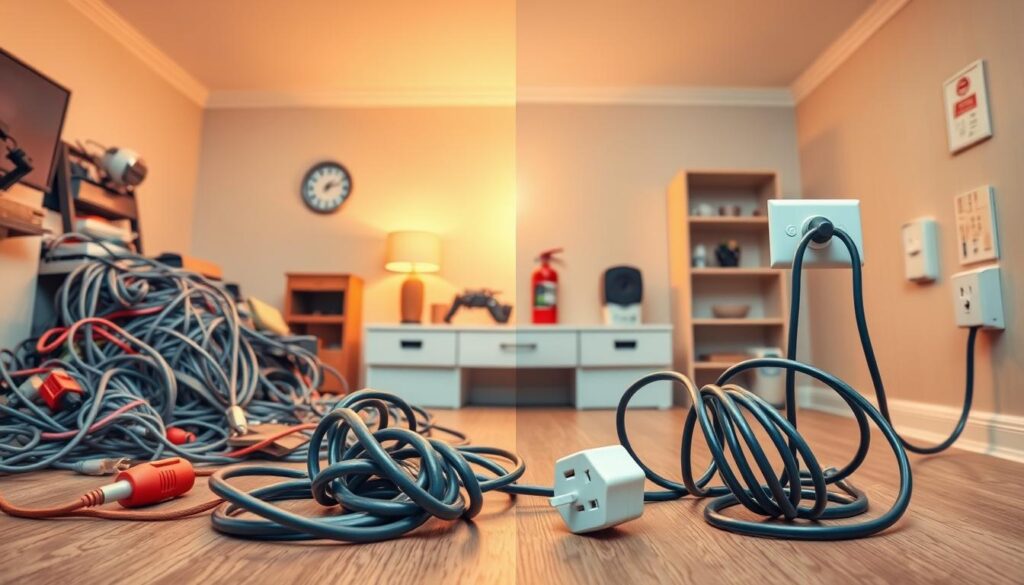
“Daisy chaining” is a big no-no. It means plugging one cord into another. This can lead to overheating and even fires. When you connect a multi outlet extension cord to another power strip, it’s too much for the circuit.
Always plug your devices directly into a wall outlet if you can. If you need an extension, make sure it’s the right one for your appliance. Never try to extend your reach by linking cords together. It’s a surefire way to cause a circuit failure.
Ignoring Manufacturer Guidelines
Every indoor extension cord has its own rules. These include how much load it can handle and where it should be used. Always check the packaging to see if your extension cord with surge protection fits your equipment’s needs.
Using a light-duty cord for heavy appliances can melt the wires. Also, using an indoor cord outside can cause short circuits because of moisture and debris. Always follow the manufacturer’s advice to keep your devices safe.
| Practice | Status | Safety Impact |
|---|---|---|
| Daisy chaining cords | Unsafe | High fire risk |
| Using indoor cords outdoors | Unsafe | Electrical shock |
| Checking wattage labels | Safe | Prevents overloading |
| Using surge-protected units | Safe | Protects electronics |
When to Replace Your Extension Cord
Electrical gear gets worn out from constant use and the environment. We need to spot the signs that tell us it’s time to replace it.
Identifying Critical Wear and Tear
Look for exposed copper wires, cracked insulation, or charred plug ends. A short extension cord often frays at the ends. If your retractable cord won’t retract or sparks, stop using it right away.
Heat during use is a big warning sign. If the cord feels warm, the wiring is likely damaged. Don’t fix it with electrical tape, as it’s a fire risk.
Safe Disposal Methods
Proper disposal keeps damaged items out of the trash and prevents reuse. Cut the plug off any damaged cord before throwing it away. This step prevents accidents.
Check with your local waste management about recycling programs for electronics. Many stores like Home Depot or Lowe’s have bins for old cables. Safe disposal helps your community and keeps landfills clean.
Stay safe by checking your power supplies regularly. A safe home environment gives you peace of mind for you and your family.