
 David Joseph
Did you know that nearly 80% of power spikes come from inside our homes? We often worry about lightning, but the real threat is from appliances like refrigerators and air conditioners. They turn on and off, causing power spikes.
These power spikes can slowly damage the circuitry in our computers and TVs. Even a small spike can lead to permanent hardware failure over time. This can cost us a lot to fix or even mean we lose our equipment.
Using a good surge protector is the best way to protect our devices. By picking the right surge protector for electronics, we keep our equipment safe and working well for years.
Key Takeaways
- Most power spikes are caused by internal household appliances rather than external weather events.
- Sensitive hardware suffers from cumulative damage caused by frequent, minor voltage fluctuations.
- A dedicated device acts as a vital barrier between our wall outlets and expensive equipment.
- Proper installation of safety hardware prevents costly repairs and unexpected data loss.
- Investing in quality power management is essential for maintaining the longevity of modern home technology.
Understanding Surge Protectors
A surge suppressor is like a silent bodyguard for our expensive tech. It controls the electricity flow, keeping our electronics safe from sudden voltage spikes. These spikes could harm our devices permanently.
We often overlook the power from our wall outlets. But, sudden power changes can happen anytime. It’s key to learn about power surge protectors explained to protect our home office and entertainment areas.
What is a Surge Protector?
A surge protector is a special device that guards our equipment from voltage spikes. These spikes are quick, intense energy bursts that can damage our computers, gaming consoles, and smart appliances.
Without protection, a single surge can destroy circuit boards or ruin stored data. We see these devices as a critical buffer between our gear and the unpredictable electrical grid.
How Surge Protectors Work
These units watch the voltage level going into our devices. When the voltage gets too high, they kick in to redirect the excess energy.
Most modern units use a Metal Oxide Varistor (MOV). This part sends the excess energy into a ground wire before it hits our equipment. This keeps our electronics safe within their correct voltage range.
Types of Surge Protectors
We can group these devices into three types based on their use and where they’re installed. Knowing these differences helps us pick the right protection for our needs.
- Type 1: These are utility-side protectors installed at the service entrance to guard against external surges like lightning.
- Type 2: These units are usually installed at the main electrical panel to offer secondary protection for the whole house.
- Type 3: These are the common plug-in adapters we use every day to protect individual devices like lamps, monitors, and chargers.
Importance of Using Surge Protectors
Power surges can happen anytime, turning our gadgets into useless items. We think our home’s electrical system is stable, but voltage spikes are common. Using a good surge protector is the best way to protect our devices from these threats.
Protecting Our Electronics
Our homes are full of advanced electronics that need careful handling. These devices are sensitive to small changes in power. A surge protector acts as a shield, absorbing extra energy before it harms our gadgets.
This shield keeps our devices working well for a long time. Consistency is key for keeping our electronics in good shape. Without protection, we risk losing our devices and the data they hold.
Preventing Potential Damage
Not protecting our gear can lead to serious damage. A surge can damage internal parts quickly, forcing us to replace the device. A good surge protector keeps dangerous voltage away from our appliances.
Damage from a surge might not be immediate or obvious. It can cause cumulative degradation that shortens our devices’ life. A surge protector stops this slow damage, keeping our devices in top shape.
Cost-Effectiveness Over Time
Some of us might think protecting our gear is too expensive. But, the cost of replacing a pricey TV or computer far outweighs the cost of a surge protector. We see it as a small investment for our most valuable items.
Looking at the long-term, protecting our electronics is a smart choice. Proactive defense is more cost-effective than dealing with expensive repairs or replacements after a surge. Protecting our devices now saves us from big financial problems later.
Choosing the Right Surge Protector
Protecting our home office and entertainment systems starts with choosing a high-quality device. We should never settle for basic power strips when our valuable electronics are at stake. Taking the time to evaluate technical specifications ensures we invest in reliable equipment that provides genuine peace of mind.
Key Features to Consider
When we shop for a surge protector, the number of available outlets is our first priority. We must ensure there is enough space for bulky power adapters without blocking adjacent ports. Many modern setups benefit significantly from a surge protector with USB ports, which allows us to charge mobile devices directly without using up precious AC outlets.
We should also consider the length of the power cord to ensure it reaches our wall outlet comfortably. A sturdy, fire-resistant casing is another essential feature that adds an extra layer of safety to our home environment. Always prioritize models that offer indicator lights to confirm that the protection circuitry is active and functioning correctly.
Understanding Surge Ratings
The effectiveness of a device is measured by its joule rating, which indicates how much energy it can absorb before failing. For a high-end surge protector for TV setups or desktop computers, we recommend looking for a rating of at least 1,000 to 2,000 joules. We must also check the clamping voltage, which should be as low as possible to ensure sensitive components receive power quickly during a spike.
“Quality protection is not an expense; it is an essential investment in the longevity of our digital infrastructure.”
We must verify that our chosen equipment carries UL or ETL certifications. These labels prove that the product has undergone rigorous testing to meet strict safety standards. Never purchase a device that lacks these certifications, as it may not provide the protection we expect.
Brand Recommendations
Finding the best surge protector often comes down to choosing reputable manufacturers with a history of reliability. We suggest focusing on industry leaders that provide comprehensive warranties for connected equipment. Consider these trusted brands for your next purchase:
- APC: Known for robust surge suppression and excellent customer support.
- Belkin: Offers a wide range of models suitable for both home and office use.
- Tripp Lite: Highly regarded for professional-grade protection and durable construction.
Installing a Surge Protector
Setting up our power protection devices needs care to work right. The right installation is key to keeping our electronics safe. By following certain steps, we can extend our equipment’s life and avoid electrical dangers.
Where to Place Our Surge Protectors
Choosing the right spot for a surge protector is crucial. They should be in dry, well-ventilated areas that are easy to check later. Don’t hide them under heavy furniture or carpets, as this can trap heat and hide warning lights.
For a surge protector for home office, place it near the main power outlet. This keeps cords neat and lets us see the status lights easily. Good airflow helps prevent overheating.
Step-by-Step Installation Guide
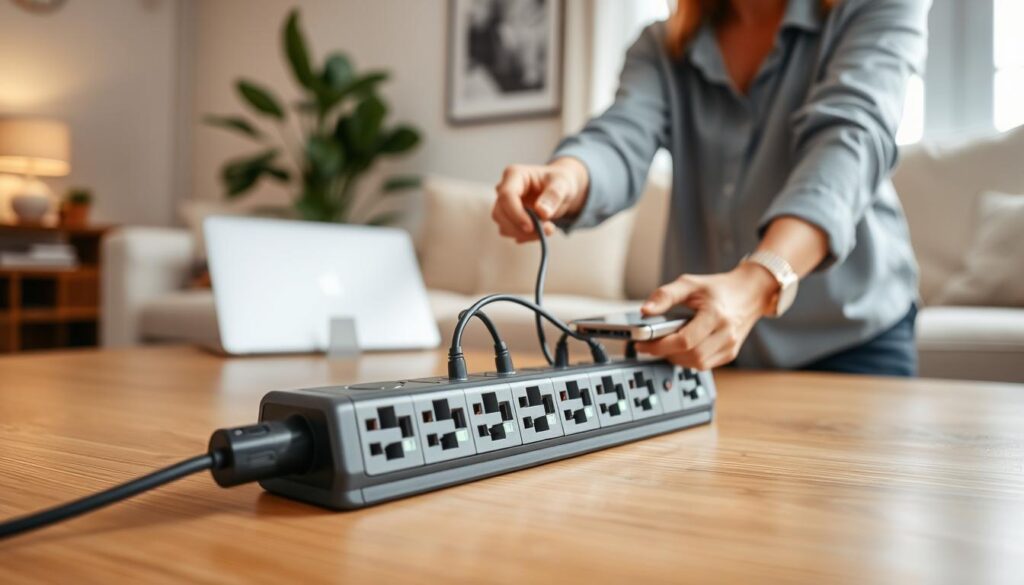
Installing most devices is simple. First, turn off the device before plugging it into a grounded outlet. Then, connect our electronics to the protected outlets, making sure not to go over the power limit.
After connecting, turn the power on. Check that the “protected” or “grounded” light comes on. For whole-home systems, contact a licensed electrician for the main service panel installation, as it needs special knowledge.
Common Mistakes to Avoid
Even with great hardware, mistakes during setup can be risky. We must watch out for these common errors:
- Daisy-chaining: Never plug one power strip into another, as this creates a significant fire hazard and overloads the circuit.
- Ignoring Capacity: Always check the joule rating and wattage limits of your surge protector for home office to ensure it can handle the connected load.
- Using Unprotected Outlets: Ensure the device is plugged directly into a wall outlet rather than an extension cord.
By avoiding these mistakes, we keep our devices safe. Correctly installing our surge protector gives us peace of mind and reliable protection against power spikes.
How to Maintain Our Surge Protectors
Even the best devices have a limited lifespan. We see them as permanent, but every surge protector can only handle so much electrical energy before it fails.
Regular Inspection Tips
It’s smart to check our gear every few months. Modern surge protectors have lights that show if they’re working right.
- Look for a protected or grounded light that stays on.
- Make sure the unit is securely plugged into a wall outlet.
- Check the power cord for any damage or pinching.
Signs of Wear and Tear
Physical damage is a clear sign a surge protector needs fixing. Look for melted plastic or discoloration around the outlets.
If the device feels too hot, it might be struggling. Also, if the outlets are loose or can’t hold plugs, the contacts are worn out.
When to Replace a Surge Protector
Knowing when to replace a unit is key to protecting our electronics. We should swap it out after a big power surge or lightning strike.
Even without a major event, these parts wear out over time. Replacing them before they fail is the best way to keep our devices safe.
“Regular maintenance of our power infrastructure is the most cost-effective way to prevent catastrophic hardware failure.”
Surge Protectors vs. Power Strips
It’s easy to mix up a standard power strip with a surge protector. But, they serve different roles in keeping our electronics safe. Knowing the difference helps us pick the right one for our home.
Key Differences Explained
A basic power strip is just an extension cord with more outlets. It gives us extra reach but doesn’t protect against voltage spikes. If a surge happens, it can harm our devices.
A power strip surge protector has special parts to handle voltage spikes. It uses things like Metal Oxide Varistors (MOVs) to soak up the extra energy. When a surge comes, it sends the dangerous current to the grounding wire, not our electronics.
When to Use Each
Choosing the right device depends on what we’re plugging in. The wrong one can damage our expensive gadgets.
- Standard Power Strips: Good for simple items like lamps, fans, or chargers without complex chips.
- Surge Protectors: Needed for devices with computer chips, like TVs, gaming consoles, computers, and smart home devices.
Cost Comparisons
While power strips are cheaper, the cost of fixing damaged electronics is higher. Spending on a good power strip surge protector is worth it for our peace of mind.
Seeing the extra cost of a reliable surge protector as an investment is smart. It saves us from the trouble and expense of electrical failures. Protecting our investment now saves us from future problems.
Understanding Lightning and Power Surges
Learning about power surges is key to protecting our devices. We often think electrical damage comes from big storms. But, the truth is more complex. Knowing where instability comes from helps us see why we need a surge protector at home.
Causes of Power Surges
Power surges happen when voltage spikes in our wiring. These spikes can come from the power grid or when power comes back on after an outage. But, many surges are caused by our own appliances.
Big appliances like refrigerators or air conditioners use a lot of power when they start or stop. This can lead to small surges that harm our electronics. A good surge protector for TV and computers can help with these issues.
How Lightning Affects Our Electronics
Lightning is the most powerful cause of electrical surges. When lightning hits near our homes, it can send a huge voltage spike through our lines. This surge can get into our homes fast, even before we know a storm is coming.
“A single lightning strike can carry millions of volts, far exceeding the capacity of any standard household wiring or device insulation.”
This energy can damage our electronics quickly. That’s why a strong surge protector is vital for our entertainment systems.
Myths About Power Surges
Many think surges only happen in big storms. But, most surges are small and happen every day. Another myth is that any power strip is as safe as a dedicated surge protector for TV gear.
| Myth | Reality | Risk Level |
|---|---|---|
| Surges only happen in storms | Internal appliances cause daily spikes | High |
| All power strips protect gear | Most strips lack surge suppression | Critical |
| Electronics are immune | Sensitive chips fail easily | Moderate |
We need to clear up these myths to protect our devices. By getting a reliable surge protector, we keep our electronics safe from the grid and our own appliances.
What to Do After a Power Surge
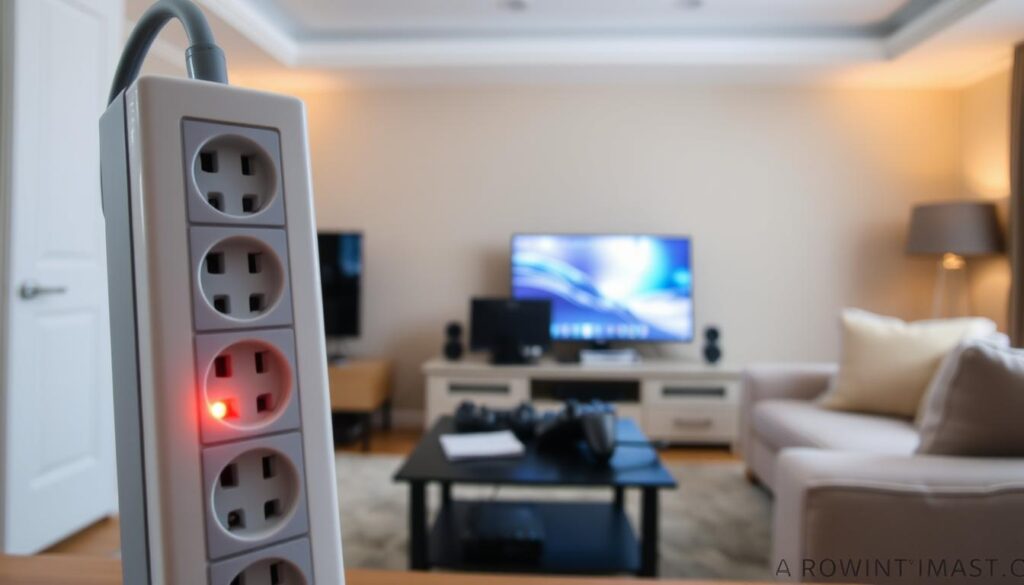
When the lights flicker and go out, we must check our home electronics right away. A sudden spike in voltage can damage even the best surge protector for electronics. This leaves our devices open to hidden harm.
Checking Our Electronics
First, we should look over all connected equipment. Search for scorched plastic, a burning smell, or melted ports near the power input.
Then, test each device to see if it works. If a unit won’t turn on, try plugging it into a different outlet. If it still doesn’t work, its internal parts might be damaged for good.
Steps to Take if Damage Occurs
If we find damaged hardware, safety comes first. We must unplug all affected devices right away. This stops more electrical dangers or fire risks.
It’s also key to document the damage for insurance or warranty claims. Take clear photos of the damaged items and the surge protector used during the surge. Keeping a detailed log helps with the recovery process.
Resources for Repair or Replacement
Many makers offer warranties for surge damage. Check our product manuals or the company website to see if our gear is still covered.
If the warranty is gone, we might need to get a pro’s estimate. Sometimes, getting a new surge protector is cheaper. It keeps our home safe from future power issues.
Conclusion: Investing in Surge Protection
Keeping our home electronics safe is an ongoing task. We need the right tools and regular upkeep. This way, we can rest easy knowing our devices are protected from sudden power spikes.
Strategic Protection Planning
A good surge protector is our first defense against damage. We should see them as key investments, not just extras. Keeping an eye on them helps us stay ready for any power changes.
Taking Proactive Steps
It’s time to check our power systems. Upgrading old gear is crucial to protect our computers, TVs, and games. Making a few changes can greatly extend their life.
Safeguarding Our Technology
Take a look at your home office or entertainment area. Adding a top-notch surge protector from brands like APC or Belkin is a smart move. Let’s make these upgrades to ensure our tech stays safe and working well for years.